

Anaesthesia for C-Section Delivery – Types and Side Effects
Types of anaesthesia used for C section delivery explained with safety benefits procedure steps and recovery guidance for mothers.





Medically Reviewed By
Dr. Sabiha Anjum
(Gynecologist/Obstetrician)


While the thought of undergoing a C-section can keep you awake at night, if it helps, we would like to tell you that you will be administered anaesthesia before the surgical procedure. Yes, anaesthesia for caesarean section is a common procedure that is done for all c-section deliveries. We know the thought of anaesthesia may not appeal (or sound convincing enough), but it can help. There are several types of anaesthesia that can be administered during the surgery. In case you’re planning to have a C-section delivery due to medical reasons or by choice, know what your options are in anaesthesia. Read through the article and have a better understanding of anaesthesia for C-section, its various types, associated risks, and more.
Factors That Determine the Anaesthesia to Be Given During a Caesarean Delivery
Here are certain factors that your doctor will consider when deciding the type of anaesthesia to be given to you during the surgical procedure:
- Your medical history
- An emergency
- The need for anaesthesia during labour
- Fetal stress (1)
- Planned caesarean section
- Any additional surgery, or if your surgery is complicated and may take longer
Different Types of Anaesthesia Used During a C-section Birth
There are different types of anaesthesia for caesarean section deliveries that are opted for by doctors in different scenarios. Pregnant women who undergo C-section deliveries are given one of two types of C-section anaesthesia: regional anaesthesia—an epidural, spinal, or a combination of the two—that blocks pain receptors while keeping the mother awake during the procedure and general anaesthesia, which allows the mother to be unconscious during the C-section (2). Let’s discuss the different types of anaesthesia used during a C-section in more detail:
1. Epidural Anaesthesia
Epidural anaesthesia may be administered when your doctor recommends a C-section under local anaesthesia. This anaesthesia is given around the nerves in the lower back. The catheter is inserted in the lower back using a needle, and the needle is removed once the catheter is secured with tape. This procedure requires administering a larger dosage of anaesthesia, and it may take longer to work.

When It Is Administered
This anaesthesia is given to improve the quality of anaesthesia used during the C-section.
How This Is Performed
- You will be required to sit curled up towards your belly.
- A catheter is inserted using a needle. Once the catheter is secured with the tape, the needle is removed.
- If the need for a C-section arises, anaesthesia will be administered through the catheter.
2. Spinal Anaesthesia
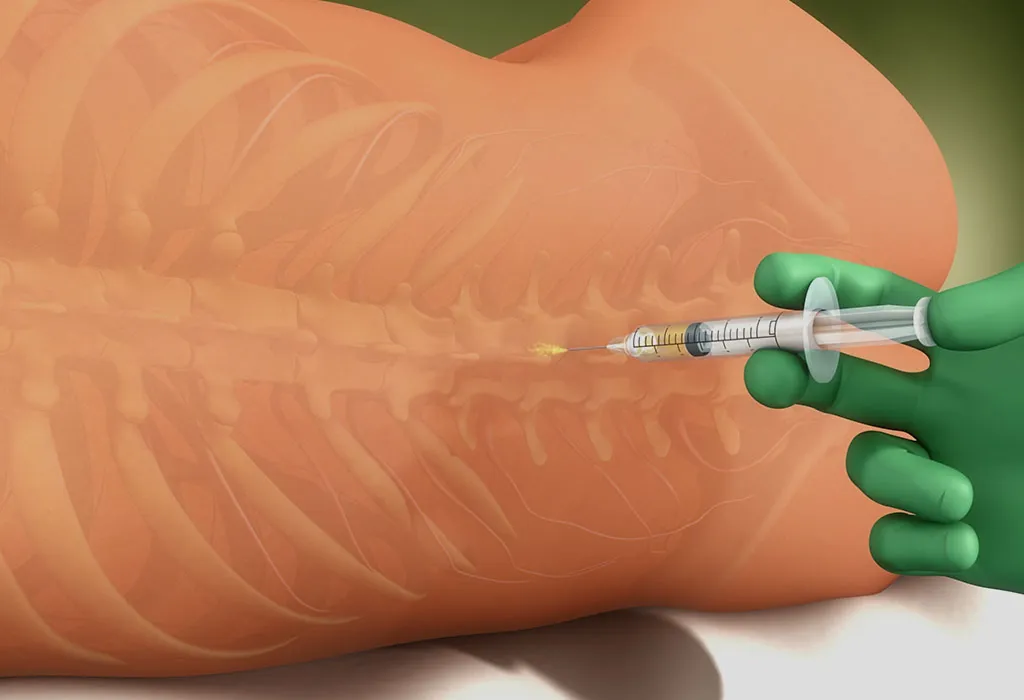
Also known as spinal block anaesthesia, this local anaesthesia is administered around the spinal cord using a needle. This anaesthesia is effective in keeping the lower body numb, from the waist down to the toes, for three to four hours. The small amount of anaesthesia helps in blocking the pain quickly. Spinal anaesthesia technique offers a quick onset and the most dependable anaesthetic block for cesarean sections (3).
When It Is Administered
This is administered for most caesarean deliveries as it starts its effect within 2 to 5 minutes.
How This Is Performed
- Anaesthesia will be administered directly into your spinal fluid.
- No catheter is required for this procedure; no extra medicine can be given.
- You will be awake during the procedure.
3. Combined spinal-epidural Anaesthesia
For a long-lasting, complete, and quick numbness, this anaesthesia is the best option. In this procedure, spinal anaesthesia is used for the surgical procedure. However, the epidural is not only used to keep the anaesthesia levels up, but it also provides relief from the post-surgical pain. In comparison to epidural anaesthesia, combined spinal-epidural anaesthesia offers quicker onset of sufficient pain relief following the injection and enhances the likelihood of maternal satisfaction (4).
When It Is Administered
The CSE or combined spinal-epidural anaesthesia is used in 20 per cent of the caesarean deliveries.
How This Is Performed
This anaesthesia follows both the above procedures of epidural and spinal anaesthesia.
4. General Anaesthesia
This anaesthesia is not used much for caesarean deliveries and is only administered in 10 per cent of the caesarean deliveries. While administering this anaesthesia, the mother remains unconscious during the surgical procedure. This type of anaesthesia may not be a safe choice for the baby in comparison to local anaesthesia. However, it is only opted for by doctors in special cases.
When It Is Administered
Though most doctors recommend and opt for local anaesthesia for a C-section, your doctor may recommend general anaesthesia in the following conditions:
- When local anaesthesia may be unsafe because of some medical conditions.
- An emergency caesarean section may be required in emergent situations such as placental abruption, cord prolapse, antenatal placental bleeding, and non-reassuring fetal tracing, but the chances of considering this are rare (5).
- In case of any spinal deformity.
How This Is Performed
C-section general anaesthesia may be recommended by your doctor in case your C-section has to be performed urgently or if there is not enough time to administer local anaesthesia. A tube will be inserted in your mouth to assist you in breathing better throughout the surgical procedure. You will remain unconscious under the effect of the anaesthesia.
Side Effects of Using Anaesthesia
Here are some side effects of using anaesthesia:
- Low blood pressure
- Nausea and vomiting
- You may feel some tingling in your bottom or legs (in case of epidural or spinal anaesthesia)
- You may experience shivering
- You may feel pain in your back; this may be temporary due to the use of the needle or being in an uncomfortable position during the procedure
- You may feel dizzy
- You may experience itching
- You may have a headache, which may last for a few days or a few weeks
Recovery After Anaesthesia
In case of local anaesthesia (spinal or epidural), the effect of anaesthesia will wear off in a few hours. Your legs may feel weak, and you may also have some tingling sensations in them. You will be given painkillers to provide relief from the surgical pain. However, if you are given general anaesthesia, you may feel all sleepy and groggy after the effects of anaesthesia subside. You may experience nausea or irritation in your throat because of the oxygen pipe that has been inserted down your throat. Until you are fully awake, you will be monitored regularly.
When to See a Doctor
It is unlikely to have complications after anaesthesia. However, if you experience any of the following, get in touch with your doctor:
- Bladder or bowel problems
- Difficulty in breathing
- Tenderness or redness at the needle site
- Intense headaches, which do not fade away
- Weakness and numbness persist for a long time
FAQs
1. What is the effect of maternal anesthesia in the fetus?
Earlier studies report that regional anaesthesia is generally safer for the mother and can actually be advantageous for a distressed newborn when done correctly. A healthy newborn also gains from the mother’s pain relief during labour and delivery. General anaesthesia, on the other hand, can lead to temporary neonatal depression, especially in emergency deliveries. Nonetheless, the proficiency and expertise of the anesthesiologist matter more than the type of anaesthesia used. Consequently, when executed properly, both regional and general anaesthesia are quite safe regarding neonatal outcomes (5).
2. Are there any long-term side effects of anaesthesia in C-section?
Long-term side effects of anaesthesia during C-section are rare, but can include postoperative cognitive dysfunction (POCD) and new or worsening back pain, though it is usually linked to either pre-existing conditions or the surgery itself. General anaesthesia, on the other hand, carries high risks for increased maternal complications like cardiac events and postpartum depression, making regional anaesthesia a much preferred option.
It is very important that you talk to your doctor and know about all the options available to you. With your doctor’s expertise and guidance, you can make an informed decision, which is in your and your baby’s interest.
Also Read:
Elective C-Section
Gentle C-Section
Ways to Avoid C-Section
Multiple or Repeat C-Section
Was This Article Helpful?
Parenting is a huge responsibility, for you as a caregiver, but also for us as a parenting content platform. We understand that and take our responsibility of creating credible content seriously. FirstCry Parenting articles are written and published only after extensive research using factually sound references to deliver quality content that is accurate, validated by experts, and completely reliable. To understand how we go about creating content that is credible, read our editorial policy here.
- Author
- Expert Reviewer
 About the Author
Aliya Khan
Related Articles
-

Gestational Diabetes and Labour Induction: Why It Matters
-
Interventions during Labor and Delivery
-
Membrane or Cervical Sweep: Risks, Pros & Cons
-
Doctors Reveal 7 Common Beliefs About C-Sections That Are TOTALLY False!
-
6 Biggest Regrets Indian Moms Have Had In The Delivery Room
-
Is Diarrhoea a Sign of Labour?