
Stretching Exercises in Pregnancy – Safe Prenatal Stretches for Comfort
Gentle stretching exercises in pregnancy to ease body pain improve flexibility and help moms stay relaxed healthy and comfortable





Medically Reviewed By
Urja Shah
(Yoga Expert)

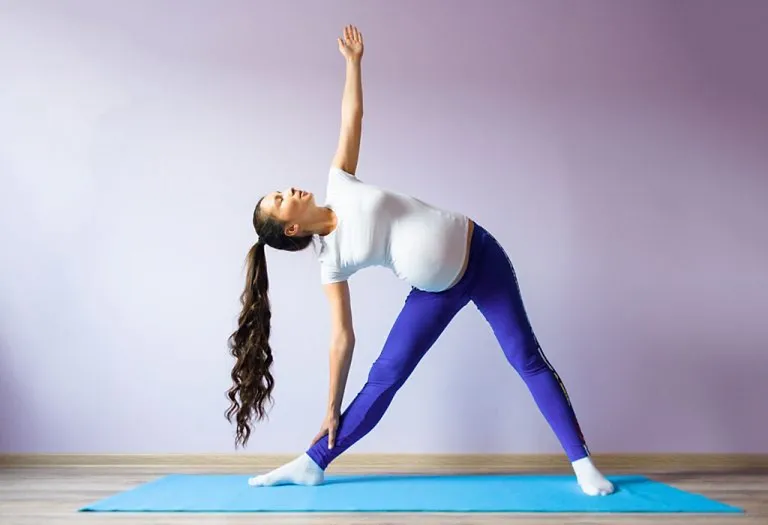
Pregnancy is a delicate and transformative time in a woman’s life, but following a healthy lifestyle during the nine months can make your experience significantly easier and more comfortable. Other than eating nutritious foods, committing to pregnancy-safe exercises is a wonderful way to stay fit and prepare your body. Stretching in pregnancy (a much-needed warm-up before exercise) is highly recommended, as it is one such gentle activity that can be very helpful for you when pregnant. Importantly, a safe stretching exercise in pregnancy can also serve as the much-needed warm-up before more vigorous activity, reducing the risk of injury. If you still have doubts about which movements are beneficial, it is always wise to consult your healthcare provider. Read on to discover more about how and why you can confidently perform stretching exercises during pregnancy!
Can You Do Stretching Exercises During Pregnancy?
A pregnant woman’s body undergoes many changes. While pregnant, you may feel fatigued and exercise will be the last thing on your mind. But stretching exercises will only do go to you and your baby, provided you do them with utmost caution and after checking with your doctor. Stretching exercises can keep you physically fit as well as relieve stress and tension. But before you start with any exercise, we suggest that you check with your doctor!
What Are the Benefits of Stretching During Pregnancy?
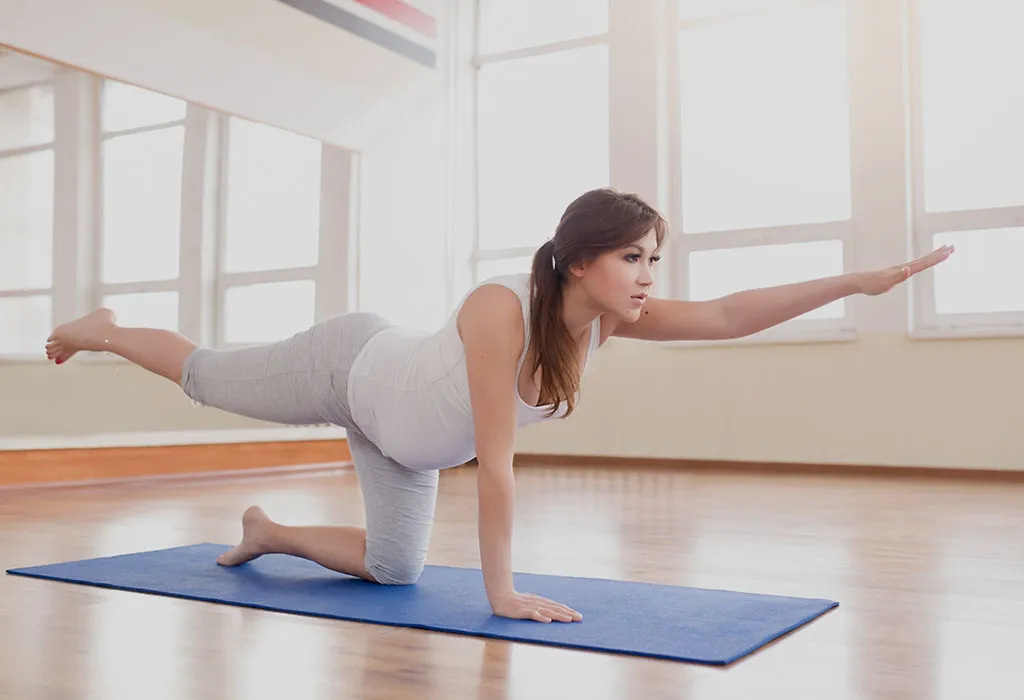
Stretching during pregnancy offers a host of benefits to a mother and the baby. Pregnancy is fraught with pain in many parts of the body, and stretching can help new mothers cope with these changes in the body.
A woman’s posture changes as the size of her belly increases. Combine that with the weight of the foetus, and the result is that the woman always experiences some pain. Back pain is extremely common in pregnant women, mainly because of the growth of the foetus accompanied by the hormonal changes taking place in her body.
Stretching the back during pregnancy can help in resolving the stiff feeling in the back, and even improve the range of motion of the mother. The heartbeat of the mother increases when she exercises, which is why the foetus in the womb gets more blood. This results in a healthy baby in the womb. Also, stretching exercises can help mothers keep their weight in check and not gain too much weight during their pregnancy. Pregnancy stretches in the third trimester are also useful since they loosen up the joints and make the mother slightly more comfortable during childbirth.
Can Stretching Hurt the Baby?
Stretching exercises may hurt the baby during pregnancy if not done correctly. You should not strain yourself too much, as this can impair the development of the foetus. A woman should always stay hydrated so that there’s no issue while exercising. Avoid lying on your stomach while doing any prenatal stretches. Do not perform Shavasana after exercising in the first trimester. The blood vessels carrying nutrients to the uterus can get squeezed, resulting in the baby not getting enough blood to grow.
Tips for Pregnant Women to Perform Stretching Exercises Safely
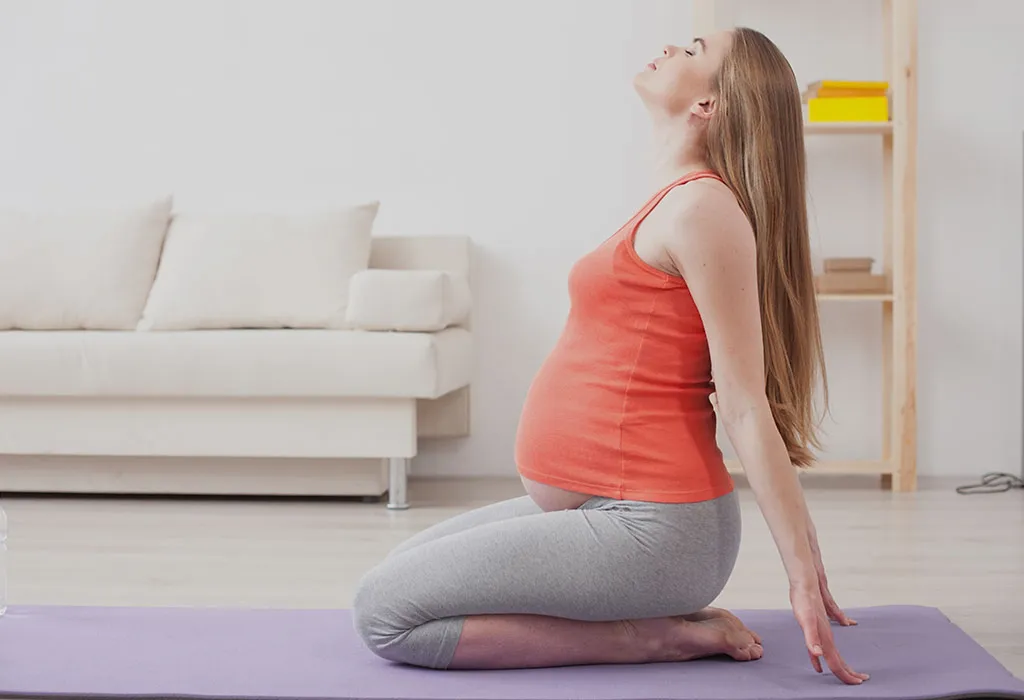
There are some tips that women can follow while exercising so that they do not bring any harm to the baby growing in their belly. Some of these are (1):
- Move smoothly. This means that you should avoid any uncomfortable or quick movements and opt to move at a slow pace. Slow movements reduce the risk of stressing out your ligaments and joints during pregnancy.
- Every stretch you do should be held for at least 10 to 30 seconds. This is because the muscles of pregnant women need some time to relax adequately.
- Understand your body and do not force a stretch with quick movements.
- Control your breath, as it can also help you limit the speed of your movements. Deepen your stretch gently as you exhale.
- If you feel any pain while stretching, you should stop stretching immediately and not go through with it.
- Inhale as you return to the starting position while stretching.
- Do not lie on your back, especially after stretching. This can result in the cutting off of blood flow to the uterus and cause lightheadedness and low blood pressure.
Consistently performing gentle sciatica stretches for pregnant women can significantly alleviate the sharp nerve pain that often radiates down the leg during the later trimesters.
Pregnancy Stretches That You Should Try
Here are some stretching exercises which could prove to be helpful for pregnant women. However, if you wish to try these exercises, do check with your doctor first (2).
1. Shoulder Stretches
- Sit on a comfortable chair, and open your chest while simultaneously rotating your shoulders backwards and down. Make the circle as large as possible. Repeat for 4 or 5 times.
2. Chest Stretches
- Stand and raise your arms on either side.
- Slowly, step forward with one foot until you feel light in the chest area (and do not move too much).
- Hold for thirty seconds, and switch feet in a smooth motion.
- Repeat one or two times per side, multiple times in a day.
3. Roll-down
- Stand with your back pressed against the wall with your feet shoulder-width apart.
- Then bend forward as you exhale, in slow, smooth action. Go as far down as you are comfortable.
- Let your hands hang in front of you, and always keep your weight on your feet.
- Inhale again before rolling back up, and press your back against the wall in a step-by-step fashion until you are upright again.
- Repeat two times. If your belly becomes too big, you can do the same while seated on a chair.
4. Neck Stretches
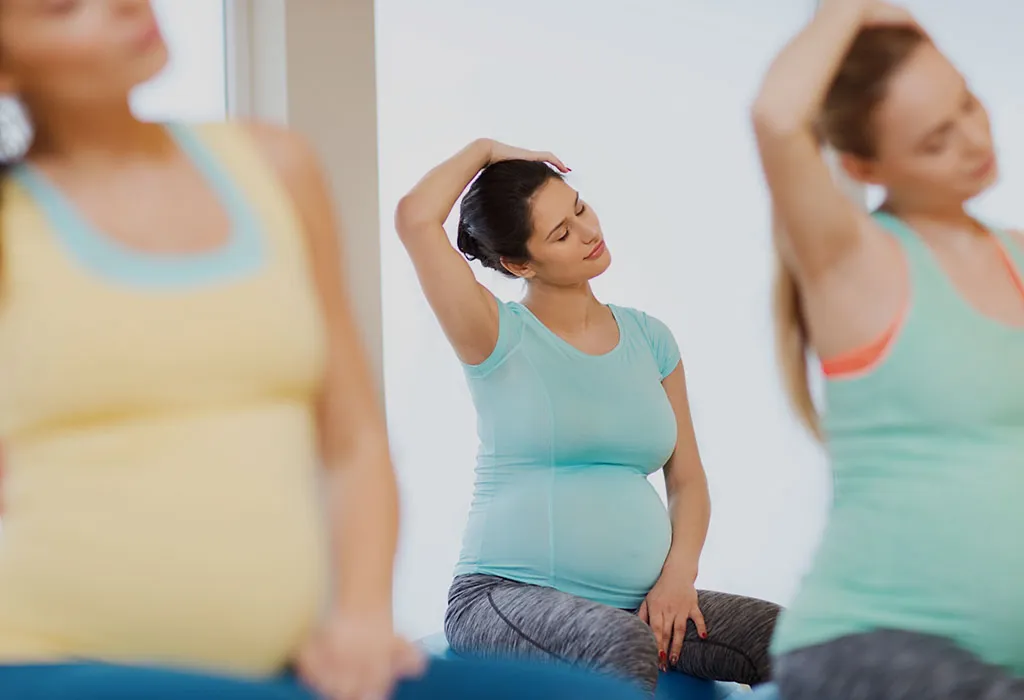
- While sitting or standing, bring your head forward and tilt it to one side, keeping your eyes open.
- Reach up behind your head with the hand on the same side as your head is tipped, and give your head a gentle pull.
- If you do this while turning your head, you will be able to isolate the muscles on your neck which need stretching.
5. Waist Twist
- Stand with your feet shoulder-width apart, and knees slightly bent.
- Bring both your arms to the left side at shoulder height, while you look over your right shoulder. Hold the stretch for a time.
- Then, move back slowly and reverse the motion.
- Repeat the actions twice or thrice each time, multiple times a day.
6. Calf Stretches
- Stand 2 feet from a wall, and extend your arms in front of you at shoulder height.
- Tilt forward slightly, so that your palms touch the wall while your heels remain on the ground. Hold the stretch for ten seconds.
- Then, slowly push away from the wall.
- Repeat twice. Make sure you don’t wear slippery shoes or socks while performing this stretch.
7. Hamstring Stretch
- Put one foot up on a chair.
- Then, lean forward slowly, holding the chair so that you feel a pull on the back of your thighs.
- If the chair is too uncomfortable, try a lower step or something with a lesser height.
For immediate relief from common pregnancy aches, incorporating gentle lower back stretches for pregnant individuals into your daily routine can be remarkably effective.
Stretches You Should Avoid in Pregnancy
While stretching is beneficial in pregnancy, certain poses can be risky due to increased joint flexibility and your changing body. It’s vital to know which ones to avoid to prevent strain or injury.
- Avoid deep backbends or intense spine twists, as they can strain the already stressed abdominal muscles and ligaments.
- Steer clear of stretches that involve lying flat on your back after the first trimester, as this position can reduce blood flow.
- Refrain from deep forward folds that compress the abdomen; instead, hinge from the hips to create space.
- Skip any stretches that cause pain, dizziness, or feel like they are pulling too intensely in the pelvic area.
FAQs
1. Can stretching exercises in pregnancy help reduce the incidence of diastasis recti (abdominal separation)?
Yes, certain gentle, focused stretches for the core and surrounding muscles can improve alignment and flexibility, potentially lowering the risk of severe diastasis recti. However, it is crucial to avoid any stretches that cause coning or bulging in the midline, and to combine stretching with safe core-strengthening exercises as advised by a specialist.
2. Is it safe to use props like yoga straps or resistance bands for stretching while pregnant?
Absolutely, and it is often encouraged. Using props can help you maintain proper form, achieve a safe range of motion without overextending, and provide support for your changing balance. They allow you to modify stretches effectively, making your stretching exercise in pregnancy both safer and more effective.
3. Can regular stretching influence my baby’s position in the third trimester?
While not a guarantee, certain stretches and positions (like cat-cow or supported squats) can create optimal space in the pelvis and encourage the baby to move into a head-down position. This practice, often part of prenatal yoga, uses gravity and muscular release to promote favourable fetal positioning for birth.
This was all about stretching and pregnancy. Stretches, particularly pregnancy hip stretches, are instrumental in helping a woman maintain her health during this tumultuous time. Integrating targeted pregnancy stretches for lower back pain into your daily wellness routine can safely alleviate discomfort and improve your overall mobility during this special time. Exercise can be good for both the mother and the baby if done correctly. So remember to check with a doctor before starting a stretching regimen.
Also Read:
Exercise to Avoid while Pregnant
Abdominal Exercise in Pregnancy
Pelvic Tilt Exercise during Pregnancy
Was This Article Helpful?
Parenting is a huge responsibility, for you as a caregiver, but also for us as a parenting content platform. We understand that and take our responsibility of creating credible content seriously. FirstCry Parenting articles are written and published only after extensive research using factually sound references to deliver quality content that is accurate, validated by experts, and completely reliable. To understand how we go about creating content that is credible, read our editorial policy here.
- Author
- Expert Reviewer
 About the Author