
Stretch Marks in Pregnancy – Causes, Prevention, and Home Remedies
Dealing with stretch marks during pregnancy made simple with everyday tips for prevention and soothing remedies





Medically Reviewed By
Dr. Sanket Devlekar
(Ayurvedic Physician)

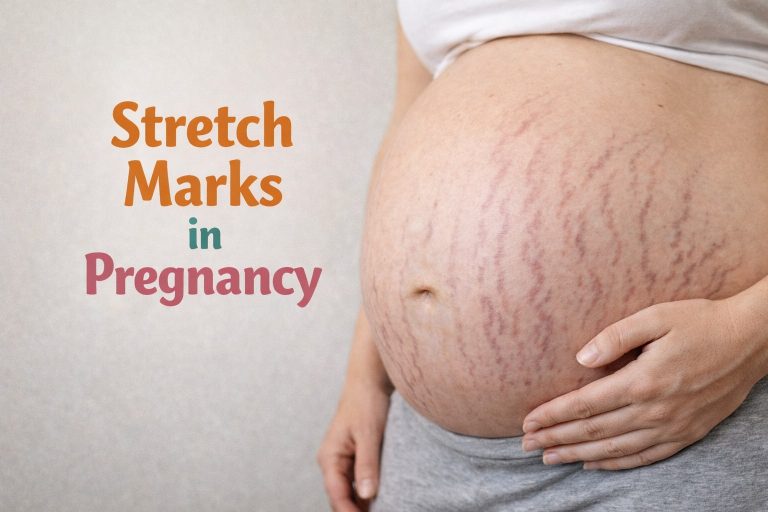
Image Credit : AI Generated Image
Stretch marks are one of the few pregnancy symptoms that don’t disappear (at least not easily) after childbirth. Almost all women get stretch marks while pregnant, but not all women may take pride in those stripes, which are a beautiful reminder of their pregnancy. The relationship between stretch marks and pregnancy is a common topic, as many seek to understand their causes and treatments. For the average pregnant woman, stretch marks become a visible part of the journey. Although pregnancy belly stretch marks do not fade away completely, they can be prevented through dedicated skincare and proper hydration. If you’d like to learn more about pregnancy stretch marks and how they can be prevented, read on!
What Are Stretch Marks?
Stretch marks are small streaks that appear on the skin of a pregnant woman towards the later stages of pregnancy. The elastic fibres under the skin tend to break because the body grows faster than the skin’s ability to cope with it. You may notice these marks on your tummy, buttocks, thighs and even on your breasts. Stretch marks can be pink, purple, reddish-brown or brown in colour. The colour of your skin will determine the colour of the marks. They eventually fade away with time, but do not go away completely. While it may come as a surprise, stretch marks are genetic (1). If your mother had stretch marks while pregnant, chances are you will have them too during pregnancy. An expectant mother of twins might wonder, ‘Twin pregnancy stretch marks – why do they appear more prominently?’ This is due to the greater and more rapid stretching of the skin.
Causes of Stretch Marks in Pregnancy
Stretch marks may appear because of one or more of the following reasons (2).
- Weight gain. Although weight gain is normal during pregnancy; if a woman gains weight rapidly, it may result in stretch marks on your skin.
- The presence of excess amniotic fluid.
- Carrying multiple babies.
- If the baby’s weight is more than average.
- If the pregnant woman’s mother or sister had stretch marks during their pregnancy.
- If the woman is young while expecting.
- If the woman had stretch marks in her teens.
Types of Stretch Marks During Pregnancy
While stretch marks are a nearly universal experience of pregnancy, they are not all the same in their appearance or development. Understanding the different types can help in identifying them early and choosing the most appropriate care (3).
1. Striae Rubra (Red Stretch Marks)
These are the early, active stage of stretch marks. They appear as red, pink, or purple streaks on the skin, indicating recent stretching where the underlying blood vessels are still visible. This type is often slightly raised and may feel itchy. Because the skin fibres are freshly torn, this is considered the optimal stage for treatment, with topical creams and oils being most effective.
2. Striae Alba (White Stretch Marks)
Over time, striae rubra mature into striae alba. These older stretch marks fade to a silvery-white or glossy hue, becoming hypopigmented. They lie flat against the skin and are essentially scars where the blood vessels have receded. While they are more permanent and less responsive to topical treatments, certain clinical procedures like microneedling or laser therapy may help improve their texture and appearance.
3. Striae Distensae (Common Stretch Marks)
This is a broader term encompassing the standard stretch marks caused by the physical distension or stretching of the skin. During pregnancy, these typically appear as parallel lines or streaks on areas of maximal growth, most commonly the abdomen, breasts, hips, and thighs. Their progression from red to white follows the standard pattern, and their severity is directly linked to the degree and speed of skin stretching.
How to Prevent Stretch Marks When Pregnant?
Looking to avoid stretch marks in pregnancy? The following are some of the measures that you can take to prevent stretch marks in pregnancy:
- Keep yourself hydrated. It is very important to keep yourself well hydrated during pregnancy in order to facilitate your increased blood volume and build the water sack for the baby. The lack of water in the body or dehydration can hamper the elasticity of your skin, making it prone to damage because of the stretching skin. So, it’s important that you keep on sipping water to keep yourself hydrated.
- Include gelatine in your diet- The collagen in gelatine helps improve skin’s elasticity. You may include gelatin in your diet to prevent the marks.
- Include vitamin C in your diet- Including vitamin-C-rich foods in your diet will help in the formation of collagen and cartilage. You can include Vitamin C-rich foods in your diet, such as guava, kale, and green bell peppers, rather than taking supplements (4).
- Use coconut oil for moisturising- Coconut oil is an excellent source of saturated fatty acids and does not get oxidised easily. It also provides good moisture to the skin and prevents the occurrence of stretch marks.
- Check for a zinc deficiency. If you have a zinc deficiency, then it can hamper your body’s ability to produce adequate collagen and antioxidants (5). In order to prevent this, you must include zinc-rich foods such as eggs, chicken, and nuts in your diet.
- Try different oils to improve the elasticity of your skin- You may use various oils such as castor oil, Vitamin E oil and other essential oils to improve the elasticity of your skin. These oils have antioxidant properties, which can help fight free radical damage and prevent the occurrence of stretch marks.
- Use cocoa and shea butter- Shea and cocoa butter work wonders to keep the skin hydrated and moist by stimulating the skin’s renewal process, and thus preventing damage.
- Use over-the-counter stretch mark serums- You may also use serums available in the market to keep your skin moist and hydrated (6).
- Monitor your weight- Sudden or rapid weight gain in pregnancy also leads to stretch marks; therefore, keep your weight in check and gain in a healthy manner to prevent stretch marks (7).

Home Remedies for Stretch Marks in Pregnancy
A common but manageable symptom many women face is itching stretch marks during pregnancy, which occurs as the skin rapidly expands. Stretch marks cannot completely go away; however, some home remedies are effective in fading them and preventing the itching, such as:
- Use alfalfa leaves- These leaves have detoxifying and antifungal properties. The paste made of alfalfa leaves and chamomile oil can be applied to the affected area twice a day for results.
- Use sandalwood and turmeric- You may apply a paste made from equal amounts of sandalwood and turmeric on the affected area. Scrub off the paste to get a brighter and even skin tone. You may apply this paste for 5 to 6 months to see an improvement.
- Use potato juice- You may apply potato juice to your stretch marks and wash it off with warm water. Apply for a few months to see them fade.
- Apply apricot paste- Make a paste from the apricot fruit after deseeding it. Apply to the affected area for a few minutes and rinse off. You may repeat it on a regular basis to get rid of the marks completely.
- Try lemon juice- You may apply lemon juice on your stretch marks and let your skin soak it for a few minutes. Rinse with warm water and repeat regularly for best results.
- Apply sugar scrub- Make a scrub with sugar, lemon juice and almond oil and apply before bath every day for a few months to lighten.
- Use egg whites- You may apply egg whites to the affected area and let it dry. Wash with cold water and apply olive oil. Use this treatment for a few weeks to fade away the stretch marks.
- Apply honey- Apply honey on the affected area and wash it off after a few minutes with warm water. Honey can help reduce the appearance of stretch marks.
- Apply aloe vera- Apply aloe vera regularly on the affected area to get rid of the marks. It will also soothe and heal your skin.
- Use oil treatments- Use oils like castor oil, Vitamin E oil, olive oil, etc., to massage the affected area. Massaging with these oils help improve blood circulation, which is very effective in removing stretch marks.
How Long Does It Take for Stretch Marks to Fade?
The fading process for stretch marks typically takes 6 to 12 months after pregnancy. Initially red or purple (striae rubra), they will gradually lighten to a silvery-white or skin-toned colour (striae alba). While they never completely disappear, they become much less noticeable over this period.
FAQs
1. Do stretch marks indicate a higher risk of perineal tearing during delivery?
This is an uncommon concern, but no, the presence of stretch marks on the skin does not mean your perineal skin is more likely to tear. Stretch marks are scars in the dermis (the middle skin layer), while the factors affecting perineal tearing are related more to the elasticity of the superficial vaginal tissue, the baby’s size and position, and the speed of delivery. The two conditions are governed by different biological mechanisms.
2. Can the severity of stretch marks predict the baby’s size?
Not reliably. While significant or rapid weight gain (which can correlate with a larger baby) can increase stretch mark severity, the connection is indirect. The primary factors are your skin’s genetic collagen and elastin capacity and the rate of stretching. A woman with a smaller baby but less elastic skin may develop pronounced marks, while someone with a larger baby and very elastic skin may have few or none.
3. Is it true that darker skin tones are less prone to stretch marks?
No, this is a myth. Women of all skin tones develop stretch marks at similar rates. The difference lies in their appearance. On lighter skin, they often start pink/red and fade to silver-white. On darker skin, they may appear as dark brown, purple, or dark grey streaks (still striae rubra) and can sometimes become hypopigmented (lighter than the surrounding skin) as they mature, which can make them more noticeable.
Apart from various preventive and home remedial measures, there are many medical treatments, such as laser therapy, chemical peels, glycolic acid, etc., that can reduce the appearance of stretch marks. But you should consult your doctor before opting for any treatment. Better yet, try these home remedies to reduce their appearance if you are not a fan of those stripes on your skin. Most importantly, don’t worry about stretch marks on your skin – take pride in them – they are a reminder of your beautiful pregnancy journey!
Also Read:
Rashes in Pregnancy
Eczema while Pregnant
Skin Care During Pregnancy
Skin Changes during Pregnancy
Pregnancy Problems and Solutions
Was This Article Helpful?
Parenting is a huge responsibility, for you as a caregiver, but also for us as a parenting content platform. We understand that and take our responsibility of creating credible content seriously. FirstCry Parenting articles are written and published only after extensive research using factually sound references to deliver quality content that is accurate, validated by experts, and completely reliable. To understand how we go about creating content that is credible, read our editorial policy here.
- Author
- Expert Reviewer
 About the Author