


When To Forward Face Car Seat – Right Age & Safety Rules
Learn when to forward face a car seat safely, including age, weight guidelines, safety tips, and expert recommendations.




In this Article
- What Is the Difference Between a Forward-Facing and Rear-Facing Car Seat?
- Why Choose a Rear-Facing Car Seat for Young Babies?
- When Can Your Child Face Forward in a Car Seat?
- What Are the Different Types of Car Seats Available for Young Kids?
- How to Switch Your Child’s Seat Safely From Rear-facing to Forward-facing?
- Car Safety Tips to Protect Your Child
- FAQs
- Infographic: Car Safety Tips to Keep Your Child Safe
View More
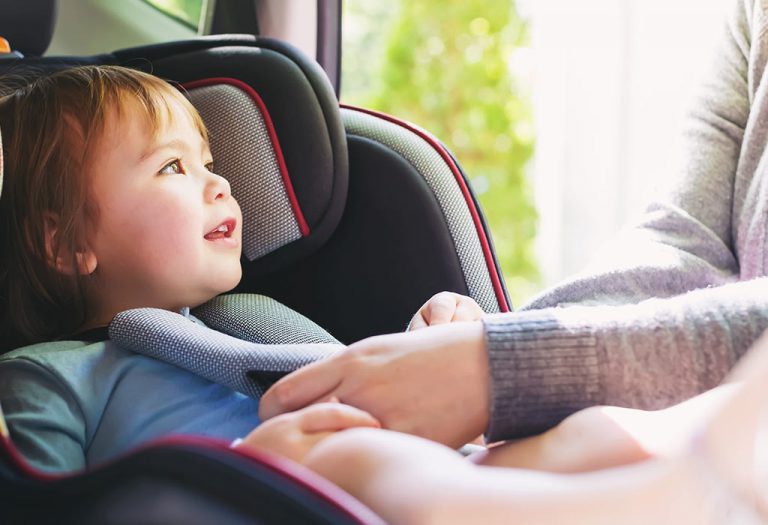
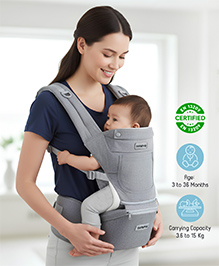
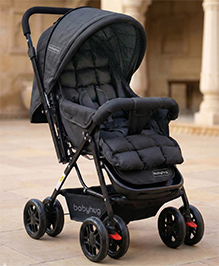
Knowing the right age for facing forward car seat is one of the first steps in keeping your child safe on the road. You may have done your research on the best baby carrier, best stroller, and cradle. After all, you want your child to have nothing but the best. But you may have overlooked one very important must-have for your munchkin: a car seat. Did you know that kids, too, need a specially designed car seat? Yes, it’s crucial to choose the right one, and no, you cannot do without it. After all, it’s better to be safe than sorry, right? If you’re planning to travel with your infant, car safety will be your topmost priority. To keep your little one protected, it’s important to understand car seat safety guidelines, including when it is safe to switch rear facing to forward facing car seat, so you know exactly how to make your child sit in a car seat.
What Is the Difference Between a Forward-Facing and Rear-Facing Car Seat?
Forward-facing car seats face the front of the car and are meant for children older than two. Rear-facing car seats face the back of the car. They are meant for babies who are under two years of age and weigh less than 13.5 kg and are less than 3 feet tall. Rear-facing car seats are at an angle of 45 degrees and provide maximum safety to infants and toddlers (1). The seat attaches to the back seat of the car, with the car’s seat belt and has safety harnesses to keep the baby in place (2).
Why Choose a Rear-Facing Car Seat for Young Babies?
A rear-facing car seat is important for infants and toddlers, according to crash test data by the car manufacturer (2). This is because infants and toddlers have underdeveloped neck muscles which cannot withstand the force of a crash in case of a collision.
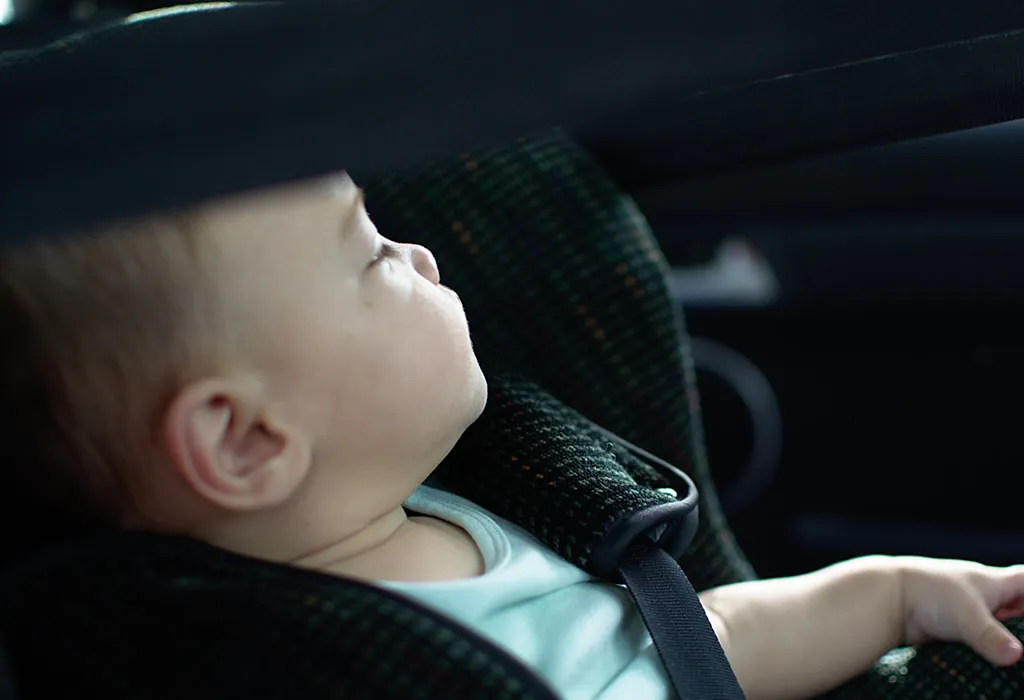
While a forward-facing car seat is designed to restrain the baby and keep her in place, the baby could have a serious head, neck, and spinal cord injuries if she is facing forward during a crash. The rear-facing seat is designed such that it absorbs much of the force of a crash and spreads the remainder over a much larger area of the body, including the entire back, head and neck. This prevents stress on any single part of the body, thus, resulting in lesser chances for serious injuries (3).

When Can Your Child Face Forward in a Car Seat?
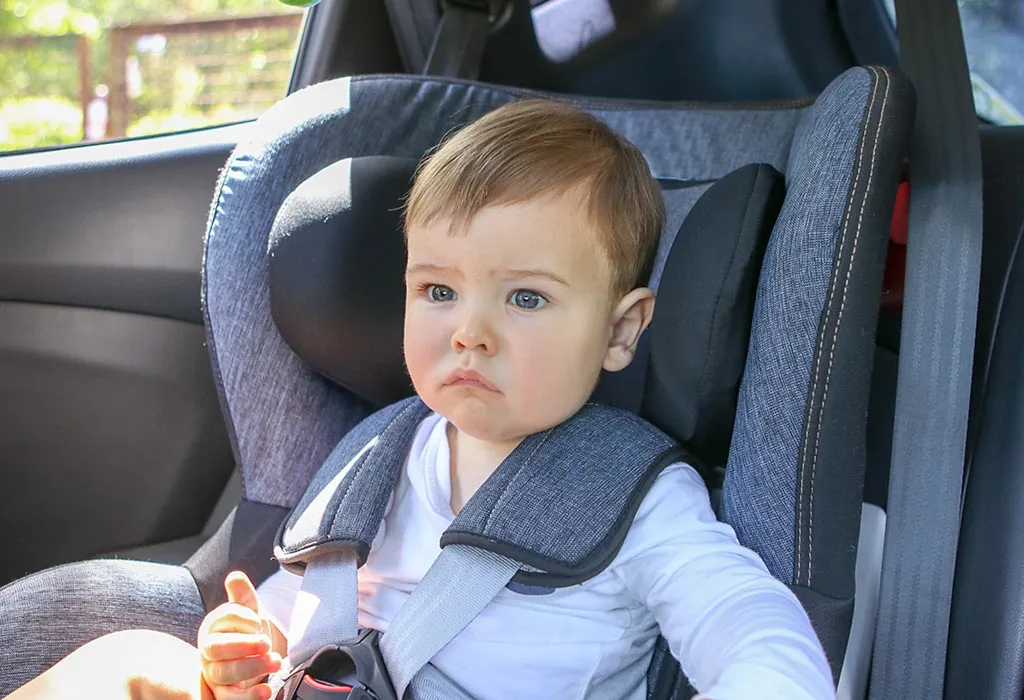
One of the most common questions new parents ask is when can you turn car seat forward. While it may be tempting to make the switch early, a child should generally sit facing forward only after they are at least two years old and have exceeded the rear-facing height and weight limits (1) (3). This is typically at a height of 3 feet and a weight of 13.5 kg.
Some babies may cry or get cranky in a rear-facing car seat. However, it is in their best interest to remain in a rear-facing seat as this gives them the best chance of survival in case of a car crash.
What Are the Different Types of Car Seats Available for Young Kids?
Some of the various kinds of car seats available for young children are (1) (2):
1. Rear-Facing Infant Car Seat
This is a rear-facing infant car seat that has a weight range of 10-18 kg. The seat has a base that stays installed in the car and a carrier with straps that clicks into the base. The carrier has a handle that makes it convenient for carrying the baby around (3).
2. Convertible Infant-Toddler Car Seat
This car seat is suitable for children weighing up to 22 kg. Use it as a rear-facing seat for slightly older babies who can hold their head up and are able to sit up on their own. When the baby is over 10 kg, you can flip this car seat and use it as a front-facing one.
3. Three-in-One Convertible Car Seat for Infants, Toddlers, and Children
This seat is similar to the previous one and is initially used as a rear-facing seat. When the child turns four and weighs around 18 kg, you can remove the back of this seat and use the base as a booster seat with the normal car seat belt.
4. Booster Seat
Booster seats are meant for kids 4 years and above and for those who are at least 35 inches tall. The child should be able to sit comfortably in the booster seat while the seat belts are comfortably fastened across the chest and hips and off the neck (4).
5. Combination Seat
Combination seats are primarily to be used as forward-facing seats with a 5-point harness and then like booster seats with the lap and shoulder belt.
How to Switch Your Child’s Seat Safely From Rear-facing to Forward-facing?
The safest way for a baby to travel by car is in a rear-facing car seat. However, if you are going on a long trip and your baby is above 1 year of age, you could feel tempted to switch the seat to face forward. If you must do so, ensure that the car seat is in the middle of the vehicle’s back seat. This is the safest spot in the car for your baby in the event of a collision.
Car Safety Tips to Protect Your Child
Here are some car safety tips to make sure your child is protected while travelling in a car (5):
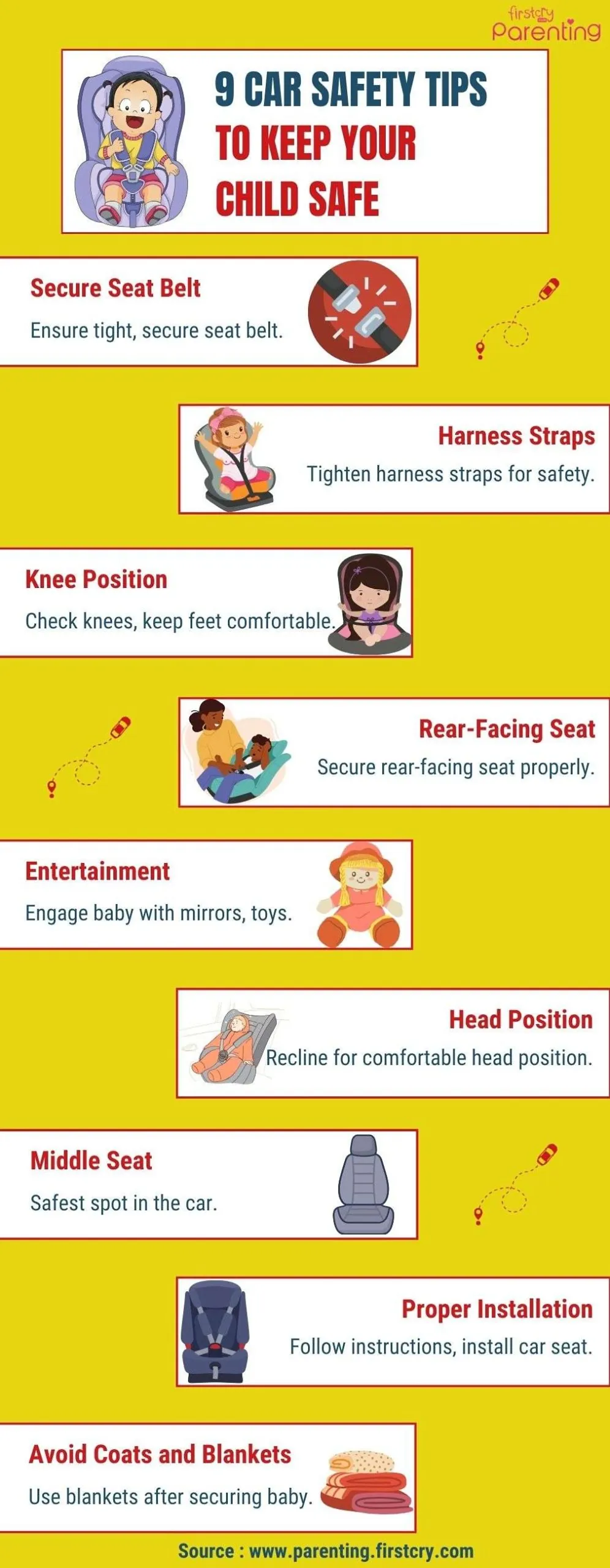
- Ensure that there is no slack between the car seat and the vehicle’s seat belt. It should be completely tight and secure.
- Make sure the baby’s harness straps are pulled tightly. If they are tight enough, you will be able to place just two fingers under the belts.
- Make sure that your baby’s knees do not push up against the chest. It is all right if the baby’s feet touch the back of the rear set.
- If you use a rear-facing carrier seat, make sure that it is completely clicked into place.
- Some infants may get fussy in a rear-facing seat. You can add a mirror in the back window that lets them see you. You can also give the baby some car safety-approved toys to play with.
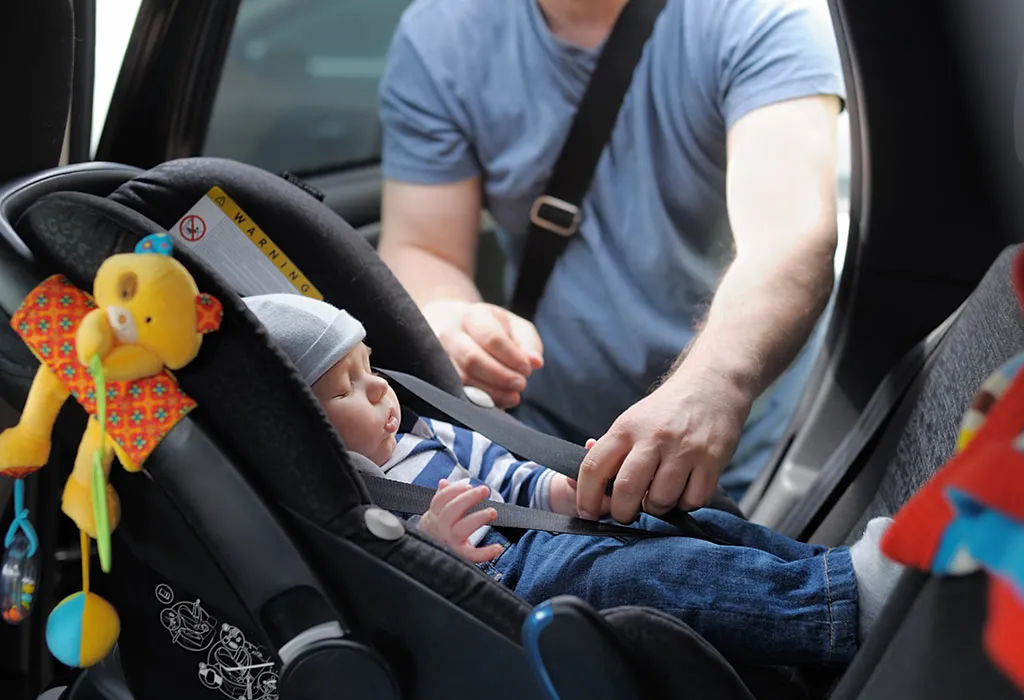
- Do not let the baby’s head fold forward over her chest. This can cause injuries in case of a crash. Recline the seat far enough so that the head is in a comfortable position.
- Situate the baby’s car seat in the middle of the vehicle’s back seat. This is the safest place as doors can get crushed on impact.
- Check the belt path and instructions correctly while installing the car seat.
- Do not bundle your baby in coats or blankets when you place her in a car seat. You can tuck a blanket around the baby once they are strapped in.
FAQs
1. What is the safest position for a car seat in the vehicle?
The safest place for a car seat is typically the back seat, preferably the middle position if it allows for proper installation. This location is farthest from potential impact zones.
2. How do parents know if the car seat is installed correctly?
A correctly installed car seat should not move more than one inch side-to-side or front-to-back at the belt path. Parents can also visit a certified child passenger safety technician for a safety check (5).
Allowing infants face forward in car seats too early can significantly increase the risk of serious injury during a crash. That’s why it’s important to do extensive research before picking a car seat for your baby, not just in terms of brand or price, but also in terms of type, positioning, and safety features. Strap the seat in place properly and use the harness belts to keep your baby safe.
Infographic: Car Safety Tips to Keep Your Child Safe
Also Read:
Baby Car Seat Safety
Types of Car Seats by Age
Rear-Facing Car Seat for Child
Was This Article Helpful?
Parenting is a huge responsibility, for you as a caregiver, but also for us as a parenting content platform. We understand that and take our responsibility of creating credible content seriously. FirstCry Parenting articles are written and published only after extensive research using factually sound references to deliver quality content that is accurate, validated by experts, and completely reliable. To understand how we go about creating content that is credible, read our editorial policy here.
- Author
 About the Author
Anisha Nair
Related Articles
-
Head Injury in Children - Types, Causes & Prevention
-

Is Anaesthesia Safe for Babies and Toddlers?
-

Sudden Infant Death Syndrome (SIDS) - Causes, Symptoms and Prevention
-

6 Changes in Your Baby’s Health You Should Never Ignore, No Matter What
-

Baby Rubbing Eyes – Reasons, Risks and Prevention
-

Rett Syndrome in Children - Causes, Symptoms, and Treatment


.svg)