
Speech on Environment for Students & Children
Inspire young minds with a simple speech on environment for students and children that builds awareness, responsibility, and love for nature.




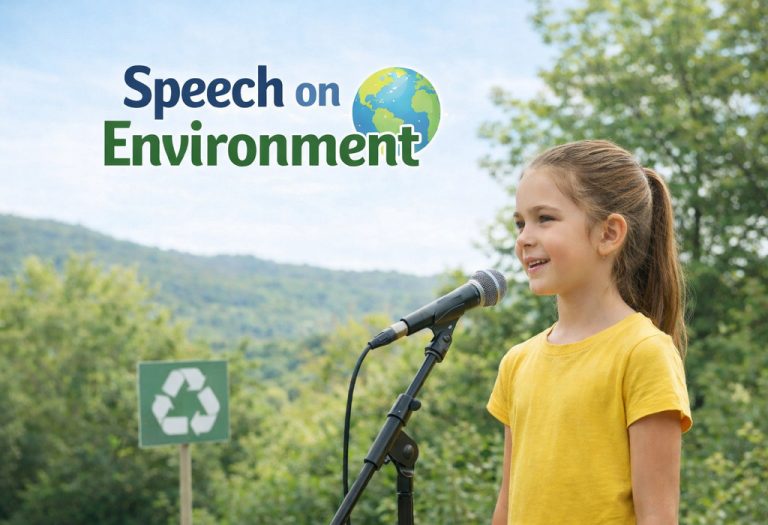
Image Source: AI-Generated Image
Children today are growing up in a world that looks very different from what their grandparents once knew. Clean rivers, fresh air, and green spaces are slowly shrinking, and this makes it important for young minds to understand their role in protecting nature. A well-prepared speech on environment can help students express their thoughts, spread awareness, and inspire others to care for the planet. Whether it is for a school assembly, competition, or classroom activity, speaking about the environment builds confidence and responsibility at the same time.
This topic is not just about facts and figures. It is about feelings, daily habits, and small choices that shape the future. When children learn to speak about environmental issues in a simple and meaningful way, they begin to notice the world around them more deeply. And sometimes, that awareness is the first step toward real change.
Points to Remember While Preparing an Environment Speech
Preparing a speech can feel a little overwhelming at first, especially when the topic is as important as nature. But once you connect your thoughts to real life, it becomes much easier to express. The goal is not to sound perfect but to sound honest and clear. The best speech on environment is one that comes from understanding and care, not memorisation.
- Start with something relatable. Begin your speech with a simple example from daily life, like saving water or planting a tree, so your audience feels connected right away.
- Keep your language simple. Use easy words and short sentences so everyone listening can understand and remember your message.
- Add a clear message. Let your audience know what small actions they can take, such as reducing plastic or keeping their surroundings clean.
- Practice out loud. Reading your speech aloud helps you feel more confident and makes your delivery natural and smooth.
10 Line Speech on Environment
Talking about nature in a few simple lines can still leave a strong impact. A speech on environment in English like this can help students share their thoughts with confidence.
1. Good morning, everyone. I am here to talk about the importance of our environment.
2. The environment gives us air, water, food and everything we need to live.
3. Today, our planet is facing problems like pollution and the cutting of trees.
4. We must understand that harming nature means harming ourselves.
5. Small actions like saving water and planting trees can make a big difference.
6. We should avoid using plastic and keep our surroundings clean.
7. Every child can help protect the environment by being responsible.
8. Nature is our home, and we must take care of it every day.
9. If we protect the environment today, we will have a better tomorrow.
10. Let us all promise to love and protect our planet.
1 Minute Speech on Environment
Speaking for a short time can still create a strong connection with listeners. What matters most is honesty and a clear message from the heart. Students do not need big words to talk about something so close to life. An environment speech for students should feel simple, real and easy to understand.
Good morning, everyone. Today, I want to talk about our environment and why it matters so much to all of us. We depend on nature for clean air, fresh water and healthy food, yet we often forget to take care of it. Pollution, cutting of trees and waste are slowly harming our planet, and this affects our future too. But the good part is that we can all help in small ways by saving water, planting trees and keeping our surroundings clean. These small steps may look simple, but they create a big change over time. Let us take responsibility and protect our environment so that we and the coming generations can live a healthy and happy life.
2 Minute Speech on Environment
Sometimes we need a little more time to explain what we truly feel about nature. A longer speech allows students to share ideas in a calm and meaningful way. It helps them connect daily habits with bigger environmental issues. A two-minute speech on the environment can inspire others when spoken with care and honesty.
Good morning, everyone. Today, I would like to share my thoughts about our environment and why it needs our attention right now. The environment is not separate from us; it is a part of our everyday life. The air we breathe, the water we drink, and the food we eat all come from nature. But sadly, our actions are harming this balance. Pollution from vehicles and factories is making the air unhealthy, rivers are getting dirty, and forests are disappearing slowly.
I remember visiting a park near my home when I was younger. It was full of trees and birds, but today it feels quieter and less alive. This change made me realise how important it is to protect what we have. We cannot wait for others to fix these problems; each one of us has a role to play.
We can start with simple steps like saving water, switching off lights when not needed and saying no to plastic. Planting trees and keeping our surroundings clean can also make a big difference. These small efforts may seem simple, but together they can protect our planet.
Let us promise to care for the environment not just today but every day because our future depends on it.
Short Speech on Environment
Talking about the environment does not always need long or complex ideas. Even a simple message can stay in people’s minds for a long time. What matters is speaking with honesty and a sense of care for the world around us. A short speech about the environment can still inspire meaningful change when it comes from the heart.
Good morning, everyone. Today, I want to talk about something that touches all our lives every single day, and that is our environment. The environment is not just about trees, rivers or animals; it is about the place we live in and depend on for everything. From the air we breathe to the food we eat, everything comes from nature. But sadly, we are not taking care of it the way we should.
If we look around, we can see many changes. The air is not as fresh as it used to be, water sources are getting polluted, and green spaces are slowly disappearing. These are not just big global problems; they are things we can notice in our own surroundings. Sometimes we ignore them because they seem normal, but they are signs that our planet needs help.
I remember seeing people throw plastic on the road without thinking twice. At first, it felt like a small thing, but when many people do the same, it becomes a big problem. This made me realise that our daily habits matter more than we think. We do not always need big actions to protect the environment; small steps can make a real difference.
We can start by saving water at home, turning off lights when they are not needed and using less plastic in our daily lives. Planting trees and keeping our surroundings clean are also simple ways to care for nature. When we take these steps, we are not just helping the environment; we are also creating a better place for ourselves and future generations.
The environment gives us everything without asking for anything in return. It is our responsibility to protect it with care and respect. Let us all make a small promise today to be more mindful of our actions and do our part to keep our planet safe and healthy.
Long Speech on Environment
Sometimes we need more time to truly express what we feel about nature and its future. A longer speech helps us connect ideas with real-life experiences and emotions. It allows students to speak with depth and clarity without rushing their thoughts. A 5-minute speech on the environment gives enough space to share concern, hope and responsibility.
Good morning, everyone. Today, I stand before you to speak about our environment and why it needs our care more than ever. The environment is not something far away; it is around us in every moment of our lives. It is in the air we breathe, the water we drink and the soil that grows our food. When we protect nature, we protect ourselves, and when we harm it, we slowly harm our own future.
Over the years, we have seen many changes in our surroundings. Summers feel hotter, rains are less predictable and clean spaces are becoming rare. These changes are not just natural; they are happening because of how we treat our environment. Sometimes we forget that nature has limits, and when we cross them, the effects come back to us.
I remember visiting my grandparents’ village, where the air felt fresh and the nights were quiet and peaceful. Today, even those places are changing with more pollution and less greenery. This made me realise that no place is untouched and that we all share the same responsibility.
We do not need to make big or difficult changes to protect the environment. Small steps like saving water, reducing waste and planting trees can bring real change. When many people take small actions together, the impact becomes powerful.
The environment gives us life, comfort and beauty every single day. It is our duty to respect it and care for it with simple, mindful actions. Let us promise to protect our planet not just with words but with our daily habits.
Importance of Environment
The environment plays a vital role in keeping all living beings healthy and safe. It provides clean air, which helps us breathe fresh water, which keeps us alive and fertile soil, which helps grow food. It also supports animals, plants and ecosystems that keep nature balanced. Without a healthy environment, human life would struggle to survive. When we understand its importance, we begin to value it more and treat it with care.
Threats to Our Environment
Our environment faces many challenges due to human actions and carelessness. The following are some of the major threats contributing to environmental degradation:
- Air pollution: Smoke from vehicles and factories makes the air harmful to breathe.
- Water pollution: Waste and chemicals are making rivers, lakes, and oceans unsafe.
- Deforestation: Cutting trees reduces green cover and disturbs the natural balance.
- Plastic waste: Plastic does not break down easily and harms land and animals.
- Climate change: Rising temperatures are affecting weather patterns and ecosystems.
Tips to Protect the Environment
Simple daily actions can help protect and improve our environment. Here are a few effective tips:
- Save water: Turn off taps when not needed and use water wisely.
- Reduce plastic use: Carry reusable bags and avoid single-use plastic items.
- Plant more trees: Trees improve air quality and provide shelter to living beings.
- Save electricity: Switch off lights and appliances when they are not in use.
- Keep surroundings clean: Do not litter and encourage others to maintain cleanliness.
- Spread awareness: Talk to friends and family about protecting nature.
These steps may seem small, but they can create a big difference when followed regularly.
FAQs
1. Why should we protect the environment?
We should protect the environment because it gives us the basic things we need to live and keeps us healthy.
2. What are simple ways to save the environment?
We can save the environment by reducing waste, saving water, planting trees, and keeping our surroundings clean.
Each step may feel small, but together they create real change. If we stay mindful and take simple actions every day, we can keep our environment clean, healthy and full of life for generations to come.
Also Read:
Poetry Books for Kids That Inspire Young Minds
Short Moral Stories in English for Kids
Interesting Dragon Facts for Kids
Was This Article Helpful?
Parenting is a huge responsibility, for you as a caregiver, but also for us as a parenting content platform. We understand that and take our responsibility of creating credible content seriously. FirstCry Parenting articles are written and published only after extensive research using factually sound references to deliver quality content that is accurate, validated by experts, and completely reliable. To understand how we go about creating content that is credible, read our editorial policy here.
- Author
 About the Author


.svg)