
Essay on Butterfly for Students and Children
A simple and colorful essay on butterfly for students and children that explains its beauty, life cycle, and importance in nature.




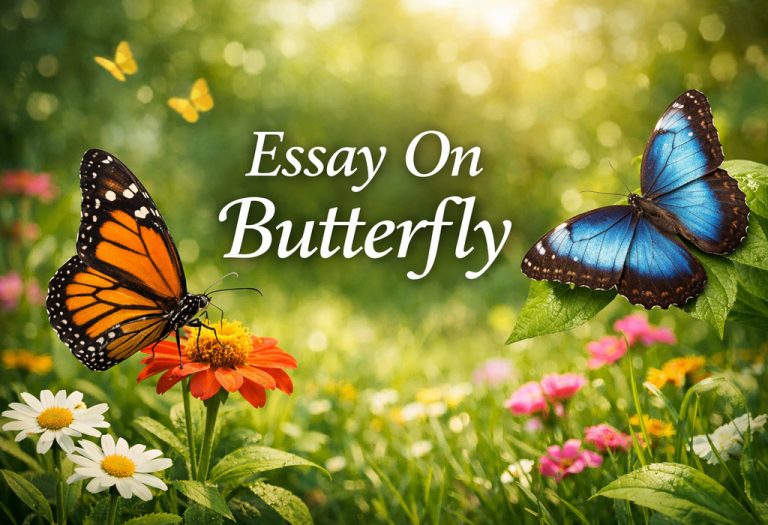
Image Source: AI-Generated Image
Ask a child to name the most beautiful insect in the world, and many will quickly say “butterfly.” There is something special about the way it moves through a garden, with soft wings and bright colours. Writing an essay on a butterfly is not just about an insect. It helps us learn about nature, change, and growth in a simple way. A butterfly essay teaches students to look closely, understand how living things grow, and care more about the world around them.
For young learners, butterflies are often the first example of change they witness in science class. From crawling caterpillar to flying beauty, the journey feels almost like a fairy tale, yet it is completely real. In this article, we will explore everything students and children should know about butterflies—how they look, how they live, and why they matter so much to our world.
5 Lines on Butterfly
When children begin learning to write, they often start with short and meaningful topics from nature. A butterfly is one of the easiest and most joyful subjects for beginners because it is colourful and familiar. Teachers often ask students to write five lines on a butterfly to help them observe and express simple thoughts clearly. This short activity works wonderfully as an essay for class 1, as it builds confidence and a love of writing at the same time.
- A butterfly is a beautiful insect with colourful wings.
- It starts its life as a small caterpillar.
- Butterflies drink nectar from flowers.
- They can fly from one plant to another.
- A butterfly makes gardens look bright and happy.
10 Lines on Butterfly
As children grow a little older, they become more curious about how things work in nature. A butterfly is a lovely topic that helps them learn about insects and life cycles in a simple way. Teachers often ask students to write a few lines on a butterfly for class 2 & 3 so they can practice forming clear and meaningful sentences. It also helps children notice small details, such as colours, wings, and the way a butterfly moves gently through the air.
- A butterfly is a small and colourful insect.
- It has two big wings and six thin legs.
- Butterflies come in many bright colours like yellow, blue and orange.
- They sit on flowers and drink sweet nectar.
- A butterfly begins its life as an egg.
- The egg turns into a caterpillar.
- The caterpillar makes a cocoon around itself.
- After some time, a beautiful butterfly comes out.
- Butterflies help plants grow by carrying pollen.
- Seeing a butterfly makes children feel happy and calm.
Paragraph About Butterfly
Children often notice butterflies before they learn their names because their colours are so bright and cheerful. A butterfly is one of the most beautiful insects we see in gardens and parks. Watching it fly from flower to flower feels calm and peaceful. Many students enjoy learning about butterflies because their life story is simple yet full of wonder.
A butterfly begins its life as a tiny egg and slowly grows into a caterpillar. After some time, it forms a cocoon and rests quietly inside. When it finally comes out, it has soft wings and can fly freely. Butterflies drink nectar from flowers and help plants grow by spreading pollen. They may look delicate, but they are an important part of nature and remind us how change can be beautiful.
Short Essay on Butterfly
Butterflies are among the most loved insects in the world. Children often notice them first in gardens where they move gently from one flower to another. Their bright wings and soft flight make them special and easy to admire. Writing an essay on butterflies helps students understand not just their beauty but also their importance in nature.
A butterfly begins its life as a tiny egg laid on a leaf. After a few days, the egg hatches into a caterpillar, which spends most of its time eating leaves. This stage may not look beautiful, but it is very important. The caterpillar then forms a chrysalis and stays inside quietly while its body changes. After some time, a colourful butterfly comes out and spreads its wings for the first time.
Butterflies drink nectar from flowers and help in pollination, which supports plant growth. They are active during the day and prefer warm sunny weather. Even though they look delicate, they can travel long distances. Watching a butterfly reminds us that growth takes time and patience and that change can lead to something truly beautiful.
Long Essay on Butterfly
Butterflies have always captured the hearts of children and adults alike. Their soft flight and bright wings make them one of the most admired insects in nature. When students write an essay on a butterfly in class 1, they often focus on colours and beauty, but as they grow older, their understanding deepens. By the time they attempt an essay on butterflies for class 2 & 3, they begin to explore life cycles and the role butterflies play in the environment.
Key Features of Butterflies
Butterflies are insects with delicate bodies and large, colourful wings. Their wings are covered in tiny scales that reflect light, creating beautiful patterns. Each butterfly has six legs and two antennae that help it sense its surroundings.
They use a long, tube-like tongue called a proboscis to drink nectar from flowers. Most butterflies are active during the day and rest at night. Their bright colours often protect them by warning predators that they may taste unpleasant. Some butterflies can travel long distances during migration. Even though they appear fragile, they are surprisingly strong and adaptable.
Stages in the Butterfly Life Cycle
-
Egg
The life of a butterfly begins as a tiny egg laid on a leaf. The mother carefully chooses a plant that will provide food for the egg once it hatches.
-
Caterpillar
The egg hatches into a caterpillar, also called a larva. This stage is mainly about eating and growing. The caterpillar feeds on leaves and sheds its skin several times as it becomes bigger.
-
Chrysalis
Once it has grown enough, the caterpillar forms a protective covering called a chrysalis. Inside this shell, its body slowly changes in a quiet and amazing process.
-
Adult Butterfly
Finally, a fully formed butterfly emerges from the chrysalis. It dries its wings and soon begins to fly in search of food and mates.
Importance of Butterflies
Butterflies are more than just pretty insects in a garden. They play an important role in pollination by carrying pollen from one flower to another (3). This helps plants grow fruits and seeds, which are essential for many living beings.
They also serve as indicators of a healthy environment. When butterflies are present, it usually means the area has clean air and a good variety of plants (4). Scientists often study butterfly populations to understand how climate and ecosystems change.
Butterflies are part of the food chain as well. Birds, spiders and other animals depend on them for survival. Their presence supports balance in nature.
Beyond science, butterflies inspire art, stories and poetry. They teach children about patience, change and hope. Watching a butterfly emerge from a chrysalis can be a powerful lesson in growth and transformation.
Challenges and Threats Facing Butterfly Populations
Butterflies face several dangers in the modern world.
- Habitat loss due to the cutting of forests and urban growth
- Use of pesticides that harm insects and plants
- Climate change affects their breeding and migration patterns
- Pollution that damages plants and air quality
- Loss of native plants that caterpillars depend on for food
- Extreme weather conditions that destroy habitats
When gardens disappear, and wild spaces shrink, butterflies struggle to survive. Planting flowers and avoiding harmful chemicals can make a real difference. Even small actions taken by families and schools help protect these gentle creatures.
Butterflies remind us that nature is delicate yet strong. By caring for them, we also care for our own environment. Their quiet presence in a garden is a sign that life is balanced and thriving.
Points to Remember When Writing Your Own Essay on Butterfly
Writing about a butterfly can feel easy because the topic is so familiar and joyful. Still, a good piece of writing needs clear thoughts and a simple structure. When students prepare an essay on a butterfly in English, they should focus on sharing what they truly understand rather than memorising lines. The best essays sound natural and show that the writer has observed and felt connected to the subject.
- Start with a short introduction about what a butterfly is.
- Describe its colourful wings and gentle way of flying.
- Explain the four stages of its life cycle in simple words.
- Mention how butterflies drink nectar from flowers.
- Write a few lines about why butterflies are important for nature.
- Add personal observation, like seeing one in a garden or park.
- Keep sentences short and clear.
- Avoid repeating the same words again and again.
- End with a thoughtful line about beauty, change, or nature.
- Read your essay once to check spelling and flow.
What Will Your Child Learn From the Butterfly Essay?
When a child writes an essay about a butterfly, they are doing more than completing homework. They are slowly learning to observe nature with care and attention. Simple topics like this help children connect classroom lessons to real-life experiences. Over time, this builds curiosity, confidence and a deeper respect for the world around them.
- Understanding the life cycle from egg to butterfly.
- Learning new words related to insects and nature.
- Improving sentence formation and writing skills.
- Developing observation skills by noticing colours and movements.
- Building patience while learning about gradual change.
- Growing empathy for small living creatures.
- Recognising the importance of protecting nature.
- Feeling joy in describing something beautiful in their own words.
FAQs
1. What does a butterfly eat?
A butterfly drinks nectar from flowers. It uses a long, tube-like tongue to sip the sweet liquid.
2. How long does a butterfly live?
Most butterflies live for a few weeks. Some species can live for several months depending on the weather and environment.
3. Why are butterflies important?
Butterflies help in pollination by carrying pollen from one flower to another. They also show that the environment is healthy.
Butterflies remind us that small creatures can teach big lessons about growth and change. By learning and writing about butterflies, students begin to appreciate nature with greater care and understanding.
Also Read:
Essay on My Parents for Students & Children
5 Tips for Teaching Essay Writing for Kids
Essay on My Favourite Animal for Students
Was This Article Helpful?
Parenting is a huge responsibility, for you as a caregiver, but also for us as a parenting content platform. We understand that and take our responsibility of creating credible content seriously. FirstCry Parenting articles are written and published only after extensive research using factually sound references to deliver quality content that is accurate, validated by experts, and completely reliable. To understand how we go about creating content that is credible, read our editorial policy here.
- Author
 About the Author




.svg)