
Can You Eat Pesto When Pregnant? Benefits & How to Eat It Safely
A helpful guide to enjoying pesto safely during pregnancy while making informed and balanced dietary choices.




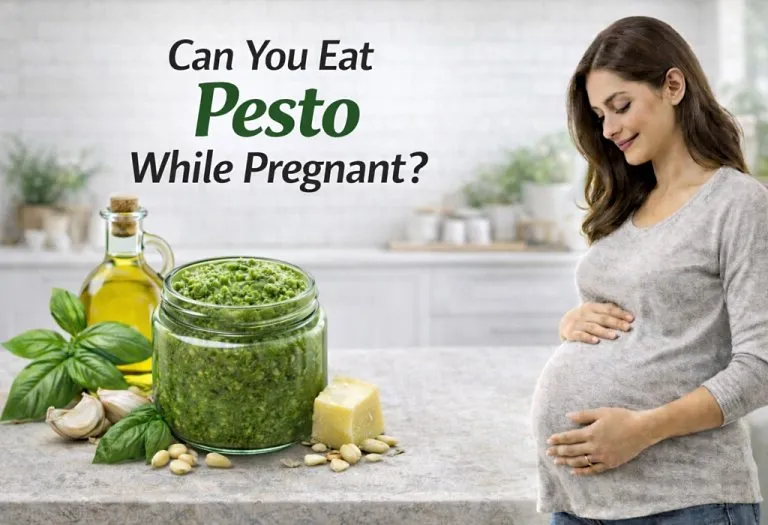
Image Credit : AI Generated Image
Pesto is a great culinary addition that can transform a pasta into a PASTA!!!, enhance the flavours of roasted vegetables or make a simple sandwich boom with flavours. Thanks to its versatility, herby flavour, and easy recipe, pesto has a special place in every food lover’s heart. While pregnancy is no stranger to food cravings, pesto in pregnancy comes in handy for quick preparations when cravings hit. But with so many cravings and caution around things, especially with foods that may contain raw or processed ingredients, it is important to ask, “Is pesto safe for pregnancy?” “Can I eat pesto sauce in pregnancy?” Many expectant mothers question whether ingredients like basil, cheese, garlic, and oil could pose any risk. Let’s learn everything about the relationship between pesto and pregnancy, and how it can safely fit into the pregnancy diet without compromising on the taste.
What Is Pesto?
Pesto is a sauce or a paste made by blending fresh basil leaves with pine nuts, garlic, olive oil, and different kinds of cheese, such as Pecorino or Parmesan. Originally from Genoa, this traditional Italian sauce is widely used in culinary preparations. The ingredients blended together are typically uncooked, especially the basil leaves, which give the pesto sauce a vibrant green colour, herby taste, and rich aroma. It is typically added to pasta, salads, sandwiches, roasted vegetables, pizza toppings, and pregnancy-friendly snacks.
Unlike the traditional one, today pesto comes in several different variations to cater to people with nut and dairy allergies or intolerances.
Nutritional Profile of Pesto
According to the Food Standards Australia New Zealand (FSANZ), the nutrition profile of 100 grams of commercially prepared basil pesto flavoured pasta sauce containing basil, vegetable and /or olive oil, cashews, pine nuts, water, cheese, sugar, salt and garlic is as follows (1):
| Nutrition | Amount |
| Energy | 1284 kJ |
| Protein | 6.1 g |
| Dietary Fibre | 1.7 g |
| Fat | 42.7 g |
| Total Sugar | 2.4 g |
| Calcium | 169 mg |
| Iodine | 6.9 ug |
| Iron | 1.62 mg |
| Magnesium | 37 mg |
| Phosphorus | 23 mg |
| Potassium | 267 mg |
| Sodium | 1439 mg |
| Folate | 39 ug |
| Cholesterol | 9 mg |
| Vitamin E | 6.19 mg |
Pesto is a mixture of several healthy ingredients, including basil, olive oil, cashews, pine nuts, water, cheese, sugar, salt, and garlic. The micronutrients, plant compounds, and essential fats support overall well-being. Let’s get a detailed overview of the nutrition profile of pesto sauce:
- Basil: Fresh basil is aromatic and a rich source of vitamins A and K and antioxidants, such as flavonoids and polyphenols, that help protect cells from oxidative stress (2).
- Olive Oil: Olive oil is a primary source of healthy monounsaturated fats (MUFAs) and helps the body absorb fat-soluble vitamins like A, D, E, and K (3).
- Pine Nuts: Energy-dense with unique flavour, pine nuts contain healthy unsaturated fats, plant-based protein, and essential minerals, like zinc (4).
- Garlic: Garlic is an immune-protector ingredient containing natural compounds like allicin that have antioxidant and antimicrobial properties.
- Cheese: A great source of calcium and protein, cheese supports bone health. Choosing pasteurised cheese is essential during pregnancy to reduce the risk of foodborne illness.
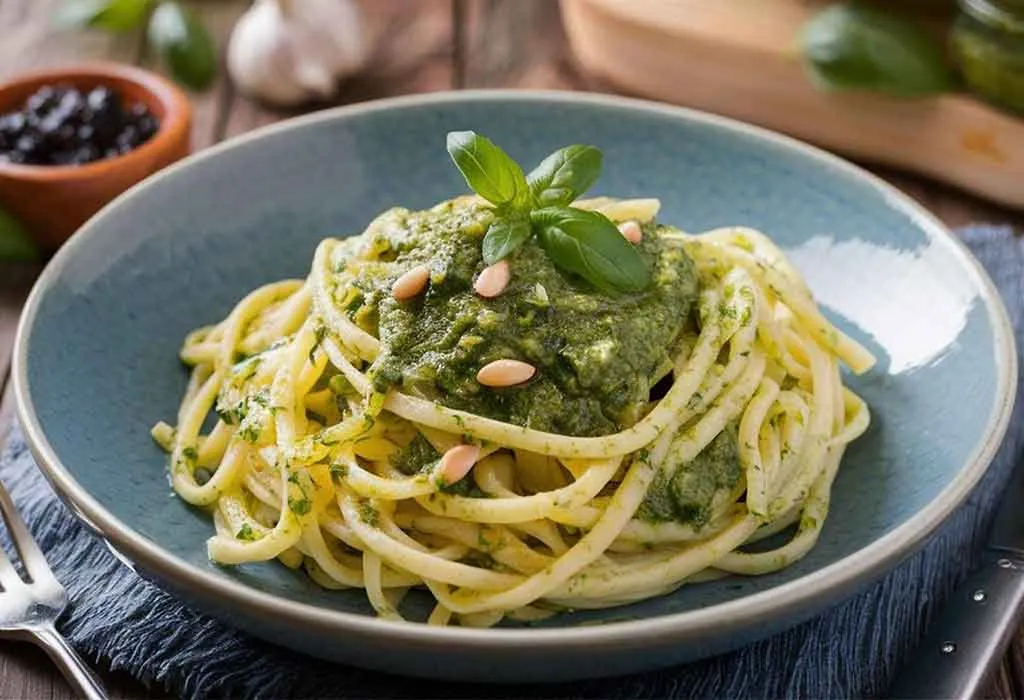
Can You Eat Pesto When Pregnant?
Yes, pesto is safe to eat during pregnancy, provided it is prepared with certain precautions. There are two main concerns with consuming pesto during pregnancy: contamination and unpasteurised cheese.
First, pesto has a short shelf life and is prone to contamination. Thus, it needs to be stored properly to prevent foodborne infections. It is best to make it at home and consume it fresh. Homemade pesto can last up to 7 days in the fridge, while store-bought pesto should be consumed within a few days of opening.
If your pesto changes colour, smells, or tastes weird, it’s best to discard it. Since pesto is prone to mould, you can top it with extra olive oil to help prevent mould.
Another issue lies in one of its ingredients – cheese. Pasteurised cheese is considered safe to eat during pregnancy. However, unpasteurised cheese should be avoided at all costs during pregnancy, as it carries a risk of listeriosis from Listeria bacteria. Listeriosis can be dangerous for the fetus’s health as it could lead to stillbirth or miscarriage, or make your newborn baby very unwell (5). Make sure to make the pesto at home using pasteurised cheese only and thoroughly wash the herbs. When choosing store-bought, check for proper refrigeration and labels for pasteurisation.
While pesto sauce is versatile, it can be tempting, too. Thus, eating in moderation is also essential. Overconsumption could cause tummy troubles and other complications. As every pregnancy is unique, consulting with your doctor or nutritionist before eating pesto while pregnant can be beneficial.
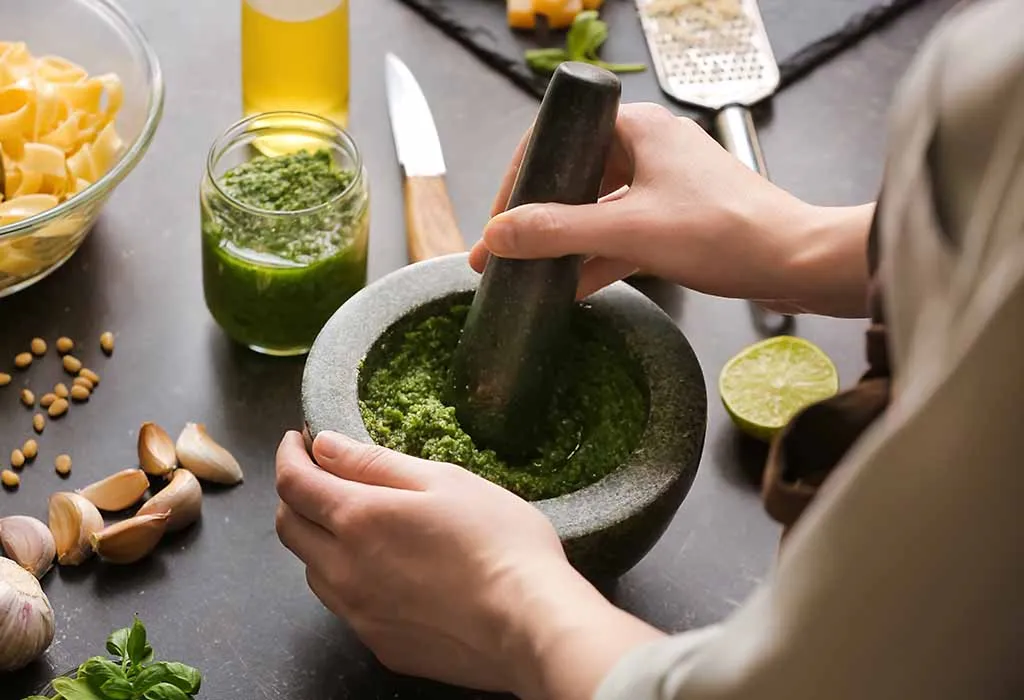
Benefits of Consuming Pesto While Pregnant
Here are some known benefits of pesto sauce while pregnant:
1. Healthy Fats
The composition of olive oil and nuts gives pesto monounsaturated fats that support heart health and easy nutrient absorption. The olive oil alone plays a key role in fetal development (6).
2. Healthy Weight Gain
The healthy fats in pesto ensure healthy weight gain without raising too much cholesterol.
3. Helps Strengthen Bones
Pine nuts and cheese are a great source of calcium and protein, which aid in strengthening bones and joints. High vitamin A improve skin quality and eye vision during pregnancy.
4. Turns Borin Food into Yummy Food
When included mindfully in dishes, this flavourful Italian sauce can add both taste and nutrition to meals without excessive processing, maintaining appetite.
5. Keeps the Digestive System Healthy
Olive oil and garlic are great foods for the gut that support digestion when consumed in small amounts.
6. Encourages Fresh Home Food
Using homemade pesto encourages fresh preparation in small batches, reduces reliance on processed foods, and encourages home cooking, keeping you active and positive-minded.
Can Pregnant People Safely Eat Jarred Pesto Sauce?
Jarred pesto sauce offers convenience, but requires extra caution during pregnancy. Not all commercial pesto products are produced in the same way or in the same ratio. Jarred pesto may also contain preservatives to increase its shelf life. If you have any concerns with the quality or have any dietary restrictions during pregnancy, consulting your doctor for personalised advice on safe food choices is necessary.
When choosing jarred pesto sauce for pregnancy, make sure of the following:
- Choose jarred pesto sauce that clearly mentions on its label the pasteurised cheese.
- Always keep jarred pesto refrigerated after opening and consume it within the recommended time as mentioned on the label.
- Avoid pesto that tastes or smells weird or unusual, or if have been stored improperly.
- Carefully check the ingredients list for allergens if you are allergic to anything.
If pesto sauce is not jarred properly, it can pose a risk of foodborne illness, such as botulism. To minimise this risk, always inspect the seal and the freshness of the components used, and eat the sauce within 10 days, even if it’s been refrigerated (7) (8).
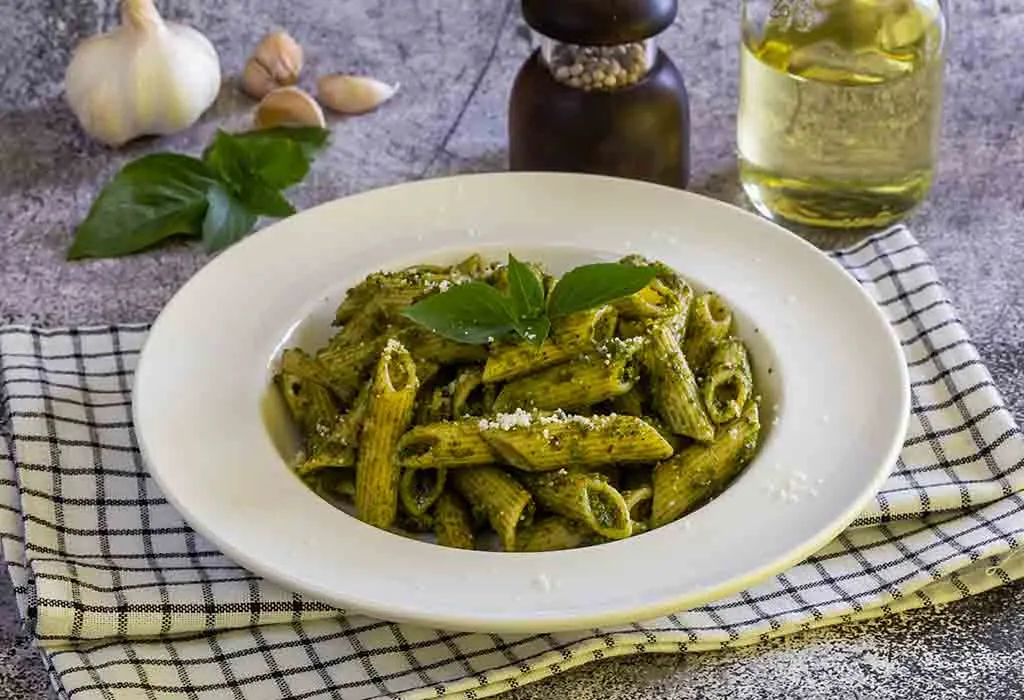
Unpasteurized Vs Pasteurized Pesto – Which Is Safe During Pregnancy?
It’s easy: Pateurised pesto is a safe and recommended choice during pregnancy. Several brands use raw ingredients, but then pasteurise the whole thing before packaging to ensure its shelf life. Another is when brands use pasteurised ingredients in the pesto. Both are safe and recommended for use.
Unpasteurised pesto or pesto sauce made with unpasteurised cheese is not safe and not recommended, as it may harbour harmful bacteria, including Listeria, and cause listeriosis (9). Pesto sauce sold at the farmer’s market may not have pasteurised cheese or be fully pasteurised, so make sure to ask before you make a purchase.
If you are unsure about the cheese used in the store-bought pesto, it’s best to avoid it and prepare it fresh at home using verified pasteurised ingredients. Either made at home or bought from a farmer’s market, pesto should be refrigerated at all times.
Ways to Consume Pesto When Pregnant
Pesto sauce in pregnancy can be enjoyed in several safe and delicious ways when paired with well-cooked foods and fresh ingredients. Let’s have a look:
- Stirred into Hot Pasta: Pesto sauce in pregnancy can be safely enjoyed when thoroughly cooked with pasta. As heat kills bacteria and other pathogens, pesto paired with hot pasta dishes is considered safe.
- Sandwich Spread: Pesto sauce pairs great as a flavourful spread for sandwiches, wraps, or toasted bread for a quick snack.
- Mixed into Cooked Vegetables: The combination of roasted or steamed vegetables and pesto sauce offers an extra layer of flavour.
- Top it Up on Scrambled Eggs: Combine fully cooked eggs with a little amount of pesto and make it a protein-packed meal!
- Used as a Marinade: You can marinade chicken, lamb, or fish with pesto to make a juicy, flavourful protein dish.
- Pizza Topping: Make pesto pizza by spreading pesto on the pizza crust if you are looking for a flavourful replacement to the commonly used tomato sauce.
- Salad Dressing: You can also drizzle pesto sauce over salads to give them more earthy flavour.
FAQs
1. How often can I eat pesto during pregnancy?
Pesto can be made a part of a healthy diet if consumed occasionally and in moderation, ideally in smaller portions. It can be safely included in meals with cooked foods.
2. Is homemade pesto safer than store-bought pesto during pregnancy?
Yes, homemade pesto is relatively safer as you can control the portion and type of ingredients used, like pasteurised cheese. Store-bought pesto may or may not be pasteurised or contain pasteurised cheese, making it unsafe for consumption. Nonetheless, hygiene, proper storage, and refrigeration are required for both homemade and store-bought Italian sauce.
3. Can pesto cause listeria during pregnancy?
Pesto containing unpasteurised cheese can cause listeria, or improper storage could increase the risk of botulism. The risk of Listeria mainly comes from unpasteurised cheese. If you use fresh, pasteurised ingredients, you can significantly lower the risk.
4. What precautions should be taken when consuming pesto during pregnancy?
When consuming pesto while pregnant, ensure none of the ingredients, such as nuts or cheese, could trigger an allergic reaction. If you have any concerns regarding specific ingredients, it’s best to speak with your doctor. When preparing homemade pesto, use fresh, high-quality ingredients and avoid unpasteurized cheese. Store pesto in the refrigerator at all times, and eat it within a few days of preparation.
Pesto can be a yummy addition to your pregnancy diet if certain necessary precautions are taken. As said earlier, the nutritional profile of pesto, including fresh basil, immune-protector garlic, healthy olive oil, calcium-rich pasteurised cheese, and energy-dense pune nuts, makes the sauce a great way to enjoy food as well as take care of one’s health. By following the precautions and consuming in moderation, you can not just savour its taste but also nurture both yourself and your little one.
Also Read:
Eating Mussels in Pregnancy
Can Pregnant Women Eat Pizza?
Eating Burgers During Pregnancy – Is It Safe?
Eating Tulsi (Holy Basil) During Pregnancy
Was This Article Helpful?
Parenting is a huge responsibility, for you as a caregiver, but also for us as a parenting content platform. We understand that and take our responsibility of creating credible content seriously. FirstCry Parenting articles are written and published only after extensive research using factually sound references to deliver quality content that is accurate, validated by experts, and completely reliable. To understand how we go about creating content that is credible, read our editorial policy here.
1. Food Standards Australia New Zealand – F008029: Sauce, pasta, basil pesto, commercial
2. Cleveland Clinic – 5 Health Benefits of Basil
3. UCDavis Health – Olive oil health benefits and why you should add it to your diet
5. NHS – Foods to avoid in pregnancy
6. International Olive Council – Olive Oil, Pregnancy and Childhood
7. Centre for Food Safety The Government of Hong Kong Special Administrative Region – Food Safety Focus
- Author
 About the Author
Rama Aiyer
Related Articles
-

Almond Milk During Pregnancy - Benefits, Side Effects, and Precautions
-
Is It Safe to Eat Instant Noodles During Pregnancy?
-
Eating Watermelon in Pregnancy - Benefits and Risks
-
Folic Acid during Pregnancy - Foods, Benefits & More
-
Low-Carb Diet During Pregnancy - Is It Advisable?
-
15 Best Juices for Pregnant Women