
B Shaped Pregnant Belly – Causes, Concerns & Support Tips
What is a B-shaped pregnant belly? Learn the causes and why every pregnancy bump is unique and perfectly normal.




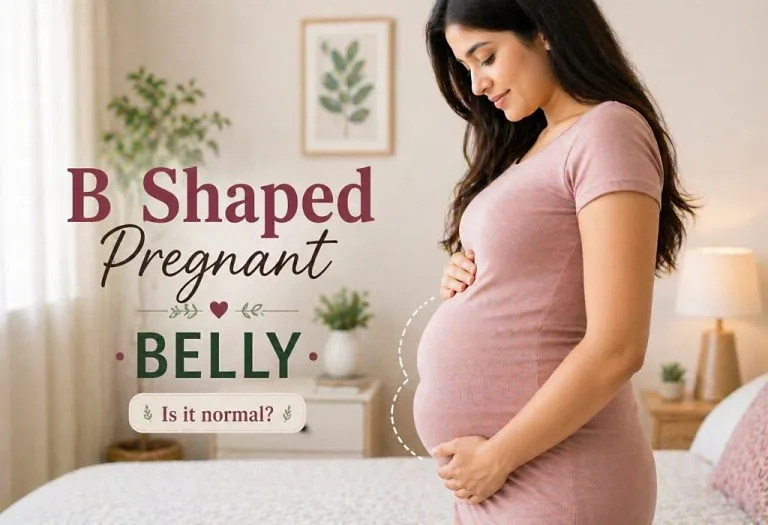
Image Credit : AI Generated Image
Pregnancy bumps come in all sizes and shapes. Many reasons determine the pregnancy belly shapes. Fitness can also determine the shape of the pregnancy belly. Most mothers have a D-shaped belly, while a few might have a pear or a ‘B-shaped’ pregnant belly. Mothers nowadays are worried about the shape of their bellies and hope to have a traditional D-shaped belly instead of a B-belly.
Many body-shamers, including strangers, friends, and even family, believe that D-bumps are more acceptable and beautiful. Due to this reason, many mothers, who are plus-size, pregnant, and have a B belly pregnancy, consider dieting while pregnant to change their body shape when the doctor does not recommend it. But pregnant mothers with a B-shaped belly should remember that no matter what the shape of the belly is, bumps are beautiful. Weight is not the only factor that causes a B stomach when pregnant! Read on to find out more about a B-shaped pregnant belly!
What Is a B-shaped Pregnant Belly?
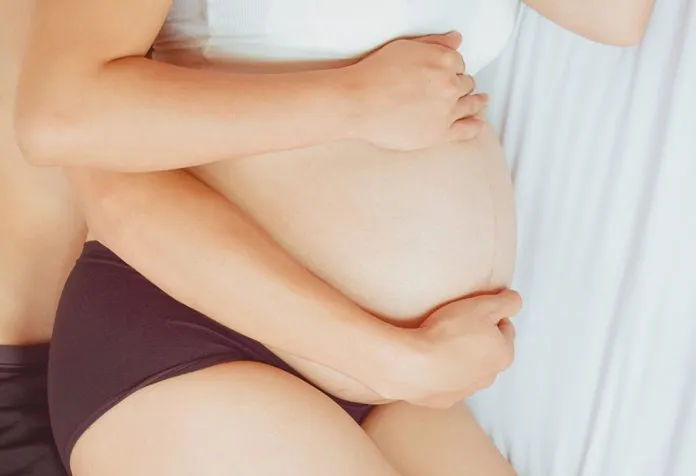
Bellies that are B-shaped are like the capital letter ‘B’. It is a B-belly when the middle of your stomach has a waistband so that the belly gets divided between the bottom and the top. B-shaped bellies have two curves instead of just one curve on the belly. A B-shaped belly during pregnancy is mainly seen in plus-size women. And, for plus-sized women, a baby bump can take longer to show. A B-shaped belly is not harmful to the baby or the mother and is just a variation of the usual D-shaped belly.
What Causes the B-Shaped Pregnancy Belly?
If you spend time online researching why this happens, you will find that many mothers are experiencing this. Here are some reasons for a B-shaped pregnant belly:
- Fascial health has a lot to do with getting a B-shaped belly. The fascia is a band of connective tissue beneath the skin (1). Fascial health and skin tautness can play an essential role in defining the shape of a person’s silhouette. The skin can change shape and sag over time; some even develop bellies shaped like an apron. A belly apron is a flap of skin that forms a crease or a fold, becoming the middle of the B-shaped pregnancy bump.
- The Diastasis Recti can also change the way your stomach looks. Excessive inner-abdominal pressure is a reason for diastasis recti (2). During pregnancy, your connective tissues and abdominal muscles become very stretched because of your growing uterus. This could make your belly stick out because the space between the right and left stomach muscles would widen. Diastasis recti is very common during pregnancy. For some women, after delivery, the condition may correct itself when the ab muscles regain strength.
- You will also get a divided stomach if you already have an apron belly, a lower belly area that hangs down.
- Certain congenital uterine anomalies can cause variations in the shape of the pregnant belly. For example, a bicornuate uterus, a type of uterine malformation characterised by a heart-shaped uterus, can lead to a different abdomen appearance during pregnancy (3). In this condition, the baby may grow in a way that creates a more elongated or “B-shaped” appearance.
- Your weight and body shape can also cause a B belly. A woman with a Body Mass Index (BMI) between 25-30 is comparatively heavier at the beginning of her pregnancy and is more likely to have a B-shape belly pregnancy. As you know, an obese pregnant woman and her unborn child are at significant risk for numerous major health issues (4).
Types of Pregnancy Belly Shapes
Pregnancy bellies can look quite different from one person to another, depending on body shape, muscle tone, and how the baby is positioned. These variations are completely normal and don’t usually indicate anything unusual.
1. High Belly
A high belly sits closer to the ribcage and is often seen in early pregnancy or among first-time mothers with firmer abdominal muscles. It can also depend on how the baby is positioned inside the uterus. This shape may make the upper abdomen feel tighter or more stretched. As the pregnancy progresses, the belly may gradually shift lower. Some women also notice more pressure around the ribs with a high bump.
2. Low Belly
A low belly appears closer to the pelvis and is more common in later stages of pregnancy or in women who have been pregnant before. It may also happen when the baby drops lower in preparation for birth. This position can create extra pressure on the bladder, leading to more frequent urination. Walking may feel a bit heavier due to the downward pull. It can also cause pelvic discomfort in some cases.
3. Wide Belly
A wide belly spreads more toward the sides rather than projecting outward. This can be influenced by the baby lying sideways or the natural shape of the mother’s torso. From the front, the bump may look broader rather than prominent. Clothes may feel tighter around the waist rather than the front. This shape is simply a variation and doesn’t affect the baby’s growth.
4. Pointed Belly
A pointed belly sticks out prominently in the front, creating a more forward-facing bump. This is often linked to tighter abdominal muscles or certain fetal positions. It can make the pregnancy more noticeable from the side view. Some people associate this shape with myths about baby gender, but there’s no scientific basis for that. It’s just another normal variation.
5. Round Belly
A round belly looks evenly shaped and symmetrical. It’s one of the most common bump shapes and usually depends on the overall body structure and how the baby is positioned. This shape often feels balanced, without too much weight pulling in one direction. Many maternity clothes are designed with this typical shape in mind. It usually becomes more noticeable as the baby grows.
6. B Belly
A “B belly” has a noticeable indentation across the middle, making it look like the letter “B” instead of a smooth curve. This is more common in women with higher body fat or specific abdominal shapes and is completely normal. The upper and lower parts of the belly may appear as two separate sections. Supportive maternity wear can help create a smoother look if desired. Importantly, this shape has no impact on the baby’s health.
Is It Normal to Have a B-Shaped Belly While Pregnant?
Yes! A B-shaped belly is entirely normal during your pregnancy. It is pretty common, so there is nothing to worry about. It is just a slight variation from the traditional D-shaped bellies. Pregnancy bumps come in all sizes, shapes, and colours, and all bumps must be celebrated.
Can a B-Shaped Belly Change to a D-shaped Belly During Pregnancy?
The usual shape of the belly when you are pregnant is one large curve. You can trace the letter ‘D’ around the bump. The curve begins small, becomes larger, and eventually takes over the mother’s body.
B-shaped bellies are like the capital ‘B’ since there would be two curves. Pregnant women plus size are more likely to have a B-belly during pregnancy. When the B-shaped belly becomes D-shaped, some women joke that they are ready to deliver. As the baby grows, it will fill the indentation that forms the letter ‘B’. But there are chances of the woman maintaining her B-shaped belly until she gives birth. Therefore, some women will never get to experience the complete D-belly.
Do Pregnant Women Face a Risk of Having a B-Belly?
Other than the change in the appearance of the stomach, with a b-shaped belly, pregnancy stages will not be affected. It also does not influence the type of birth or the labour you will have. Special care would be needed for women whose lower abdominal area is more extensive when recovering from C-section.
How Can You Avoid a B Belly During Pregnancy?
Many people think that a pregnant woman’s belly merely looks like the letter D. The unique belly shape scares many pregnant mothers who worry that there may be foetal problems. This occurs due to the growing uterus and changes in the abdominal muscles. However, there are steps expectant mothers can take to minimise the appearance of a B belly and maintain a more even and rounded belly shape throughout pregnancy. Here are three key points to consider for getting rid of b belly during pregnancy.
1. Exercise and Strengthen Your Core Muscles
Regular exercise under a healthcare professional’s guidance can help strengthen the abdominal muscles and support the growing uterus. Exercises such as prenatal yoga, swimming, and gentle Pilates can help maintain muscle tone and prevent excessive separation of the abdominal muscles, known as diastasis recti. Strengthening your core muscles can contribute to a more balanced belly shape.
2. Maintain a Good Posture
Proper posture can make a significant difference in the appearance of your belly during pregnancy. Aim to keep your shoulders back, chest lifted, and spine aligned. Avoid slouching or arching your back, as these positions can accentuate the B belly shape. Practising good posture can help distribute the weight of the growing uterus more evenly and promote a rounder belly appearance.
3. Wear Supportive Clothing
Choosing the right clothing can help create a smoother silhouette and reduce the visibility of a B belly. Opt for maternity clothing that provides support and gentle compression around the abdomen. Maternity support belts or bands can also help lift the belly and alleviate pressure on the lower back, enhancing the overall belly shape. Wearing high-waisted bottoms or maternity leggings can provide additional coverage and support.
4. Embrace a Body-Positive Mindset
It’s important to remember that every woman’s pregnancy journey is unique, and the appearance of the belly can vary. Embrace your body and the changes it undergoes during this special time. Practising self-love and body positivity can help you feel more confident and comfortable in your skin, regardless of the shape or size of your belly. Remember that the health and well-being of you and your baby are the most important factors during pregnancy.
What Kind of Maternity Clothes Should You Choose If You Have a B-Shaped Pregnancy Belly?
It will be a little challenging to find maternity clothes since any form-fitting dress or top can show the B-belly pregnancy bump. One good way to conceal the B-shape of the belly is by using belly bands. You can combine the belly band with some plus-size baby-doll tops and plus-size maternity dresses. You can also get maternity dresses that are flowy below the bust area. Bella Mama has a good range of maternity tops with extra length to conceal the B-shape. With these maternity clothes, you will surely look pregnant without fearing the B-shaped belly is showing.
When to Consult a Doctor
A “B-shaped” pregnant belly is usually a normal variation and often related to body type or fat distribution. However, there are certain situations where it’s wise to check in with a doctor to ensure everything is progressing well. Consult a doctor:
- If you notice sudden or unusual changes in your belly shape along with discomfort
- If there is persistent pain, tightness, or tenderness in the abdomen
- If you experience reduced or no baby movements after previously feeling regular kicks
- If there is swelling, redness, or warmth in any part of the belly
- If you have severe pelvic pressure or lower abdominal pain
- If you notice bleeding, fluid leakage, or unusual vaginal discharge
- If your belly feels unusually hard for long periods (possible frequent contractions)
FAQs
1. Does B-belly go away after giving birth?
Yes, B belly after pregnancy typically resolves post-delivery, although the timeline may vary for each individual. The B belly shape typically diminishes over time as the body goes through the postpartum recovery process. Additionally, engaging in postpartum exercises, such as gentle core strengthening exercises and postnatal yoga, can help promote abdominal muscle recovery and restore muscle tone.
2. Can a B-shaped belly affect how the baby grows or develops?
No, a B-shaped belly does not affect the baby’s growth or development. The shape of the belly is mainly related to how fat and skin are distributed or how the abdominal muscles support the uterus. The baby continues to develop normally inside the uterus regardless of the external belly shape.
3. Does a B-shaped belly mean I will have a bigger or harder delivery?
Not necessarily. A B-shaped belly does not predict the size of the baby or the type of delivery you will have. Labour and delivery depend on many medical factors like baby position, pelvic structure, and overall pregnancy health—not belly appearance.
The most important thing you should remember when you have a B-shaped belly is that it is normal and very beautiful. There are a lot of things pregnant mothers already worry about; therefore, do not add the shape of your belly to that list. Pregnancy is about ensuring you and your baby are healthy and not about staying thin. Your B-shaped belly during pregnancy is natural and something you should embrace instead of trying to change it!
Also Read:
Belly Button while Pregnant
Why do Pregnant Women Rub their Belly?
Pregnancy Belly Pictures Week by Week
Was This Article Helpful?
Parenting is a huge responsibility, for you as a caregiver, but also for us as a parenting content platform. We understand that and take our responsibility of creating credible content seriously. FirstCry Parenting articles are written and published only after extensive research using factually sound references to deliver quality content that is accurate, validated by experts, and completely reliable. To understand how we go about creating content that is credible, read our editorial policy here.
- Author

Related Articles
-

When Does Morning Sickness Start, Peak and Subside
-
30 Best Sibling Pregnancy Announcement Ideas
-
Mucus in Stool in Pregnancy: Causes and Treatment
-
Baby Hiccups In The Womb: Causes and What to Expect?
-
15 Dream Vacation Ideas For A Perfect Babymoon
-
Allergies During Pregnancy : Causes, Signs & Prevention