

















.svg)
.svg)
.png)


Preschooler





Suggested articles for you

Answering The ‘Where do Babies Come from’ Question
Responsibly answering questions about the origin of babies is extremely important in your role as a caregiver or a parent. Being prepared from the time your little one begins understanding interactions with the world around is extremely imperative, since you can never be sure when the question will pop.
By the time your little one is six-seven years old, you can rest assured that thoughts of babies, love, and kissing would have started revolving in his little head. So, be prepared to answer some tough questions in the days and months to come.
Wait Until Asked
Not all children are inquisitive about babies and sex by the age of six and seven. At this age, you are still her role model, and any questions or doubts in her mind will be directed to you for clarification. So, until asked – relax. She probably hasn’t thought of it yet, or it hasn’t raised a question in her mind. And this probably means she isn’t ready for this discussion yet.
Understand The Question Well
Do not make the mistake that most of us make – that is to pre-empt the question. Let your child clearly explain what she wants to know or the question in her mind. Ask questions, that you feel will allow her to explain clearly, as she may not know the right way to explain a thought as new as this.
If we jump into an explanation regardless of the question, chances are we might explain something very different from what she had in mind.
Tell in a Story Format
There are several formats you may use to explain this topic to your child – a story-telling format being one of them. You may divide your story into three parts – the beginning, the middle and the end. It can begin with mommy and daddy falling in love and creating the child. This may be followed by how the baby grew inside mummy’s tummy and then finally, her arriving in the world as a baby. This makes the process a lot more real and acceptable for the child rather than just a biological process.
Use Scientific Names for Body Parts
When explaining the concept of babies being born, at the appropriate age, explain the process to your little one, by using the correct names of body parts to the child. This makes them look at it objectively. Using terms such as wee-wee or pee-pee for private parts can confuse them when some smart child in school takes it on themselves to explain matters to the kids around.
Be Matter-of-fact
Ensure that you do not appear embarrassed or uncomfortable when discussing the topic with your child. Children being intuitive by nature; will pick up the feelings from you. This will clamp them up from coming back to you in future. Also, it creates all kinds of notions in their mind about the topic – some that are not necessarily correct. If you need time to come to terms with the question and answer it appropriately, let the child know that you will come back to him. Do not forget to discuss it with him at the soonest thereafter.
Why not see how our Mommy Blogger Gauri Venkitaraman answered the “where do babies come from” questions? You can surely pick up a few tips from her honest account!
Children are inquisitive by nature, and a very generic instance can trigger a very random question. The best you can do is to be prepared at all times and run with all the scenarios – beginning with the worst case. All the best!
Read more




Top 10 Bento Box Lunch Ideas for Kids
Make breakfast and packing lunches much easier with these Bento box ideas. Assemble some nutritious food and introduce new flavors to provide delicious meal options for your family.
What Is a Bento Box and What Are Its Benefits?
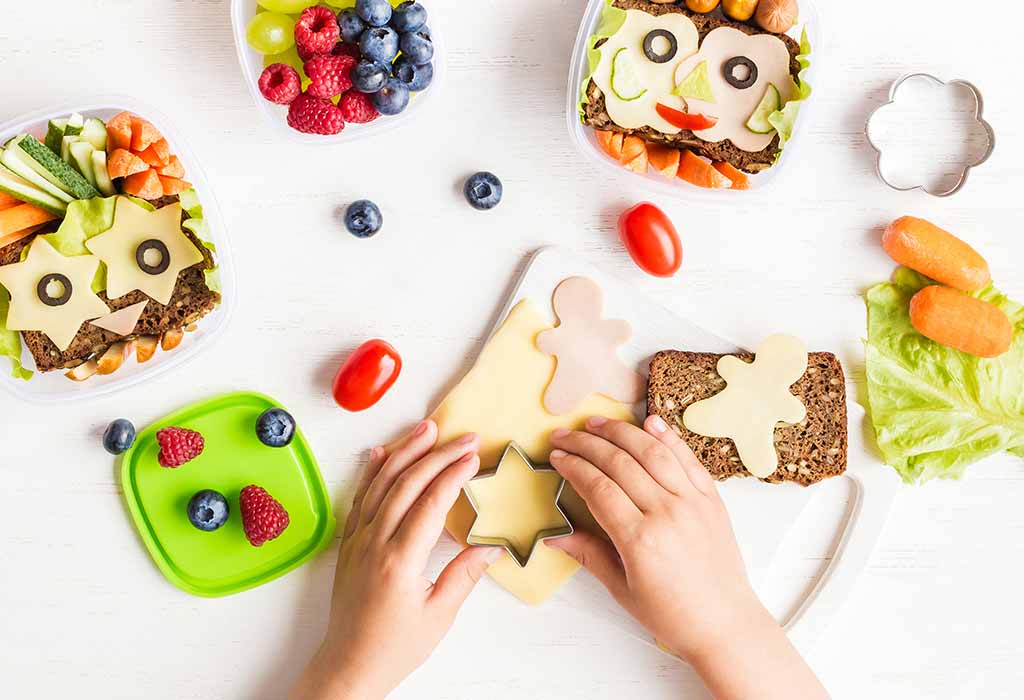
Children’s Bento box lunch ideas are a perfect way to start the day for your kids with a healthy breakfast menu. Bento lunch box can be the perfect solution for convenient, safe, and fun ways of packing your kid’s lunch boxes that they will enjoy. It comes with multiple compartments to pack different food items saving your valuable time and space. It presents artfully arranged food items based on attractive children themes and many other surprises for your kid.
There are so many benefits to using a Bento lunch box over a normal lunch box. It makes it a much better option for your kid’s lunchtime fun. Here are some of the top benefits of using a Bento lunch box and why a parent would choose a healthy bento box for kids.
It keeps the food fresh as it is designed in such a way to separate the different food items. You can put some fruit slices, noodles, sauce, and other yoghurt items in separate compartments and chicken nuggets or sandwiches on the other. This doesn’t allow the food items from touching each other, and it stays fresh for a longer duration.
It is a good choice in opting for Bento box lunches for picky eaters. You can easily pack your kid’s favorite foods by filling each compartment with an array of colorfully appealing foods. The temptation will make your kid more likely to eat a wholesome meal with this idea.
Washing Bento boxes is easy and doesn’t require much help from others. They are economical and make up for a convenient and fun eating session. Moreover, it will help you save more as your family will control how much you eat by not eating in restaurants every day.
As the compartments are sealed, you don’t need wrappers and aluminium foils to keep the food items warm. Each compartment can hold a single food item and limits the amount of food to be packed, ensuring that your kids eat sensibly by sticking to a diet plan.
Bento boxes offer a great way of packing a variety of snacks for your hikes and picnic parties. You can serve yourself with some cool treats and take a refreshing break on hot summer days.
Bento lunch boxes are stylish as you decorate the food items with animal themes or some popular fictional characters that suit your kid’s sense of style.
It is good for the environment as it reduces the usage of one-time-use plastic wraps or aluminium foils. The compartments allow different food items to be placed without touching each other and leave the food warm for a long time. This reduces plastic waste from going into landfills and helps the environment.
It also encourages kids to try different food items and get the desired nutrients from multiple food sources. For adults, Bento lunch boxes are an ideal solution for weight loss programs. The different compartments make you avoid filling them with extra food. It thus helps to reduce the intake of extra calories and helps maintain a healthy diet plan.
Easy Kid-Friendly Bento Box Lunch Ideas
Here are the Top 10 Bento box lunch ideas for kids to bring in a little more fun while eating in day-care or pre-school.
1. Garden Bento Box
Get your creative ideas flowing with the ham roll-ups and a side of strawberries. Add a few cucumber slices and pair them with some dark grapes, making a great combination for an appealing preschool Bento box lunch idea. This is one of the easiest Bento box lunch ideas, which takes only a few minutes to prepare.
Ingredients
The ingredients consist of the following items:
Strawberries – 4 pieces
Ham roll-ups – 4 slices
Silicon leaves for decoration – 2 different leave patterns along with 3-4 smaller leaves
Black grapes – 25-30 pieces
Cucumber – 8-10 slices
Instructions
Use 3-4 strawberries and place them on one side of the Bento lunch box.
Use 4-5 Ham Roll-Ups and place them next to the strawberries to look like rosebuds in the centre of the Bento box.
Place the silicon leaves to separate the strawberries and the Ham Roll-Ups.
Make thin lines along the length of the cucumber while peeling it to make a stripe pattern when it is sliced.
You can now place the cucumbers with stripes on the other side of the Bento box next to the Roll Up hams and the leaves.
Place a silicon divider in the form of a star and place the black grapes.
2. Star War Bento Box
Use the stamp cookie cutter to make this fancy-looking lunch idea. Not all kids would be fond of eating whole wheat bread, but your kids will love this appealing Star Wars lunch idea. Throw in some sides with the sweet mini peppers and grape tomatoes that will go well together with this Bento box platter.
Ingredients
The ingredients consist of the following items:
Green grapes – 14-15 pieces
Carved star wars in the wax shell of Babybel cheese – 1 piece
Yodas made from slices of honeydew melon – 3 pieces
Lettuce – 2-3 leaves (cut into small pieces)
Sweet mini peppers – 2 pieces
Darth Vader and stormtrooper carved sandwiches – 2 pieces each
Grape tomatoes pierced by lightsaber cupcake picks – 8-9 pieces
Instructions
Prepare the Darth Vader and Stormtrooper slices from wheat and white loaves of bread using star wars press and stamp cookie cutters.
Also, carve out Yodas from 2-3 slices of honeydew melons using the press and stamp cookie cutters.
Use a few leaves of lettuce and flank it alongside the sweet mini peppers.
Pierce the grape tomatoes with lightsaber cupcake picks.
Pack it with some green grapes and a carved Star Wars wax shell made from Babybel cheese.
3. Shark Bento Box
Kids will love this shark-themed lunch idea and jump to the occasion as they won’t be able to hold their breath for long. Serve the sandwich shark design along with sprout peanuts and blueberry gelatin to make the idea come back to life.
Ingredients
The ingredients consist of the following items:
Strawberries – 2 pieces (cut into halves)
Carrots – 3-4 peeled carrots
Blueberry gelatin – 100 ml (depending on the container size)
Blue tinted Greek yoghurt – 100 grams (depending on the container size)
Shark sprinkles -15-17 pieces
Sprout peanuts -4-5 pieces
Whole bread – 1 slice
Instructions
Place the sandwich shark with sprout peanuts in a jumbo silicone cup.
Fill the next compartment with strawberries and carrots.
Place two small containers one with blueberry gelatin with a gummy shark.
Use another container to hold the Greek yoghurt tinted blue with shark sprinkles.
4. Cheese & Cracker Bento Box
Make your own cheese and crackers with some affordable and readily available ingredients at home. Sliced hams will add some nutritional value along with fresh fruits. Make a wholesome meal for your kids by placing some cheese slices along with the crackers and whole-wheat pretzels.
Ingredients
The ingredients consist of the following items:
Sliced ham -7 medium slices
Whole wheat pretzels – 7 pieces
Cheese slices – 5 slices
Strawberries – 5 pieces
Orange – 10-12 pieces (use one peeled whole orange)
Crackers – 5 pieces
Instructions
Wrap the strips of deliciously sliced ham around the whole wheat pretzels.
Cut the cheese slices into star shapes and placed them along with 5-6 crackers alternatively.
Use the strawberries and oranges for an appealing presentation and to increase the nutritional value of the meal.
5. Pancakes Bento Box
Whether it is lunchtime or breakfast, spread some peanut butter on the pancakes for a protein-rich meal for your kids. Make it more attractive by serving along with strawberries and grapes and a little bit of cheese.
Ingredients
The ingredients consist of the following items:
Pancakes -5-6 pieces
Peanut butter – 1 small serving
Strawberries – 4 pieces
Babybel cheese – 1 piece
Grapes – 14-15 pieces
Instructions
Pair a few pancakes with peanut butter for a healthy protein-rich meal.
Complete the meal with some fruits like strawberries and grapes along with some cheese.
6. Tortoise Bento Box
This meal idea for your kids is simple to make and requires very few ingredients. Also, this healthy lunch idea will make your kids get excited about lunchtimes with their friends as they cherish and share the information about turtles/ tortoises and their habitats.
Ingredients
The ingredients consist of the following items:
Toasted wholemeal pitta pocket – 1 piece
Mayo – 1 tablespoon
Lettuce – 1 leaf cut into smaller pieces
Roast beef slices – 2-3 slices
Carrot – 1 peeled carrot (sliced into four parts)
Cucumber – 3 slices
Kiwi – 3-4 slices
Strawberries – 2 pieces
Instructions
Cut the pitta into two halves and fill it with the roasted beef slices.
Highlight the turtle shell with an edible marker pen.
Add a few pieces of carrot for the turtle legs.
Use a mini hand-shaped cutter to mark the bite mark and prepare the cucumber slices.
Make some kiwi slices and finish it with some strawberries.
7. Waffle Mouse Bento Box
Look out for this Waffle Mouse Bento box lunch idea for your kids as you let your creative ideas flow. This amazing lunch idea will make sure to put a smile back on your kid’s face.
Ingredients
The ingredients consist of the following items:
Carrots – 2 long slices
Waffles – 2 big pieces and 2 smaller ones
Pretzel sticks – 6 pieces
Jelly – 1 tablespoon
Peanut butter – 1 tablespoon
Marshmallow – 1 or 2 pieces
Cantaloupe – 2 small slices
Cheese sticks – 6 pieces
Raisin -1 or 2 pieces
Instructions
Toast the waffles and spread peanut butter along with the jelly, and place it between the waffles.
Spread the peanut butter on the small waffles to prepare the ears.
Then you need to cut and press the raisin to make the nose, mouth, and pupils using kitchen scissors. Use the peanut butter to stick them on the waffles.
Also, use the cheese sticks to look like the mouse’s moustache.
Then, serve by making baby carrots and crackers in a triangle shape to look like cheese and to make waffle mouse feed.
8. Wheels on the Bus Bento Box
Keeps the bus rolling as your kids get back into the groove and get excited for the school trip or a field tour with this bus-themed bento lunch idea. Learn more about these fun Bento box ideas for your kids to get the excitement going as you open up this creative meal preparation to lift up their mood.
Ingredients
The ingredients consist of the following items:
Mini wheels pasta – 10-12 pieces
Cherry tomatoes – 4-5 pieces cut in halves
Bell-pepper strips – 6-7 slices
Boiled-egg – 1 (cut in half)
Chocolate crackers – 2 pieces (break it into small parts)
Mango chunks – 10-12 small chunks
Boiled beans -2 pieces (cut them into equal halves)
Instructions
Spread the Mini wheel pasta along with some mango chunks, cherry tomatoes, and boiled beans.
Add 2 slices of hard-boiled eggs for a protein-rich diet.
Add the chocolate crackers and bell-shaped peppers to complete the meal.
9. School Rocks Bento Box
Kids have a bittersweet moment when it comes to school hours. To make schooling and study hours more fun and attractive, try this School Rocks Bento recipe for a positive school experience. Use this theme for your kid’s Bento lunch box whenever you need to lift up your kid’s mood and kick-start the day.
Ingredients
The ingredients consist of the following items:
Peanut Butter – 1 tablespoon
Bread Sandwich – 1 big slice
Strawberries – 3-4 pieces (cut them into smaller chunks)
Grapes 8-10 pieces
String cheese – 2-3 pieces
Gluten-free Cookies – 2 pieces
Cucumber – 2 -3 slices
Silicon divider – 1 piece
Instructions
Cut the strawberries and place them along with the grapes in one compartment.
Make a star shape cucumber and place it inside the silicone divider.
Place the gluten-free cookies and arrange them with grapes and string cheese.
Use the press and stamp cutter and create cheese alphabets to read “School Rocks!”
Finally, spread the peanut butter across the bread sandwich and add the cut out alphabets.
10. Pac-Man Bento Box
Prepare this adorable meal for your kids with simple ingredients and fruits to make this fun and creative lunch box in a few minutes. Your kids will love this healthy meal as they show them to their friends during lunchtime.
Ingredients
The ingredients consist of the following items:
Peanut butter – 1 tablespoon
Jelly – 1 tablespoon
Strawberries – 5-6 pieces
Pretzels -4-5 pieces
Pistachios 10-15 pieces
Carrot Sticks – 2 pieces (cut them into equal halves)
Instructions
Prepare the peanut butter and jelly sandwich by trimming it into a circle shape.
Color the sandwich using yellow food color and make a V-cut to make Pac-Man’s mouth.
Create the ghosts by slicing the cheese and coloring it with food colors of your choice.
Use the color marker to make smiley faces on the pistachios for delightful lunchtime fun.
Add the rest of the lunch components by placing the strawberries, pretzels, pistachios, and carrot sticks to make this delicious meal ready for your kids.
Bento box lunch ideas are the perfect way to introduce nutrient-rich food to your kids by providing wholesome foods in a creative and appealing way. The nutritional benefits packed in a super smart way will get your kids excited in sharing a fun-filled lunchtime with their friends.
Also Read:
Lunch Box Ideas for Children
Lunch Box Notes for Children
Read more
20 Fascinating Snake Facts and Information for Kids
One of the most interesting reptiles around us, snakes tend to inspire fear as well as excitement in anyone who sees them. When getting more information on rattlesnakes or pythons, understanding what separates them and what makes them the same is essential to create an interest in snakes within children. These creatures come in various sizes and colors; each adapted to its environment in unique ways. Some fascinating snake facts for kids can help dispel myths and work towards conserving them. Learning about how they move, hunt, and survive in different climates can make children more curious and appreciative of these remarkable reptiles.
What Are Snakes?
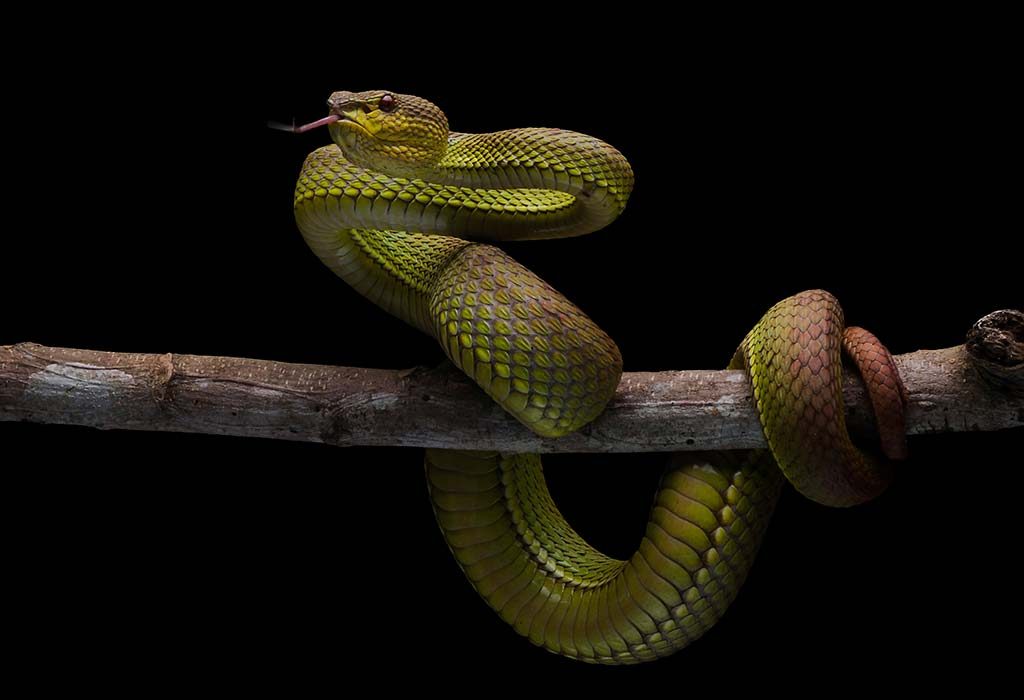
Snakes are long, thin animals with no legs, covered in scales that help them move smoothly. They come in many different sizes and colors, and some can even swim! Snakes have special tongues they use to smell the air and find out what’s around them. Instead of blinking, snakes have clear scales over their eyes to protect them. They shed their old skin as they grow, revealing new, shiny skin underneath. Even though some people are scared of them, most snakes are harmless and important to nature.
What Do They Eat?
Snakes eat a variety of animals, depending on their size and species. Most snakes are carnivores, which means they eat meat. Some common foods include mice, rats, birds, frogs, and lizards. Larger snakes, like pythons, can even eat bigger animals like deer or pigs. They swallow their food whole because they don’t have teeth for chewing. Some snakes, like cobras and rattlesnakes, use venom to catch their prey, while others, like constrictors, squeeze their food tightly until it stops moving before eating it.
Where Do They Live?
Snakes live in many different places around the world, except for very cold areas like Antarctica. They can be found in forests, deserts, grasslands, mountains, and even in water. Some snakes, like tree snakes, live high up in the branches, while others, like ground-dwelling snakes, live in burrows or under rocks. Water snakes and sea snakes are adapted to live in lakes, rivers, and oceans. Snakes are good at finding hiding spots and can adapt to different environments to stay safe and find food.
Which Are the Largest and Smallest Snakes in the World?
The largest snake in the world is the green anaconda, which can grow up to 30 feet long and weigh over 500 pounds. It lives in the swamps and rivers of South America.
The smallest snake in the world is the Barbados thread snake, which is only about 4 inches long and as thin as a strand of spaghetti. It is found on the Caribbean island of Barbados.
These two snakes show the amazing range of sizes that snakes can be!
20 Amazing Facts About Snakes for Children
Understanding the facts and different kinds of trivia about snakes can help you stay more informed and even get excited about them, whether you’re looking to have pet snakes or not. Here are some amazing facts about snakes for kids.
1. There are nearly 3000 varieties of snakes
Some of them are long, some of them are short, some are multi-colored, some are pitch black. But most importantly, some can be venomous while some are totally harmless.
2. Snakes are deaf and cannot hear sounds
Snakes don’t have ears at all. Snakes stay close to the ground and slide flat to it as much as possible. This is because they sense and judge the movement through vibrations on the ground, using their jaws.
3. Most poisonous snakes have bright colors
The bright colors are a great warning sign for any kind of predator to instantly realize that this snake could be poisonous and can kill them if they bite. However, a few non-venomous snakes have this quality and have bright colors on their scales, too. This fools the predators and keeps them safe.
4. Snakes live longer in zoos than in the wild
One of the most interesting pieces of snakes information for kids on the internet to note is that snakes live longer in captivity and grow larger as well. An anaconda in South America has lived for nearly 28 years. Some anacondas are known to grow up to as long as 38 feet and can weigh upwards of 120 kg.
5. Snakes eat only when they feel hungry
Many snakes have different times when they feel hungry. Some can eat every 2-3 days, while others eat once in two weeks or even once a month. It all depends on their physical activity, which is why snakes in zoos tend to eat only a few times in the entire year.
6. Snakes can swallow large prey easily
Most snakes have around 200 teeth that allow them to chew their food. The muscle tendons around their jaw allow them to open their mouth to eat something that is more than 3 times larger than them. Thus, they bite their prey and hold on to it, while slowly swallowing it down.
7. Snakes don’t take a bath
The skin of snakes is made of scales that are placed together so intelligently that dirt barely catches on to them. Therefore, they don’t tend to take a bath as such. On regular occasions, they do get rid of their skin to be replaced with a new one.
8. Snakes help keep pests away
One of the important python facts is that snakes like these end up eating rats, rodents, and other animals as well as insects that tend to destroy and ruin crops. Therefore, having a snake around is actually beneficial to many farmers and adjoining areas.
9. Snakes are extremely speedy
With their slender and agile bodies, snakes can slide quickly from one point to another. The black mamba, one of the most dangerous snakes, is known to slither at a speed of nearly 12km/hr.
10. A few snakes can fly as well
Okay, snakes don’t fly like birds, but they can flatten their bodies to trap air under them, allowing for a gliding movement when they fall from a height. Many snake species tend to do this.
11. A snake’s venom has multiple purposes
The snake uses its venom while hunting in order to paralyse its prey or kill it making it easy for eating the food. But if the venom is extracted, then scientists can use its properties to make life-saving medicines as well.
12. Snakes have heat vision
Although some snakes have eyes, they cannot see properly even in the day. Therefore, they make use of tiny holes in front of their mouth to sense the heat around them, allowing them to hunt even in the night.
13. Snakes don’t have noses
Although they rely on the sense of smell, snakes don’t have noses. Their tongues, however, can pick up chemical molecules from the air and analyze them to understand their environment better.
14. Sea snakes breathe through their skin
Amongst the fun sea snake facts for kindergarten kids, one of the most interesting ones is their ability to breathe underwater. They can do this partially through their skin, which allows them to hunt for prey for a longer time.
15. Snakes respond to movement and not sound
If you’ve seen a snake charmer, the music is just a distraction for the audience. The snake actually moves to the movement of the instrument and not the music.
16. Some snakes give birth to live young
While most snakes lay eggs, some species, like the boa constrictor, give birth to live young. These baby snakes are fully formed and ready to survive on their own right after birth.
17. Snakes shed their skin multiple times a year
As snakes grow, they shed their old skin to make room for new, larger skin. Depending on the species and their age, they can shed several times a year.
18. Snakes don’t blink
Snakes do not have eyelids, which means they cannot blink. Instead, their eyes are covered by a clear scale called a spectacle that protects them from dirt and injury.
19. Some snakes can survive in freezing temperatures
Certain snake species, like the garter snake, can survive in extremely cold environments. They enter a state of hibernation, slowing down their body functions until temperatures rise again.
20. Some snakes use camouflage to hide
Many snakes have colors and patterns that help them blend into their surroundings, making it easier for them to hide from predators and sneak up on prey. This camouflage can include spots, stripes, or earthy tones that match the environment they live in.
FAQs
1. Can snakes change color like chameleons?
While snakes cannot change color in the same way that chameleons do, some species can slightly alter their coloration due to temperature or mood. For example, the eastern hognose snake may change shades when it feels threatened, but these changes are not as dramatic or intentional as a chameleon’s.
2. Do snakes have a social life?
Most snakes are solitary creatures, but some species, like garter snakes, have been observed gathering in large groups during mating season or when hibernating. These social gatherings can sometimes consist of hundreds of snakes coiling together in one spot.
3. Can snakes recognize their owners?
While snakes do not have the same capacity for recognition as pets like dogs or cats, they can become familiar with their caretakers’ scents and may learn to associate them with feeding times. Some snake owners report that their pets seem to react differently when they see their owner compared to other people.
Putting together some interesting king cobra facts for kids and even about other varieties of snakes helps your children dissolve the fear around the species and look at them from a scientific perspective. Snakes are animals in their own right and deserve to be cared properly, too.
References/Resources:
1. Awesome 8: Super snakes; National Geographic Kids; https://kids.nationalgeographic.com/nature/article/super-snakes
2. Snake; Britannica; https://www.britannica.com/animal/snake
3. List of Snakes; Britannica; https://www.britannica.com/topic/list-of-snakes-2032997
4. Goiran. C, Shine. T, Shine. R; The banded colour patterns of sea snakes discourage attack by predatory fishes, enabling Batesian mimicry by harmless species; the Royal Society Publishing; https://royalsocietypublishing.org/doi/10.1098/rspb.2022.1759; November 2022
5. Luiselli. L, Sale. L, Akani. G, Amori. G; Venomous Snake Abundance Within Snake Species’ Assemblages Worldwide; MDPI; https://www.mdpi.com/1424-2818/12/2/69; February 2020
Also Read:
Astounding Dinosaur Facts for Kids
Interesting Dog Facts for Children
Horse Facts and Information for Children
Information & Facts About Blue Whale for Kids
Read more

Simple Ways to Get Tie Dye Off Your Kid's Hands & Skin
There are so many arts-and-crafts projects you can introduce your kids to. Children love to get creative. And, the messier and more colourful the project is, the more they enjoy it. Tie-dying is one such activity kids can get really creative with. They can use their favourite colours and can always show it off later by wearing their art!
If you have a few clothes that are starting to look dull/ mostly because of its fading colour, this is the activity to remedy it. Better yet, if you have old white cotton shirts that are just plain boring, your kids will have a great time making them look far more interesting. Think of all the fun your kids will have, and the value of knowing a skill that will surely come to use in the future.
But if parents are honest, they sometimes tend to go for the more cliched activities when it comes to creative arts. The reason? Clean up can be so difficult with some of the more exciting ones! Don’t let this be the only reason to stop your kids from experimenting with useful arts and crafts such as tie and dye. After all, there are many easy and useful ways to deal with a messy situation.
How to Get Tie Dye Off Skin- Easy Tips And Tricks For Children
So, how does one get tie-dye ink off skin? There are a few natural ways and some that involve a trip to the store. Let us explore the different methods here:
1. Baking Soda
Baking soda is used in many homemade cleaning products. It can be considered to be a magic potion when it comes to stain removal. When using it on the skin, take half a teaspoon of baking soda and mix it with water to form a paste. Use the mixture as you would use handwash.
2. Vinegar
If you want to get tie-dye off your hands without using baking soda, there are a few other options, and vinegar is one of them. All you need is a little bit of vinegar, cotton balls and water. Dip the cotton balls into the vinegar and then apply this to any area that is stained. Give it a good rub and then rinse your hands with water. You can repeat this step if it does not come out the first time. Vinegar is acidic and so it may not agree with everyone. If you find that it is irritating the skin, stop using it, and try one of the other options mentioned in the article.
3. Exfoliation
A familiar part of skincare can help with removing tie-dye paint from the skin. You can use a gentle exfoliator that suits your baby’s skin and massage it slowly on the areas with stubborn paint. If you don’t have an exfoliator, you can even make one at home. Add some sugar to your regular lotion, mix it, and you’re good to go. If you want an all-natural exfoliator, you can skip the lotion and make one from scratch.
Those with very sensitive skin can use oats as an exfoliating agent instead of sugar, which tends to be more abrasive. Ground coffee is another great exfoliating agent that can be found in the kitchen. Mix them into honey, which keeps the skin soft and moist, and you have a gentle exfoliator that can help get those pesky stains off your kids’ skin.
4. Oil
Oil cleansing is a big hit in the skincare world. It is gentle on the skin and removes some very stubborn makeup. It is able to get the dirt and grime off your skin much better than plain soap. The same logic comes into play here. Use oil of your choice and rub it all over the areas your kid has tie-dye stains. Massage it well into the skin and then rinse with soap. This is a great way to get tie-dye paint off your fingers and nails. You can repeat it until the colour is gone completely. Using oil will also prevent your children’s skin from drying out during washing.
5. Lotions
If you dislike the oily feeling, you can always opt for using an oil-based lotion. This is also a great way to get tie-dye colour off your hands. You can use it the same way you use the oil. Massage it well into the skin, and then wash off with soap. The oil in the lotion will be able to help break down the colour pigments on the skin, leaving you with clean and soft skin.
6. Professional Stain Removers
Depending on just how messy your little ones have gotten or are prone to getting with these artsy activities, you may need to go for something a little more hardcore. There are plenty of products available in the shops that will help you to remove dye stains from your and your children’s skin.
You can get some wipes that are similar to the ones that are used in salons to remove hair dye stains on the skin. They are easily available in beauty shops or any online store. If you are not comfortable using harsh chemicals on your kids’ skin, you can keep it as a last resort. Perhaps use this remedy occasionally when your kids need to look well-groomed, and not like little, walking-talking paint palettes.
The best way to go about tie-dye activities if to wear a pair of latex gloves to prevent any stubborn stains on the hands and all you may need to deal with is a spot or two that may have gone astray.
Another great tip is to wash up as soon as possible. Like any dye, tie-dye paint needs to soak into something in order to stain it well. If you wash up as soon as you are done with handling the colours, you will find that the stains won’t even set in, and all you will really need is regular soap and water.
We hope these tips will have put your mind at ease about trying out tie and dye as a fun activity to enjoy with the children. Clean up need not be dreaded now.
Read more

Top 13 Country Songs for Kids
Listening to music and dancing to the songs is extremely beneficial for children; it improves their physical and mental well-being. Catchy and upbeat tunes can get kids up on their feet instantly. That’s one reason why country music, which is a form of music that originated in the United States, has gained popularity all across the world. If you’re looking for classic country songs about kids, you’ll find this article helpful. Here, we bring you a host of the most popular country songs about kids that your children can listen to and enjoy.
Best Country Songs About Children
Country songs about kids often relate to the same fears, hopes and dreams that parents have for their children. Artists have also created songs that consider the struggles and rewards of parenthood. Whether it is for their solid beat, fun lyrics or sing-along aspects, many kid-friendly country songs appeal to the sensitivities of children and their parents. They certainly need to be passed on to the new generation for them to become their childhood anthem. So, without any further ado, let’s check out amazingly beautiful kids’ country songs.
1. Mr. Mom by Lonestar
The hummable, sing-along tune, easy-to-remember lyrics (Barney, Pampers, sweet potatoes, crayons), and the cartoon music video of this country song are sure to bring a smile to your kid’s face.
2. Life Is a Highway by Rascal Flatts
This song from the album ‘Mad Mad World’ is also a soundtrack of the movie Cars. The main theme of this song highlights the hardships that we humans must undergo and yet keep going until we all reach our destinations.
3. Coal Miner’s Daughter by Loretta Lynn
In this classic country song, a girl talks about how proud she is to be a coal miner’s daughter and how hard her father and mother struggled to make sure she and her siblings had a comfortable life.
4. You Can’t Lose Me by Faith Hill
Released in 1996, from the album, ‘It Matters to Me’, this song peaked at No.6 on the Hot Country Songs Chart. The music video features Faith with girls of all ages dressed in white, celebrating their femininity on the beach. The beautiful and meaningful song has been used to express the love of a mother towards her daughter.
5. The Dollar by Jamey Johnson
If you’re looking for country songs about little boys, then this one is just right for you. The son if about a young boy trying to understand why his father leaves for work every day. When his mother explains that dad gets paid for his time spent at work, he offers to give him a dollar’s worth of change so that he can spend some time with him.
6. Help Pour Out the Rain (Lacey’s Song) by Buddy Jewell
This melodious song has adorable lyrics that highlight the wisdom of a child and her father’s love for her. The narrator strikes an emotional chord with the listeners as the little girl asks her father what will happen when she dies and goes to heaven.
7. I Believe in You by Dolly Parton
This song is Dolly Parton’s first children’s album. It will leave her young and old fans feeling inspired to take on the world. The upbeat, energetic music will make listeners want to move while learning some valuable life lessons.
8. I Heard the Bells on Christmas Day by Johnny Cash
An adaptation of a Henry Wadsworth Longfellow’s poem from 1863, this song catches the despair of hearing Christmas. Recorded as a part of the album ‘The Christmas Spirit’ in 1963, this powerful song will remain one your child will remember for a long time.
9. My Little Girl by Tim McGraw
This wonderful song was first featured on ‘Tim McGraw Reflected: Greatest Hits Vol.2’ and the movie Flicka. It chronicles the timeline of a daughter’s life from the day she was born till her father gives her away to another man. Some of the best lines of this song can bring listeners to tears.
10. Boy by Lee Brice
The tender country tune of this country soundtrack takes kids outdoors where they can learn a lot of life lessons, which they may not learn at school. The singer here makes sure that his sons treat people right while growing up in a man’s world.
The southern way of life has a long tradition of upholding strong family ties and bonds of friendship, which are reflected in country music. The most unforgettable and heart-warming country songs provide an emotional connection that would make your kids relate to them as a part of their childhood. So, get your little cowboy or cowgirl bopping, wiggling and giggling to some foot-tapping numbers and enjoy the best years of childhood. Boots and hats not required, though!
11. Watching You by Rodney Atkins
Rodney Atkins’ ever-so-classic song ‘Watching You’ is popular among kids. This heartfelt and beautiful song is about a father who realises how much his son looks up to him. Through his actions, the child looks up to the father by mimicking him, setting a good example for him.
12. Little Bitty by Alan Jackson
Little Bitty by Alan Jackson is a vibrant and upbeat song that teaches us to appreciate life’s simple joys. The song is a beautiful reminder that happiness comes from within, family, love, and small moments, in contrast to material things. It’s beautiful, lighthearted composition with country charm makes it a popular country song.
13. Wagon Wheel by Darius Rucker
If there is a country road trip anthem, then Wagon Wheel will certainly be nominated. This extraordinary melody is about a man who travels south to reunite with his love. An amalgamation of folk-inspired melody and addictive chorus, this song captures the spirit of wanderlust and longing for home.
FAQs
1. How does music help children develop?
Music has been known to accelerate physical health, socio-emotional development and cognitive skills in children. Toddlers love to dance to the tune of music that encourages language and memorisation through repetition. Not only is it a resource that can channelise the excess energy of hyperactive kids, but it can also calm them down to do more creative activities. Music acts as therapy and can be used to improve self-expression, behaviour and communication in kids. Country songs appropriate for kids evoke happy thoughts that can, in fact, keep you and your child going all day.
2. Where can I listen to kid-friendly country songs?
You can easily find kids’ country songs on streaming platforms, such as Spotify, iTunes, YouTube, and more. There are several playlists available on titles like ‘children’s country music’ and ‘kids’ country music.’
Also Read:
Action Songs for Kids
Counting Songs for Kids
Party Songs for Children
Funny Songs for Children
Friendship Songs for Kids
Animal Songs for Children
Read more
15 Incredible Family Books for Children
One of the most important hobbies that anybody should inculcate is reading. It is very important to expand your knowledge, vocabulary, and your perspective on life and things around you. Many parents try to read to their toddlers and children which is a great habit to develop from a young age. Many of these kids, when they grow older, will end up finding solace in the books that they love. However, it can be challenging to be able to pick out books considering there are so many of them. We have curated the best list of family books for kids.
Best Family Books for Toddlers
Toddlers love listening to stories read by their parents before they go to sleep. It is a tradition that is followed by numerous families across the globe. In case you are confused about which family books for kindergarten kids works best, Here are some to get you started.
1. The Family Book
Source: Pinterest
Author: Todd Parr
Short Summary of the Book: The Family Book is perfect for your little one. It is one of the better picture books filled with colourful illustrations and highlights different kinds of families ranging from two mothers, two fathers to a single parent and a family that has an adopted child. The theme of the book is showing what they all have in common and makes for a great children’s book about family diversity.
2. Sometimes It’s Grandmas and Grandpas: Not Mommies and Daddies
Source: Pinterest
Author: Gayle Byrne
Short Summary of the Book: A heart-warming story for your toddler about a little girl who is brought up by her grandparents and wonders why she does not have parents like her friends. She eventually realizes that the only thing that matters is that she shares many great memories with her grandparents filled with joy and happiness.
3. The Very Hungry Caterpillar
Source: Pinterest
Author: Eric Carle
Short Summary of the Book: This one is a super cute book meant for your tiny one. They are sure to love it with all the colourful illustrations that are there in the book. It talks about the Caterpillar, which is perpetually hungry; similar to toddlers when it comes to this book!
4. The Happy Egg
Source: Pinterest
Author: Ruth Krauss
Short Summary of the Book: Toddlers are growing up and learning as each day passes by and will eventually have a lot of questions to ask you in order to satiate their curiosity. This book talks about how a baby bird comes from an egg and has the cutest illustrations. It is sure to answer many questions for your toddler and they are bound to love it!
5. Yummy Yucky
Source: Pinterest
Author: Leslie Patricelli
Short Summary of the Book: This is a great way to start teaching your toddler at a young age. One of the first things that they learn is yummy and yucky with respect to the food that they eat. This book will help you explain to your toddler the exact meanings of both words and when they should be using them so that the next time, they don’t end up saying yummy to something bad that they have eaten!
Top Family Books for Preschoolers and Kids
As your toddler grows up, you might want to consider changing up the content of the books that you are reading to them. It’s a good idea to have some substance so that their inquisitiveness is taken care of and they end up learning something. Here are some books that you can use for kids at the Preschool level.
1. Tell Me Again About the Night I Was Born
Source: Pinterest
Author: Jamie Lee Curtis
Short Summary of the Book: The ever famous Jamie Lee Curtis came out with this book in the year 2000 which talks about how two adoptive parents get a phone call in the middle of the night and they set off to meet their new baby girl. As the baby grows up, she loves to hear stories about her birth and family and how it came to be.
2. Monday Is One Day
Source: Pinterest
Author: Arthur A. Levine
Short Summary of the Book: This book shows how diverse families spend their time indulging in regular activities. However, each day is somehow made special by the intertwining of the families in some way or the other. During the weekends, the families come together to have a good time!
3. Thanking the Moon
Source: Pinterest
Author: Grace Lin
Short Summary of the Book: The story is about a family that is getting ready to celebrate the Mid-Autumn festival. Each member of the family has a specific task to make sure the ceremony goes perfectly. Each member also sends their wish to the moon. This book is a super cute story about the Chinese festival.
4. Two Is Enough
Source: Pinterest
Author: Janna Matthies
Short Summary of the Book: This is a wholesome book which talks about how it’s okay to have just two people in the family and there are still loads of fun things to be done. Kids of single parents may feel odd sometimes, but this story ensures that they get a better idea of the situation.
5. Jingle Dancer
Source: Pinterest
Author: Cynthia Leitich Smith
Short Summary of the Book: Depicting Native American families, this book talks about a girl who wants to dance with her grandmother at the next get-together. However, she needs more jingles for her jingle dress which she ends up acquiring by helping family and friends.
6. The Case for Loving: The Fight for Interracial Marriage
Source: Pinterest
Author: Selina Alko
Short Summary of the Book: This is a substance heavy book and talks about the real-life struggle and triumph of one couple and how they won their right to be legally wedded in Virginia at a time when interracial marriages were not allowed.
7. A Tale of Two Daddies
Source: Pinterest
Author: Vanita Oelschlager
Short Summary of the Book: A very wholesome story about a girl and how she lovingly talks about both her dads at a playground. One braids her hair while the other makes breakfast but both of them give her plenty of hugs and support.
8. Who’s in a Family
Source: Pinterest
Author: Robert Skutch
Short Summary of the Book: This book shows the different kinds of families that can exist, away from the traditional mother-father construct. It has interesting and inclusive illustrations which help celebrate diversity and other things that make the readers’ families unique.
9. Corduroy
Source: Pinterest
Author: Don Freeman
Short Summary of the Book: Corduroy is a stuffed bear in overalls that lives in a store on the shelf. A little girl comes and takes him after a night full of adventures and he thinks to himself, “I’ve always wanted a friend”.
10. It’s Okay to Be Different
Source: Pinterest
Author: Todd Parr
Short Summary of the Book: Todd Parr writes a reassuring book telling kids that it’s okay to need help sometimes. It’s okay to be of a different colour and it is most definitely okay to talk about your feelings.
We hope our article on children’s books about home and family along with blended family books has helped you start off on this journey with your little one! All the best!
Also Read:
Funny Books for Children
Mystery Books for Children
Fantasy Books for Children
Read more
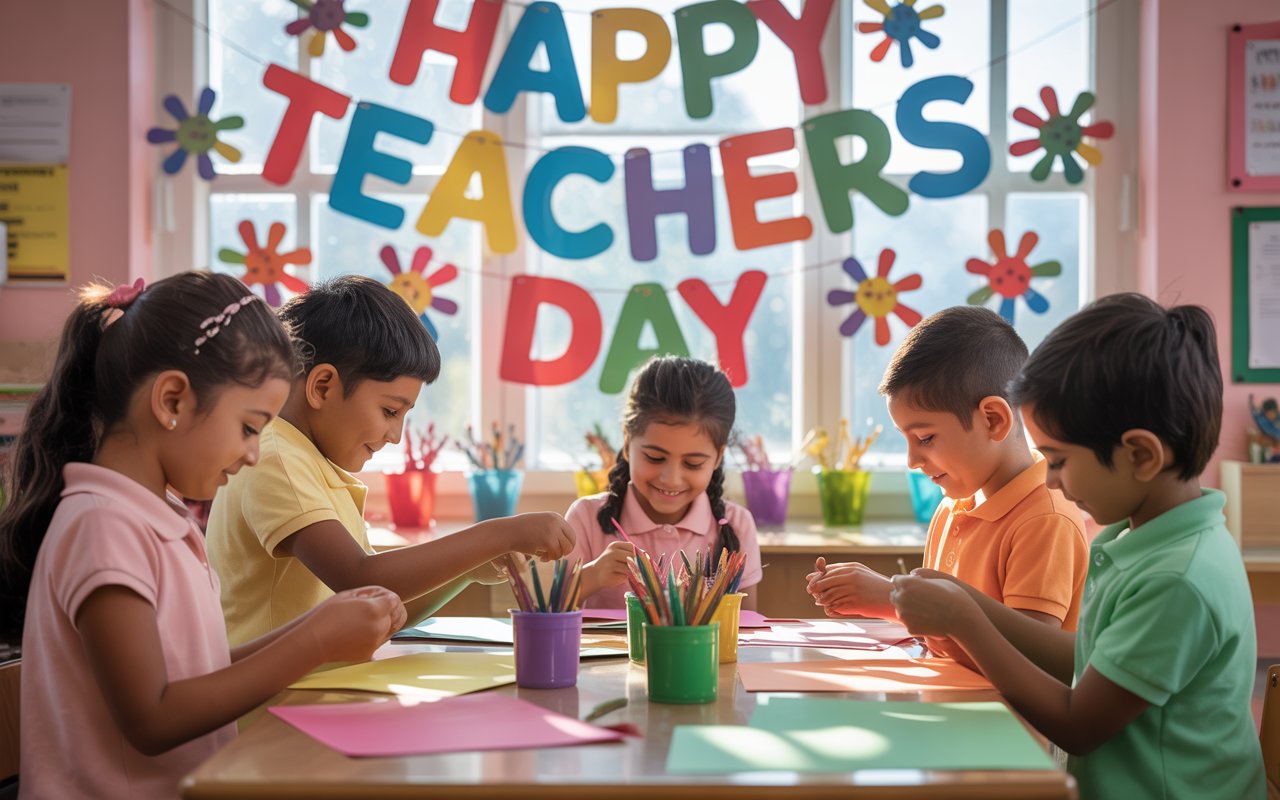
15+ Best Teachers Day Craft Ideas for Preschoolers and Kids
Children have their own way of expressing affection towards people who are close to them. After parents, children are closest to their teachers. And, why not? They spend most of their learning years with the teachers. Dr. Sarvepalli Radhakrishnan, a renowned academician and the second president of independent India, believed that teachers should be the best minds in the country. Thus, since 1962, we have celebrated his birthday, i.e., 5th September, as Teacher’s Day in India. However, we also celebrate 5th September as National Teacher Day to recognize and appreciate the efforts of teachers towards the overall development of children. As part of this celebration, many schools and parents explore National Teacher Day art and craft ideas to engage children in expressing their gratitude creatively.
If your child is expressing his desire to create something unique for his favorite teacher, we have some interesting Teachers’ Day crafts he can use. As a parent, you can help him explore these creative Teachers’ Day craft activities and have loads of fun while doing so!
Easy Teachers Day Craft Ideas
Below are some unique and adorable Teachers’ Day art and craft ideas for National Teacher Day. These Teachers’ Day craft ideas are perfect for children to express their appreciation in a creative and heartfelt way.
1. A Handmade Card With Little Hearts for National Teacher Day
A sweet and cute handmade card says it all!
Things Needed:
2 chart papers – one in white and one in red
Crayons
Scissors
Glitter pens
A fancy envelope
Glue
Instructions:
Cut out the white coloured chart paper into a card size which can easily slip into the envelope.
Ask your kid to use the crayons and draw some flowers on the edges of the card and use the glitter pen to write a warm message in the centre. The message can be ‘The Best Teacher ever!’, ‘Thank you for being the most wonderful teacher!’ or simply ‘Happy National Teacher Day!’.
Next, decorate the envelope, for this, you need to cut out two heart shapes from the red chart paper, one bigger and the other smaller.
Put the card inside the envelope and once it is done, let your kid paste the heart on the opening of the envelope. Paste the hearts in an overlapping manner to create a 3D effect, and you’re done!
2. Pencil Flower Vase
This is a unique yet easy idea for a gift.
Things Needed:
A tall glass or cylindrical jar
Ribbon
Gum or hot glue (to be handled by the parent)
Pack of coloured pencils
Flowers for decoration
Instructions:
Using the hot glue, stick the coloured pencils all around the jar, such that they encase it.
Now, tie the vase with the ribbon to make a bow.
Your pencil vase is now ready!
Neatly decorate with beautifully arranged flowers.
3. Pencil Tree Image With Colourful Stamps
Trees provide us with shade, oxygen, fruits, etc. They also teach us the way of life, just like teachers, who are always there to help children. Our next idea is based on this theme!
Things Needed:
White coloured chart paper
Different stamps
Photographs of your kid and her classmates
Glue
Glitter pen
Crayons
Instructions:
Cut out a tree trunk from the chart paper. To make it funky, we have given it a pencil shape at the bottom and many twigs on the top.
Let your kid colour the trunk in brown to make it look like a tree trunk, and you can add some shades in the trunk to make it look realistic. The bottom tip can be coloured in any colour to make it look like a pencil.
Next, paste this trunk on the base as shown in the image. You can paste it slightly tilted to give it a trendy feel.
Next, glue the stamps in a manner to form the crown of the tree.
Once the stamps are dry, glue the tiny photographs on these stamps.
To finish it, your kid can write a message for the teacher besides the tip of the pencil trunk.
4. Crayon Frame
A lovely way to keep memories is a photo frame. This idea makes for a perfect gift to bring back memories!
Things Needed:
2 crayon boxes
Hot glue (to be handled by the parent)
Wooden photo frame
Craft paper
Instructions:
Carefully apply hot glue to each crayon.
Firmly stick each crayon to the wooden photo frame. Keep pressing till the glue has cooled and is holding the crayons in place.
When you reach the end of the frame, you can cut the crayons to fit the frame accordingly.
You can now stick the craft paper in the centre with a personalised message for the teacher!
5. Autumn Flowers Bouquet
Flowers are the best gifts to express love, respect, friendship and togetherness. Your teacher will love them!
Things Needed:
A small to medium-sized tin or bucket-shaped can, here we are using a can with a tiny handle.
Autumn flowers or any blooming seasonal flowers
Pencils
A blank card
Decorative pebbles (optional)
Instructions:
Clean the can thoroughly so that it looks shiny and clean from the outside.
Let your kid write a warm message for her teacher on the card.
Next, put the decorative pebbles in the can and arrange the flowers and pencils neatly in between the pebbles. You may avoid the pebbles if you have enough flowers to fill the can.
Finally, settle the thank you card in between, and your gift is ready.
6. Colourful Bouquet With Paper Flowers
If you can’t get natural flowers, you can always create a colourful paper flower bouquet for the teacher.
Things Needed:
Different coloured chart paper – Red, yellow, green, pink, lavender, etc.
Satin ribbon
Scissors
Stencil cutters (optional)
Glue
Instructions:
Take the green chart paper and cut it to get a 12×12 inch square. Fold it neatly like a fan such that when you hold it from the bottom and open the top portion, it opens like a fan.
Tie the ribbon at the bottom of the fan-folded paper into a cute knot. Your base for the bouquet is now ready.
Start cutting tiny flowers from coloured chart papers. You may use a stencil paper cutter or just cut it with scissors.
Once you have many flowers, start pasting them on the bouquet. You may also stick tiny stone stickers on the flowers for an added effect. And your paper flowers bouquet is ready!
7. Felt Gift Pouch
Source: Pinterest
This simple gift will be absolutely loved by the teacher as it will make it very convenient for her to keep her stationery and gifts in place!
Things Needed:
Felt
Glue
Scissors
Gifts like chocolates, pencils, etc.
Instructions:
Cut out the felt and make a long rectangle.
Apply glue to both the long sides and fold the felt in half.
Keep it pressed and leave it to dry.
You will be left with a pouch with an open end.
You can even cut out shapes from the felt, like flowers, stars, etc. and stick them on the pouch.
You can now fill this bag with the goodies.
8. Dried Flowers Bookmark
Bookmarks are useful gifts for teachers. Help your child make this lovely bookmark with dried flowers.
Things Needed:
A thick craft paper
Dried flower petals and leaves
Glue
Woollen thread
Scissors
Instructions:
Cut out a craft paper; it should be 6 inches long and approximately 1.5 inches wide.
Pierce a tiny hole on the top to pass a woollen thread through the hole and tie a firm knot on top, as shown in the image.
Let your child glue the flower petals and leaves in a neat pattern on the bookmark. Let it dry, and the bookmark is ready to slip into the pages of the book.
9. Summer Flowers on Ice Cream Sticks
A cute handmade gift for your favourite teacher will definitely make her feel special.
Things Needed:
Ice cream sticks – 9
Different coloured craft papers
Scissors
Glue
Ribbon
Woollen thread
Faux pearls – 2
Instructions:
Stick the ice cream sticks in a neat equidistant manner as shown in the image. Cut a tiny snippet of ribbon and stick it on the back of the ice cream stick trail as shown in the image, so that you can hang it on a nail in the wall.
Cut out flowers in different colours and sizes from the craft papers. Next, cut out a vase from purple chart paper and leaves from the green chart paper.
Now ask your kid to glue the vase onto the ice cream stick trails and then affix the large size leaves and flowers, one over the other, as shown in the image.
Pierce the small-sized flower from the centre. Cut out a small length of woollen thread and tie a knot at the end. Insert a faux pearl and then insert the small-sized flower and again tie a knot. Repeat the process on the other end of the thread. Finally, tie it on to the stick trail as shown in the image.
This, along with a warm teacher’s day message, will serve as a lovely gift to the teachers!
Also Read: Best Teacher’s Day Activities for Kids
10. Rainbow Hearts Greeting Card
This beautiful rainbow hearts greeting card is a perfect teacher’s day gift.
Things Needed:
Paper card base
Craft papers in rainbow colours
Scissors
Glue
Colour Pens
A small envelope
Instructions:
Cut out 7 heart shapes in equal size from the craft papers.
Glue the tiny envelope on the left side at the bottom of the base card and write a message on it.
Next glue the hearts one over the other as shown in the image.
It will form a beautiful bright coloured trail. And your rainbow hearts and wishes are ready!
11. Recycled Tin Pencil Holder
Teachers will love this classic recycled tin pencil holder.
Things Needed:
One or two tins
Lace
Decorative fabric
Burlap thread
Bright coloured satin thread
Fabric Glue
Instructions:
Clean the tin inside out and let it dry.
Cut out the decorative fabric in the correct measurement of the tin and paste it around the tin with the help of fabric glue.
Next, cut out the lace in the measurement of the circumference of the tin, you may go for two layers or single-layered lace decoration, and glue it on the fabric.
Tie the satin thread around the lace in a neat knot. You may use rhinestone stickers or other decorative stickers to make it look more beautiful.
12. Pipe Cleaner Pencil Topper
These adorable pencil toppers are a great option to spruce up the teacher’s stationery!
Things Needed:
Pipe cleaners of different colours
Pencils
Scissors
Instructions
Wrap one colour of the pipe cleaner around the top 3 inches of the pencil.
Now cut the rest of the coloured pipe cleaners into the desired lengths and shapes of your choice.
Using glue, stick this shape on on side of the previously wrapped pipe cleaner.
You can play around with different shapes, to create a set of pencil toppers!
13. Funky Car With a Message for the Teacher
Knowledge is the vehicle that changes everyone’s lives, and teachers provide us with knowledge. This funky car with a message is a perfect gift for teachers!
Things Needed:
Toilet roll cardboard tube
4 bottle caps
2 toothpicks
Hot glue (parents need to help kids with this)
Coloured chart paper
Sketch pens or colour pencils
Scissors
Ribbon
Instructions
Take the toilet paper cardboard roll and mark its width on the coloured chart paper.
Cut a strip long enough and glue it on the cardboard tube.
Use your colour pencils or sketch pens to decorate the tube.
Then, take the bottle caps and pierce a hole in the centre of each cap. You may need your parent’s help here.
Leave about 2 cms space from each end of the cardboard tube and stick the toothpicks in it.
Then, fit the bottle caps on each side of the toothpicks, and glue them with some hot glue (parents may need to help here). Set it aside to dry.
Cut another strip of the chart paper and write a beautiful message for the teacher. Folt it and on one side glue a small piece of ribbon.
Then insert it carefully inside the tube, leaving the ribbon dangling outside so the teacher can pull the note out.
14. DIY Tic-Tac-Toe Gift for Your Teacher
Just like kids, teachers can also have some fun! This tic-tac-toe is a great gift for National Teacher Day!
Things Needed:
A shoebox lid or the lid of any cardboard box
Medium-sized black and white-coloured pebbles (5 each; you can paint the pebbles too if you have only one-coloured pebbles)
A marker
A white chart paper
Poster colours
A pair of scissors
A pencil
Scale
Glue
Instructions
Take the pebbles and decorate them with poster colours. Paint them such that you have two different sets of pebbles.
If you have decently sized pebbles, write small messages for your teacher on the flat portion of the pebbles using a marker pen. Set them aside to dry.
Take the white chart paper and place it inside the shoebox lid. With a pencil, mark all the edges and cut the chart paper.
Using a scale and a pencil, draw two vertical and two horizontal lines, equidistant from each other on the same chart paper. Do this such that you have nine smaller squares/rectangles (like the tic-tac-toe board).
Now, with the marker, write adjectives or messages inside each square/rectangle for your teacher.
Glue the chart paper inside the box lid. Keep it aside to dry.
Once it is dry, arrange the pebbles on top of the messages to conceal them until your teacher picks them up and reads them.
15. Coloured Pasta Bouquet
This stunning pasta bouquet is another way your child can express how much the teacher means to him.
Things Needed:
Farfalle pasta
Watercolours
Paintbrush
Glue
White chart paper
Coloured pencils of sketch pens
Pencil
Instructions
Take the farfalle pasta and paint them with watercolours. Keep them aside to dry.
Cut a 16×8 inch rectangle and fold it in half. You have an 8×8 inch card now.
With a pencil, draw a conical basket in the bottom half of the top of the card.
Inside the card, write a beautiful message for the teacher.
Then, with your coloured pencils or sketch pens, colour the conical basket, and draw stems and leaves projecting out from the basket.
Once the pasta has dried, glue them carefully on the card above the conical basket, and the stems and leaves. Refer to the image given below.
16. Best Teacher Crown
This stunning paper crown is another way your child can express how much the teacher means to him.
Things Needed:
Yellow Sheet
Sparkle
Glue
Scissors
Colour pens
Instructions
In a sheet, measure the approximate size of a head using an adult head’s measurement.
Cut the desired length.
To make it look like a crown, cut the upper half part of the sheet in a zig-zag style.
Make colourful designs using sketch pens or stick beads and pearls using glue. Ask your child to decorate the crown however they like.
You can also write ‘Best Teacher Ever’ on the crown as well.
Voila! The crown is ready.
You and your kids are going to have a lot of fun trying these crazy DIY crafts for National Teachers Day. These projects will enhance the creative side of your kid and will make him understand the importance of teachers. So what are you waiting for? Go ahead and give it a shot.
Also Read:
Teacher’s Day Speech Ideas for Kids
Teachers Day Appreciation Poems
Best Teacher’s Day Quotes and Messages
DIY Teacher’s Day Greeting Card Ideas for Children
Teachers Day – History, Importance and Celebration Ideas of Shikshak Din
Read more

Top 11 Maths Apps for Kids
In today’s times, various educational apps have become popular which foster fun-filled learning practices and experiences with numbers for kids. Parents can make their kid’s screen time count through these educational and interactive apps. They can stimulate their child’s curiosity to know and learn different maths skills. Moreover, these apps have dashboard features that let teachers and parents track the child’s progress over time.
Parents need to provide their kids with only age-appropriate apps with suitable content which correspond with the child’s mental and physical abilities to facilitate the best possible learning and education.
How Will Maths Apps Help Your Child?
Maths apps may help your child in the following ways:
Mathematics apps can be a great way to trigger a liking towards maths in your kid. The main objective of these maths apps is to make learning maths appealing and engaging for young minds.
The fun apps may prove helpful in both reinforcing and practising the basic concepts of maths like addition, subtraction, division and multiplication and also testing a child’s accuracy and speed in them.
They suggest techniques which may assist children to understand the various concepts and skills of maths like counting, solving fractions easily and quickly.
They teach strategies which may not only build a kid’s number sense but also can help enhance his estimation and concentration skills which may enable him to crack maths problems faster.
Kids who are not fond of studying maths may mainly benefit from these apps as they may get to sharpen their arithmetic skills while playing maths games without even realising it.
Most of these learning apps are adaptive, meaning they can adjust the difficulty levels according to the requirements and abilities of the individual.
Many educators may express their reservations regarding the use of these apps. But supporters usually highlight the expected benefits like increased confidence in kids to deal with difficult mathematical problems.
Best Mathematics Apps for Children
Some of the useful math learning apps for kids can be:
1. PlayBees: 123 for Kids
This number learning app for kids may help your child identify and count numbers, write them, as well as pronounce them correctly!
Key Features
The app content is based on the STEM curriculum which helps develop important skills such as motor skills, creativity, and coordination.
This app contains entertaining mini-games, classic childhood rhymes and creatively crafted stories.
The customised content focuses on the child’s learning and growth.
Kids will love the bright graphics and amazing sound effects.
Age Group: 2 to 8 years old
Ratings: 4.7
Platform: iPad, iPhone, Android
Price: Free
2. Monkey Preschool Lunch
This animated maths game may provide your kid with the right encouragement for productive learning.
Key Features
It has six interesting math games like matching, pattern recognition, counting, puzzles and even recognising shapes and colours.
It is a kid user-friendly app wherein kids can easily navigate their way through its different features.
The kids get cartoon stickers for all the correct answers which may keep them glued to the game.
Age Group: 2 to 5 years old
Ratings: 4.0
Platform: iPad, iPhone, Android
Price: About Rs 140
3. Hungry Caterpillar
This exciting counting app may strengthen the counting skills of your kid through a world full of nature and art.
Key Features
The app is colourful and enables kids to explore nature and learn positive things like watering the plants, taking care of animals.
It teaches basic counting by ones. It later advances to other concepts like skip counting by 2, 5 and 10.
Your kid may enjoy earning the right answers which help the caterpillar turn into an attractive butterfly in the end.
Age Group: 3 to 6 years old
Ratings: 4.2
Platform: Android
Price: About Rs 130
4. Maths Games – Maths Tricks
This fun app may give a chance to your kid to play and practise different math skills without getting bored.
Key Features
This app has different mathematical games for practising addition, subtraction, division and multiplication tables.
The app has different play modes which promote learning and playing through practice games and quiz.
Age Group: 9 to 12 years
Ratings: 4.3
Platform: Android
Price: About Rs 150
5. Splash Maths
This simple app may keep your kid gainfully occupied for hours.
Key Features
The app has different difficulty levels like one figure multiplication, one and two figure subtraction and addition, division which help kids train in mental maths.
Kids throw vegetables and fruits at a target board. Every right answer fetches them points which gets them nearer to the bull’s eye.
For an extra challenge, the kid may encounter random difficulty at every throw.
The game has no ads and does not need special permissions when downloading on the phone or tablet.
Age Group: 5 to 12 years old
Ratings: 3.7
Platform: Android, iPhone
Price: Free
6. Prodigy Maths Game
This engaging app is kids math free app which may aid your child to master arithmetic concepts and skills at his own pace.
Key Features
This app has educational content in alignment with main curricula like Ontario, MAFS, TEKS, Common Core.
It provides an automatic assessment of kids with real-time reporting which may help in keeping a constant check on the student progress.
The app had inbuilt diagnostic, formative and summative assessments to identify the trouble spots of students and accordingly grade them.
Age Group: 6 to 12 years old
Ratings: 4.7
Platform: iPhone, Android
Price: Free
7. Reflex Math for Kids
This cool educational app can be the best math apps for kids android as it may help develop arithmetic skills effortlessly through elementary maths drill.
Key Features
This app has a very adaptive environment which keeps adjusting to nurture optimum learning experience for students.
The app includes fun maths games and easy math drill practice which may promote a kid’s quick reflex training.
Age Group: 3 to 8 years old
Ratings: 3.8
Platform: Android
Price: Free
8. Sumdog
Kids may have a great time learning maths through the app’s new 3D games.
Key Features
Kids can enjoy many features like turning the background music on and off, Nanometer to find out the level they have reached.
The 3d games with amazing graphics may make for an extremely entertaining experience.
Age Group: 6 to 12 years of age
Ratings: 4.4
Platform: iPhone, Android
Price: About Rs 250
9. Doodlemaths
This amazing app may accelerate your kid’s learning of math concepts through personalised practice sessions.
Key Features
The app’s curriculum-aligned program can adjust to suit the needs of a student and cater to his strengths and weaknesses.
The app has an adaptive, intelligent algorithm which challenges kids through fun games and questions.
Age Group: 4 to 14 years old
Ratings: 4.2
Platform: Android, iPhone
Price: About Rs 160
10. Wee Kid Maths
Your kid may become fond of this app because of its entertainment value and attractive designs.
Key Features
This app contains interactive math games with wonderful sound effects.
It offers different levels of games to accommodate beginners as well as advanced games for division and algebra.
Age Group: 5 to 8 years old
Ratings: 4.1
Platform: iPhone, Android
Price: About Rs 130
11. Kids Academy: Talented & Gifted
This app may increase your kids’ confidence in maths through stimulating gameplay.
Key Features
This app offers a variety of topic-related videos, games, worksheets and a personalised learning plan to guide, track and report your child’s progress.
This app uses animated flashcards, puzzles, memory games to develop several maths skills.
Age Group: 3 to 5 years old
Ratings: 4.9
Platform: iPhone, Android
Price: About Rs 270
Disclaimer: All the apps are suggested on the basis of popularity, key features and ratings and have not been tested by the experts.
Educating through play-way method may be the best approach parents can adopt to promote their child’s learning. Technology today like the iPad, Android tablets support numerous interactive apps which may boost simpler and better understanding and learning. The different apps focus on introducing children to new concepts as well as allowing them to practice, improve and advance.
With regular practice, your child’s reasoning and problem-solving skills will enhance. Your child may even develop a liking for this subject. And if he is already showing a liking, then he may be a logic smart-oriented kid. To work on his other ‘smarts’, get him FirstCry Intellikit – active learning for little ones.
Also Read: Benefits of Abacus for Kids
Read more

Vomiting in Kids – Types, Causes & Treatment
Vomiting in kids is most often a symptom of some underlying condition. While vomiting helps in getting rid of undigested food, you should be concerned if you notice frequent vomiting in your child. Sure, the stomach is being cleaned the natural way, but frequent bouts of vomiting should get you worried. During vomiting, your kid will expel the contents of his stomach through the mouth. There can be many reasons for vomiting, like gastritis, food poisoning, overeating and injury to the head, which should be investigated and treated promptly. Keep reading to learn how to identify the specific type of vomiting your child may be experiencing, what might be causing it, and the best ways to manage and treat it to ensure your child’s health and comfort.
Types of Vomiting Your Child Can Experience
Your child can experience the following types of vomiting:
1. Posseting
If you are breastfeeding your child, it is common for the baby to throw up tiny amounts of milk immediately after every feed.
2. Projectile Vomiting
When your baby brings the contents of her stomach forcefully out, it is known as projectile vomiting. Although the volume may seem quite large, the vomit generally consists only of the last feed your baby has had. This kind of vomit may happen intermittently but can be a matter of concern if it occurs after every feed.
3. Reflux
Young kids generally face this kind of vomiting. This happens when the valve at the top of the baby’s stomach opens up unintentionally. This causes the stomach contents to travel reversely up the oesophagus/food pipe. Reflux in babies is usually harmless and will stop by the time they begin sitting upright or walking.
Causes of Vomiting in Children
The following are some of the common reasons that could cause vomiting in children:
1. Allergy to Certain Foods
Your child could be allergic to certain foods like milk, wheat, eggs, fish or peanuts, which could cause a reaction when he consumes them. He could experience severe abdominal pain, and this could be followed by nausea and vomiting (2).
2. Gastroenteritis
Children often feel like vomiting when they are affected by this infection. Bacteria, viruses and parasites are the primary causes of gastroenteritis in children and can lead to diarrhoea (1).
3. Digestive Problems
If your child has an infected appendix or a blockage in his digestive system, he can suffer from vomiting. Stomach acid reflux is also one of the causes of vomiting in children.
4. Food Poisoning
This can cause severe nausea and vomiting, which leads to dehydration. Food poisoning is often the result of the harmful bacteria present in stale or undercooked meat, poultry, or fish. When you suspect food poisoning, look out for common signs like nausea, abdominal pain, and diarrhoea in your child.
5. Stress and Emotional Upheavals
If you have recently moved to a new city or your child is now attending a different school, these changes can cause excessive stress. Your kid may also feel stressed before or during exams while competing in debates or competitions or interacting with new people. This situation is often the cause of nausea and vomiting in children.
6. Flu and Other Sicknesses
Seasonal allergies, stomach acid reflux, swine flu, and ear infections are some diseases that can induce vomiting in young children. Appendicitis causes severe abdominal pain, which could lead to vomiting in young kids. In such cases, the appendix may have to be removed, and vomiting could stop. Labyrinthitis (ear infection) leads to extreme dizziness, and this spinning sensation is a common cause of vomiting in kids (6).
7. Brain Conditions
Quite often, it is seen that when a child undergoes an emotional trauma (death in the family or divorce or separation of parents), it leads to excessive vomiting. Brain tumours cause swelling of the brain, and this pressure is the reason for vomiting in children (5).
Symptoms That May Accompany Vomiting in Kids
Parents should watch out for the following signs and symptoms in children, along with vomiting, to determine the cause.
Severe headaches
Nausea
Increased heartbeat
Pale skin
Exhaustion and listlessness
Low appetite
Dehydration
Drooling or spitting
Irritability
Diarrhoea
Low-grade fever
Giddiness
Fussiness and sleepiness
Abdominal pain or swelling
Frequent retching (attempting to vomit forcibly)
Dehydration is a prominent and noticeable side effect of vomiting in children, and the common symptoms of dehydration are:
Too much sleep
Gaunt eyes
Less or no tears
Tiredness
Dry Mouth
Deep, hurried breathing
Reduced rate of urination
Reduction in diapers wet in a day
Damp hands and feet
Diagnosis
Your doctor will carry out detailed scrutiny of the child’s condition when you visit his clinic. He will need answers to when the vomiting began, the number of times the child vomited, and the food intake before the vomit. This will help him diagnose your child’s condition properly, so ensure you provide the necessary answers.
In addition to the external examination the doctor carries out, he will also suggest the below-mentioned medical tests to complete his diagnosis. These tests include:
1. X-Ray of the Abdomen
This X-ray is useful in identifying any blockages or tears that may have occurred in your kid’s digestive system. It also proves to be a valuable guide to the doctor in ascertaining the cause of the vomiting.
2. CT of the Abdomen
This test is carried out to check for the presence of a tumour or appendicitis. Clear images of the child’s abdomen are taken using a computer and an X-ray machine.
3. Blood Tests
This is the first test carried out to check for infections. Blood tests are also advised to inspect any defects in organs like the stomach, liver, or brain.
4. Abdominal or Pelvic Ultrasounds
In such a test, sound waves are used to see how the internal organs look from the inside. If your child is afflicted with problems related to the abdomen, digestive tract, or appendix, an ultrasound will be able to detect them.
Treatment for Vomiting in Children
Anxious parents are generally keen to know how to stop vomiting in children since vomiting leads to loss of fluids. Your child will become dehydrated due to this, and hence, it is necessary to extend a quick line of treatment. If not, the condition could worsen, and hospitalisation may be required.
Here are a few measures to be taken if your child is vomiting:
1. ORS or Oral Rehydration Solution
Severe dehydration can be quickly prevented if he is administered an Oral Rehydration Solution, commonly known as ORS. This mix of salt, sugar, and water helps replace the fluids lost due to excessive vomiting. It must be given at regular intervals until the child feels better.
2. Anti-Nausea Medicines
It is necessary to calm your child’s stomach and reduce the sensation of vomiting. The medicines for nausea do the same jobs and help manage any vomiting bouts your child has.
3. Antibiotics
Doctors will undoubtedly prescribe a dose of antibiotics so that your child will be able to ward off flu or bacterial attacks. However, you must ensure that your child completes the course suggested by the doctor. Not doing so may not give the expected results.
4. Intravenous Fluids
This step may be needed if the child refuses to take fluids orally. The body needs fluids, which will then be administered intravenously to ensure dehydration does not occur.
Tips to Help the Child Cope Up With Vomiting
Many parents may be confused about the steps to be taken and wonder what to do when their child vomits. The following tips will prove to be useful allies to win against vomiting:
1. Focus on Your Child’s Diet
Large amounts of fluids should be an essential feature of your child’s diet during this period. ORS or Oral Rehydration Solutions should be regularly taken. Water and diluted fruit juices are other options to rehydrate the body. Avoid carbonated beverages and fruit juices like apple, pear or cherry juices since they contain high sugar. Your child’s diet should include fruits, vegetables, yoghurt, rice and potatoes. Fatty and oily foods that are difficult to digest should be avoided altogether. If your baby is breastfeeding, wait to stop feeding him until your doctors tell you to. Breast milk is easy to digest for infants, so ORS is generally not recommended for infants (4).
2. Give Oral Rehydration Therapy
Although this therapy does not help cure vomiting in itself, it proves to be a powerful tool against dehydration. The ORS mixture is available at the local pharmacies, mostly without a doctor’s prescription. Use a spoon, cup or feeding bottle to feed your child the ORS if mild dehydration or diarrhoea is seen. Use ORS if your child refuses to eat or take his regular diet. Read the recommended dosage on the pack and feed your child regularly. Your child can have his regular diet after the ORS solution has been taken properly (3).
3. Decrease Vomit Triggers
External factors like smoke, heat, strong odours, humidity, stuffy rooms and perfumes can prove to be triggers for vomiting bouts. Avoid them as much as possible. Choose a cold room with ventilation for your child. Installing a humidifier to control the moisture content in the room is a good idea. Sudden movements can act as triggers for vomiting and nausea, so keep your child in bed for as long as possible. Perfumes, deodorants and room fresheners can make your child uncomfortable, so avoid spraying them till your child recovers fully. Food items that emit strong smells should be kept away during this period.
Home Remedies for Vomiting in Kids
If you are wondering how to stop vomiting in children, try out the home remedies mentioned below. These simple and easy-to-use natural remedies for vomiting in kids provide effective ways to alleviate discomfort and promote recovery using common household ingredients.
1. Salt and Sugar Mix
This age-old remedy is quick and can be made from these everyday ingredients. Continuous vomiting can aggravate the stomach lining, lead to severe dehydration and expel essential nutrients from the child’s body. This simple mix can replenish the fluids and rehydrate the body.
2. Papaya
This commonly available fruit is packed with antibacterial compounds which help digestion and reduce acids in the body. Papaya contains all the necessary natural enzymes that facilitate food’s smooth and quick digestion. Papaya is also helpful in removing harmful germs that cause stomach upsets.
3. Onion Juice
Mix one teaspoon of onion juice with a similar quantity of ginger juice and feed it to your child. It is a beneficial home remedy for stopping vomiting and nausea since ginger contains natural antibiotic properties. If ginger isn’t readily available, take one and a half cups of onion juice and add two spoons of organic honey. Feed your child half a teaspoon at a time until the vomiting stops. This may be useful in certain situations, but consult your doctor before doing so.
4. Cumin
Known as one of the best home remedies for vomiting, cumin seeds enhance pancreatic enzyme secretion. This settles the stomach, and the digestion improves dramatically, while the uneasy feeling is reduced too. Boil a cup of water and add freshly- ground cumin seeds. Adding a bit of nutmeg to this mixture can further enhance its effectiveness in curing vomiting in kids. Another mix you could try is ½ teaspoon of cumin powder and cardamom, along with one teaspoon of honey. Ensure your child consumes this mixture slowly to keep vomiting at bay.
5. Apple Cider Vinegar
Mix one tablespoon of honey and apple cider vinegar in a glass of water. Give this mixture to your little one at regular time intervals. Vinegar contains antimicrobial properties that help cure food poisoning. Mix vinegar with water and ask your child to rinse his mouth. This will eliminate the acidic smell of vomit and reduce the vomiting sensation that rises due to it. Vinegar is also a great way to detoxify the body.
6. Mint
If you want quick relief from vomiting and nausea, mint is a wonderful antidote that works wonders. To make this remedy, boil water and add one tablespoon of dried mint leaves (organic). Keep the mint leaves in the water for 10 minutes and then strain it. Give this solution thrice a day to get relief from vomiting. Chewing on fresh mint leaves is also a proven method of reducing the feeling of nausea. A mix of lemon, mint, and honey (one teaspoon each) can be equally effective in vomiting cases.
7. Ginger
Ginger is a proven remedy for stopping vomiting in children since it contains natural antiemetic properties. It effectively soothes your child’s digestive system and eliminates the nauseous feeling (7). Squeeze one teaspoon of fresh ginger juice in a bowl and add approximately one teaspoon of lemon juice. Mix it well and feed it to your child every two hours. It will help him overcome the vomiting and nausea. Kids love fresh ginger tea with honey, so you can also try that.
8. Rice Water
Rice water is the starch from white rice. When gastritis is the reason for a bout of vomiting, rice water can be pretty effective (8). Make sure you use white rice, not brown, since the starch from white rice is easily digestible for young children. To make this, take one cup of white rice, add two cups of water, and boil it. Strain this mixture and separate the rice water in a cup. Feed this rice water to your ailing child and watch the vomiting reduce and then vanish gradually.
When Should You Call the Doctor?
It is essential to seek medical advice immediately by calling your doctor when you notice the following symptoms in your child:
Bile or blood in the vomit
Uncontrolled retching and gagging
Stomach ache
Continuous vomiting
Body temperature above 104°C
Blood in stool
Projectile vomiting
Lethargy or slow to respond
Word of Caution
There could be severe consequences if specific preventive measures are not taken when your child is vomiting:
Make sure your child is in a sitting or standing position while vomiting. If he is in a horizontal position, it could lead to choking.
Tell the child to keep the mouth open and not to control the vomit in any way. If the child tries to stop the vomit, he could choke on his vomit.
Watch for irregular breathing or trouble breathing, especially with infants.
Vomiting can lead to dehydration quite rapidly, and this can become a critical situation in no time.
Be on the lookout for irregular or fast heartbeats. If you notice one, immediately address it at the local medical facility.
The child’s stool is a good indicator of his health. Stool mixed with mucus or blood indicates a disorder, especially when accompanied by pain.
FAQs
1. How can I prevent vomiting in children during travel?
Preventing travel-induced vomiting, or motion sickness, in children involves several strategies. Seat your child where they can see the horizon to help stabilise their balance. Offer small, frequent snacks rather than large meals and avoid greasy foods. Ensure they stay hydrated with small sips of water or ginger ale. Keep the car cool and well-ventilated, and consider using travel-specific medications or natural remedies like ginger candies. Distractions such as music or games can also help.
2. Are there dietary changes that can help reduce the incidence of vomiting in kids?
Dietary changes can significantly reduce vomiting in children. Provide a balanced diet with fruits, vegetables, lean proteins, and whole grains while avoiding greasy, spicy, or acidic foods. Offer smaller, more frequent meals to avoid overloading their digestive system. Incorporate natural anti-nausea foods like ginger and mint, and ensure they stay hydrated with plenty of fluids throughout the day.
Vomiting is generally caused by gastroenteritis and is not known to cause any severe issues to a child’s health. However, on occasion, it is known to be a sign of a severe disorder and needs to be evaluated by a doctor quickly. Parents should remember that the situation can be controlled by watching out for trouble signs and addressing them before it becomes a larger problem.
References/Resources:
1. Vomiting in children; Healthdirect; https://www.healthdirect.gov.au/vomiting-in-children
2. Vomiting Without Diarrhea; Seattle Children’s Hospital; https://www.seattlechildrens.org/conditions/a-z/vomiting-without-diarrhea/
3. Vomiting; Nemours KidsHealth; https://kidshealth.org/en/parents/vomit.html
4. Vomiting; Nationwide Children’s Hospital; https://www.nationwidechildrens.org/conditions/vomiting
5. What Should I Do About My Child Vomiting?; Rochester Regional Health; https://hive.rochesterregional.org/2022/02/child-vomiting; February 2022
6. Barkwill. D, Arora. R; Labyrinthitis; PubMed; https://pubmed.ncbi.nlm.nih.gov/32809341/
7. Giacosa. A, Morazzoni. P, Bombardelli. E, et al.; Can nausea and vomiting be treated with ginger extract?; PubMed; https://pubmed.ncbi.nlm.nih.gov/25912592/
8. Wong. H. B; Rice water in treatment of infantile gastroenteritis; PubMed; https://pubmed.ncbi.nlm.nih.gov/6113434/
Also Read:
Celiac Disease in Kids
Pinworm in Children
Indigestion in Kids
Stomach Problem in Children
Read more

11 Common Monsoon Diseases in Babies and Children
Going out and enjoying the first showers of the season, gorging on delicious street food, and playing in puddles of water are how many of us wish to be associated with the monsoons. But, these fun activities come with the risk of exposing ourselves to various germs and viruses, which leads to spending the rest of the season in bed due to sickness. Rainy season illness in babies also begins to ramp up since their bodies are suddenly exposed to a huge fluctuation in the atmosphere and a considerably larger amount of microorganisms that the body has to fight against. As a parent, you must be aware of the common monsoon diseases in babies and children to be able to deal with them and get immediate medical attention.
Most Common Monsoon Illnesses in Children
During the monsoon season, children are more prone to certain illnesses due to the damp and unhygienic conditions. Here are the common illnesses that you should be wary of in the monsoon.
1. Malaria
Malaria is one of the most common diseases that affects a large number of people during monsoons.
Causes
The incessant rains can lead to puddles of water forming in various areas. These could even be close to the home, which turns into effective breeding grounds for mosquitoes. As per the WHO, the female of the Anopheles variant of mosquitoes usually carries the germs and ends up transferring it to humans after biting them (1).
Symptoms
Malaria makes itself felt with the first sign of fever. This usually occurs at regular intervals or as evening dawns and chills set in. This is further accompanied by uncontrolled shivering, extreme pain in the body and weakness of the muscles (2). These symptoms get worse with time.
Prevention
Keeping mosquitoes away is the only method to prevent malaria from infecting you and your child. Make sure the surroundings are clean and no pools of water are located in your vicinity. Always ensure you wear clothes that cover the body fully and use mosquito repellents to keep mosquitoes away. Mosquito nets are useful in this regard, too, but only indoors.
2. Cholera
Cholera is a common monsoon illness in children. It is quite a deadly disease and usually infects people who tend to have outside or unhygienic food.
Causes
Cholera is primarily caused by a specific type of bacteria that usually thrives in dirty or contaminated water, as well as food items prepared in them. Unhygienic surroundings, unclean lavatories or buildings located near unhygienic places can lead to the spreading of the bacteria (3).
Symptoms
The only symptom of cholera is repeated bouts of diarrhoea. The stools are generally watery; this leads to immense dehydration, muscle cramping, and vomiting, which can be quite fatal for a baby.
Prevention
Vaccination is the first line of defence in this regard since one shot can provide protection for half a year. Maintaining personal hygiene is next; it can be done by using sanitisers and disinfectants. Opt for boiling drinking water to kill the germs in it. Also, avoid outside food at all costs and purchase any vegetables and fruits carefully. Raw meat items should be avoided, too, in such cases.
3. Typhoid
Typhoid is a bacterial infection that is quite common in monsoons (4).
Causes
Contaminated water and food items prepared in unhygienic ways or in unclean surroundings are the major reason for spreading typhoid. The Salmonella typhi bacteria is the culprit for typhoid, and it easily thrives in such conditions.
Symptoms
Typhoid is quite dangerous compared to other diseases since it tends to make its home in the gallbladder of a person even after treatment is successful. On contracting typhoid, fever, abdominal pain, and severe headaches are strong tell-tale signs of an infection.
Prevention
The disease spreads by eating contaminated food; therefore, maintaining hygiene at all costs is an important way to stop the disease from affecting you. Another preventive measure is the Typhoid vaccine which is available and can be given to children after the age of 6 months.
4. Viral Fever
Though it can be contracted any time of the year, the chances of catching a viral are more during monsoons.
Causes
This is a generic way of describing any fever that occurs due to a viral infection. The strain causing the disease could be among many, with most of them having the same method of attack. They are usually airborne and seem to affect people, especially when the weather undergoes a lot of fluctuations.
Symptoms
Viral fever is primarily characterised by repeated sneezing, intense fever, weakness and a sore throat.
Prevention
Avoiding the rain is one of the best ways to stop viral fever from reaching you. Having turmeric milk regularly helps your body prevent the infection. A sore throat can be relieved by gargling with warm, salty water.
5. Gastroenteritis
The stomach bears the worst brunt of them all with this disease that causes a lot of trouble during the rains. Gastroenteritis is the inflammation of the stomach lining and intestines (5).
Causes
This is usually caused by multiple viruses and bacteria. They can be present in water, food, or even contaminated surfaces. The slightest contact of an unclean hand with the mouth can transfer them to your body and get you infected.
Symptoms
Severe vomiting and constant diarrhoea are the strongest symptoms of gastroenteritis. They are quite debilitating and bring immense weakness. Some more symptoms of this disease are irritation, inflammation, and cramping of the intestines, which leads to a lot of pain.
Prevention
Hand-hygiene is paramount to be followed at all times. Avoid eating food items that have been kept open for a long duration. Drink clean, boiled water constantly throughout the day. Spicy and sugary foods should be avoided as much as possible.
6. Dengue
Malaria is not the only disease that mosquitoes can cause. They can also cause dengue, a viral infection, which can be quite fatal if not treated in time.
Causes
A variant of the mosquitoes with stripes resembling a tiger on their body is the carrier of this virus. When it bites a person, it transfers the virus directly into the bloodstream.
Symptoms
Extreme pain in the joints and muscles, swelling of the lymph nodes, weakness, headaches, and high fever can even lead to haemorrhagic bleeding, which can be fatal (6).
Prevention
In a room that is not air-conditioned, make use of a mosquito bed. Use repellent aerosols to keep the room free of mosquitoes. Wearing full-sleeved clothes at all times to prevent the chances of mosquitoes biting you (7).
7. Influenza
Influenza is a commonly observed respiratory illness that affects people to varying degrees, in the form of cold and cough (8). It is also called flu.
Causes
It is caused by the influenza virus that is extremely contagious and spreads rapidly through the air. It enters the body via the nose and throat, affecting the upper respiratory tract.
Symptoms
Incessantly runny nose, body pain, irritated throat, fever, and shortness of breath (9).
Prevention
Having a strong immunity is the only way of preventing the virus from taking over your health. Opt for a diet that is nutritious and balanced.
8. Hepatitis A
Hepatitis A is a serious and dangerous disease that spreads rapidly through water and attacks the liver by inflaming it and then damaging it (10).
Causes
Unclean water and food allow the hepatitis A virus to thrive. The stool of an infected person can attract flies on it, which can later sit on exposed foods and transfer the virus in that manner.
Symptoms
Substantial inflammation of the person’s liver, symptoms of jaundice due to yellow eyes and skin, stomach ache, vomiting, loss of appetite, diarrhoea, and exhaustion.
Prevention
Vaccines are essential in building immunity against the virus. Taking care of basic hygiene can reduce the chances, too. Boil water if there are signs of contamination and keep away from outside food that is open and exposed.
9. Leptospirosis
Leptospirosis is a bacterial illness caused by the bacteria Leptospira (11). This is seen in people who regularly come in contact with polluted water.
Causes
Coming in contact with contaminated water and soil, usually mixed with animal urine containing the infection, can cause leptospirosis. The infection can enter the body through food, water, through the mouth, nose or eyes, or even a tiny open wound in the skin.
Symptoms
Headaches, body pain, fever, all resembling influenza. Shivering and stiffness in the neck, inflammation of the brain and abdomen.
Prevention
Wear proper footwear that protects the feet from getting wet. Keep your pets clean and get them checked up. Cover any open wounds at all times.
10. Scabies
Scabies is a parasitic skin infection that can infect babies and lead to irritating rashes all over the body.
Causes
Parasitic mites that are small in size find their way onto the skin and lay eggs, later on to cause persistent itching and rashes (12). These thrive in warm and humid areas such as armpits, skin folds, elbows, genitals, and even in the scalp. It is contagious and can be spread by skin-to-skin contact, too.
Symptoms
Red rashes with bumps and water-filled blisters. There are brown or silver lines present in the areas which denote mites entering inside the skin.
Prevention
Keep away from people who seem to have a skin infection. Regularly wash and replace bedsheets, blankets and other household items. Wear full clothes that are completely dry and disinfected.
11. Chikungunya
Chikungunya is a viral disease spread by the bite of an infected mosquito. Although it is non-fatal, it requires immediate and complete treatment.
Causes
Chikungunya happens when the mosquitos Aedes Albopictus or Aedes aegypti bite an individual, transferring the virus into the host body (13). The mosquito can bite any time throughout the day and night. The mosquito breeds in stagnant water available in overhead tanks, utensils, refrigerators, plants, AC, and water pipes.
Symptoms
The symptoms include excessive join pain, rashes, fatigue, headache, high fever, muscle pain, and chills.
Prevention
Keep you baby or toddler protected with mosquito repellants when outside the home and with mosquito nets at night. Do not keep water in open areas and do not keep stagnant water anywhere near the house.
FAQs
1. What is monsoon fever?
Viral fever is colloquially called monsoon fever as it peaks during monsoon season. It is typically a viral infection that causes coughing, runny nose, fatigue, and body ache.
2. What are other monsoon-led illnesses among babies, toddlers, and children?
Fungal infections, respiratory infections, and conjunctivitis are other illnesses that surface during monsoon.
3. When should parents seek medical help?
If a child develops high fever, persistent vomiting or diarrhoea, difficulty breathing, rashes, or shows signs of dehydration or weakness, immediate medical attention is necessary.
Rain-born diseases in children come in all shapes and forms. Prevention is the best cure instead of spending the entire season in the bed, recovering from an illness. Keeping a healthy diet and regular vaccination shots to boost immunity can play a vital role in this regard.
References/Resources:
1. World Health Organization – Malaria
2. Centers for Disease Control and Prevention – Malaria
3. Cleveland Clinic – Cholera
4. NHS – Typhoid fever
5. Cleveland Clinic – Gastroenteritis
6. World Health Organization – Dengue and severe dengue
7. Centers for Disease Control and Prevention – Dengue
8. Cleveland Clinic – Flu (Influenza)
9. Centers for Disease Control and Prevention – Influenza (Flu)
10. National Institute of Diabetes and Digestive and Kidney Diseases – Hepatitis A
11. Cleveland Clinic – Leptospirosis
12. World Health Organization – Sacbies
13. PAHO – Chikungunya
Also Read:
Rainy Day Essentials for Children
Monsoon Skin & Hair Care Tips for Kids
Mouth-watering Rain-Snacks For Your Kids
Foods Kids Should Eat & Avoid In Rainy Season
Read more
How To Teach Kids To Pump A Swing In The Playground
As adults things like cycling, swinging and sliding down a slide may seem like no-brainers, but for a little child, these tasks are much more daunting! If you want to teach your child to use a swing, you first need to understand how to break down the motion. Let’s look at how your child can learn to pump a swing with ease.
As your child turns 4-years-old, he can keep himself in motion on a swing all by himself. Here, we list some easy tips that can help you teach your kid to pump a swing in the playground. Scroll down to discover them.
1. Choose A Low-Hanging Swing
Initially, make your preschooler sit on a low-hanging swing so that he can sit on and get off it all by himself. Being on a low-hanging swing makes it easy for your preschooler to reach the ground to jump off, which otherwise was difficult with a high-hanging swing.
2. Feel The Motion Of The Swing Alone
Once your preschooler sits on the swing, tell him to hold and pull on the chains or ropes of the swing. Now, ask him to lean forward and backward all by himself by holding onto the ropes. When this motion continues, the swing tends to move with the weight of the child, slowly increasing in speed.
3. Bend Knees And Kick The Ground Backwards
As your preschooler learns to move the swing slightly by leaning forward and backwards, teach him to enjoy long swings forward and backwards. Tell him to bend his knees and hit the ground with his toes and ball of the foot backwards. This will make his swing propel forward at a greater distance. As your preschooler swings far forward, he is bound to swing back automatically. As he swings back, tell him to bend his knees and continue enjoy swinging.
4. Use ‘Kick and Bend’ Trick To Pump a Swing
If your kid is finding it difficult to learn to swing easily, try this trick. Stand at a safe distance in front of your preschooler who is sitting on the swing, stretch your hands flat forward, and tell your little swinger to kick your hand. This will make your preschooler put his feet up high in the air and then bend his legs to pump the swing. Make another grownup person to stand at a safe distance behind your swinging preschooler. Tell your little swinger to bend his knees as he swings backwards, after hitting your hand in the front. Repeating ‘Kick and Bend’ trick will train your preschooler to pump a swing on his own and enjoy swinging without your assistance soon.
5. Demonstrate Swinging
Watching others swinging and learn to swing simultaneously is a brilliant idea to teach your preschooler pump a swing all by himself. If you find an empty swing next to your preschooler’s swing on the playground, sit on the empty swing and demonstrate step-by-step swinging to your kid. First, demonstrate slow motion swinging and then fast swinging. Tell your preschooler to follow your lead and swing side-by-side to help him understand the technique till he gets it.
6. Praise Your Child
Make sure you appreciate your preschooler’s efforts to pump a swing on his own. A little encouragement from your side can boost his confidence. Appreciate even the smallest improvement made by your child, it does wonders for overall physical and emotional development.
Pumping a swing is a delightful pastime that your kid is ready to enjoy anytime. As your preschooler enjoys swinging, you can find a pleasant smile and happiness on his face. Pumping a swing is not only a fun activity but also a great way to hone your preschooler’s large muscles of his legs and arms, improve coordination, and promote the development of his gross motor skills as your child learns to pump a swing.
Read more

Mango for Kids – Health Benefits and Delicious Recipes
Mangoes are loved by all, be it kids or adults. The juicy mango is the best retreat from the hot summers for adults and kids alike. This fruit not only hydrates the body, but its rich taste has the power to soothe the taste buds. Also, the health benefits associated with mangoes can’t be ignored. Packed with vitamins, fiber, and antioxidants, mangoes are a great addition to a healthy diet. Whether you eat it or gulp it down in the form of a mango shake, either way, it tastes delicious. Learn more about mango for kids to understand its numerous benefits and how to incorporate it into their diet.
Benefits of Mango for Children
Is mango good for kids? The answer is yes. It is a powerhouse of nutrients, minerals, and vitamins. Moreover, it has antioxidant properties that make it the best choice to eat in the summer. To get an insight into more of its benefits, read on.
1. Enhanced Vision
Owing to the fact that kids are in a development stage, giving them food that enhances their vision becomes necessary. And, what could be better than a juicy mango? Kids are picky and may refuse to eat vegetables, but they will never refuse mango, which is rich in vitamin A. This source of vitamin A can help in averting night blindness, softening of the cornea, and reducing the aridness in the eyes.
2. Sharpened Memory
Mangoes are rich in glutamine acid, which acts as a memory booster. When you include mangoes in your kid’s daily diet, you ensure that they stay active and pick on the learning skills quickly.
3. Improves the Health of the Skin
All parents want their child’s skin to be soft and smooth. But the secret behind it is keeping your kid hydrated. Eating mangoes can make a child’s skin healthy and radiant. Applying mango pulp also unclogs blocked pores.
4. Reduces Chances of Anaemia
Mangoes are rich in iron, and iron is a necessary mineral that helps boost the production of red blood cells. Therefore, serving your kids mangoes can help reduce the chances of developing anaemia, where the blood lacks the right amount of red blood cells.
5. Promotes Healthy Weight
Kids require the right amount of nutrients and vitamins to gain healthy weight. If your child is not gaining adequate weight, you can include mango in his diet. You can give him a mango shake regularly, it tastes good and will also help kids to stay strong and healthy.
6. Boosts Digestion
Mangoes are known to be a rich source of digestive enzymes that, in turn, help in breaking down proteins. This boosted process further leads to better digestion in kids. Also, as an added benefit, mangoes thwart acidity or other digestive disorders that occur commonly in kids.
7. Averts the Risk of Cancer
Mangoes are found to be rich in pectin, the dietary fibre that reduces the chances of developing cancer associated with the gastrointestinal tract. Including mangoes in the regular diet plan of your kids thus becomes essential as it will keep them away from serious diseases such as cancer.
8. Enhances Immunity
Mangoes are a rich source of vitamins A and C. Also, mangoes are a good source of different types of carotenoids that help in maintaining a healthy immune system. The antioxidant properties help in preventing microbial attacks, thus automatically boosting immunity gradually,
How to Store Mangoes for a Long Time
Mangoes are a seasonal delight that many people love to enjoy all year round. To make the most of their availability, it’s essential to know how to store them properly. Here are some effective methods to store mangoes for a long time:
Store ripe mangoes in the refrigerator to extend their shelf life by up to a week. Ensure they are kept in a plastic or paper bag to prevent moisture loss.
Peel, slice, and remove the seeds from the mangoes. Place the slices on a tray to freeze individually before transferring them to airtight containers or freezer bags. This method can keep mangoes fresh for up to six months.
Preserve mangoes by canning them in syrup or water. Sterilize jars, pack them with mango slices, and cover them with boiling syrup before sealing. This method can keep mangoes for up to a year.
Dehydrate mango slices using a food dehydrator or an oven on low heat. Once dried, store them in airtight containers. Dried mangoes can last several months when stored in a cool, dry place.
Blend ripe mangoes into a pulp and store it in airtight containers or freezer bags. Freezing the pulp allows you to enjoy the taste of mangoes for up to a year.
Easy Mango Recipes for Kids
Is mango good for toddlers? Yes! So, are you wondering how to add the nutritious mango to your kid’s diet? Read the following mango recipes for kids to get some ideas.
1. Mango Shake
Mango shake not only hydrates the body but also tastes delicious.
Ingredients
Finely cut fresh mango
Sugar to taste
A glass full of milk
Ice cubes, if necessary
Method
Mix the finely cut mango, sugar, and milk in a big bowl.
Use a blender to blend it well.
Keep blending until it turns into a smooth liquid.
Add ice cubes if needed, and serve it chilled to your kids.
2. Mango Grape Smoothie
This mango smoothie for kids is a blend of grapes and mangoes and can do miracles. Not only will it taste good, but it offers the best of health benefits.
Ingredients
1 chopped mango
2 cups green grapes
1 tablespoon of lemon juice
½ a cup of water
Sugar to taste
2 peppermint leaves
Method
Mix the mangos and grapes in a bowl, and blend them well till the mixture turns into a viscous liquid form.
In another bowl, add the lemon juice, water, sugar, and peppermint, and mix well.
Pour the mango mix into a glass and top it with the mixture of sugar and peppermint.
Add ice cubes if needed, and serve to your kids.
3. Mango Cake
The sweetness and the flavour of mangoes in a cake make it the best recipe to experiment with
Ingredients
1 cup flour
Sugar to taste
½ cup fresh cream
1 tablespoon of butter
1 tablespoon baking powder
2 pasteurised eggs
2 mangoes
Method
Extract the mango pulp, and keep it aside in a deep bowl.
Add sugar and whipped cream to the mango pulp and beat it well with a blender.
Add the eggs to the mixture and beat it well.
Now add the baking powder and the flour and mix it well till your get a cake batter.
Pour the mixture into a well-greased, oven-safe bowl.
Bake the mixture for about 10 minutes.
Check after the oven beeps, and if the cake is not set, bake it for another 4-5 minutes.
Let it cool once ready, and serve it to your kids.
4. Mango and Yogurt Mix Popsicles
This is a must-try mango dish for kids as they would enjoy it wholeheartedly for its rich taste
Ingredients
1 cup of yoghurt
1 cup of chopped mango
Sugar to taste
½ a tablespoon of vanilla essence
Method
Mix everything in a bowl and blend it well till it forms a smooth paste.
Fill the plastic popsicle moulds with the blended paste.
Keep the filled moulds in the freezer and leave it overnight.
Insert ice-cream sticks through it when you notice that the popsicle has started to become firm.
Freeze for another few hours, and serve it to your kids when they come back from school.
Also Read: Healthy Fruits and Vegetables for Children
5. Sumptuous Mango Salad
This one is the easiest mango snack for kids. This recipe requires minimum effort, but provides the best results.
Ingredients
2-3 fresh and peeled mangoes
A lemon
Salt to taste
A pinch of cayenne pepper
Chilli powder (optional)
Method
Chop the mangoes and place them in a deep bowl.
Mix together the salt, cayenne pepper, chilli powder, and lemon in another bowl.
Now mix the prepared spice mixture with the mangoes and serve it to your kid.
6. Mango Coconut Chia Pudding
This refreshing mango chia pudding is a great way to introduce chia seeds into your child’s diet while enjoying the tropical flavor of mangoes.
Ingredients
1 cup coconut milk
½ cup mango puree
2 tablespoons chia seeds
1 tablespoon honey or maple syrup (optional)
Fresh mint leaves for garnish
Method
Mix the coconut milk, mango puree, chia seeds, and honey (if using) in a bowl.
Stir well and let it sit for about 5 minutes.
Stir again to ensure the chia seeds are evenly distributed.
Cover and refrigerate for at least 2 hours or overnight to allow the chia seeds to gel and the flavors to meld.
Garnish with fresh mint leaves before serving to your kids.
FAQs
1. Can mangoes cause allergies in kids?
Yes, mangoes can cause allergic reactions in some children, especially those who are sensitive to urushiol, a compound found in the skin of mangoes and poison ivy. Symptoms may include itching, rashes, and swelling around the mouth. If your child shows any signs of an allergic reaction, it is important to stop giving them mangoes and consult a doctor.
2. How should I introduce mangoes to my baby?
When introducing mangoes to your baby, start with a small amount of mashed or pureed mango to ensure they tolerate it well. It’s best to wait until your baby is around 8-10 months old and can handle solid foods. Always monitor for any signs of allergies or digestive discomfort.
3. Can mangoes interact with any medications for children?
Mangoes generally do not have significant interactions with most medications. However, because they are high in vitamin C, they could potentially affect the absorption of certain medications. If your child is on specific medications, it’s best to consult with a healthcare provider to ensure there are no potential interactions.
4. Are there any specific types of mangoes that are better for kids?
There are many varieties of mangoes, and while most are suitable for kids, some are sweeter and less fibrous, making them easier to eat. Varieties such as Alphonso or Honey Mangoes are known for their smooth texture and sweet flavor, which might be more appealing and easier for kids to enjoy.
Now that you know all about the health benefits of mangoes for toddlers, why don’t you try these recipes? Adding mango to your little one’s diet will give him all of its nutrition and help in healthy development. Mangoes are an absolute must in the summer, so make sure you get your kids to eat mangoes regularly.
References/Resources:
1. Mango; National Horticulture Board; https://nhb.gov.in/report_files/mango/MANGO.htm
2. Eating, Diet, & Nutrition for Irritable Bowel Syndrome; NIH National Institute of Diabetes and Digestive and Kidney Diseases; https://www.niddk.nih.gov/health-information/digestive-diseases/irritable-bowel-syndrome/eating-diet-nutrition
3. Mango; Solid Starts; https://solidstarts.com/foods/mango/
4. Lauricella. M, Emanuele. S, Calvaruso. G, Giuliano. M, D’Anneo. A; Multifaceted Health Benefits of Mangifera indica L. (Mango): The Inestimable Value of Orchards Recently Planted in Sicilian Rural Areas (Nutrients); National Library of Medicine; https://www.ncbi.nlm.nih.gov/pmc/articles/PMC5452255/; May 2017
5. Can Babies Eat Mangoes?; National Mango Board; https://www.mango.org/blog/can-babies-eat-mango/
6. Mango-licious: The Top 6 Health Benefits of Mangoes; Cleveland Clinic; https://health.clevelandclinic.org/mango-benefits
7. Is mango the luscious superhero of fruit?; American Heart Association; https://www.heart.org/en/news/2021/06/02/is-mango-the-luscious-superhero-of-fruit
Also Read:
Soup Recipes for Kids
Health Benefits of Apples for Kids
Delicious Fruit Salad Recipes for Kids
How to Make Kids Eat Vegetables – Tips for Parents
Ways To Develop Healthy Eating Habits in Children
Read more
Helping Your Preschooler Improve Jumping Skills
Out of the many preschoolers developmental milestones, jumping is usually reached at the age of 3-4 years. This is an interesting time for them as they learn to explore and physically use their abilities in many ways. Help them get around and reach the next stage smoothly!
Hop like a kangaroo.. hop, hop, hop, Jump like a monkey.. up and down’…Preschoolers learn to jump as they cross 3 years of age. While they take tentative jumps early on, once they gain confidence, they are sure to love the whole process. As parents, a 3-year-old is already a handful and this new aspect just adds to the jamboree happening at home. Here is all that you need to know about the jumping milestone in preschoolers.
Understanding 3-Year-Olds Jumping Milestone
1. When do Preschoolers Start Jumping?
Most preschoolers start jumping between 36 to 42 months. As simple as it may look, jumping requires a lot of balancing and coordination. Terminologically, it’s called bilateral coordination. This essentially means the ability to use both sides of your body to perform an activity. Apart from this, children jumping with both feet is only achievable when she has enough strength and confidence in her abilities.
2. Jumping Activities for Preschoolers
Act out a nursery rhyme with your child like ‘the cow jumped over the moon’, ‘jump up high, listen to the music’ and any other which is her favourite to encourage her to jump.
Teach your child about animals like frogs and kangaroos. This way you’re actually helping kids in jumping by telling her about the frog jump or the kangaroo hop.
Prepare a pattern of circles, squares, and other shapes and ask her to jump from one shape to the other.
Play curb hopping with her by standing on a curb with her while holding her hand and jumping on the count of three.
Trampolines are also a big hit with all kids! Get a small one at home and watch her jump with glee.
3. How to Encourage Kids to Jump?
Encouragement is a major aspect of parenting. Preschoolers need reassurance and confidence boosting for almost all the activities they learn and perform. To encourage your children to jump, you must take care of the following:
Explaining kids part of a good jump is a must! You must explain to her the correct way of jumping and the importance of maintaining her balance.
Reassure you child that a small jump is safe and if performed well, it’s even harmless. Jump a few times to show her how much fun it is to jump.
Always be mindful of safety while organising jumping games for kids. If you are living in a high-rise building, you must take all precautions to childproof your house, especially the balconies and the windows.
Read more

Child Development Stages by Age With Milestones
All parents want their child to grow up to become a smart, successful, and happy individual. They have big dreams for their little one the moment they take their first steps! However, children must go through numerous developmental stages, each with its own significance and set of benefits. As parents, learning about the valuable milestones a child navigates during their childhood helps a great deal in ensuring the child is on the right path, hits all the milestones, and continues to develop steadily. Since every child is unique, children’s development stages and growth will be unique from those of every other child, and so will be their strengths and weaknesses. Thus, every development of the childhood stage will bring excitement and learning.
When children are in their growth phase, they undergo several distinct developmental stages. These phases can be easily segregated based on the age range they are in. These phases of growth have been documented as being helpful to parents in understanding their growing child better and also handling them accordingly. Based on this, parents can follow a few tips and tricks that will enable them to focus on their child’s overall holistic growth.
Children undergo numerous physical and mental changes as they develop, and the exact nature of these changes is largely determined by genetics. By understanding the various developmental stages a child goes through, you, as a parent, can provide them with the necessary support to develop in a positive manner. By taking note of these different stages and keeping an eye out for any sort of developmental habits, you will be able to understand your child better!
What Are the Stages of Childhood Development?
There are different stages of childhood development that have been segregated based on the age of the children and their progress. Each of these stages of child development has distinct periods, which require different parenting approaches. Once you’ve read through them, you’ll be able to acknowledge certain behavioural, physical and emotional traits in early childhood development stages.
The childhood development stages are broadly classified as:
Birth (0 to 1 month)
Baby Development (1 to 12 months)
Toddler Development (1 to 3 years)
Preschooler Development (3 to 5 years)
School-Aged Children Development (6 to 17 years)
1. Birth
When the baby is around 1 month old, they are considered to be in the birth stage of their development cycle. Here, the baby is generally trying to make sense of the world around him, and he is very attached to the mother, as she provides him food, warmth and shelter, and takes care of his other needs.
If you’re a parent who has an infant in this stage of development, you’ll be able to notice certain signs, such as the baby holding his head erect and steady when you hold them upright.
Parenting Tips:
During this stage, your baby will start recognising faces around them. He may begin to coo and babble by 2 to 4 months of age, so take note of the different sounds he makes at this age of development.
He will slowly learn to develop his motor skills by lifting his head while being on his tummy. It is important that you can give your baby at least 20 to 30 seconds of tummy time sessions right from their 2nd week, and gradually increase the time as they grow older.
He will also begin displaying certain reflexes, such as opening his mouth, moving his head when you stroke his cheeks, and trying to grasp things you put in his hands.
2. Baby Development (1-12 Months)
Between the ages of one and 12 months, it is the “baby development stage” of childhood. During this time, your baby will begin to exhibit characteristics that are characteristic of this particular stage.
Babies during this age are able to easily identify their parents and other close relatives and will feel at ease with them. They will also be more comfortable expressing themselves with time. From one to 12 months, babies go through an expanse of development, starting from smiling back if you smile or talk to them and making “cooing” noises like “ooo” and “ahh to sitting up by themselves and walking with the help of furniture, waving ‘bye,’ and saying ‘mama’ or ‘papa.’ (1)
Parenting Tips:
Your baby will now begin to understand their body a little better. He will start improving his motor skills, so you can provide him with toys that will help enhance stimuli like sound, touch, and sight.
He will also be able to sit up when you prop him up, but he may struggle to maintain his balance. Ensure you’re able to strengthen his core muscles to help him with that.
Your baby will also find a love of putting things in his mouth, as he will begin teething at this stage of life. Ensure that you do not provide any harmful objects that he could insert into his mouth.
By the time he is in his 7-12-month stage, he will understand names and other commonly used words. Try seeing if he responds to certain words at this age. Don’t wait for a particular age; talk to your baby right from the moment they are conceived. Your voice will calm them down when they are shocked or overwhelmed (2).
Kids love being in motion towards the end of this stage, and will almost be able to sit up on their own. Your little one will also start trying to walk and build strength in his legs, so try helping him out.
3. Toddler Development (1-3 Years)
Children between 1 and 3 years of age are in the toddler stage of development. During this stage, children begin to show parts of their personality. It is essential to keep an eye out, as they love to explore the independence that comes with the freedom of walking around.
Parenting Tips:
At this age, kids will begin to understand concepts like a bedtime routine, which gives them a sense of comfort. Make sure you stick to a disciplined bedtime routine for your child at this age. You can include reading in your toddler’s bedtime routine.
As your child should be able to walk fairly independently at this age, you must keep an eye out for them wandering or coming into contact with hazardous items.
Your little one might be clumsy, but he should have decent motor skills now. Provide him with bulky stationery like fat crayons or building blocks to aid their cognitive and motor development at this stage.
Take some time out and talk to your child to develop their language speaking skills (3). He can begin to form short sentences that may be a bit incoherent, but with practice, he will improve.
4. Preschooler Development (3-5 Years)
This is the age between 3 and 5 years old, where your child is no longer a baby! He is now able to do things, such as run and have conversations. Now, parents need to help their child grow from a mental perspective and ensure that he is developing in kindergarten. You can talk to your child’s teachers and gauge the kind of activities that he enjoys at school.
Parenting Tips:
At this age, kids love talking about anything and everything. Continue talking to your child and engage in his little conversations. Since they can speak clearly, which anyone can understand, it is good to engage in conversations with them (4).
At this age, your child can read and understand what they read. Have a few books ready to help them improve their reading skills, creativity, and even pronunciation.
Let your child also run around and get much-needed exercise, as he is at an age where he has oodles of energy!
5. School-Aged Children Development (6-17 Years)
School-aged children fall within the 6 to 17-year age bracket. At this age, they are taking in the world around them and are getting influenced by what they see and hear. However, if nurtured in the right way, kids will begin to show traits of intelligence, thoughtfulness, and emotional intelligence, which is exactly what we, as parents, want for them.
Parenting Tips:
Kids at this age have fully developed motor skills and plenty of energy. You need to find ways to channel that energy! See if your child is interested in sports, and ensure that they get exercise on a daily basis. They will enjoy plenty of activities, such as riding a bike, engaging in physical sports, jumping rope, painting, drawing, and more (5).
Your child will also begin to form peer relationships at this age, so make sure that you’re involved in their social development. If you notice that your child is finding it difficult to communicate with new people, be there to support him. Kids should receive emotional and mental support at this stage, as it helps them when they grow up!
Your child will also begin developing secondary sexual characteristics during the later part of this stage, so keep an eye out for the same.
Some kids can also begin showing traits of independence at this age. As long as your child is able to take care of himself, you can begin loosening the reins a little and allow him to make his own decisions.
4 Key Domains of Child Development
Children develop through four main areas, and each one is connected to the others. Progress in one area often supports growth in another. Every child moves at their own pace, so no two journeys look exactly the same.
1. Communication
From early sounds to full conversations, children gradually learn how to express themselves and connect with family, friends, and teachers. Strong communication skills form the base for building relationships as they grow.
2. Physical Development
Physical growth encompasses both large movements (such as walking, jumping, or climbing) and finer skills (like holding a spoon or drawing). As children progress through different stages, they develop balance, coordination, and confidence in their body movements.
3. Social and Emotional Development
This area helps children understand their emotions, develop self-awareness, and learn how to interact with others. Developing these skills supports positive relationships and helps them manage emotions in different situations.
4. Cognitive Development
Cognitive growth is about how children think, explore, and make sense of the world. Early milestones include curiosity, problem-solving, and understanding basic concepts such as numbers, patterns, and cause and effect. These first years shape how a child approaches learning later on.
What Happens If Your Child Doesn’t Meet Development Milestones?
Every child grows differently, and it’s natural for some to reach milestones earlier or later than others. If progress seems delayed, it may or may not point to an underlying issue such as a special educational need. Delays can have many causes, so if you’re concerned, it’s best to check with a doctor or paediatrician. Early support, such as speech, physical, or occupational therapy, can make a big difference.
There are several experts, such as occupational therapists, paediatric neurologists, speech/language therapists, and psychologists, who can help in the development of your child. You can ask your paediatrician for a referral to these specialists.
It’s essential not to delay if you suspect any disorder or developmental delay in your child and to address it with the help of a specialist effectively.
FAQs
1. What to do if your child struggles with some activities for their age?
It’s normal to worry if your child finds certain milestones challenging. Remember, these milestones are only general guides, and every child develops at their own pace. Some children may excel in one area and require a little more time in another. If you’re concerned, your child’s paediatrician is the best person to ask. They can check your child’s progress, suggest helpful therapies like physical, occupational, or speech therapy, or connect you with specialists and resources if needed (6).
2. What are the signs of developmental delays in young children, especially toddlers?
Developmental delay refers to when a child is slow to reach one or more developmental milestones expected of them, given their age. Developmental delay could occur in speech, vision, hearing, or motor function. Children born prematurely often have milestone delays of one month or so, which is normal. However, if a full-term child shows symptoms such as delays in rolling over, sitting up, crawling, and walking, has difficulty with fine motor skills, problem-solving, talking (or talking late), or remembering things, you should consult a paediatrician (7).
3. What constitutes early childhood development?
Early childhood spans roughly from 1 to 6 years of age and is the primary stage for rapid physical growth, language sponging, social development via play and peer interaction, and cognitive development.
4. What are some common challenges children face in their middle childhood?
Middle childhood, generally considered to span from ages 6 to 12, presents challenges such as the establishment of more complex social connections, increasing academic expectations, the development of self-identity, and the exploration of personal interests and hobbies.
The early development stages of a child are a challenging time, and parents must be prepared to be on their toes at all times. Everything that a child sees, hears, touches and even smells can influence their behaviour, and it is the parents’ duty to provide a nurturing environment in which the child can develop. However, you must keep an eye on your child both at home and outside, as kids tend to experiment a lot. Don’t leave anything to chance! At the same time, don’t forget to enjoy your little one’s behaviour and antics. When they are small, they are truly themselves without any restrictions, so try to ensure that they have a childhood worth remembering.
Also Read:
Physical Development in Kids
Types of Play For Child Development
Factors Affecting Child Growth and Development
The Importance of Children’s Play and Its Role in Development
Read more

15 Parenting Skill Tips Every Parent Should Know
Being a parent can be daunting. Not only is your child’s health in your hands, but you are also responsible for raising them well. Raising children who are well-adjusted, responsible, yet aren’t burdened by the world around them seems exceptionally hard. In today’s age, when we are more aware of developmental psychology, being apprehensive of having the ‘right’ parenting style is perfectly understandable. Read on to learn how to improve your parenting skills.
15 Tips to Enhance Your Parenting Skills
There are three areas you can concentrate on while trying to bring in positive parenting.
Increasing Positive Interactions
It is important to expose your child to constructive conversations. Here are a few ways in which you can enhance positive interactions with your little one.
1. Spend quality time with your child
If you have more than one child, make sure you spend quality time with each child separately as well as together. One-on-one time with your child will help you understand your child better and enhance your bond as well. Use this time to encourage your child in whichever activity you choose together. Do not use this time to correct or teach the child anything, just concentrate on spending time with each other.
2. Set clear limits
Children need structure in order to flourish. Explain the rules to your child so that he/she can understand why you have these rules in place and the consequences of not having them at all. Answer any question he/she may have patiently and as clearly as you can.
3. Ask questions and listen to the answers
Asking questions when your child is young opens lines of communication that will be helpful as he/she grows older. Ask questions about his/her daily routine and listen to his/her answers to initiate the conversation further.
4. Practice what you preach
Children are great imitators and will pick up habits that they see in their surroundings. They also look for what is good in people around them. So, if you take the ‘do as you’re told or because I said so’ route, your child is going to be confused. He/she will also not trust you when you do the opposite of what you ask him/her to do and will pick up your habits anyway.
Decreasing Unhelpful Habits
Not everything that is asked of you is always the right thing that needs to be done. As parents, you may want to give everything to your child, however, it is imperative to draw a line and make them understand that certain habits are not always helpful in getting things done. Also discouraging these habits and a few other tips may help:
5. Soften reactions
Children and adolescents push buttons to get a reaction from adults. While it may seem hard, you must keep control of your irritation and annoyance and answer them firmly yet gently.
6. Do not do everything
Your child needs to understand that he/she must learn to acquire skills and look after himself/herself too. This will only be beneficial for his/her future. Once your child learns a new skill, leave it to his/her to do it when he/she needs to. It might be hard to give your child space, but that is precisely what he/she needs for full development.
7. Stop nagging
When you give attention to any behaviour, either negative or positive, that behaviour tends to increase. So instead of pointing out a habit that is undesirable, do not pay attention to it. Instead, praise your child when he/she does something positive.
8. Handle parental conflict behind closed doors
When your child sees you and your spouse arguing or disagreeing over a parenting technique or decision, the child will see it as an opening to pit one against the other to his/her advantage. Instead, talk about your approach with each other away from your child and make adjustments that will be to your child’s benefit.
Helping Yourself Become a Better Parent
9. Build a strong support system
Do not underestimate the value of bringing in the other adults your child interacts with. Talk to the teacher, coach, grandparents and even your neighbours. Keeping them in the loop will help you understand how your child is developing in spheres that are outside your realm. It will also give you some space and time to do things for yourself.
10. Delegate
Knowing when to delegate is half the battle. Accept offers on babysitting or get help with the chores around the house. No one person is equipped to deal with the sheer amount of work that is involved in raising a child. Get the grandparents involved in aspects that will bring joy to them as well.
11. Do not forget yourself
Sometimes, in all the flurry of raising a child, we forget that we existed before the little one arrived. Take time each day with a few rituals to boost your sense of self. Most parents are fatigued when raising their child. Spend time to re-energise yourself as this will not only remove any stress but will also make you a better parent.
Listen to your gut while parenting, as it is usually right. Other good parenting tips that you must keep in mind while raising your child are:
12. Unconditional love
One of the most important things your child will learn is that you love him/her unconditionally. However, it can be assumed that this is understood by your child inherently. Your child must be shown that your love is not based on parameters. When you confront your child about any issue, do not find faults, criticise, or blame your child, which could cause him/her to feel under-confident. Knowing there is someone in their corner no matter what will empower your child.
13. Be affectionate to your spouse in front of your child
Your child will look up to you and your spouse to know what a marriage looks like. Showing affection that is genuine towards each other will teach your child that this is how adult relationships look like.
14. Be consistent
There is nothing more damaging to a child than an unstable environment. If your rules and behaviour change on a daily basis, your child will get confused, and their misbehaviour may continue. You must figure out your list of non-negotiable rules or conditions that are based on wisdom and not power. Take the time to explain these rules to your child. The chances of adhering to a set of rules that are consistent are significantly higher than ones that keep changing to suit your needs.
15. Earn respect, do not demand it
Most parents assume that as parents they are worthy of respect from their child. However, your child will not think the same and will question your authority if you demand respect. Treat your child with the same respect and you’ll find him/her reciprocating the same.
FAQs
1. How can I use “Reverse psychology” effectively without manipulating my child?
Reverse psychology can work when used sparingly and positively—for example, saying “I bet you can’t finish your veggies before the timer goes off!” to a competitive child. However, avoid overuse or deceit, as it can backfire by creating distrust. Instead, pair it with genuine encouragement (“You’re so good at trying new things!”) to keep interactions healthy.
2. How do I balance structured routines with free exploration for my child’s development?
A flexible approach works best—establish consistent routines for meals, sleep, and chores to provide stability, while leaving room for unstructured play. For example, schedule daily “exploration time” where your child chooses activities like building blocks or outdoor discovery. Watch their cues: if they’re engrossed in play, allow extra time; if they seem restless, gently transition to a new task. This balance fosters both security and creativity.
Giving birth to a healthy child and thereafter making sure that they stay healthy is only half the battle won. Talk to other parents and have a healthy discussion on what works as a general practice and what doesn’t. You must also remember not to be too hard on yourself. Being a parent is not easy and you are bound to make mistakes. Own up to them and have a healthy conversation with your child.
These were some of our best tips on parenting skills. There are many books on how to be a good parent and plenty of people ready to give you parenting advice. Do not be overwhelmed by all the input and figure out a strategy with your co-parent. Good parenting skills match that of your child’s needs as opposed to what other people are saying around you.
Also Read:
Positive Parenting
Nurturing Parenting
Montessori Parenting
Authoritative Parenting
Parenting Tips on How to Make Your Child Smart & Intelligent
Read more

20 Amazing Hurricane Facts For Kids
Hurricanes are extremely interesting natural phenomenons. They carry a lot of information that are definitely of interest to little kids. Reading out hurricane facts for children is a great way to keep their little minds engaged and interested about mother nature.
Interesting Facts and Information About Hurricane For Children
We’ve broken down some interesting hurricane information for kids, including elucidating the difference between cyclones, hurricanes, typhoons and more. Read on –
A hurricane generally consists of a tropical storm, with intense rain and heavy winds.
There are many more names for a hurricane which include cyclone, typhoon and tropical storm.
While they are essentially the same thing, the different names usually indicate where the storm took place. Tropical storms that form in the Atlantic or Northeast Pacific (near the United States) are called hurricanes, those that form near in the Northwest Pacific (near Japan) are called typhoons and those that form in the South Pacific or Indian oceans are called cyclones.
Hurricanes are usually formed in tropical areas around the world.
Hurricanes are known to develop right over warm water and use it as an energy source.
Hurricanes tend to lose strength when they move over land.
Coastal regions are more at risk from hurricanes.
Hurricanes can also create tornadoes, high waves and widespread flooding along with heavy rains.
Hurricanes are generally regions of lower atmospheric pressure (and this is also called a depression).
The wind flow of hurricanes in the southern hemisphere is clockwise while the wind flow of hurricanes in the northern hemisphere is counterclockwise.
The weather right in the middle, which is the eye of a hurricane is categorized as calm.
The eye of a hurricane can range from a diameter of 2 miles (3.2 kilometres) to over 200 miles (320 kilometres) and they get to around 30 miles (48 kilometres).
The strongest winds are around the eye of the hurricane
Tracking hurricanes can be done by weather satellites and weather radar closer to land.
In the last 200 years, hurricanes have led to the death of around 2 million people.
The 1970, Bhola Cyclone that struck Bangladesh killed over 300000 people.
In 2005 Hurricane Katrina killed over 1800 people in the United States and caused around $80 billion dollars worth of property damage. The city of New Orleans was hit particularly hard with levee breaches leading to around 80% of the city being flooded.
Each year, the World Meteorological Organization names tropical storms in alphabetical order. That name stays with the storm until it develops into a hurricane. The same names can be repeated after six years.
In 1953, the US Weather Bureau switched to women’s names for hurricanes.
There are computer models which can predict the amount of storm surge in a coastal area. These are called Slosh Models.
Thus, these are some of the ways you can go forth and teach kids about hurricanes and how they occur around the world.
Also Read:
Facts About Sun for Children
Facts About Space for Children
Interesting Rainbow Facts and Activities for Children
Read more
Preschooler Month 43-48 — Growth and Development
It has been over 43 months since you first held your little baby. By now you are an indispensable part of each other’s lives. There’s so much you have learnt from your baby and so much she has learnt from you. In fact, this learning never stops. Let’s have a look at the next few months with your preschooler and what you can expect her to learn shortly.
Between months 43 and 48, you will notice a lot of “growing up” – suddenly. Every child develops at their own pace so it is impossible to figure out exactly when yours will learn a particular skill. The following milestones will give you an idea of what you can expect in these months. However, do not get worried if your child has different interests or a slower pace at developing. The rate of development varies across children. However, if something worries you too much, consult the pediatrician for advice.
Physical Development
Your child’s jaw and facial bones have been growing to create some space for teeth. This sort of changes the size and appearance of the face.
Now, your child can walk up and down stairs without stumbling or using any support now.
Riding a tricycle is child’s play for your little one as her body fine tunes its motor skills even further.
Socio-emotional Development
Your little girl most likely has some best friends in her life whom she is really attached to. If she hasn’t been exposed to many kids her age, her family will be of utmost importance to her.
She will learn to share toys around this time and will learn that it is a social norm to share. Teaching your child to share should be easy but if you aren’t too sure you can find some great ways here.
As for potty training, you might not need to worry any longer and these months are usually when children are quite capable of doing the job on their own.
Previously you may have noticed emotional outbursts that are common in toddlers who cannot contain their feelings. These will decline as your child gets older and finds ways of coping. There will be a definite improvement in emotional self-regulation.
You will also notice your child considering someone else’s feelings, especially if they are directly related to her own actions.
Cognitive Development
Thinking and cognitive development is also major at this stage. For instance, your little one can easily feed herself with a spoon or fork now.
She can also undo and put on bigger buttons on a dress. Frees up quite a bit of your time, we assure you!
Her attention span increases as well as she can focus for longer periods without interruptions.
You will find that random scribbles now transform into more meaningful pictures, perhaps a family picture.
Linguistic Development
Your little talker can now ask grammatically correct questions and not just baby-talk words.
She can also speak out about 10 letters of the alphabet in the correct order. If she is being taught phonetics then she may also be able to match some letters with their correct sounds.
As for writing skills, she should be able to trace certain letters down. This will only get better with practice and increasing confidence.
Contact Your Pediatrician If You Notice
By now, your child should be able to throw a ball overhand and jump in one place. Most kids this age are also able to ride a tricycle easily. If your child is still struggling with these milestones, it could indicate a physical development lag. You should discuss this with pediatrician to rule out problems with muscle tone or gross motor skills.
Can your child not use simple sentences yet? Does he still confuse “me” and “you”? It is possible that he could be going through a language or speech problem. You should get this analyse by the doctor who will suggest therapy or activities to help your little one.
Previous Month: Preschooler Month 37-42— Growth and Development
Next Month: Preschooler Month 49-54 — Growth and Development
Read more
Facts About States Of Matter For Kids
When it comes to understanding the world around us, we need to learn the essential topic of states of matter. Since all physical objects constitute matter, they exist in a one-state or a combination of states. This article consists of all the information needed about the primary states of matter, such as solid, liquid, gas, for kids, which will help them better understand the concepts of science in the future.
What Is Matter?
Matter, by definition, is anything that occupies space and has mass. Examples include every object you see, your body, and even the air you breathe! When you take up any form of matter and divide it to a great extent, you end up with the building blocks of matter – Atoms. Atoms are in turn made up of what are called subatomic particles – Protons, Neutrons, and Electrons.
When two or more atoms combine, they form molecules. Molecules are extremely tiny, but they combine to form matter all around. For example, a water molecule is made of two hydrogen atoms and one oxygen atom combined (written as H2O). If you take 18 grams of water, it contains 6.02214076×10²³ water molecules.
What makes the difference between solid, liquid, and gases is how tightly the substance molecules are packed.
What Are The Different States Of Matter For Kids?
All matter exists in what is called ‘states’ or ‘phases.’ The most common states of matter are solid, liquid and gas. Your table is solid, the water you drink is a liquid, and the air you breathe is gas. There is also the fourth state called plasma, which we do not directly encounter in our daily lives. Here are some solid-liquid-gas kindergarten and elementary school facts about the states of matter:
Solids
Solids have their molecules tightly packed together in such a way that they become rigid. Therefore solids are substances that have definite shapes and other properties such as texture, hardness, and rigidity.
Ice is a solid form of water. When water freezes below 0°C at 1-atmosphere pressure, it becomes a solid.
Most materials we use daily are solids such as the table, the floor, rocks, marbles, candies, etc.
Solids can also be turned into different shapes; modelling clay is one such example.
Liquids
Liquids can flow freely as their molecules are a lot more loosely bound compared to solids.
Liquids can flow and take the shape of the container they are poured into. When you pour water into a cup, it takes the shape of the cup.
Water, juice, milk, petrol, oils, etc., are examples of liquids.
Gases
Gases are the third state of matter where the molecules have so much distance between them that they flow much easier than liquids and are very light for a given volume.
Examples of gas include air and gases such as nitrogen, filled in the car tires, and helium that makes balloons float.
Gases also take the shape of the container they are put in, and unlike liquids, they can be compressed.
Plasma
Plasma is the fourth state of matter, similar to a gas in its flow properties but is made out of ‘Ionized gas.’
Plasmas are generally found in high-temperature regions where the electrons of gases break away, creating Ions.
Plasma can be found in the sun, lightning, and decorative plasma globes.
Some Other Interesting Facts and Information About The States of Matter for Children
Here are some more interesting facts about the state of matter:
Matter can change from one state to another when there is a change in temperature or pressure. Ice (which is solid water), for example, is formed at 0°C at 1-atmosphere pressure when water changes to a solid-state (freezing). When water is heated to 100°C at 1-atmosphere pressure, it changes state from liquid and becomes steam, a Gas (boiling).
Water can also be made to boil at room temperature without heating just by putting it in a vacuum chamber and lowering the pressure!
Iron is solid at room temperature. It becomes a liquid or melts when it is heated to 1,538°C. It boils and turns into vapour at 2,862°C.
While plasma is chaotic with ionized gas moving around in a region, there is a fifth state of matter called Beam where the ions inside are harmonious and aligned in one direction. Unlike plasma, beams are non-thermal and do not generate heat.
Solids, Liquids, and Gas are the most common states of matter we encounter on a daily basis. The states of matter of all substances can be changed from one to another by heating or cooling. Share these fun facts and fascinating information about the states of matter and watch your little scientist observe the world around him with a bit more curiosity!
Also Read:
Facts about Earthquakes for Children
Strange Volcano Facts for Children
Amazing Facts of Plants for Children
Read more

Parental Pressure on Children: Signs and Effects
Academic excellence has always been a symbol of pride and status in our society; however, it is a class divide among children that adults drive entirely. It’s bad enough that their future holds a cutthroat world where success is measured by how much money they make; on top of that, undue parental pressure on children to score high marks and show excellence in every subject makes their minds a boiling pot ready to burst.
Parents, of course, envision a bright and happy future for their children, and the knowledge of how competitive it is makes them push their wards to do well in every field. However, growing parental pressure on children’s academic excellence has become a grave concern.
What Is Parental Pressure?
Parental pressure refers to the expectations and demands parents place on their children to achieve certain goals, often related to academics, sports, extracurricular activities, or behaviour. This pressure can stem from parents’ desires for their children to succeed, their unfulfilled ambitions, or societal and cultural expectations (1).
Why Do Parents Put Pressure on Their Children?
The dismal condition of our education system and the swelling volume of applicants each year is a stress point for most parents. Educational institutes always look for the best and brightest students to maintain their rankings, which ultimately percolates to the children through parental pressure. Protecting their child from a lifetime of regrets and heart-breaking rejections is a parent’s prerogative; however, sometimes, they raise the stakes too high for children to cope with.
Social standing is a big cause of parental pressure. Caring more about how the world perceives them, can render parents ignorant about the true talents of their children. It’s important to remember that success and excellence are not one-size-fits-all. Parents often generalise these terms, depending on how others are doing. This can lead to children feeling overwhelmed and underappreciated in areas of their own interests like arts, music, theatre, especially in sports.
Unfortunately, parental pressure in sports is common, ultimately making children give up on their talents. Competitive exams, institutional elitism, and the race for a plush job have created an unhealthy culture in which children are stunted instead of flourishing.
Signs of Parental Pressure on Kids
Though based on good intentions, parental pressure is often mistaken as care and can seriously affect children. A little bit of extra attention can reveal alarming behavioural signs (2):
1. Nightmares
Children often reflect on their fears in sleep. Examination fever or not being able to get sound sleep could be signs of parental pressure.
2. Seclusion & Cheating
Children under stress are more likely to shut everyone out. If a child stops talking about school or ignores important information like mark sheets, examination schedules, or school grades, it could be because they are scared to let their parents down. This fear can make children resort to unhealthy practices like cheating in examinations.
3. Lethargy & Loss of Interest
The constant fear of falling short of parental expectations can be tiring, leaving a child lethargic and disinterested. It is definitely a red flag if your child loses interest in an extracurricular activity that he/she otherwise enjoyed. Losing interest in extracurricular activities could also cause physiological symptoms like stomach pain, headaches, and diarrhoea.
4. Late Hours
Parental pressure can push children into panic mode, keeping them up late into the night to achieve what is expected of them. It often hampers their retention power, making the whole activity futile.
5. Bad Temper
When a well-behaved child suddenly starts to fly off the handle at the slightest instigation, it is time to pay attention to his stress levels. Stress causes anger, and this is true for adults as well as children. If the child feels that his efforts are not good enough for his parents, it can cause a great deal of stress, resulting in a bad temper.
The Effects of Parental Pressure on Children
The signs that your child might be under parental pressure are less prominent than signs of stress in adults. Unlike adults, children are not vocal about these symptoms mostly because they are conditioned into thinking that their failure is causing the stress. Long-term subjugation of children to parental pressure can push them beyond recovery. Here are a few dangerous effects of parental pressure on children:
1. Prone to Mental Disease
Children who go unnoticed while dealing with an internal tussle between expectations and capabilities are more likely to succumb to mental diseases. Students often slip into depression or other diseases related to the mind, not knowing how to deal with it due to constant goal-setting by their parents.
2. Self-Harm
Children, especially during their teens, often resort to self-harming activities to deal with parental pressure. Studies show that children contemplate suicide as an answer to deal with parental disappointment due to low scores in examinations. In India, especially, deaths caused by suicide are unnaturally common among students, and no one needs to look further than the news reports received right after exam results to realise this truth.
3. Low Self-Esteem
Children mostly look at their parents for validation on everything they do, but if they meet with constant criticism from the other side, it most likely will create a negative self-image. This negative perception can transform into self-hate and hinder children from growing into well-adjusted adults.
4. Defensive Attitude
Constant parental pressure can create a defensive attitude in children. Fear of failure can stop them from taking up new projects or completing them. It can create unhealthy defiance in them that can lead to dissatisfied adulthood.
5. Risk of Permanent Injuries
Children who are made to bear the burden of excessive parental pressure while dealing with the physically and mentally taxing requirements of professional sports are more likely to push themselves over the threshold. They tend to ignore the pain and hurt, causing permanent injuries.
How to Encourage Your Child Without Parental Pressure?
The pressure parents put on their children can significantly influence their development and well-being. Encouraging your child without applying undue parental pressure is essential for their healthy development and self-esteem. Here are some strategies to encourage your child positively:
1. Focus on Effort, Not Just Results
Praise your child for their hard work, dedication, and improvement rather than solely on the outcomes. This helps them develop a growth mindset, understanding that effort leads to progress and success (3).
2. Set Realistic and Achievable Goals
Work with your child to set challenging yet attainable goals. Ensure these goals align with their interests and capabilities. This approach prevents overwhelming feelings and fosters a sense of accomplishment when they achieve these targets.
3. Provide a Supportive Environment
Create an environment where your child feels safe to express their feelings, interests, and concerns. Be an active listener and show empathy towards their experiences. This supportive atmosphere helps them feel valued and understood, reducing stress and anxiety.
4. Encourage Decision-Making
Allow your child to make their own choices regarding their activities and interests. Offer guidance and advice, but let them take the lead. This autonomy builds their confidence and teaches responsibility as they learn to make decisions and face the consequences.
5. Celebrate Individual Strengths and Interests
Recognise and celebrate your child’s unique talents and passions, even if they differ from your expectations. Encourage them to pursue what they love, whether academics, sports, arts, or any other.
FAQs
1. How can parental pressure affect the parent-child relationship?
Excessive pressure can strain the parent-child relationship, leading to feelings of resentment and mistrust. Children may feel misunderstood and unsupported, causing emotional distance. Over time, this can erode the bond between parent and child, making open communication and mutual respect more difficult.
2. How does parental pressure contribute to the development of perfectionism in children?
Parental pressure often sets unrealistic standards for children, leading them to develop perfectionistic tendencies. This constant pursuit of flawlessness can result in heightened anxiety, fear of failure, and a diminished sense of self-worth.
3. How does parental pressure affect students’ academic performance?
Parental pressure on students’ academic performance can have positive and negative effects. While some students may feel motivated to excel under their parents’ expectations, excessive pressure can lead to detrimental outcomes. Students may experience heightened stress, anxiety, and a fear of failure, ultimately hindering their ability to perform well academically (4).
4. How can parents recognise the fine line between healthy encouragement and detrimental pressure in their parenting approach?
Recognising the fine line between healthy encouragement and detrimental pressure requires mindfulness and self-awareness on the part of parents. It involves paying attention to their child’s cues, respecting their needs and limitations, and adjusting their approach. Open communication, empathy, and a willingness to prioritise their child’s well-being over external expectations are essential in finding this balance.
Parental pressure on students can significantly impact their academic performance, mental health, and overall well-being. As a parent, you must create a healthy space for your child to flourish and excel in life. You should discover your child’s strengths and guide them in enhancing their talents. Each child doesn’t need to achieve academic excellence. Success is inevitable if you give your child the required support to pursue their dreams in whichever field they want without instilling the fear of failure.
References/Resources:
1. Moneva. J. C, Moncada. K. A; Parental Pressure and Students Self-Efficacy; ResearchGate; https://www.researchgate.net/publication/339096621_Parental_Pressure_and_Students_Self-Efficacy_1; January 2020
2. Impact Of Parental Pressure On Creativity And Self Efficacy Of Young Adults; IJCRT; https://ijcrt.org/papers/IJCRT2306199.pdf; June 2023
3. How to Motivate Children: Science-Based Approaches for Parents, Caregivers, and Teachers; The Center on the Developing Child; https://developingchild.harvard.edu/resources/how-to-motivate-children-science-based-approaches-for-parents-caregivers-and-teachers/
4. Srivastava. A; Impact of Parental Pressure on Academic Achievement; ResearchGate; https://www.researchgate.net/publication/344137451_Impact_of_Parental_Pressure_on_Academic_Achievement
Also Read:
How to Raise a Tech Savvy Child?
Parenting an Overly Competitive Child
Habits That Parents Must Quit for Their Children
Why You Should Stop Comparing Your Kid to Others
Read more

Speech on Father's Day in English for Children & Students
Father’s Day is a beautiful chance to celebrate one of the most important people in our lives—our fathers. Whether he is strict or funny, quiet or talkative, every dad holds a special place in a child’s heart. This day gives us the opportunity to express love, gratitude, and appreciation for everything our dads do for us. Fathers are our heroes in many ways, whether it’s helping with homework, fixing a broken toy, or simply being there when we need a hug.
Many children look for a speech on Father’s Day to share in school assemblies or small celebrations at home. A well-prepared Father’s Day speech in English can make the day even more special. It’s not about big words or long sentences but about the feelings that come straight from the heart.
In the following sections, you’ll find a speech that’s easy to understand, meaningful, and perfect for children and students to say aloud confidently.
10 Lines Speech on Father’s Day
Sometimes, short and sweet is the best way to express big emotions. For small children, especially those in kindergarten and early classes, a 10-line speech is perfect. The Father’s Day speech for kindergarten & class 1 kids is easy to remember and delivers heartfelt feelings in a simple manner.
Here’s a lovely Father’s Day speech for kindergarten & class 1 kids that they can confidently speak in school or at home.
1. Good morning, everyone. Today, I am going to speak a few lines about Father’s Day.
2. Father’s Day is a special day to thank our dads for everything they do.
3. My father is my superhero, who always helps and supports me.
4. He teaches me how to be strong, kind, and honest.
5. I love spending time with my father and learning new things from him.
6. On Father’s Day, we make our dad feel special and happy.
7. I have made a card and a gift for my dad this year.
8. A father’s love is full of care, support, and protection.
9. My father is my mentor, protector, teacher, and, most of all, my best friend.
10. Thank you, and Happy Father’s Day to all the amazing dads.
2 Minute Speech on Father’s Day
Not everyone needs a long speech to make their feelings clear. A 2-minute speech is just the right length for school events or classroom activities. It allows children and students to speak from the heart and show how much their fathers mean to them.
Here is a simple and meaningful 2-minute speech on Father’s Day that is easy to understand and say with confidence.
Good morning to everyone present here. Today, I feel happy to speak a few words about someone who is very special to me. That person is my father.
Father’s Day is when we thank our dads for all the love and care they give us daily. My father works very hard for our family. He goes to work even when tired because he wants us to be happy and safe. He helps me with my homework and tells me stories at night. He always tries to make me smile, even when he has a tough day.
My father is my biggest role model. I look up to him because he is kind to others and always tells me to be honest. He also teaches me never to give up and always to try my best. He stands by me when I make mistakes and guides me to learn from them.
On this special day, I want to say thank you to my father for everything. Thank you for loving me, protecting me, and always being there. You are my superhero and my best friend. I made a small card for him today, and I hope it makes him smile.
Let us all take a moment today to thank our dads and make them feel special. Happy Father’s Day to all the wonderful fathers.
Short Speech on Father’s Day
Some occasions call for just a few words from the heart. A short speech is perfect when children want to say something sweet and meaningful without making it too long. These speeches are ideal for young students who are preparing for a class activity or school event.
Below are a few short speech samples, including a small speech and a Father’s Day speech from a daughter, that are easy to say and understand.
1. Easy Speech for Father’s Day
Good morning everyone,
Today, we celebrate Father’s Day—a special time to honour the men who have guided, protected, and supported us. A father teaches through example, loves without condition, and sacrifices with a smile. My dad has been my rock, always there with wisdom and strength. Let us take a moment to thank all fathers and father figures who daily shape our lives. Today, I want to say thank you to my father. He works hard every day to keep us happy. He loves and protects me always. Happy Father’s Day to the heroes who don’t wear capes but save the day. You are deeply appreciated. Thank you for everything you do.
2. Father’s Day Speech From Daughter
Hello everyone,
Happy Father’s Day to all the amazing dads! Today is your official license to wear socks with sandals, tell cheesy jokes, and take long naps without judgment. But seriously, fathers are our first teachers, our protectors, and our lifelong role models. They show us how to be strong, kind, and responsible. I feel proud to speak about my dad. He teaches me new things every day. He makes me laugh when I feel sad, and I am lucky to be his daughter. Although his way of showing love is totally different from others, I know he does so very deeply. Happy Father’s Day, Papa! Daddy, you rock—today and always!
3. Short Speech for School Kids
Good morning, respected teachers and dear friends,
Today, we gather to celebrate Father’s Day. It is a special day to thank our dads. Fathers are like superheroes who may not always be seen but are always there when needed. They work hard, guide us, and love us endlessly. They take care of us and help us grow. My father is my inspiration, and I’m sure many of you feel the same about your dads. Let’s use this day to tell our fathers how much they mean to us and make this day special for them. A small thank you, a hug, or a kind word can mean the world. Happy Father’s Day to all the wonderful dads out there!
Long Speech on Father’s Day
For older students and school events, a longer speech gives more space to share stories, feelings, and lessons we learn from our fathers. A good, long speech should come from the heart and touch on why fathers are so important in our lives. Below are some speech samples that are simple, emotional, and full of love.
Each sample also includes a line with the keyword Father’s Day motivational speech naturally and meaningfully.
1. Heartfelt Speech on Father’s Day by a Student
Good morning, respected teachers and my dear friends.
Today, I feel proud to stand here and speak about a very special person in my life. That person is my father. Father’s Day is a time to say thank you to our dads for all the things they do. From the day we are born, they protect us, guide us, and give us everything we need.
My father is not just someone who brings food to the table. He is also my best friend and my hero. He teaches me right from wrong and always supports me when I feel low. He may not say much, but I know he cares deeply for me.
Fathers are often the unsung heroes of our lives. They work tirelessly, love silently, and protect us fiercely. My father, and I’m sure many of yours too, may not say “I love you” every day, but he shows it through his actions—whether it’s fixing something that’s broken, staying up late waiting for us to come home, or simply being there when we need him most.
One thing I always remember is how he stayed up with me when I was sick. He held my hand and said. Everything will be okay. That moment taught me the meaning of strength and love. I want to say this is not just a Father’s Day motivational speech but a thank you from my heart.
Today, on Father’s Day, I want to say thank you—to my father and to all the fathers out there. Thank you for your unconditional love, your unwavering support, and your quiet strength. Thank you for being the pillar of our families and for the countless sacrifices you make each day.
Let’s not wait for special occasions to show our appreciation. Let’s tell our fathers how much we love and respect them—not just today, but every day. A simple hug, a kind word, or a few moments of quality time can mean the world to our fathers.
To those who may not have their fathers with them today, I extend my heartfelt thoughts. The love and lessons of a father never fade; they live on in our memories, our actions, and in the values they’ve passed down. And to those who have stepped in as father figures—uncles, grandfathers, brothers, teachers, or mentors—your role is just as invaluable!
Happy Father’s Day to all the incredible dads out there. We are who we are because of you.
Thank you.
2. Father’s Day Long Speech From a Daughter
Good morning, everyone!
It’s a great privilege to speak with you all today as we celebrate Father’s Day—a day dedicated to honouring the incredible men who shape our lives through strength, love, and guidance. Today, I want to talk about my father, who is my guide, my support, and my hero. Every daughter sees her father as her first teacher and best friend. My father always stands by me and encourages me to follow my dreams.
He tells me that mistakes are part of life and teaches me to stay strong. He listens to me even when I don’t make sense and always makes me feel safe. To me, my father is more than a parent. He is my role model and my biggest cheerleader.
Fathers are not just providers; they are our first role models. They teach us how to walk, how to dream, and how to face challenges with courage. A father leads not just by giving directions, but by showing the way through his own actions—often without expecting praise or recognition.
My own father always told me, “Don’t be afraid to fail. Be afraid of not trying.” These words have stayed with me and continue to guide me in every difficult moment. Fathers give us the tools to build our futures: confidence, resilience, and integrity.
Today, let’s take a moment to reflect on everything our fathers have done for us. Let’s appreciate their quiet sacrifices—the late nights, the tough decisions, the lessons taught through example. Fatherhood is not an easy role, but one that is filled with love, patience, and strength.
Let us also remember those who act as father figures—those who have chosen to stand up and support children who are not their own. They are heroes, too.
As we honour all fathers today, let’s not forget that the best way to show our gratitude is by living the values they’ve instilled in us. Let’s be strong, kind, responsible, and generous—just like them.
I wrote this Father’s Day motivational speech to tell him how much he means to me. Happy Father’s Day, Papa. I love you!
Thank You.
3. Motivational Father’s Day Speech for School Assembly
Good morning everyone,
Today, I feel very happy and proud to speak a few words about a very special person in our lives—our father. We are celebrating Father’s Day to honour and appreciate all the love, hard work, and care that our fathers give us every single day.
Fathers are like superheroes. They may not wear a cape, but they do so many amazing things for us. They protect us, guide us, and help us become better people. Whether it’s fixing something that’s broken, helping with homework, teaching us to ride a bicycle, or making us laugh with their silly jokes—our dads are always there for us.
My father is my hero. He works very hard so our family can live happily. Even when he’s tired, he always makes time to talk to me, play with me, and listen to my stories. I feel safe and loved when I’m with him. I know many of you feel the same way about your dads, too.
Father’s Day is not just about giving cards or gifts. It’s about saying a big “Thank You” to our dads for everything they do. A warm hug, a kind word, or even helping them with something simple can make them feel really special.
Let’s also remember that some of us may have grandfathers, uncles, or other special people who take care of us like a father would. Today is a day to thank them, too.
I hope my words today inspire others to appreciate their dads more. This is my Father’s Day motivational speech, and it comes from my heart. Before I end, I would like to say—Happy Father’s Day to all the wonderful fathers out there. Thank you for your love, your strength, and your endless support. You are our heroes, today and always!
Thank you, and have a wonderful day!
Things to Keep in Mind for Preparing & Delivering Your Own Father’s Day Speech
Preparing a good speech does not have to be difficult. You just need to plan your thoughts, speak from the heart, and use simple words that everyone can understand. Here are some things you can keep in mind about Father’s Day speech:
1. Know Who You Are Speaking To
Before writing your speech, think about who will be listening because it helps you choose the right words and tone.
2. Start With a Simple Greeting
Begin your speech with a friendly greeting, like Good morning, and then tell them why you are talking about Father’s Day.
3. Write What You Truly Feel
Think about your own father and write what makes him special so your speech feels honest and real.
4. Keep Sentences Short and Easy
Use simple and clear sentences that are easy to speak and understand, especially if you are a student.
5. Practice in Front of a Mirror
Reading your speech out loud in front of a mirror helps you become more confident and improve your delivery.
6. Use Body Language
Stand straight, smile, and look at the people you are talking to, as it helps your message feel warm and clear.
7. Add a Thank You Line
Always end your Father’s Day speech with a thank you message to show respect and appreciation.
8. Keep It Short If You Are Nervous
If you feel nervous, then a small speech is also enough because what matters most is how you say it.
9. Stay Calm and Be Yourself
You do not have to be perfect, so just speak slowly, be calm, and let your feelings guide your words.
FAQs
1. Why do we celebrate Father’s Day?
We celebrate Father’s Day to thank our fathers for their love, care, and support because they work hard for us every day and guide us through life with strength and kindness.
2. How can I prepare the best speech for Father’s Day?
To prepare the best speech for Father’s Day, you should write from the heart, use simple words, and share your personal feelings or stories about your father to make your speech real and touching.
3. What should I say to wish my dad a Happy Father’s Day?
You can say happy Father’s Day by just telling your dad how much you love him and thanking him for everything he does for you, and a simple line like I love you, Dad can make his day special.
Father’s Day is a time to show our love and respect for our fathers. It is a day to say thank you for all the little and big things they do. Fathers may not always say much, but they always care deeply. A good speech can help express those feelings in a simple way. You do not need long words, just honest thoughts. Whether it is a short speech or a long one, what matters most is the love behind it. Children should feel proud to speak about their fathers. Let us all take a moment to wish every dad a warm and heartfelt Happy Father’s Day. Make your words count, and make your dad smile.
Also Read:
Father’s Day Poems
History and Significance of Fathers Day
Father’s Day Poems To Celebrate Dad
Essay on Father’s Day in English for Children
Read more
Tools And Trackers


.svg)


Sort By
 Latest
 Most Popular
 Trending
Please select atleast one Filter