

















.svg)
.svg)
.png)


Baby


Suggested articles for you
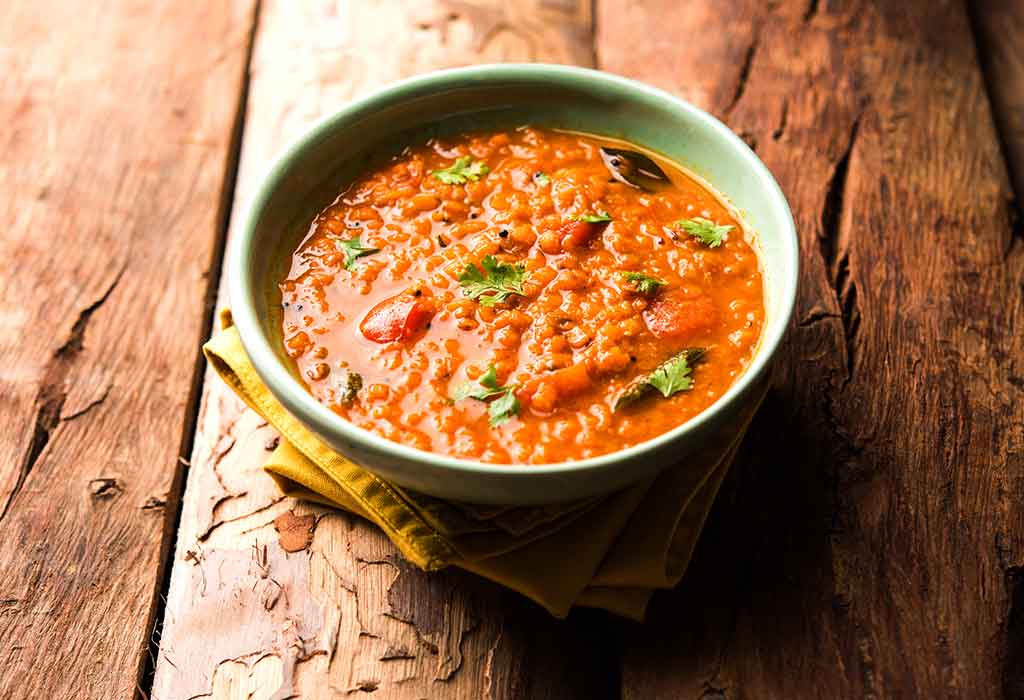
Tomato Masoor Dal Soup Recipe
An easy to make soup, this tomato and masoor dal (split red lentil) soup is a simple recipe that can be had as comfort food and an appetizer before the main meal. Learn how to make Tomato Masoor Dal Soup – a nutritious food recipe that is loaded with protein, carbohydrates and Vitamin C.
Cooking Time
Type
Time
Preparation Time
00:10:00
Cooking Time
00:30:00
Total Time
00:40:00
Total Servings: 3-4
Cooking Method: Gas stove, induction or microwave
Suitable for: Any baby above 7 months of age
Type of Meal: Vegetarian and suitable for vegans
Meal Schedule: Appetizer before the main meal, light evening snack, main meal with rice or chapati.
Recipe Type: Starter/ Appetizer or Main Meal
Ingredients
Ingredients
Quantity & Volume
Masoor Dal
½ cup dried red lentils
Water
3 cups for cooking lentils
Turmeric
¼ teaspoon
Salt
1 teaspoon
Green chillies (small)
2, slit lengthwise
Ripe Tomatoes
2 medium-sized, chopped finely
Ghee
2 teaspoons
Cumin Seeds
1 teaspoon
Coriander
2 tablespoons, finely chopped
Instructions
Here is a step-by-step guide on how to make Tomato and Masoor Dal Soup for babies/toddlers.
Rinse the masoor dal in cold water three to four times. Discard the water after every rinse.
Bring the dal to a boil in 3 cups of water in a saucepan or a pressure cooker (2 to 3 whistles).
Add the turmeric, salt, green chillies and cook for about 15 minutes.
While the lentils are boiling, you may see a frothy scum forming on the surface. Remove it gently with a ladle or a spoon.
Once cooked, add the tomatoes. Cook for another 5 minutes. Let the tomatoes become mushy and then mash them in the cooked dal.
Boil the mixture till it gets a nice soup-like consistency which is neither too thin nor too thick.
For the tempering, heat the ghee in a small pan or skillet on medium heat.
Add the cumin seeds and wait for it to splutter.
Pour the ghee along with the cumin seeds over the cooked dal.
Garnish with chopped coriander.
This simple recipe can be made almost every day and can be included in every meal. The recipe tips given below can help you provide the right nutrition to your baby every time he is fed this humble masoor dal recipe.
Recipe Tips
Use only the required amount of salt as babies do not need too much salt in their food.
Wash the dal, tomatoes and green chillies thoroughly before use.
You could use the remaining dal and mix it with rice and serve it for lunch or dinner.
Only use boiled water or treated water to cook the dal.
Wash the coriander thoroughly before chopping them for garnish.
You can cook the dal in the microwave to save time, but it tastes best when cooked on gas or induction
Use a generous amount of ghee for tempering the cumin seeds as it will enhance the taste of the dal.
This easy/simple tomato masoor dal soup recipe is ideal when your baby has a cold or flu.
Nutritional Facts (Per 100 Gram Serving)
Nutrient
Value
Total Calories
370
Protein
25.09 gm
Total Carbohydrates
63 gms
Sugar
2.6 gms
Dietary Fibre
1.2 gm
Health Benefits
Tomatoes are filled with antioxidants to help improve your kid’s immunity.
Tomatoes are also full of Vitamin C and are excellent for the skin.
Masoor dal is also very good for the skin.
The dal is also good for nourishing bones and teeth.
As a bonus, here’s a buying guide that will help you purchase quality ingredients.
Buying Guide
Make sure you buy firm, but ripe tomatoes as the squishy ones or the raw ones may not taste good. Ripe tomatoes will give the right amount of sourness to the dal.
Buy good quality masoor dal in sealed packs as they will cook quickly. Refrain from buying loose dal which is sold at a cheaper rate as it may be adulterated.
You can buy long green chillies as they are less spicy. It will give the needed dash of spice for your baby and not make the soup very hot!
It is ideal if you use homemade ghee, but if you do not have it, you can use the branded ones from the store.
If you are vegan, then you can use olive oil, refined oil or any other vegetable oil instead of ghee.
Read more




10 Common Parenting Issues and Their Solutions
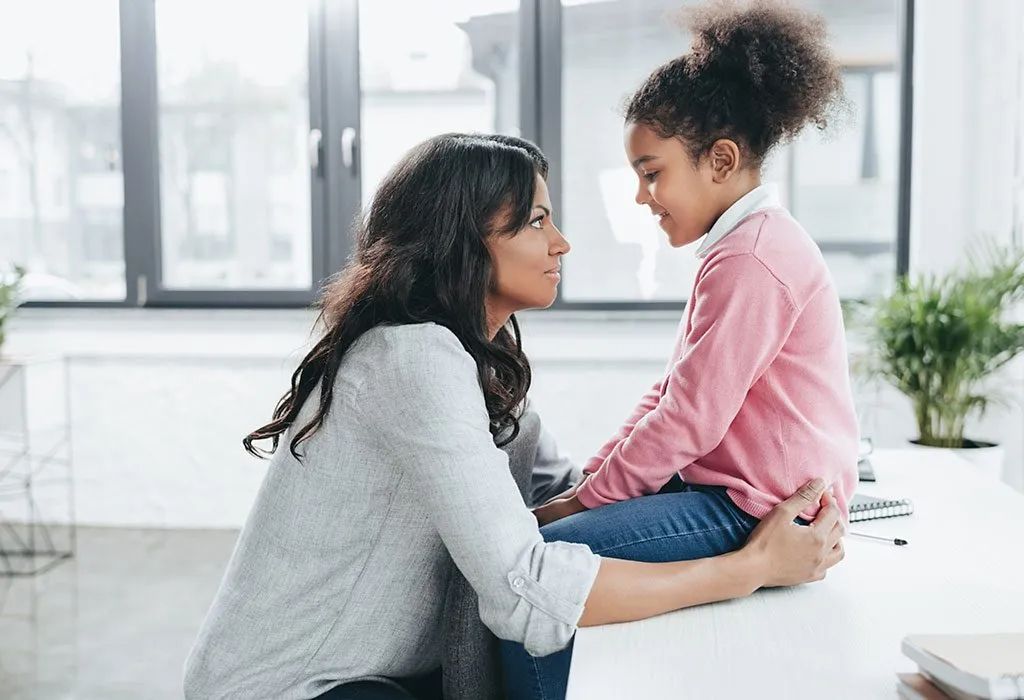
If you ask a parent about parenting, they’ll say, ‘It’s not a piece of cake!’ While that’s true, it is certainly not an impossible task either. Children are constantly learning new things as they grow up. While learning and exploring, they may encounter certain situations in their lives where you might have to step in and help them out. In all this process, you may feel like loosing cool or control, but that’s totally normal. Such scenarios often bring a bunch of parenting challenges that need attention. In this article, we are going to discuss some of the most common parenting issues or challenges and how to overcome them.
What is Meant By Parenting Issues?
Being a parent is both rewarding and tough, which comes attached to certain parenting issues. Parenting issues cover all the different problems and worries parents might have while raising their kids. These challenges can pop up at any time as children grow, and they can be affected by many things, such as looking after the kids, disciplining them, money, daily schedules, and chores around the house. But remember, every family is different, and what one family deals with might not be the same for another.
Most Common Parenting Problems and Ways to Overcome Them
Here are some common problems that parents face and ways to resolve them.
1. Shyness
As children grow up, they start meeting other kids in school and their neighborhood. Many engage readily with other kids, but a few of them prefer being aloof and shun any kind of engagement. Some kids may be extremely shy and slow to warm up to other children to make friends or converse with them.
Solution
The best way to handle this situation is to observe your child. If he actively refuses to engage with other kids, you can talk to him gently about making friends or so. At no point should you force him to converse with someone or play with somebody else. At times, two shy kids may also end up becoming friends. If despite everything, your child’s shyness doesn’t reduce, then you should cosult a child pshycologist (1).
2. The Digital Device Addiction
All our lives revolve around devices, but kids perceive digital devices in a different way. They will literally grab phones and video game consoles and stay hooked to them for hours at end. On refusing to give him or taking the gadgets away from him, your kid might get angry, impatient, or start crying uncontrollably.
Solution
Its parents who introduce children to the digital world, and as parents, it’s your job to introduce your kids to other activities that provide them with the same excitement or fervour that gadgets do. Outdoor activities and board games are a great alternative where you can participate as well. Try and enforce specific playing times or playing hours when your child can use their gadgets (2).
3. Improper Eating Habits
One of the most common parenting problems faced by parents is that their children often do not eat proper meals at the right time and in the right quantity. They will refrain from eating healthy vegetables and often opting for sweets and snacks stored in the house. Burgers, pizzas, and other junk foods hold their attention and your child would want to eat only those every time you step outside.
Solution
In such cases, forcing never works. Try talking to your child about the effects of continued consumption of junk foods. Show him examples of obesity and health issues. Include him in various activities of the kitchen and let him see how a nutritious meal is prepared. Also, instead of just preaching, be a model and eat with them (3).
4. No Mood for Studies
Every parent has had to struggle with their kid procrastinating on completing their homework or studying for an upcoming exam or simply being in touch with what has been taught. Most of the times, this is met with scolding the child or forcing him to sit and finish the chapter.
Solution
Try and talk to him about what he liked in school and inculcate a sense of curiosity and interest in that subject. If he is weak or unfocused in a particular subject, talk to him about how the knowledge can be applied with real-life examples. When it comes to studying, having a set routine works like magic. So try and implement a routine and follow it consistently. You may try extrinsic motivation like rewards in the form of ice cream or their favourite food to encourage them to study harder (4). However, this should not be the only way of motivating kids to study.
5. Constant Whining and Complaining
Nearly all children whine and complain to their parents. He might cry and whine for the smallest of things. Any small incident in school while playing with his friends or even at home might trigger him to complain and whine about it throughout.
Solution
It is important to know that the pure reason for complaining and whining is that your kid wants to know whether you are paying attention to him or not. It is best to talk with him the moment you hear him complain and offer a solution quickly. Gradually, educate him in communicating his issues the right way instead of whining all the time. Talk to him about how he himself can resolve certain problems of his own or together by communicating nicely what is stressing them and what do they want out of it (5).
6. Angry and Aggressive Child
This is quite a challenging issue and might be a result of various single-parenting issues as well. When your child’s actions go unchecked, he could develop into an angry child who screams and breaks things, constantly causing trouble and stress for himself and for you. The child may resort to violence as a way to get things done.
Solution
It is very rare that your child may not have a reason for their angry behaviour. It is important to remember that hey may not have the skills to communicate their distress that is turning into anger and lack knowledge on impulse control (6). Try talking to him to find out if there are any situations in the house or outside that cause him to be stressed and react in this manner. If the situation is dire and has been continuing for a long time, it is best to get him to an anger management counsellor for professional attention.
7. Lying
Nearly all children lie at one time or the other. You may even realise that your child is lying but don’t call him out on that. This results in him continuing to lie and developing it into a habit. Left unchecked, this could manifest in hiding important things from you as well. Starting as the manifestation of a fantasy world to becoming deceitful, it can have severe impact on children (7).
Solution
It is important to not scold or beat your child when he lies. Let him know that you can see the lie and talk to him about why it isn’t good. Ask him to not fear you while telling the truth, even if it might be where he may have committed a mistake.
8. A Rivalry Between Siblings
Sibling fights and arguments are something every parent takes for granted. But when they get out of control, these could manifest into hatred for each other. Moreover, constant fights can cause you a lot of trouble and ruin the atmosphere of the house. It could either be because of unequal attention, family dynamics, aggression, etc (8).
Solution
Intervene in the initial times to resolve the situation calmly and talk to them about how they could do the same as well. Let the first steps be to calm both the kids down and not blame one or the other for anything. Enforce a rule where any argument would end up as a penalty for both kids equally.
9. Disobedience
Disobience is a one of the most common parenting challenges. There are times when you ask your child to do something, and he straight-up refuses. Most parents interpret this as rudeness or being over-smart, but your child is primarily trying to establish his own importance and opinion. Creating a power dynamic of your superiority over him might cause him to be aggressive.
Solution
Having an opinion is a strong sign in your child. Talk to him about why what you’re asking of him is necessary, and listen to his side of why he doesn’t want to do it. Reason it out, and it would mostly work. Being calm will cause them to rethink what they’ve said an respond to you in a calm manner as well (9). If it starts getting rude, be firm and strict about it right away.
10. Consistent Tantrums
This is different from whining or complaining. When your child throws a tantrum, he will just start crying and not convey the reason behind it. He won’t listen to you or want to calm down and just create absolute chaos (10).
Solution
This is majorly a power dynamic at play and it is important to not lose your cool. Tell your child that you are ready to listen to him once he stops crying. Until then, continue with your own activities. Once he sees that his tantrum has no effect on you, he will stop and talk to you about what he really wants.
FAQs
1. What if I am a little late in addressing my child’s problem?
There is no need to panic. Since children are consistently in their growth stage, it is easy to influence them positively and corrcet your mistake.
2. What is the hardest phase of parenting?
There is no csuch criteria that defines a particular phase of parenting as the hardest. Instead, it depends on the individual cicrumstamces and the child’s requirements. For newbie parents, the starting stage of newborn care and toddler hood may feel the most challenging while for some teenagehood can be the most challenging as at this stage rebellion attitude of children is ar its peak. Therefore, it depends on the difficulties one faces during the parenting.
3. What is the best method of dicplining a child and making them responsible without scolding or being too lenient?
Here are some points you can follwo to achieve the desired results:
Make rules that are easy to understand for your child’s age. Stick to them every time.
If your child breaks a rule, let them know what will happen next, and make sure it’s fair.
Praise your child when they do something good or try hard.
Think of punishments that match your child’s age and what they did wrong.
Sometimes, it’s good for your child to take a break and think about their actions. This is called a time-out.
Taking care of a child as he grows up is certainly a herculean task. The various parent-child relationship problems one faces during this journey can be difficult. Realizing that children are trying their best to cope up as well, is the key to being understanding, calm, and caring in helping take care of their problems.
References/Resources:
1. Children and shyness; BetterHealth; https://www.betterhealth.vic.gov.au/health/healthyliving/shyness-and-children
2. 10 Best Strategies to Stop Your Child’s Screen Addiction; University Hospitals; https://www.uhhospitals.org/blog/articles/2015/09/10-strategies-to-stop-screen-addiction/; September 2015
3. Picky Eating: How to Help Change a Child’s Food Habits; Nationwide Children’s; https://www.nationwidechildrens.org/family-resources-education/700childrens/2018/06/picky-eating
4. How to Help Your Child Get Motivated in School; Child Mind Institute; https://childmind.org/article/how-to-help-your-child-get-motivated-in-school/
5. How to Stop Your Child’s Whining; Nationwide Children’s; https://www.nationwidechildrens.org/family-resources-education/700childrens/2022/04/how-to-stop-your-childs-whining
6. Angry Kids: Dealing With Explosive Behavior; Child Mind Institute; https://childmind.org/article/angry-kids-dealing-with-explosive-behavior/
7. When Children Lie; American Academy of Pediatrics; https://www.healthychildren.org/English/family-life/family-dynamics/communication-discipline/Pages/When-Children-Lie.aspx
8. Sibling Rivarly; University of Michigan Health; https://www.mottchildren.org/posts/your-child/sibling-rivalry
9. The Disobedient Child; American Academy of Pediatrics; https://www.healthychildren.org/English/ages-stages/gradeschool/Pages/The-Disobedient-Child.aspx
10. Temper Tantrums; Stanford Medicine; https://www.stanfordchildrens.org/en/topic/default?id=temper-tantrums-90-P02295
Also Read:
Best Parenting Books
Tips to Be a Nurturing Parent
How to Improve Your Parenting Skills?
Bad Parenting Signs and Its Impact on Children
Read more

10+ Best Parenting Books of All Time
Being a parent to a child is one of the most wonderful feelings. However, besides the joy and love, parenting involves unique challenges that keep changing as children grow up. Here is a list of 10 best parenting books that can help you navigate through your journey of being a parent.
Top Rated Books on Parenting That Every Parent Should Read
While children are getting smarter with each generation, parents need to up their parenting game too, to be able to handle them! These books will help you on your way to becoming a great parent for your child!
1. How to Talk So Kids Will Listen & Listen So Kids Will Talk by Adele Faber and Elaine Mazlish (1979)
This best-selling book is written by renowned experts Adele Faber and Elaine Mazlish who specialise in effective communication between parents and their children. This well-loved classic offers enduring insights on ways to deal with problems faced by parents while raising their children. Recommended by parents all over the world, this book offers practical, sensible, and hands-on solutions to children’s frustration and anger.
2. Calm Parents, Happy Siblings: How to Stop the Fighting and Raise Friends for Life by Dr. Laura Markham (2015)
A clinical psychologist and a mother of two, Dr. Laura Markham is an acclaimed author on parenting. She believes that a strong emotional bond between parent and child is key to raising a healthy and happy child. Raising siblings, as any parent would agree, is an extremely challenging task. In this book, the author emphasises on teaching children conflict resolution skills and creating a deep and meaningful bond with each child to cultivate a good family life.
3. Heart to Heart Parenting: Nurturing Your Child’s Emotional Intelligence From Conception to School Age by Robin Grille (2008)
This book stresses the importance of emotional bonding between parent and child. Heart to Heart Parenting is about celebrating the blissful journey of raising your children and trusting your instinctive parenting acumen. A psychologist and psychotherapist, Robin Grille offers insightful and practical ways to help develop your child’s emotional and social well-being.
4. Simplicity Parenting: Using the Extraordinary Power of Less to Raise Calmer, Happier, and More Secure Kids by Kim John Payne, Lisa M. Ross (2009)
Children today are overwhelmed with many choices and with very little time, leading to behavioural problems like social anxiety and stunted emotional growth. The book offers ideas and ways for salvaging the freedom and care-free environment that every child deserves to grow up in. An insightful read, this is a timeless book that has become a favourite among parents.
5. The Mommy Shorts Guide to Remarkably Average Parenting by Ilana Wiles (2016)
One of the funniest and most entertaining parenting books for moms, The Mommy Shorts Guide tells the story of an “average” mom from a refreshing perspective. Ilana Wiles’ humorous book on remarkably average parenting is a must-read for every mom struggling to be the perfect mother to her children. Although the book contains lots of practical advice, it does not offer a solid list of dos and don’ts about raising children. This book is more of a tribute to every mother and celebrates the less glamorous side of parenting.
6. Raising Your Spirited Child: A Guide for Parents Whose Child Is More Intense, Sensitive, Perceptive, Persistent, and Energetic by Mary Sheedy Kurcinka (1991)
Mary Sheedy Kurcinka is an internationally renowned author and educator on parent and child relationship. Translated into ten languages, this best-selling book includes real-life stories told from a refreshing and engaging perspective. The book draws on relevant and current research to offer effective parenting tips for handling tantrums and instilling discipline. It also helps build a positive, promising, and healthy environment for your children to grow up.
7. Unconditional Parenting: Moving From Rewards and Punishments to Love and Reason by Alfie Kohn (2006)
In this pioneering book, educator Alfie Kohn argues that traditional parenting methods often send out the wrong message. Children are loved only when they earn our approval, which may affect their mental and emotional wellbeing. An alternate parenting approach Kohn suggests involves shifting from the traditional approach to working with children by offering unconditional love and support.
8. First-time Parents by Miriam Stoppard (2009)
When you think of good parenting books, this is one that immediately comes to mind. In this book, Dr. Miriam Stoppard, a childcare specialist, offers first-time parents a practical guide to parenting. One of the best parenting books for new parents, this book addresses a wide range of topics. The book also talks about the role of the father, including emotional issues of adapting to becoming a new parent.
9. Parentology: Everything You Wanted to Know About the Science of Raising Children But Were Too Exhausted to Ask by Dalton Conley (2014)
In this witty and extremely entertaining book, Dalton Conley, a university professor, offers his unconventional but appealing approach to raising children. The book reveals pioneering research to help groom smart and self-assured children. The book, however, does not present a list of dos and don’ts or instructions for other parents. Instead, it is about his parenting experience.
10. Parenting With Love and Logic: Teaching Children Responsibility by Foster Cline and Jim Fay (1990)
Jim Fay, an educational consultant, and Dr. Foster Cline, a child and adult psychiatrist, stress the importance of “practice” while raising responsible children. This parenting book offers practical tips and tricks and shows you how to raise self-confident, motivated children without resorting to shaming and manipulation.
Enjoy a good read while you pick up trick and tips which will help iron out the rough road of parenting, with this selection of parenting books.
Also Read: Positive Parenting Tips
Read more

Interesting Facts and Characteristics of October Babies
Do our nature and other characteristics get affected by the month we are born in? Well, there are many believers of the fact that one’s behaviour and other personality traits greatly depend on the month they are born. October babies have some fun and quirky personality traits, and if your little one is born during this month, we are sure you might be interested in reading some facts about him. This is a fun exercise you can do with your family, and guess if your baby indeed does have these traits. In this article, we will be discussing some interesting facts and characteristics of October-born babies!
Fun Traits of Babies Born in October
Want to know about October-born personality traits? Here are some fun facts about babies born in October:
1. October-born People are Romantic
People born in this month are die-hard romantics. Whenever they fall in love, they love with all their heart and soul. Love holds too much value and importance to them, and they do not shy away or hesitate to express their love. They can go out of their way to show to their partner how much they love and care for them and also how important they are to them. When you fall in love with an October-born, get ready for romantic getaways, dinners, and more such sweet acts of love.
2. October-born People Are Charming
If anyone exudes charms and charisma, it has to someone who is born in October. These people have an unmatched charm that can mesmerise anyone, and for this very reason, these people are very good at winning the hearts of people. They are such charmers that people like to be around them or be friends with them. They are filled with optimism and positivity that attracts people. Their positive approach to life tends to influence people around them.
3. October-born People are Calm
They are peaceful and calm people who like to contain their emotions and feelings inside them. Their easy-going attitude lends them a very chilled out nature. They do not attract problems and believe in making more friends than foes. They also try and stay away from negative people or people who try to give them jitters. In short, they are kind of introverts, and they like to keep their emotions to themselves. People often find them to be too close and not easily swayed by their emotions.
4. October-born People are Collected
The people born in this month are collected and poised. They seldom blurt out their feelings, anger or worries to people around them. In case they feel scared or nervous, they would prefer to keep it within themselves to avoid making hoopla of a situation. They are very sensitive and empathetic towards other people, and instead of confronting you, they may offer you a helping hand. They do not like to judge people.
5. October-born People Have Perseverance
These people are very perseverant, and whatever they undertake or start, they will finish to the best of their ability. No matter how difficult a task or job is, they will try their hundred per cent to solve the issue and find a solution for it. For this very reason, they like to work solitary or alone rather than working with others or more number of people. They achieve greater levels of success, and they usually have a well-settled and stable life.
6. October-born People Are Positive
People born in this month are very optimistic and positive in their approach towards almost everything in life. They never give up, and if they make up their mind in achieving something, they do not stop until they achieve what they thought off. Even if a failure is met, they do not stop, and they work tirelessly towards achieving their goals. They may not appear so, but they can be extremely stubborn towards achieving success or achieving their goals. This trait also motivates others to offer their best.
7. October-born People Like to Spend Money
Whether they have money or they are in dearth of it, October-born people love to own luxurious stuff. If they have money they will buy what they desire and when they do not have it, they can save money for a long time to buy what they desire. They not only like spending money on themselves, but also like to spoil their loved ones with extravagant gifts.
8. October-born People Are Smart and Intelligent
They generally perform well academically, and they are such keen learners that they like to invest their time and money in acquiring more knowledge in the field they are interested in. They are focused and quiet and when they say something, it correct and relevant. They tend to observe and analyse various situations and then come up with the best possible solutions that usually please everyone. People often ask them for their advice because they have great ideas and they are very sharp.
9. October-born People Live in the Present
These people are live wires and believe that life is to be lived with loads of fun and for that each moment must be lived to the fullest. They do not like to worry about the future or the past, and prefer living in the moment. They perform their duties and responsibilities diligently and worry only when a problem is faced rather than worrying about it before it is even there. They do not worry about what will happen tomorrow because they are focused on what is happening today.
10. October-born People Are Kind-hearted
As per astrology babies born in October month are very warm, friendly and kind. They do not like to be in anybody’s bad books and thus try and make efforts to be friendly and nice to everyone they deal with. They do not like to hurt anyone, and even if they do not want to do something, they may just do it to make their friends or near ones feel comfortable and happy. Those who are born in this month are kind friends and above all good and decent souls.
11. October-born People Believe in Justice
October borns believe in honesty and justice and believe that fairness and equality rule the world. Your baby is most likely to tell you the truth rather than hiding it from you, so you won’t have to worry about them doing something behind your back. They prefer resolving disputes through conversations for a harmonious outcome.
FAQs
1. What Are the October Birthstone Colours?
October-born people are associated with two birthstones; opal and pink tourmaline. These two birthstones are found in multiple colours, and this array will make them stand out. Your baby will enjoy multicolour accessories and stones, which add fun and colour.
2. What Zodiac Signs Are Associated With October Born Babies?
The two Zodiac signs associated with October-born babies are Libra and Scorpio. Babies born from 1st – 22nd October are considered Libras, and babies born after October 23rd are Scorpios.
These are some of the special traits of October-born babies. Share these facts with your friends or family members who are born in this month!
Also Read:
Facts About February Babies
Interesting Facts About January-born Babies
Knowing Your Baby’s Personality According to Zodiac Sign
Read more
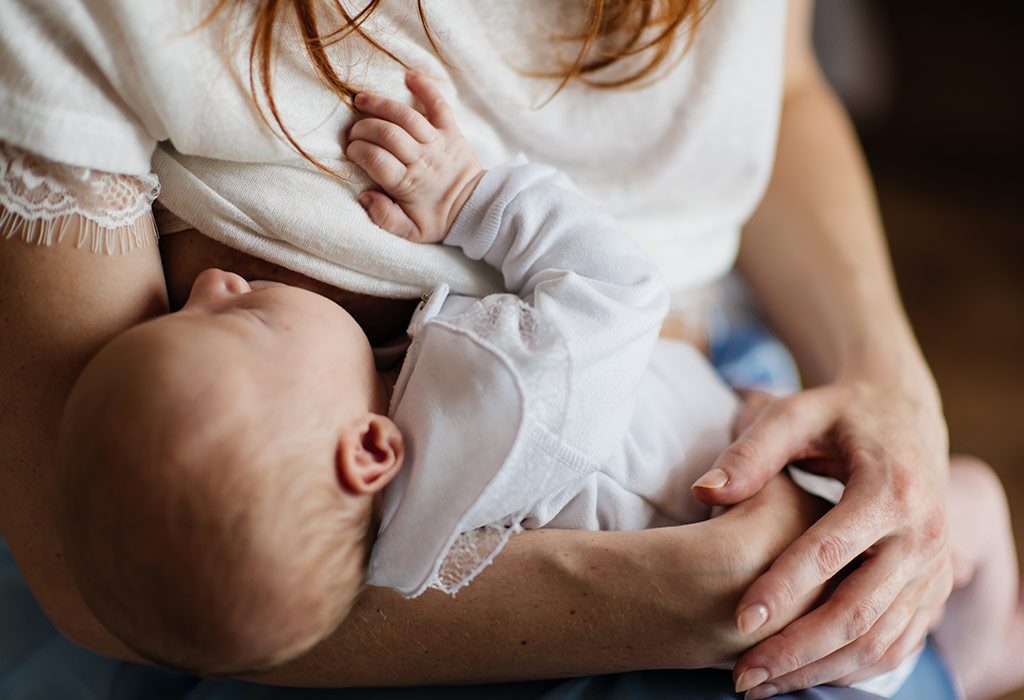
Nipple Biting While Breastfeeding – Reasons and Prevention
A baby biting nipples while breastfeeding is common. Many babies do it for various reasons; the most common is teething. Babies will gnaw at anything that relieves the pain of teething.
When breastfeeding properly, a baby will cover the lower gum ridge or teeth (if he/she has teeth yet) with the tongue and will be wary of biting the breast as that would hurt the underside of the tongue, too. In the correct latch, the nipple is positioned deep in the baby’s mouth and cannot be bitten. However, if a baby is not latched on properly or the tongue is not correctly used, it can feel he/she is clamping down or biting on the nipple.
As we know, every problem has a solution, and so does this. We need to take certain measures to prevent babies from biting, which can be done only when you know why your baby bites while breastfeeding. Once that is known, half the battle is won. After that, you can easily take preventive steps to stop your little one from hurting you.
Reasons for Baby Biting While Breastfeeding
There are plenty of reasons for baby biting while nursing. Apart from not latching on properly to your breast or improper positioning while being breastfed, here are some reasons as to why babies bite while breastfeeding.
Teething can be said to be the number one cause of this problem. Your baby seeks relief from the pain during teething by biting onto the mother’s breast while breastfeeding (1).
Older babies get distracted easily. In case they turn to look at something, they can forget that they still have their mother’s breast in their mouth. This can cause unintentional damage when the baby inadvertently closes its jaws (3).
Sometimes, babies don’t get enough milk, so they bite into the nipple to get a better hold.
A baby may involuntarily bite when they fall asleep while being breastfed.
Babies bite as a sign of affection and may cause unintended damage to the nipple.
Biting can be a sign of Tongue Tie in younger or newborn babies and should be examined by a paediatrician.
Can You Continue Feeding Your Baby Even After Teething?
There is no reason as to why you cannot continue feeding your baby when it begins to grow its milk teeth. It is a common misconception that when a baby has teeth and starts biting, the time for nursing is over, and it is time to start weaning. But that’s not necessarily correct (6). If your baby is latched on properly and the positioning is correct while being breastfed, you should not feel any pain, even if they have a mouthful of pearly whites (2). A breastfeeding baby biting with gums can just as painful as a baby biting with their teeth.
Biting is something that most babies try to explore, especially when they are teething. It can be stopped with a little bit of persistence on your part. Not all babies react in the same manner to a situation, and you may need to try various ways to discourage him/her before you find one which works. All that is required to stop your baby from biting you while breastfeeding is the three “P’s”: Patience, Perseverance and Persistence.
What to Do If Baby Bites While Breastfeeding?
It’s not uncommon for babies to bite during breastfeeding. This behaviour can be quite painful and unsettling. Here’s how you can handle biting during breastfeeding:
1. React Calmly and Gently
When your baby bites, try to stay calm and avoid reacting with a loud or abrupt response. A sudden reaction may startle your baby and create anxiety around feeding times. Instead, gently remove your baby from your breast and say, “No biting; it hurts Mommy.” This helps your baby understand that biting is unacceptable without creating fear or discomfort (5).
2. Use a Firm “No”
After removing your baby from the breast, firmly but gently say “no” to indicate that biting is not allowed. Consistency is key, so use the same phrase each time biting occurs. This helps your baby learn that biting results in the end of the feeding session.
3. Check for Signs of Teething
If biting is a new behaviour, it might be related to teething. Check your baby’s gums for signs of emerging teeth. If teething is the cause, consider offering a teething toy or a chilled washcloth before breastfeeding to soothe their gums. This can help reduce the urge to bite during feedings (4).
How to Stop Baby From Biting While Nursing?
Many mothers ask how to stop their baby from biting the nipple. Biting comes naturally to babies, especially when they are teething. However, by taking several measures, mothers can try to prevent their baby from biting while nursing.
The baby often bites after the nursing session or when it is tired and bored of suckling. So, watch out for indications of disinterest and stop nursing before the biting begins.
Mothers should learn to position their babies correctly. Incorrect positioning of the baby while breastfeeding could irritate them, which in turn could lead the baby to bite the mother’s breast.
Make sure that there are no distractions while feeding the baby. If there are any distractions, the baby may forget what they are doing and close their mouth, which could be painful.
Talk to your baby while feeding them to communicate that biting is not a good thing. Consistently engage them by singing or telling a story while feeding them. When you see their jaws tighten to bite, just say a firm ‘no’. For this, too, you may have to experiment with several ways of saying it because, for some, a stern impression may work and, for others, something else.
If your breasts are engorged, the baby may find it difficult to latch on to it. Therefore, before you start nursing, try expressing some milk.
Learning the time when your baby bites can also help in preventing them from taking jabs at your nipple. Usually, babies bite at the end of a nursing cycle when they have finished getting enough milk and simply want to play around by gnawing at your nipple. Therefore, once the baby slows down the intensity of their sucking, gently pull your breast off from their mouth.
Many mothers find that encouraging correct behaviour with ample praise is effective in discouraging the baby from biting.
Feeding the baby only when hungry can also prevent a baby from biting. If the baby is hungry, they will be more interested in sucking milk and less in biting.
You can also soothe the baby’s gums by feeding them expressed breastmilk popsicles.
Can Your Nipple Get Damaged Due to Baby Bites?
The biting of the nipple by the baby while breastfeeding can be painful. It leads to soreness and discomfort, too. Usually, it does not damage the nipple, but at times, you can get a bad bite from your baby. In that case, it is best to apply ice right after the injury and after every nursing session. Apart from this, Ibuprofen (Advil, Motrin) or Acetaminophen (Tylenol) is compatible with breastfeeding and can be taken as and when required. However, it is best to take the advice of a medical practitioner before taking any medicine. Also, applying a few drops of fresh Aloe Vera juice could help heal the wound (7).
FAQs
1. Can I use a pacifier to prevent biting?
A pacifier might help satisfy your baby’s need to chew and reduce the likelihood of biting during breastfeeding. However, it’s important to ensure that your baby has ample opportunities to latch correctly and feed effectively.
2. How long does it typically take for a baby to stop biting?
The duration varies by baby. Some babies may stop biting within a few weeks after adjusting to proper latching and feeding techniques, while others might take longer.
3. When should I seek professional help for biting?
If biting persists despite trying various strategies or if you experience significant pain and discomfort, it may be helpful to consult a lactation consultant or your doctor. They can offer guidance on improving the latch and addressing any underlying issues.
Although babies biting while breastfeeding can be painful and a nuisance for the mothers, one cannot steer clear of it. You may go through a whole lot of pain and problems associated with breastfeeding, but the outcome is sure to be rewarding for both you and your baby. After all, a mother’s milk is rich in nutrients and antibodies and helps a baby’s health and growth.
References/Resources:
1. Breastfeeding: why babies may bite and how to stop it; NCT; https://www.nct.org.uk/baby-toddler/feeding/common-concerns/breastfeeding-why-babies-may-bite-and-how-stop-it
2. 5 common breastfeeding problems; UNICEF; https://www.unicef.org/parenting/food-nutrition/5-common-breastfeeding-problems?gad_source=1&gclid=EAIaIQobChMI2KLUybS4iAMVW6RmAh15mijyEAAYASAAEgLeZPD_BwE
3. La Leche League GB; Help! My baby bit me!; https://laleche.org.uk/help-baby-bit/
4. Breastfeeding FAQs: Spitting Up, Gagging, and Biting; Nemours KidsHealth; https://kidshealth.org/en/parents/breastfeed-spitting-up.html
5. Breastfeeding When The Baby is Teething/Biting; Breastfeeding Support For Indian Mothers; https://www.bsim.org.in/breastfeeding-information-breastfeeding-when-the-baby-is-teething-biting/
6. Breastfeeding; WHO; https://www.who.int/health-topics/breastfeeding#tab=tab_2
7. Sore, cracked or bleeding nipples; Pregnancy, Birth and Baby; https://www.pregnancybirthbaby.org.au/sore-cracked-or-bleeding-nipples
Also Read:
Baby Choking when Breastfeeding
Baby Sweating during Breastfeeding
Baby Crying while Breastfeeding
Baby Sleeping when Breastfeeding
Read more
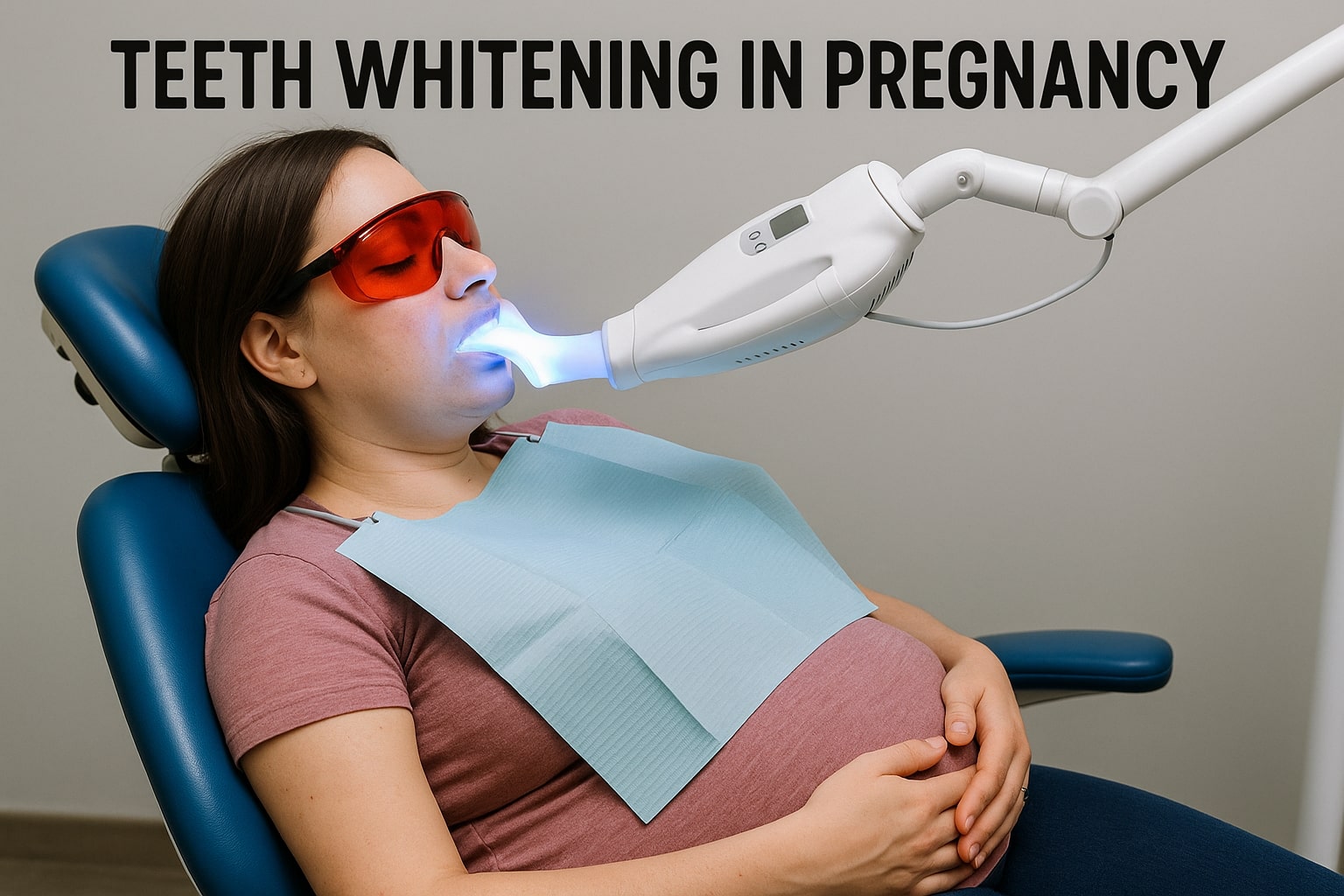
Teeth Whitening in Pregnancy – Is It Safe?
We all want our pearly whites to stay white and shiny, but if you’re pregnant and are thinking of undergoing teeth whitening procedures, then you will have to check whether or not it’s safe. The primary concern for many expectant mothers is the safety of elective cosmetic treatments, including teeth whitening in pregnancy. Some women experience dental problems during pregnancy, such as gum issues or stained and discoloured teeth. In either case, a pregnant woman must check with her doctor regarding the need for any dental treatment. This article will inform you about bleaching teeth, and it will detail the safety considerations and potential risks of the same during pregnancy.
What Is Teeth Bleaching?
Teeth bleaching is a technique used for whitening teeth enamel, which makes the teeth shine and look bright. There are two ways to brighten the teeth. The first option is using a whitening toothpaste, and the other is consulting a professional for the same (1). Whether you use a toothpaste or consult a professional, peroxides will be used in various concentrations to bleach the teeth.
Can You Whiten Teeth While Pregnant?
Is teeth bleaching safe during pregnancy? There’s not enough evidence to confirm that bleaching or whitening teeth during pregnancy poses any risks for the mom-to-be or the baby, but to avoid taking any chances while pregnant, it’s best to avoid it. There is not enough evidence that confirms the dangerous effects of bleaching teeth during pregnancy. But peroxides above a certain concentration in the body have been shown to cause tissue injuries. It’s important to keep this in mind when using peroxide toothpaste, where the chances of swallowing it are higher. The best thing to do is to delay the bleaching treatment until after delivery (2).
Pregnancy Gingivitis and Teeth Whitening
You may want to whiten your teeth post-pregnancy if you have pregnancy gingivitis. This condition causes inflamed gums due to the hormonal flux during pregnancy (3). These hormones increase blood circulation in the gums, making them prone to inflammation and bleeding. You can avoid this by maintaining teeth hygiene. In case you want to whiten your teeth, check with your doctor because the peroxide in the teeth whitening bleach can worsen your already sensitive gums.
Risks of Teeth Whitening or Bleaching While Pregnant
Understanding the potential risks of bleaching teeth while pregnant is crucial for making an informed decision. The following points outline the primary concerns associated with this elective procedure for expectant mothers.
1. Increased Tooth Sensitivity
Pregnancy hormones can make your gums and teeth more sensitive and vulnerable to irritation. The bleaching agents used in whitening treatments can significantly exacerbate this sensitivity, causing considerable discomfort and pain.
2. Potential Harm to the Developing Baby
While direct studies are limited, the chemical components in whitening gels, such as hydrogen peroxide, could potentially be swallowed. There is no conclusive evidence proving these chemicals are safe for a developing fetus, so avoidance is the recommended precautionary approach (4).
3. Heightened Gum Irritation and Inflammation
Many pregnant women already experience pregnancy gingivitis, which causes swollen, tender gums that bleed easily. Applying a strong whitening gel can further irritate these sensitive gum tissues, leading to increased inflammation and discomfort.
4. Unpredictable and Uneven Results
Hormonal changes can affect the porosity of your teeth and the health of your gums, which may interfere with the whitening process. This can lead to uneven results, streaking, or a less effective outcome overall, making the procedure a poor investment during this time.
5. Exacerbation of Underlying Dental Issues
Pregnancy can sometimes uncover or worsen pre-existing dental problems. Whitening treatments can aggravate these unknown or underlying conditions, such as minor cavities or cracks, turning a simple cosmetic procedure into a more serious dental emergency.
6. Lack of Safety Data and Medical Approval
Major dental associations universally advise against elective procedures like teeth whitening during pregnancy due to the lack of comprehensive research. Since the safety cannot be definitively confirmed, most healthcare providers will recommend postponing treatment until after delivery and breastfeeding.
Tips for Teeth Whitening During Pregnancy
When considering a brighter smile, prioritising safety is paramount. For those seeking pregnancy-safe teeth whitening, the best approach focuses on gentle, non-chemical methods and professional consultation.
1. Prioritise a Thorough Oral Hygiene Routine
The most effective way to maintain a bright smile is through excellent daily care. Brush at least twice a day with a fluoride toothpaste and floss daily to remove surface stains and plaque, which can make teeth appear yellower.
2. Choose Your Diet to Minimise Staining
Be mindful of foods and drinks that stain teeth, such as coffee, tea, and berries. When you do consume them, rinse your mouth with water immediately afterwards to help reduce their staining potential.
3. Consult Your Dentist for Safe Advice
Always speak with your dentist and obstetrician before trying any whitening method. They can provide personalised guidance and confirm whether a specific product or procedure is safe for your individual situation (5).
4. Use Whitening Toothpaste Approved by Your Dentist
Some mild, non-bleaching whitening toothpastes that rely on gentle abrasives may be considered safe. However, it is essential to get your dentist’s approval on a specific brand before use to ensure it does not contain harsh chemicals.
Natural Teeth Whiteners That Are Safe to Use During Pregnancy
If you have discoloured or stained teeth and you’re looking for at-home teeth whitening during pregnancy, you can use natural teeth whiteners. Below is a list of pregnancy-safe teeth whiteners you can use after checking with your doctor (6).
1. Strawberries
Take a fresh strawberry and mash it in a bowl along with some toothpaste. Using your finger or your toothbrush, apply this mixture to your teeth. After five to ten minutes, wash out the mixture, then brush and floss properly to remove any strawberry pieces that might have gotten lodged between your teeth. Strawberries contain malic acid, which can help dissolve dental stains. But you should not leave it for long, as the malic acid can damage teeth enamel.
2. Orange Peel
You can take an orange peel and brush your teeth with it. Make sure you cover both the front and back surfaces of your teeth. After repeating this a few times, rinse your mouth. The mild fruit acids and vitamin C present in oranges are great for teeth and can help with teeth discolouration considerably.
3. Lemon Juice and Salt
Take some lemon juice in a bowl; add half a teaspoon of salt to the juice and some water, and mix well. Rub this mixture across your teeth. Don’t use this technique if your gums are sensitive or if you are on a reduced salt diet.
4. Turmeric
Put some turmeric powder on your wet toothbrush and then brush your teeth gently in circular motions. Then rinse.
5. Apple Cider Vinegar
Apple cider vinegar (ACV) has malic acid too, just like strawberries and can be used to remove teeth stains in diluted form. To use apple cider vinegar, add half a teaspoon of apple cider vinegar to a cup of water. Mix well and gargle with this solution before brushing your teeth. You can try this remedy twice or thrice a week.
FAQs
1. Can you bleach your teeth when breastfeeding?
While the risks are lower than during pregnancy, the consensus on breastfeeding and teeth whitening remains cautious. It is generally recommended to postpone elective bleaching until after you have finished nursing, as there is insufficient data on whether whitening chemicals can pass into breast milk.
2. Can you use whitening strips while pregnant?
No, it is not advised. Whitening strips contain bleaching gels that can be absorbed by your gums or swallowed in small amounts. Due to the unknown effects on fetal development, dentists recommend avoiding them entirely during pregnancy.
3. Are teeth whitening pens safe during pregnancy?
No, they are not considered safe. These pens contain the same concentrated bleaching gels as other products. The risk of swallowing the gel and the potential for gum irritation make them unsuitable for use during this time.
4. Can pregnancy hormones themselves cause teeth to yellow?
Yes, indirectly. Hormonal changes can lead to gum inflammation, which may cause more plaque buildup. This plaque can make teeth appear more yellow, even without changes in diet or hygiene.
This was all about teeth whitening and pregnancy. Before you try to whiten your teeth with using any of the above natural remedies, do check with your doctor first. Further, you can discuss with your dentist about your options regarding teeth bleaching during pregnancy. Either way, remember to make your dental appointments regular, so your teeth can be cleaned of tartar or the yellowish hardened plaque which stains your teeth. Make sure that your dentist keeps an eye out for periodontal disease, which can lead to premature labour and low birth weight in newborns.
Also Read:
Is it Safe to Get Braces in Pregnancy
Ways to Prevent Root Canal in Pregnancy
Home Remedies for Tooth Pain while Pregnant
Dental Problems and Treatment during Pregnancy
Read more

The Social World of Your Newborn Baby
When you look at your baby, you worry if his physical and cognitive development are in order. But does he have social skills as well? What if we tell you your baby is a social being from an early age?
While it differs across babies, research has conclusively proven some social skills that infants possess at a very early age. This list may surprise you!
1. They like people who use baby-friendly language
No, we don’t necessarily mean baby-talk. However, if you use infant-directed speech while communicating with babies, chances are they will be friendlier toward you. This means you need to slow, a bit rhythmic and repeat more than in usual conversation.
2. They recognise your voice and how you look
After all those months of listening to your voice from the womb, your baby now knows your voice very well. Not just that, he can also recognize your features, though his vision will be blurry and limited in range for the first few months. So, if Mamma is part of a social gathering, your baby is likelier to participate!
3. They like it when you make eye contact– except when they are overstimulated
Like perfect social creatures, babies like it when you make eye contact. They will stare into your eyes, and if you look happy, they will love it all the more. Babies tend to break eye contact, however, when they are tired or have had too much for the moment.
4. When people around them are sad, they hate it too
This is yet another social skill that babies have right from the beginning. They prefer happy, animated faces around them. If you look glum or are too quiet, your baby will also turn fussy and upset.
5. They understand facial expressions quite well
This may sound surprising but research has proved it to be true. Right from an early age, babies can discriminate between facial expressions. They know when you’re happy and when you’re in the doldrums.
6. They are attuned to the feelings of others and know when you’re upset
An extension of the previous pointer, this skill also indicates that babies are quite nice, social human beings! If they perceive sadness around them, they will try and put up little shows such as grinning or cooing to lift the spirits. They have a sense of empathy from the outset.
Does your bundle of joy also display the above skills? If not, don’t fret. Every child develops at a different pace. In the meantime, talk and play with your baby as much as you can, and also let friends and family members spend some time with him – without making him cranky. With time, your baby will blossom into a socially adept young child!
Read more
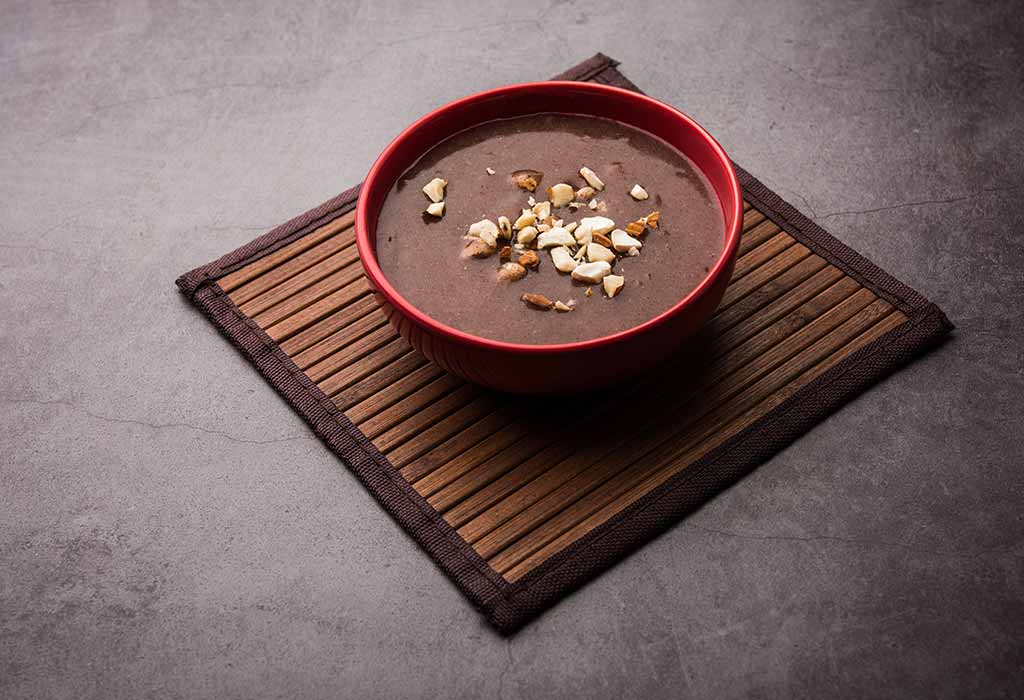
Ragi Porridge Recipe
Ragi malt and ragi porridge are the same thing with different names. Ragi is cooked in either milk or water and is healthy for babies and adults. It can be given to babies as early as they start on solids because it has high nutritional value; it is a good source of Vitamins B1 and B3, calcium, and iron.
Ragi, also known as finger millet, is widely consumed in southern parts of India. As ragi does not have a taste of its own, its porridge can be made in two ways: sweet or salty. If you want to know how to make ragi porridge for your baby, read on. We have a quick recipe for you!
How to Make Ragi Porridge for Babies?
Here’s all you need to know to make a healthy and delicious ragi porridge recipe for babies and toddlers. This section includes all vital information about the recipe, including ingredients, step-by-step instructions, recipe tips, valuable information on its health benefits, and a buying guide.
Cooking Time
Type
Time (hh:mm:ss)
Preparation Time
00:01:00
Cook Time
00:05:00
Total Time
00:06:00
Cooking Method
Gas stove
Type of Meal
Vegetarian
Suitable For
Any baby above seven months of age
Meal Schedule
Breakfast or mid-morning snack or evening snack
Recipe Type
Side dish
Ingredients
For Sweet Porridge
Ingredient
Quantity
Ragi flour
4 tbsp
Water
1.5 cups
Sugar or dates or jaggery
1.5 tbsp
Milk (optional)
1 cup
Ghee (optional)
1 tsp
Cardamom powder (optional)
¼ tsp
For Salted Porridge
Ingredient
Quantity
Ragi flour
4 tbsp
Water
1.5 cup
Buttermilk
1 cup
Salt
As per taste
Cumin powder
1 tbsp
Curry leaves
1 sprig
Coriander leaves (finely chopped)
1 tbsp
Oil or ghee
1 tsp
Instructions
Below is a step-by-step guide on making salty and sweet ragi porridge.
Sweet Porridge
1. First Method: Heat a pan and add ragi flour. Next, add water. Mix it well and let it cook. Keep stirring it constantly to prevent it from burning until the mixture thickens. Once it turns thick, your ragi malt will be ready. Turn off the heat and serve warm.
2. Second Method:
Mix the ragi flour in ¾ cup of water.
Heat the remaining water in a pan and bring it to a boil. Next, add the ragi mixture to it.
Keep on stirring and cook it on medium heat.
Turn off the flame when the mixture thickens.
Now add dates, sugar, or jaggery and milk to adjust the consistency and make it sweet.
Add some ghee and dry fruits to make the recipe more nutritious.
Your sweet porridge is ready to serve.
Salted Porridge
Take ragi flour and water in a pan and cook well. Keep stirring until the mixture thickens.
Add salt and buttermilk to adjust the consistency and bring out the taste.
Salted porridge is ready to serve.
If you wish to add a tempering, heat ghee or oil in a pan. Add cumin seeds and curry leaves. Let them splutter. Switch off the flame. Add this seasoning and coriander leaves to the prepared ragi porridge to enhance the taste.
Serve the yummy porridge to your little one!
Recipe Tips
Follow the below tips to enhance the nutritional content and taste of this simple ragi porridge recipe:
It is better to prepare ragi porridge for babies without milk. Because adding milk reduces the iron absorption of ragi (1).
Adding fruit like apples or bananas helps absorb iron from ragi. So you can add fruit to the sweet porridge.
Nutrition Information (Per 100 Grams)
Type
Quantity
Energy
165 kCal
Carbohydrates
25 g
Protein
5 g
Fat
4 g
Dietary Fiber
11.1 g
Vitamin C
2.3 mg
Iron
0.6 mg
Calcium
143 mg
Potassium
195 mg
Sodium
62 mg
Note: These values are only for the sweet porridge.
Health Benefits
Following is the list of benefits your child will get out of this homemade ragi porridge baby food recipe:
Ragi is extremely beneficial for your growing child. As you can see from the table above, this recipe has a high calcium content. Calcium helps develop bones and teeth and prevent bone-related diseases (2).
Ragi is a good source of natural iron (3). When mixed with a fruit, the Vitamin C in the fruit facilitates iron absorption, helping increase children’s haemoglobin (4).
Ragi is loaded with iron, calcium, protein, phosphorous, and calcium. These minerals also serve as the building blocks for growing children (5).
Ragi also keeps the child full for long.
Buying Guide
Making ragi flour at home by sprouting and roasting the grains would be best. After this, they can be powdered in the mixer. This method is best for babies. But if you cannot prepare it at home, buy the prepared ragi flour from the supermarket!
FAQs
1. Does ragi porridge help with baby weight gain?
The sweet porridge in the ragi recipe contains ghee and jaggery, which will help babies gain weight. It also contains micro and macro nutrients that aid a baby’s growth (6)!
2. How long should ragi be soaked for a porridge recipe?
Ragi grains should be soaked for at least 8-12 hours or overnight, then germinated to sprout. Once sprouted, they can be roasted and powdered to add to the porridge recipe.
Follow the instructions and prepare this effortless and nutritious ragi recipe for babies and toddlers. This will keep him healthy and energetic. Happy Parenting!
References/Resources:
1. Lönnerdal B.; Calcium and iron absorption–mechanisms and public health relevance. International journal for vitamin and nutrition research; Internationale Zeitschrift fur Vitamin- und Ernahrungsforschung. Journal international de vitaminologie et de nutrition; https://pubmed.ncbi.nlm.nih.gov/21462112/; 2010
2. Calcium, Nutrition, and Bone Health; Orthoinfo; https://orthoinfo.aaos.org/en/staying-healthy/calcium-nutrition-and-bone-health/
3. Anitha, S., Kane-Potaka, J., Botha, R., et al.; Millets Can Have a Major Impact on Improving Iron Status, Hemoglobin Level, and in Reducing Iron Deficiency Anemia-A Systematic Review and Meta-Analysis; Frontiers in nutrition; https://www.ncbi.nlm.nih.gov/pmc/articles/PMC8551390/; 2021
4. Lynch, S. R., & Cook, J. D.; Interaction of vitamin C and iron; Annals of the New York Academy of Sciences; https://pubmed.ncbi.nlm.nih.gov/6940487/; 1980
5. Hamner, H. C., Perrine, C. G., & Scanlon, K. S.; Usual Intake of Key Minerals among Children in the Second Year of Life, NHANES 2003-2012; Nutrients; https://www.ncbi.nlm.nih.gov/pmc/articles/PMC4997381/; 2016
6. Anitha S, Givens DI, Subramaniam K, Upadhyay S, Kane-Potaka J, Vogtschmidt YD, Botha R, Tsusaka TW, Nedumaran S, Rajkumar H, et al.; Can Feeding a Millet-Based Diet Improve the Growth of Children?—A Systematic Review and Meta-Analysis; Nutrients; https://www.mdpi.com/2072-6643/14/1/225; 2022
Also Read:
Oats Porridge Recipe
White Pumpkin Soup Recipe
Idli Recipe for Babies and Toddlers
Rice Porridge for Infants and Toddlers
Read more

Try This Simple Doctor-Recommended Solution to Help Your Baby Sleep Peacefully During the Afternoon or Night!
Sleep is very important for your baby’s development. Yet, it is very common to observe babies having an irregular sleeping pattern. Many babies tend to have a disturbed sleep-cycle and wake up frequently while napping, both in the afternoon and at night. Not only does this make the baby cranky, it also affects the peace of the entire household. Well, fret not, moms! Doctors have found one simple solution to regularise your little darling’s sleep easily!
Babies have an erratic sleeping cycle which consists of daytime naps and a nighttime slumber. It is often observed that the daytime naps are longer than the night sleep. Have you wondered why this happens? In this lies the answer to all the sleeping problems of a baby!
As per doctors’ research, it has been found that the two main problems affecting a baby’s sleep quality and duration are LIGHT and NOISE! Babies who get distracted by these two factors whether at home or from outside tend to have difficulties falling/staying asleep.
How LIGHT & NOISE Affect Your Baby’s Sleep
In their early years, babies are not able to distinguish between darkness and light. Scientifically speaking, darkness triggers melatonin, which is a very important hormone responsible for inducing sleep in humans. Experts suggest that light literally switches on a baby’s biological ‘go’ button (which means NO SLEEP!). It is therefore essential to make the distinction between days and nights extremely clear to your little one.
Likewise, for noise, until the time your baby is six weeks old, it has no sudden effect on his sleep. But when he starts noticing the environment, he can wake up with sudden noises like the doorbell or a phone ringing. While some babies can sleep in noise, some require an extremely silent room for sleeping.
So, how can you ensure your baby gets comfortable sleep? We need to help them build the association of darkness and peace with sleep. Basically, all we need to do is create minor changes around us to help the baby understand when it gets dark and quiet, it’s time to doze off!
How to Minimise The Effects of Light & Noise
During the infant stage, or when your baby is still a newborn, there is little effect of noise and light on your baby’s sleep. However, with passing months, your baby becomes more alert and can get distracted easily while sleeping. It becomes essential now to maintain a consistent noise and light level so that your baby gets adjusted to them comfortably. For your baby to sleep peacefully without getting up frequently, it is important to create a comfortable environment for him.
Follow these tips to minimise distractions for your baby and solve his nap-time problems both during the day and at night.
1. Dim the Lights for Bed-Time
When you start to prepare your baby for sleep, dim the lights to signal bedtime. The controlled light effect in the room will reduce stimulation in the little one. This will make him more settled and calm and he will start associating darkness with sleep
2. Close Curtains and Blinds for Daytime Nap
Use room darkening curtains made from natural fabrics (cotton, linen or silk) if your baby wakes up with the slightest of sunlight entering the room. For daytime nap, close the curtains and the blinds to create a darkened effect in the room. Extra light can stimulate the baby’s senses and make him reluctant to sleep
3. Don’t Do This When Baby Wakes Up At Night
If your baby wakes up at night, do not switch on the room lights or carry him/her to a brightly lit room. Instead, try to soothe him in the dark room itself. The shift from dark to light gives an indication wake up
4. Do This to Block Outside Noise
It is important to maintain a minimum noise level while your baby sleeps in the room. Early morning sunlight, the noise of household chores and sound of traffic can disturb baby’s sleep. In order to ensure that he gets good sleep, keep your windows closed and use thicker curtains to shield from the noise and light. While you put your baby to sleep, try and block any sudden noise from outside by keeping the doors and windows closed. You can even hang blankets or heavier curtains on the windows and use a draft blocker for doors to prevent any loud noise from entering the room, especially if you live in the noisy neighbourhood.
5. Play Soft and Soothing Music
Another means to block sudden noises is by maintaining a constant, low-noise level in the room. Play soft and soothing music while tucking your baby to sleep. If you do not want to make it a habit, turn the music on and off whenever you feel like
Understanding these basics of noise and light effects on your baby’s sleep will give you an insight into dealing with his nap-time problems better. You can now help your little one to take a sound nap without any disturbances so that he wakes up refreshed and happy!
Read more
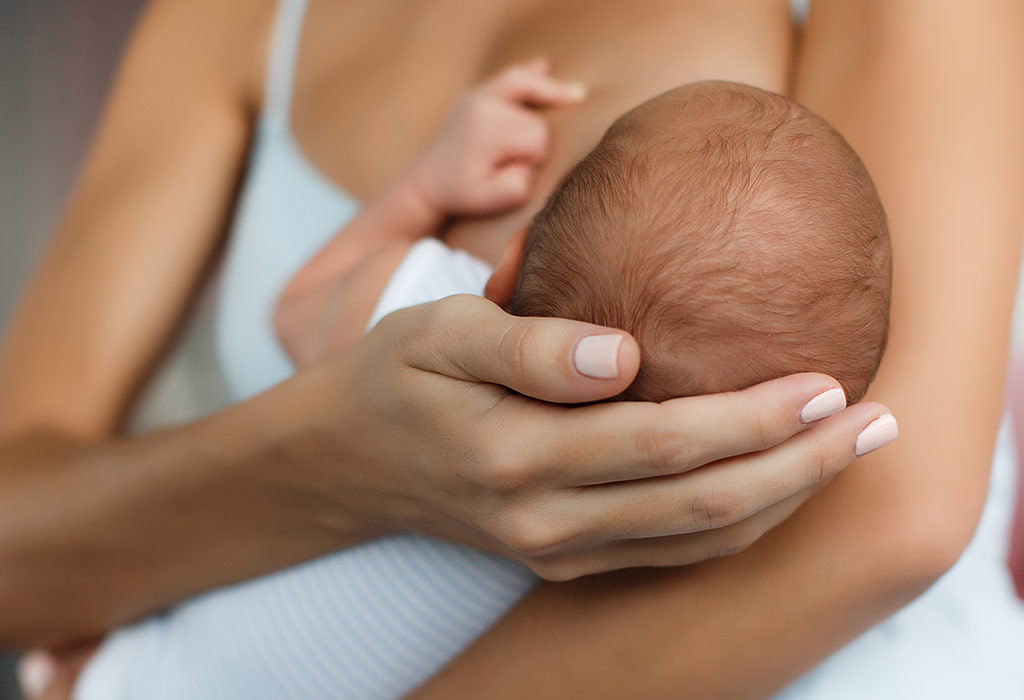
Baby Sweating While Breastfeeding – Causes & Remedies
Do you often find your baby sweating during feeds? If this is a constant source of worry, know that it is quite normal for a baby to sweat while feeding. However, if there is excessive sweating, it could be a sign of an underlying medical condition. So, how do you know whether your baby’s sweating is normal or calls for a closer look? Before you make that doctor’s appointment to get the problem checked, read this article to understand the baby sweating phenomenon.
Video: Baby Sweating While Breastfeeding – Should You Be Worried?
Do Babies Sweat While Breastfeeding?
Yes, babies may generally sweet while feeding. This could be due to a variety of reasons, from transfer of heat to number of layers of clothing. Not to mention, humidity in the environment also makes babies and adults sweat alike.
Reasons Your Baby Sweats While Breastfeeding
Usually, a baby sweats because of the natural process by which he releases excess body heat. The baby needs to cool off naturally because:
1. Close Connection
The close, skin-to-skin contact with the feeding mother increases the baby’s body temperature.
2. Oodles of Energy
Suckling needs a lot of energy. The movement of the jaw while suckling is a kind of exercise for the baby and the baby sweats as a result of putting in the effort.
3. Hot Head
Have you also noticed the baby’s head sweating while breastfeeding? Many mothers tend to hold the baby in the same cradle position while feeding. Often, the mother holds the baby’s head in her palms in this position for a long time. This passes on more warmth from the palm, causing the baby’s head to sweat.
4. Too Many Layers
Sometimes, the baby is warm because of the many layers he is covered in. That may make him sweat.
5. Need for Fresh Air
The feeding room may be cramped, stuffy, and without ventilation. This warm environment makes the baby sweat more while breastfeeding.
6. Staying in the Same Position
If you hold your baby in the same position for a long time during feeds, it may cause some sweating in the areas where his skin makes contact with yours.
However, there may be other reasons why your baby is sweating while breastfeeding – reasons that may require medical attention. We will discuss that below.
Why Does the Baby’s Head Sweat?
Sweating on the baby’s head is caused by two main reasons:
Only the baby’s head has active sweat glands while the rest of the body does not have any. So, the head sweats more than the rest of the body when the baby is feeling hot, especially while feeding.
The temperature of the baby’s head is always higher than the rest of his body.
Is It a Sign of a Health Issue?
As new parents, one of the most natural concerns you may have if your baby sweats when breastfeeding is whether this is because of an underlying ailment. While mild sweating in babies is not usually a cause for concern, if you notice unnatural and excessive sweating on your baby’s head, it may indicate a health problem. It could be any of the following:
1. Pulmonary Atresia
It is a form of congenital heart disease that blocks the flow of blood from the heart to the lungs and the baby does not get enough oxygen. This happens because the pulmonary valve, which regulates the blood flow from the heart to the lungs, has a malformation and does not open. Excessive sweating while breastfeeding is a key indicator of this ailment.
2. Hyperthyroidism
Excessive sweating can also be caused by an overactive thyroid gland or hyperthyroidism.
3. Infection With Fever
The baby can sweat excessively if there is some sort of infection, accompanied by fever.
4. Sudden Infant Death Syndrome
In extreme cases, some babies have a higher risk of Sudden Infant Death Syndrome (SIDS). They could show signs of excessive sweating. While there is no conclusive evidence of this connection, according to a study, a majority of mothers whose babies suffered from SIDS said that they noticed that their babies would sweat too much.
5. Congestive Heart Failure
This ailment is caused by either a structural problem or a weak muscle in the heart. Hence, the baby’s heart is unable to supply enough blood to the rest of the body. This ailment is marked by excessive sweating as well.
Please note: The above reasons require a diagnosis from a doctor and also have several other symptoms associated with them. If you find that your baby sweats while breastfeeding, try the below points to help minimise it.
Tips to Minimise Baby Sweating During Breastfeeding
Now that you know the reasons behind this, you can take measures to make life more comfortable for your bundle of joy. Here are some tips and tricks to do that:
Feed the baby in an airy room with moderate temperature. The room should ideally be neither too hot nor too cold.
During the summer season, you and your baby should both wear soft, cotton clothes while breastfeeding. Even during winters, don’t wear too many layers, heavy woollen clothes or clothes made of materials that may cause skin irritation and sweat. Try to wear light, soft, and warm woollens.
Keep the baby’s head bare to let the scalp breathe while breastfeeding. Take off any cap or scarf from the baby’s head before feeding. During winters, a cotton cap can be used to cover the baby’s head.
If you are breastfeeding the baby in public, you should preferably use a cotton nursing cloak to let the air circulate well.
You and your baby should avoid polyester garments while feeding.
Feed your baby from both breasts. That will ensure that your baby is not in one fixed position the entire time during feeding, and this movement will reduce heat from trapping.
Do not assume that the baby is feeling cold all the time and overdress him/her in the process. Breastfeeding increases the baby’s body temperature as he is putting in an effort while suckling, and also because he is in close contact with another human body. Too many layers of clothes can add to the baby’s discomfort.
You and your baby should not wear tight clothes during feedings. This will make both of you sweaty and uncomfortable.
When to Consult Your Doctor?
You should consult your paediatrician if you notice these symptoms:
Breathing Problems: Your baby is breathing too hard, too slow, or in gasps.
Tiredness: You may notice constant lethargy or sleepiness, even during breastfeeding.
Aversion to Feeding: You baby may not be eager to feed at all.
Bluish Skin: In some rare cases, the baby’s skin may develop a bluish shade.
FAQs
1. Do Premature Babies Have More Sweats During Breastfeeding?
Sweating while breastfeeding has more to do with the environment than your baby. If you take the right measures to ensure your baby is comfortable while feeding, he will sweat less.
2. Can I Breastfeed a Baby Who Is Already Sweating Due to Fever?
Yes, you can continue to feed your baby if he has a fever, as his body needs the nutrients to fight the infection. Regular feeding also ensures that the virus gets flushed out of the system faster.
Sweating while feeding is usually not a problem in babies, but in some cases, it may be due to an underlying medical condition. If your baby’s sweating does not stop or improve despite trying the above-mentioned methods, please consult your doctor immediately.
References/Resources:
1. Foster. K, Hey. E, Katz. G; The response of the sweat glands of the new-born baby to thermal stimuli and to intradermal acetylcholine; The Journal of Physiology; https://physoc.onlinelibrary.wiley.com/doi/epdf/10.1113/jphysiol.1969.sp008846
2. Harpin. V, Rutter. N; Sweating in preterm babies; PubMed; https://pubmed.ncbi.nlm.nih.gov/7062212/; April 1982
3. Key practice: Infant feeding during sickness; UNICEF; https://www.unicef.org/uganda/key-practice-infant-feeding-during-sickness
4. Breastfeeding your baby; Pregnancy Birth & Baby; https://www.pregnancybirthbaby.org.au/breastfeeding-your-baby
5. Sweating; National Library of Medicine; https://medlineplus.gov/ency/article/003218.html; April 2021
Also Read:
Baby Crying while Breastfeeding
Infant Biting when Breastfeeding
Baby Choking during Breastfeeding
Read more

Liver Disease in Babies and Children
The liver helps us to digest food and get rid of toxins in the body, making it a very important organ. If your baby has been diagnosed with a liver disorder, you will need to know about the problems that they can cause and what you can do about it.
What is Liver Disease?
Liver disease could be used to refer to a broad spectrum of liver problems. Around 75% of the liver needs to be damaged before you notice that it is not functioning well anymore. Another term for liver disease is a hepatic disease. Babies who have been diagnosed with a liver problem will need consistent medical support and a very good disease control plan in order to pull through.
What Causes Liver Problems?
Here we look at what causes liver problems in children:
1. Viral Infections
Viral infections can also cause liver problems in children. Some of these can include Hep A, B and C.
2. Genetic Disorders
Sometimes liver problems are caused by disorders that are passed down the family line; hemochromatosis, for example, a disorder that is genetic and that causes the body to store too much iron. Like the disorders, genes that are defected can also be passed down the family line leaving children prone to liver problems.
3. Cholestasis
The flow of bile in the liver can be affected, resulting in problems in the liver.
4. Cancer
The tissue of the liver can be infiltrated by cells that are abnormal, like cancer cells. They can also be damaged by certain chemicals and minerals that are taken in excess.
Signs And Symptoms Of Liver Problems
There are so many liver diseases that it shows itself differently in each individual, making diagnosing liver diseases very difficult. Here we have some of the common symptoms of liver problems in children:
Jaundice
Your baby’s skin and eyes will appear to be a pale yellow which will be accompanied by fever and chills.
Abdominal Discomfort
Your child may be in a lot of pain due to an enlarged liver. Sometimes this does not hurt as much as it makes your child feel full.
Oesophageal Varices
The blood vessels within the walls of the lower oesophagus dilate, causing bleeding.
Portal Hypertension
The portal vein supplies blood to the liver from the large intestine. When portal hypertension takes place, new blood cells begin to form, and they connect the flow of blood from the intestine to the general circulation, which means that it does not go through the liver in order to have the toxic substances removed, and they then flow to the rest of the body, causing problems.
Brain Damage
When the toxic substances are not removed, and they reach the nervous system, it can cause serious problems as a result. Brain functioning is affected a lot by this, sometimes leading to mental disorientation, and in the worst cases, can lead to a coma.
Ascites
There could be a build-up of fluids in the abdominal cavity, causing the abdomen to swell.
How Is A Liver Problem Diagnosed?
Liver problems are diagnosed in the following ways:
Albumin
Albumin is a protein that is made by the liver. The protein found in blood is made up of 6% albumin. This test is done to screen for and diagnose liver and kidney diseases.
Bilirubin
Bilirubin is a pigment that is made when the red blood cells break down. If the level of Bilirubin is elevated, the person has jaundice. The test checks how well the liver functions in eliminating Bilirubin.
Alanine Transaminase (ALT)
This enzyme is generally found in the liver. If the level of ALT is too high, it is a sign that there is liver damage. The ALT test checks this.
Treatment for Liver Problems
The treatment of liver problems depends on what is causing it to begin with. If the disease resulted from a virus, then the virus will need to be treated, and medical care will be required until the virus runs its course. In the same way, the cause of the problems must be identified in order to treat it properly. In the worst case scenario, where the liver has been damaged beyond repair, a liver transplant will need to be done.
Other than some causes of liver disease, like hepatitis or gallstones which can be treated, most liver diseases are only managed. Finding out your precious child has an illness is not something any parent wants to hear, but unfortunately, these things can happen, and it is up to you to do the best you can to help your child recover. Once diagnosed and once the treatment begins, your child will need you to be strong and consistent.
Also Read:
Hepatitis in Kids
Hepatitis A Vaccine in Infants
Jaundice In Kids
Read more

Mango Oats Milkshake Recipe
There are more than one ways to enjoy the summer and a breakfast milkshake using mangoes and oats is a delicious option. The gradual process of weaning becomes easy when you introduce complementary food like mango and oats that are incredibly healthy for your baby. This wholesome beverage can be a refreshing drink that can be relished at any time of the day. The oatmeal lends it a smooth texture to this already creamy treat that is simple to whip up. Wondering how to make mango oats milkshake? Read on to master the art of making the perfect recipe for this drink to treat your baby and the entire family.
Cooking Time:
Type
Time (hh:mm:ss)
Preparation Time
00:05:00
Cook Time
00:01:00
Total Time
00:06:00
Cooking Method: Blender
Type of Meal: Vegetarian beverage (Contains Milk)
Suitable For: Babies above 12 months of age
Meal Schedule: Breakfast, Mid-Morning Snack, Evening Snack.
Recipe Type: Side Dish / Beverage
Ingredients
Type
Quantity
Mango
1 (ripe)
Quick-cooking oats
4 tsp
Milk
¼ cup
Almonds
10
Sugar/Honey
2 tsp
Yoghurt/Curd
¾ cup
Water
½ water
Instructions
Here are step by step directions to make the best mango oats milkshake that would power your child’s body throughout the day:
Peel the mango and slice it into cubes.
Boil the milk in a pan, add sugar or honey to it and stir well. Let it cool down completely.
Grind the almonds coarsely in a blender.
Put oats in a blender and blend it at high speed till it turns into a powder.
Transfer the mango cubes, yoghurt and oatmeal powder into a blender and blend until smooth.
Add a splash of milk for desired consistency.
Gently pour out the milkshake into a tall glass and check for the sweetness.
Add more honey or sugar if needed.
Serve chilled or at room temperature.
Recipe Tips
You can use this simple mango oats milkshake recipe to prepare a chilled smoothie that will be your child’s favourite drink after playtime. Make sure the mangoes are ripe enough, and you can use chilled yoghurt and frozen mango cubes to make the smoothest milkshake.
This homemade mango oats milkshake baby food recipe can be made using sweetener like maple syrup instead of sugar depending upon the sweetness of the fruit.
For older babies, you can use flax seeds, sunflower seeds instead of almonds for making it more nutrient-rich.
Add water for a thinner consistency of the milkshake.
Soak the oats overnight for making them more digestible.
Sprinkle chia seeds or almonds for some crunch.
Use soya milk or almond milk if you wish to keep your smoothie dairy-free.
Nutrition Information (Per 1 serving)
Type
Value
Energy
240 kCal
Carbohydrates
65.9 gm
Sugar
35 gm
Calcium
44 mg
Iron
0.5 mg
Protein
5.8 gm
Sodium
139.4 mg
Fibre
5 gm
Fat
4.6 gm
Potassium
598 mg
Vitamin A
1785 IU
Vitamin C
66.8 mg
Health Benefits
Here are some health benefits of a glassful of the superfood – Mango Oats Milkshake for babies:
Packed with plenty of protein, fibre and flavour, the mango oats milkshake will keep your baby’s tummy full until lunchtime.
Oat bran is high in fibre that provides polyunsaturated fats and protein.
Mangoes are low in calories and loaded with nutrients. Its Vitamin C, Vitamin K and Vitamin E content helps in boosting immunity, iron absorption, growth and repair of the body. Its Vitamin A content is essential for good eyesight while the amino acid present in mangoes is critical for brain development.
The high level of carotenoids helps in warding off a common cold for babies.
Including mangoes in any form in your baby’s diet as it offers a delicious alternative saving you from feeding time tantrum.
The calcium content of yoghurt or milk is essential for healthy bones and teeth in babies. Calcium prevents childhood obesity, while its protein content in milk serves as the best source of energy for children.
Almonds contain healthy fat, fibre, magnesium and Vitamin E that reduce hunger and lowers blood sugar levels.
Buying Guide
Here are buying tips that you should keep in mind while picking up ingredients for mango oats milkshake for your baby:
Ripe mangoes have a fruity aroma at their stem ends. The red colour is not the right indicator of a mango’s ripeness.
Buy organic fruits (if possible) from an excellent vendor to ensure its optimum quality.
Check the expiry date of the milk carton before buying.
Rolled oats cook faster than steel-cut oats, but Quick oats are creamier and are over-processed. Steel-cut oats retain all the nutrients of whole oats.
This quick mango oats milkshake for babies is a tempting summertime bliss that will make your baby happy and recharge their energy for the entire day.
Read more

150 Names That Mean Green for Boys and Girls
Selecting the ideal name for a child requires research, but can also be hilarious and confusing. Most parents want to go beyond a name’s sound. They would want to select a name that has a special significance to it or perhaps is drawn to something in nature. Here comes the topic of colors and, specifically, green, which symbolizes the process of growing, nature, freshness, and the power of life. Perhaps it is the greenery of the spring, the serenity of the meadow, or the vigor and essence of life, but green is definitely something beyond every other color. For all those parents who want something exclusive and special for their kid, names that mean green provide a fantastic opportunity to choose a name for the kid that radiates nature and the power of growing. Let us take you through a wide range of names for boys and girls with their origins, along with their meanings and interesting facts about the significance of each names meaning green.
Boy Names That Mean Green
If you are looking for a name for your little boy that reflects nature and life, these options are inspiring. Each male name meaning green carries charm, positivity, and uniqueness.
Aaron – Mountain of strength and growth.
Aodhan – Little fire, symbolizing life and renewal.
Basil – Royal and green, associated with herbs.
Bennett – Blessed, like fresh new beginnings.
Caspian – From the Caspian Sea, vibrant and alive.
Chive – Small herb, representing freshness.
Clancy – Red-haired warrior, also tied to green fields.
Clover – Lucky and green, nature-inspired.
Conall – Strong wolf, connected to forests.
Darcy – Dark one, with shades of green.
Dillon – Loyal and steadfast like evergreen trees.
Elan – Tree, symbolizing growth and vitality.
Farast – Protector of the woods and green lands.
Gavin – White hawk, often seen in green valleys.
Garland – Decorated with leaves or flowers.
Heath – Untamed land, full of green life.
Jaode – Precious green stone, harmony.
Jasper – Treasured stone, often green in hue.
Keegan – Small flame, reflecting green fields of energy.
Kermit – Little wart, often linked to frogs and greenery.
Leif – Heir, symbolizing leafy nature and new beginnings.
Landen – Tree with good and soft green leaves.
Lionel – Young lion, roaming green lands.
Lucan – Light, glowing like fresh spring greens.
Malachy – Messenger, representing green growth and hope.
Muir – Sea or marsh, tied to green landscapes.
Niall – Champion, thriving in lush green lands.
Nolan – Noble, like green fields of peace.
Oklan – Meadow of oak trees, steadfast and green.
Olwen – White footprint, surrounded by greenery.
Oran – Light or pale green, nature-inspired.
Perrin – Little rock, thriving amidst greenery.
Quillon – Crossing swords, symbolizing green protection.
Rafe – Wise wolf, living in green forests.
Rowan – Little redhead, also a green tree.
Sagae – Sage and verdant, like the herb itself.
Seamus – Supplanter, grows strong like green shoots.
Silvan – Forest dweller, embracing all shades of green.
Sorrel – Plant with green leaves.
Sterling – High quality, representing fresh green beginnings.
Talon – Bird’s claw, soaring over green landscapes.
Teal – Bird and color, a soft green shade.
Thorne – Thorn bush, part of green nature.
Ulric – Wolf ruler, roaming green forests.
Vale – Valley, lush and green.
Viridian – Blue-green shade, full of life.
Waldemar – Famous ruler, tied to green woods.
Wesley – Western meadow, open and green.
Yarden – Flowing down to green lands.
Zephyr – Gentle wind, nurturing green fields.
Girl Names That Mean Green
For parents looking for a choice that has a nature connection, these names are lovely and full of energy. Every female names meaning green has its own warmness and positivity associated with it.
Aileen – Bright and green, symbolizing growth.
Althea – Healing and fresh like nature.
Amara – Eternal and flourishing, tied to greenery.
Anwen – Fair and blessed, reflecting green fields.
Aspen – Graceful tree, standing tall in green forests.
Aviva – Springtime and renewal, vibrant and green.
Briony – Climbing plant, symbolizing fresh growth.
Caitlin – Pure and youthful, like green meadows.
Camellia – Flower and greenery, elegant and bright.
Carina – Beloved one, thriving in lush lands.
Celeste – Heavenly and green, symbolizing life.
Clopvar – Lucky and full of green charm.
Dahlia – Blooming flower, associated with green leaves.
Daisy – Cheerful and fresh, a green companion.
Eden – Paradise on earth, lush and green.
Elara – Shining and vibrant, like green nature.
Esme – Loved and graceful, tied to greenery.
Fern – Soft and delicate, representing green foliage.
Flora – Goddess of flowers, bringing green life.
Freya – Noble lady, thriving in green fields.
Gaia – Earth mother, full of green vitality.
Hazel – Tree and nut, symbolizing green growth.
Holly – Evergreen plant, symbol of protection.
Ivy – Climbing plant, representing green strength.
Jade – Precious green stone, symbol of harmony.
Juniper – Aromatic tree, fresh and green.
Laurel – Symbol of victory, tied to greenery.
Leila – Night beauty, glowing like green leaves.
Liana – Graceful vine, climbing among green trees.
Lilac – Blooming flower, surrounded by green leaves.
Linnea – Twinflower, soft and green.
Liora – Light of life, flourishing in green lands.
Maris – Of the sea, reflecting green shores.
Melina – Honeyed and sweet, tied to fresh greenery.
Mira – Wonderful, shining like green fields.
Nadira – Rare and precious, surrounded by green life.
Nara – Happy and lively, connected to green nature.
Nerida – Sea nymph, linked with green water plants.
Olive – Peaceful tree, evergreen and strong.
Opal – Precious stone, with soft green tones.
Paloma – Dove, bringing peace and green harmony.
Petra – Stone or rock, thriving in green lands.
Rosalie – Beautiful rose, nestled in green leaves.
Sauge – Green and wise, much like the herb.
Selene – Moon goddess, shining over green fields.
Sylvie – Forest dweller, embracing all shades of green.
Thalia – Blooming and flourishing, tied to greenery.
Veda – Knowledge and life, connected to green earth.
Yara – Small butterfly, dancing among green plants.
Zephyra – Gentle breeze, nurturing green nature.
Gender-Neutral Names That Mean Green
If you want a name that works for any child and reflects nature, these options are perfect. Each of these unisex names that mean green carries life, freshness, and charm.
Ash – Tree and strength, connected to green forests.
Bay – Tree and coastal plant, symbolizing growth.
Cedar – Strong tree, representing life and nature.
Cypress – Tall evergreen tree, tied to greenery.
Farn – Soft and delicate, representing positive attitude.
Jedean – Precious green stone, symbol of peace.
Linden – Tree with soft green leaves.
Marlow – Driftwood by green waters.
Oak – Strong and enduring tree, symbolizing nature.
River – Flowing waters through green landscapes.
Sage – Wise and green, like the herb.
Willow – Graceful tree, embracing green surroundings.
Ariel – Lion of God, linked to green fields.
Besael – Herb and plant, fresh and green.
Blair – Field or plain, lush and green.
Ravand – Little redhead, yet a tree of green.
Asdean – Graceful tree, standing tall in green forests.
Bayou – Wetlands and greenery, full of life.
Cupresus – Evergreen tree, strong and green.
Iris – blend of blue and green tones, symbolizing hope and renewal.
Ocean – Vast waters, nurturing green shores.
Pine – Evergreen tree, symbolizing growth and freshness.
Riverly – Flowing through green valleys and meadows.
Robin – Bird, associated with greenery and spring.
Sagebrush – Shrub with green leaves and resilience.
Saerrel – A vibrant plant adorned with green leaves.
Teala – A bird with the gentle hue of green-blue.
Forest – Protector of woods and green lands.
Glen – Valley surrounded by green hills.
Indigo – Deep green-blue shade, natural and soothing.
Lark – Songbird, often seen in green fields.
Moss – Soft green plant, covering forest floors.
Oakley – Oak tree meadow, strong and green.
Palm – Tall tree, symbolizing warmth and green life.
Rain – Nourishing green plants and forests.
Segawod – Wise and strong, tied to green nature.
Sequoia – Majestic tree, enduring and green.
Shiloh – Peaceful place, surrounded by green lands.
Sky – Open skies over green fields.
Teagan – Attractive, lively, growing like green shoots.
Vaale – A green, thriving valley full of life.
Verdant – Rich and green, full of life.
Wilder – Untamed and natural, surrounded by greenery.
Yarrow – Herb with green leaves, used for healing.
Zaphyre – A gentle breeze that nourishes green nature.
Aspenlea – Meadow with green trees and fresh life.
Cedarwood – Strong tree, symbolizing green forests.
Greenly – Full of green, nature inspired.
Hollis – Dwelling among holly trees and greenery.
Lior – Light and life, flourishing in green lands.
FAQs
1. What is the significance of giving a child a green name meaning?
A green name meaning often reflects nature, growth, renewal, and harmony. Parents choose these names to connect their child with positive energy, vitality, and a sense of calm. Such names can inspire a lifelong appreciation for the natural world and a feeling of balance and freshness.
2. Are names that mean the color green suitable for modern baby naming trends?
Yes, names that mean the color green are versatile and timeless. They can feel modern, unique, or traditional depending on the choice. Many parents today prefer names that have a natural or earthy connection while still sounding fresh and appealing.
3. How can I choose the right green-inspired name for my child?
Choosing the right green-inspired name involves considering sound, meaning, and personal connection. Think about whether you want it to feel strong, gentle, or whimsical. You can also explore cultural origins, family significance, or the type of nature it represents to find a name that truly resonates.
Deciding on a name for your child is a personal journey of love and hope. Names inspired by the color green fill the life of your child with the essence of nature. You may opt for a boy’s name, a girl’s name, or a unisex name. There may be something unique and different within each of these. Some of the names are linked to trees, plants, rocks, or natural places. There may be a deep meaning attached to these names. green-inspired name suggestions may fill your child’s life with happiness and renewed energy. You may choose the name linked to nature after delving deep into its meaning. It may not only fill your life with hope but will make your child’s life laden with the beauty of ‘green.’
Also Read:
Names Meaning Red
Names That Mean Blue
Names That Mean White
Colour Names for Girls and Boys
Names That Mean Purple or Violet
Read more

A Guide to HIV and Breastfeeding
Breastfeeding is often considered essential for the growth and development of a child. This is because, during the initial stages of their lives, children need breast milk as a primary source of nutrition. This, however, can become complicated if you are ill. Because breast milk is a form of bodily fluids, it can spread diseases if the mother is suffering from a chronic health condition like HIV/AIDS. To better understand how to overcome this obstacle, we must first understand the intricacies of HIV and infant feeding.
HIV is a virus that attacks the immune system within the body and renders it incapable of fighting off diseases. The virus spreads only by an exchange of certain body fluids like blood, semen, rectal fluids, vaginal fluids, and breast milk. The most common way the virus spreads is through intercourse and sharing injection needles.
HIV positive mothers may transfer the virus to the baby through the placenta, during pregnancy (through secretions and blood), and through breast milk. On certain occasions, HIV may be transmitted through blood from cracked and bleeding nipples as well. Without intervention, an HIV positive mother has a 35 to 45 percent chance of transmitting the virus to the baby. However, this percentage can be reduced to almost 1% with the right antiretroviral (ARV) drug treatment throughout pregnancy and delivery, and opting for a C-section delivery.
Are you wondering whether HIV can be transmitted through breast milk? Let’s find out how and what you can do to keep your baby safe.
Can You Breastfeed With HIV/AIDS?
The general consensus is that mothers who are HIV positive refrain from breastfeeding their babies, as there is a 10 to 20 percent chance of the virus being transmitted through breast milk. The popular choice, in places where there is access to clean, boiled water, is to formula feed the baby for six months, until solid foods can be given.
However, WHO has suggested a combination of exclusive breastfeeding (baby is fed only breast milk) and antiretroviral drugs to the baby or the mother to enable babies of HIV positive mothers to benefit from breast milk for the first 6 months of their lives. It is best to not mix-feed the baby with solid food and breast milk before six months, to reduce the risk of HIV. This option is suggested only in places where clean boiled water is not available at all times.
How Does AIDS/HIV Affect Breast Milk?
There is very little information on how HIV affects breast milk. It is known that breast milk contains three HIV reservoirs – RNA, proviral DNA, and intracellular RNA. However, their role in HIV transmission through breast milk is not well researched.
Factors That Protect Your Baby From HIV
Here are some factors you need to consider to protect your child from HIV.
Treat Yourself
It is important that you continue treatment on a regular basis, do not miss your ART. Treatment can reduce the risk of spreading the disease through breast milk. By sticking to the treatment, the risk of the disease spreading is reduced greatly.
Treat the Baby
Ensure you treat the baby for HIV with antiretroviral drugs for the period your doctor suggests. This treatment can prevent HIV from affecting your baby. It is mandatory that your child be treated for HIV if you are HIV positive, this is for the safety of both your child and the general public.
Breastfeed Only If Necessary
It is recommended that you feed your baby formula for the first six months. Breastfeed only if you do not have access to formula and clean boiled water. Ensure that you visit your doctor regularly and take antiretroviral drugs throughout the duration for which you are breastfeeding.
Get Your Baby Checked Regularly
If you are breastfeeding, have your baby checked on a regular basis to see if he is HIV positive. This can help treat your baby early enough for them to live a life that is close to normal.
Sanitation
Having HIV can be tough on a mother. Ensure that you are alert and sanitize yourself regularly, especially if you accidentally cut yourself. If your baby accidentally ingests your blood, treat and cover any wounds as soon as they appear. Don’t neglect your child’s open wounds.
How to Feed Your Baby If You Are HIV Positive
Breast milk, even when treated with drugs to reduce the severity of AIDS or HIV in your body can be passed onto your baby. The safest way to feed your child is by preparing baby formula or bottle feeding your child.
To feed baby formula is considered safe as the formula is usually made with powder and water. This means it is manmade and has no exposure to the disease. To prepare the formula, simply follow the steps mentioned below:
Sterilize the storage container with boiling water.
Prepare the formula by adding warm water to the formula feed powder.
Store the container in the refrigerator and use within a day or two.
If your doctor advises you to breastfeed, then it is recommended that you follow the steps mentioned below:
Breastfeed your child exclusively for 6 months, and ensure you get treated with ART at least once a week.
Use heated breast milk or expressed breast milk to reduce the risk of spread of AIDS/HIV.
Ensure your baby is treated for the entire period you breastfeed.
Check them regularly.
Ensure you feed your baby safely by consulting an MFM specialist. These are doctors who specialise in helping women with diseases like AIDS prepare a baby formula that is both safe and nutritious for their baby. Follow the doctor’s instructions, and take the necessary precautions if your baby is HIV+. Be sure to inform the school and follow up on treatments if your baby does have it. Do not be ashamed of HIV or AIDS. Talk to your doctor about support groups to help you cope and manage with this condition and ensure you consider your psychological health as well. This disease isn’t taboo and having it doesn’t make you or your child dangerous.
Read more
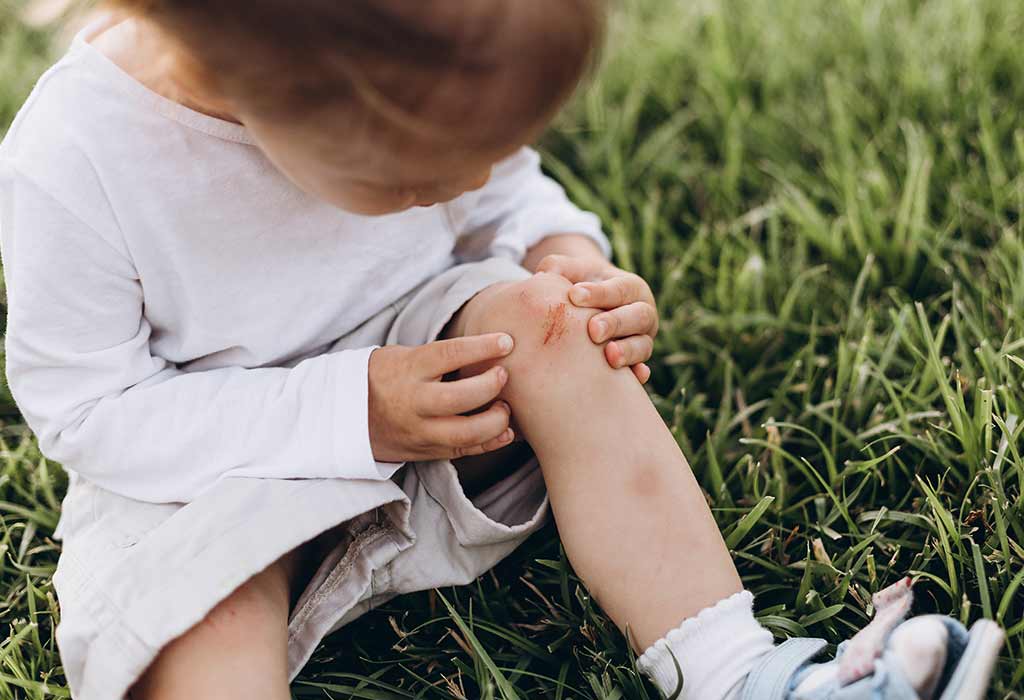
4 Common Causes Of Injuries In Your Baby and How To Keep Him Safe!
An injury to your little one is the biggest nightmare any parent can face! Rightly so, because many children get severely affected by accidents at home, sometimes more than infectious diseases or birth defects. Here is a look at the most common causes for childhood injuries, and how you can prevent them.
As children start growing, they come in contact with the outside world, increasing the risk of them getting hurt. Even though parents are very cautious with their surroundings; childhood injuries are very common and can lead to severe consequences. Moreover, children who suffer severe injuries can carry its memory if they get hurt early on, and it might hamper their holistic development.
Common Causes of Injury
1. Burns
Burns can occur in the house due to various reasons, right from an unattended gas stove or the cute looking diya in the puja room, to electric burns and firecrackers. Some parents put their toddler on the kitchen counter while cooking. Beware, as your child might get hurt by touching the hot utensils.
What To Do
Installing smoke alarms in your house may help you to detect uncontrolled fire immediately. Teach your children what to do in case of a fire emergency. Use safe cooking methods and never leave the stove unattended. Make sure the knobs are closed when not in use and recheck before sleeping. In case of a burn, hold affected area under running cool water, or pour it on the affected area.
2. Drowning
This one might be difficult to fathom, however you don’t have to necessarily venture near a pool for a drowning accident. The household bath-tub or bucket may also lead to a drowning accident.
What To Do
You should always accompany your children while they are getting into bathtubs, swimming pools or natural water bodies. Do not let your child be in the bathtub alone. Give your child a proper swimming gear before going to the pool. Do not trust the float with greater depths; make sure your child learns to swim with the help of a trained professional.
3. Falls
Most parents feel happy to see their child fall and get up on her own. Falling is no doubt the way to making your kids independent, but these falls can be dangerous sometimes.
What To Do
Let your child play on a surface which is soft so that the child doesn’t get severely hurt. Prefer to have the playroom carpeted. You could also put a soft mat on the floor and let your child play on it. You need to take extra care if you have stairs in your house or items which your child can bump into. Never leave your baby alone on a bed, changing table or sofa.
4. Poisoning
Just like drowning, poisoning might seem to far-fetched a cause for baby injuries. However, growing babies are forever curious of their surroundings. Once they develop the ability to pick things up, at some of the other point they are going to start putting these things in their mouth. While some can just give your baby an upset tummy, others can lead to poisoning.
What To Do
Medicines should be stored away from the reach of your children, and if possible, keep the cabinet locked. Update your medical kit frequently, and dispose off expired or unused drugs. Syrups should be stored separately, and your child should not have access to such items. Also watch out for common household items that can cause poisoning – like crayons, make-up, household plants, etc.
General Safety Measures
Do not keep small decorative items that your child can swallow and choke his throat.
Be careful with your furniture, and do not let the toddler sleep on a bunk bed for he can easily get hurt by it.
Keep all your cosmetics, body washes and deodorants away from his reach, as he may try to put them in his mouth.
Keep mosquito repellents away from the reach of children.
Buy toys which are suitable for your child’s age, and from a known and certified manufacturer.
Ensure to cover the balcony railing with boards or nets.
Use special devices to close the doors properly, otherwise your child’s finger may get trapped in the doors.
They say experience is the greatest teacher, and it is inevitable that there will be some mishaps in the journey of growing up. All you need to take care and ensure is that the bruises become great memories for both of you. Enjoy every moment of your toddler’s growth with the assurance that you have done all that is in your capacity to avoid any unexpected and unpleasant shocks and accidents.
Read more
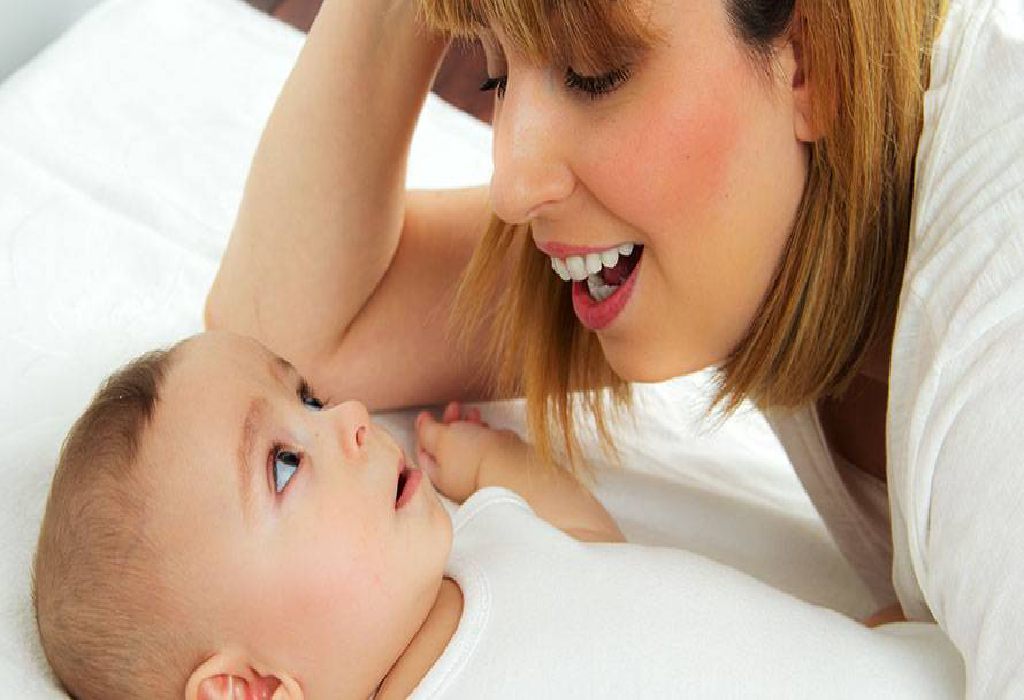
Why Does Your Baby Stare at Your Hands?
Does your dear little one stare at your hands? Are you wondering why your baby gazes at your hands and his crib toys? Is the behaviour of my baby looking at hands normal? If you are stressing over this habit, you need not worry any more. Babies are naturally drawn to contrasting colours and movement, making your hands a captivating sight. Babies begin comprehending depth, distance, and object permanence by observing hands and surroundings, laying the foundation for cognitive and motor skills. Being constantly in motion and often close to their line of sight, your hands provide a perfect opportunity for them to practice this understanding. Keep reading to know why your baby is so fixated on your hands and what it tells us about their growing minds.
Reasons Why Your Baby Stares at Your Hand
Babies are curious beings, constantly exploring their surroundings and learning about the world through their senses. Here, we list some reasons and facts that explain why your baby stares at your hands.
1. Baby Has Blurry Vision in His First Week
In the first week after birth, your newborn is only able to view objects that are present at a distance of about 8 to 10 inches from his eyes. This is about the distance from the baby’s face to your face and hands. Also, your infant has a blurry view of things in the first week (7). So, your baby holds his gaze at your hands for a few seconds when they are 8-10 inches from his face.
2. Baby Experiences Transformation From Black and White to Colourful Vision
Your newborn views objects and surroundings only in black and white colours and some shades of grey soon after his birth. As your baby grows, his vision develops into colour vision. Your baby finds various contrasting colours and geometric patterns that are entirely new to view, so he stares at them. Your baby may develop good colour vision by five months (5), and you can find him staring at your hands and seeing various other colourful objects in his surroundings.
3. Baby Is Widening His Visual Sphere
As your infant grows 2 to 3 months old and more, his vision and brain develop significantly, thus offering him a broader visual sphere. At this stage, your little one develops stronger eye muscles than before. This helps him look for the details of any object before him. So, when you bring your hands in front of your infant’s face, your baby will stare at them, taking in the details, such as your hand and finger movements. You will also find your little one gazing at his own hands
4. Baby Is Now Recognising Things
When your baby turns 3 to 7 months old, he recognises familiar faces and toys he sees regularly (1). Even if your baby cannot call to you at this age, your face, hands, and toys that he sees regularly are familiar to him. So, when you bring your face or hands in front of his face, your baby finds it familiar and stares at it happily with a smiling face.
5. Baby Now Has Improved Depth Perception
When your infant turns 3 to 6 months old, his perception ability improves substantially, and he can view objects and people located farther away (about three feet away). Your baby develops depth perception that helps him gaze at objects better (4). When you bring your face or hands in front of your baby’s face, he enjoys staring at you and your hands till you move away. This is because his gaze can now linger.
FAQs
1. How can parents encourage hand-eye coordination in babies?
Parents can encourage hand-eye coordination by providing toys and objects for their baby to grasp and manipulate. Activities like reaching for toys, playing with blocks, and stacking cups help develop these skills (6).
2. Should parents be concerned if their baby stares at their hands excessively?
Occasional staring at hands is normal behaviour for babies. However, if it seems to be obsessive or accompanied by other concerning behaviours, it may be worth discussing with a paediatrician to rule out any underlying issues (2).
3. When do babies notice their hands?
Babies start to notice their own hands around two months of age and begin to track and focus on objects around 3 to 4 months (3). By six months, they can fully grasp and manipulate objects, including their hands.
There! Now, whenever you find your baby staring at hands without shifting his gaze, rest assured that it is normal! While it may seem simple, it signifies a deeper sensory and cognitive discovery process. So, next time your little one fixates on your hands, embrace the moment as an opportunity for connection and growth.
References/Resources:
1. Your Baby’s Hearing, Vision, and Other Senses: 7 Months; Nemours KidsHealth; https://kidshealth.org/en/parents/senses-7mos.html
2. Behavior; Hand Staring, Mouthing Objects; World Federation of CdLS Support; https://www.cdlsworld.org/xwiki/bin/view/ATEPublic/ATE000270
3. Homma. T; Hand Recognition Obtained by Simulation of Hand Regard; PubMed Central; https://www.ncbi.nlm.nih.gov/pmc/articles/PMC5962778/; May 2018
4. Boyd. K; Vision Development: Newborn to 12 Months; American Academy of Ophthalmology; https://www.aao.org/eye-health/tips-prevention/baby-vision-development-first-year; February 2022
5. Infant Vision: Birth to 24 Months of Age; AMERICAN OPTOMETRIC ASSOCIATION; https://www.aoa.org/healthy-eyes/eye-health-for-life/infant-vision?sso=y
6. Rymanowicz. K; Infant vision development: Helping babies see their bright futures!; Michigan State University; https://www.canr.msu.edu/news/infant_vision_development_helping_babies_see_their_bright_futures; December 2014
7. Your Baby’s Hearing, Vision, and Other Senses: 1 Month; Nemours KidsHealth; https://kidshealth.org/en/parents/sense13m.html
Also Read:
Signs of Intelligent Baby
Reasons On Why Your Baby Keeps Staring?
When Do Babies Recognize Their Parents & Other Familiar Members?
When Do Babies Make Eye Contact and How Can Parents Encourage?
Read more
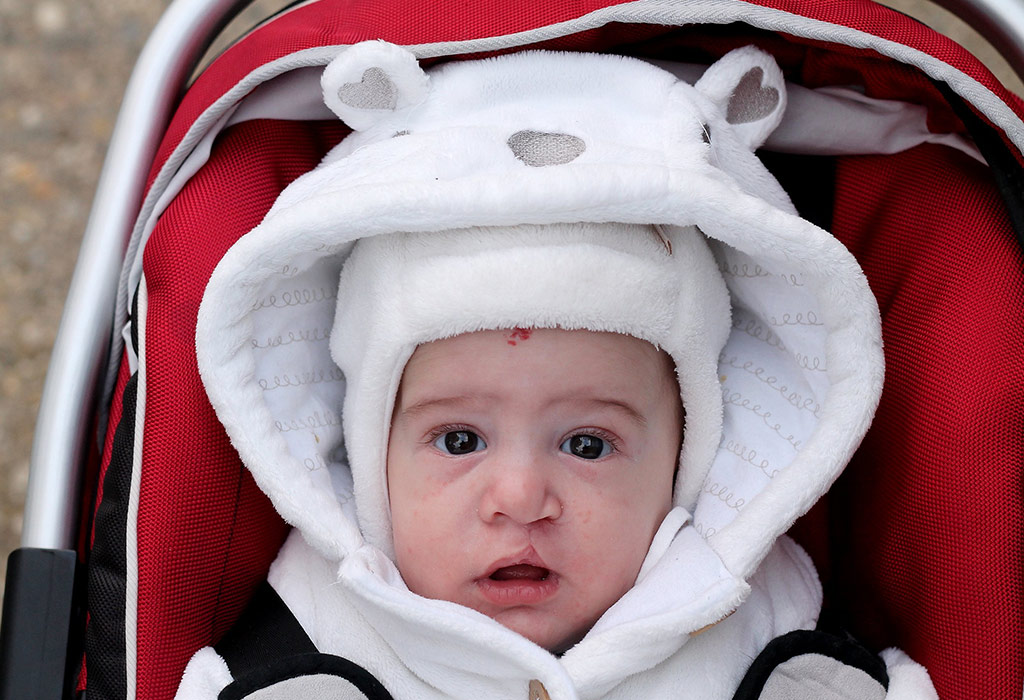
Cleft Lips and Cleft Palate in Babies
Children are sometimes born with a split in the upper lip. This is called cleft lip (cleft meaning split). While some children have only a small notch on their lips, others may have prominent splits. In some babies, the cleft can be on both sides of the lips. Let us figure out what causes cleft lips in babies and how it can be treated.
There is no definite cause for cleft lip or cleft palate in children. Researchers say that both genetic and environmental conditions may be responsible for it. So, either a child may inherit his cleft lip or palate from someone in the family, or it may be caused due to the intake of certain medications during pregnancy.
Also, women who drink, smoke, or take drugs during pregnancy are at higher risk of giving birth to infants with birth defects like clefts.
Children develop a cleft lip or palate in the mother’s womb. It is also believed the cleft lips or palates occur when some parts of head, face, and skull don’t join properly during the development phase in the mother’s womb.
Cleft lips or palates are diagnosed soon after birth. In some cases, it is also seen in the 2nd level scan which is done in the 18th or 20th week of pregnancy.
Sometimes a cleft palate is not visible at all in newborns. It is hidden by the roof of the mouth. It is called sub-mucous cleft palate. This is detected only when the baby is 3 to 5 years of age. Children with this condition may have nasal sound while speaking. They may also not be able to blow a candle or drink out of a straw.
A cleft lip or cleft palate can only be fixed with a surgery. If your baby has a cleft lip, he should have a surgery when he is 2 to 3 months old. If your baby has a cleft palate, then his surgery will be scheduled when he is 6 to 9 months old. If your baby has both, then the first surgery will take place when he is 3 months old and the 2nd surgery will take place when he is 9 months old. A special cleft team within the specialist centre will work on your baby to treat this problem. The team usually consists of cleft surgeons, cleft specialist doctors and nurses, speech therapists, clinical psychologists, children’s dentists, hearing specialists, and pediatric ENT surgeons.
If the cleft affects your baby’s gums, then he may have to go through a minor graft operation when he is 9 to 11 years old.
What Do Cleft Lip and Palates Look Like?
A cleft lip baby has a split on the upper lip. In some children, it is as small as a notch, while in others it may look like a prominent cut.
Cleft palate, on the other hand, is a split in the roof of the mouth. Cleft palate is usually a small gap in the roof of the mouth. But if the condition is severe, then the roof of the mouth may be completely separated.
Cleft palate can occur independently without a cleft lip.
Who Can Suffer from Cleft Lip and Cleft Palate?
This condition affects around 700 babies annually. It is the 4th most common birth defect in children in the US. Clefts are usually seen in children from Asian, Latino or Native American descent. Cleft lips appear more in boys without a cleft palate, whereas cleft palate is seen more in girls without cleft lip.
How Do Cleft Lips and Cleft Palates Form?
Cleft lip and cleft palates are formed in the first 6 to 8 weeks of pregnancy. During this phase, the bones and tissues of baby’s upper jaw and mouth come together to form the upper lip and the roof of the baby’s mouth. If these parts don’t fuse together normally, then a cleft lip or palate forms.
Both cleft lips and cleft palates vary in size. While for some it may be almost invisible, in others it may appear more prominently and may cause issues.
What Are the Causes?
The definite causes of cleft lips and cleft palates are unknown. It is believed that a cleft lip or palate could be caused due to changes in the genes or combination of genes. The other factors that may be responsible for causing cleft lip and cleft palate in newborns include:
Smoking during pregnancy
Women diagnosed with diabetes before pregnancy
Use of certain medicines during pregnancy, especially the medicines used to treat epilepsy
Problems Faced By Children Having a Cleft Lip or Palate
The symptoms associated with cleft lip and cleft palate are as follows:
A child who has a split in the palate or in the lip will have eating issues. The food and liquid will pass from the mouth back towards the nose. There are specially made baby bottles and nipples available in the market that will help your baby to eat. Children with split palate may have to wear a manmade palate to help him/her eat better.
You may observe that children with cleft palate may have hearing issues.
A nasal tone while speaking is also one of the symptoms of cleft palate.
Children suffering from cleft palate may also have dental issues like cavities or malformed or displaced teeth.
Diagnosis and Tests
As discussed before, cleft lip or palate can either be diagnosed with the 2nd level of ultrasound that is usually done in the 18th or 20th week of pregnancy or it is diagnosed once the baby is born. So, they are either seen in the scan, which is rare, or picked immediately after birth.
Risk Factors That May Increase the Chances of a Baby Developing a Cleft Lip or Cleft Palate
The two main risk factors that increase the chances of a baby developing a cleft lip or cleft palate are:
Mothers who are in the habit of smoking, drinking, and taking drugs during pregnancy usually give birth to children with clefts. These habits usually affect the baby in the womb during the first and second week of pregnancy.
Also, children born to mothers who were taking seizure/anticonvulsant drugs, acne drugs containing Accutane and methotrexate, or drugs used for treating cancer, arthritis, and psoriasis, during pregnancy, are on the higher risks of developing clefts.
Complications With Cleft Lip and Cleft Palate
Children with cleft lip and cleft palate can have few complications that can be taken care of through the right treatment. Problems with cleft lip and palate vary from children to children. The most common ones are:
Cleft palate can cause severe hearing problems. If the problem is not treated on time, then ear infections caused due to cleft palate can cause hearing loss.
Children with cleft lips or palates also have serious speech issues. Their speech is difficult to comprehend and in some cases, their speech is nasal.
Children with clefts have far more cavities than other children. Some children also have missing, extra, malformed or displaced teeth. Children with cleft palates have a more severe dental complication. They may have alveolar ridge defect. Children suffering from alveolar ridge defect may have replaced, tipped or rotated permanent teeth. It can also prevent permanent teeth from appearing or prevent alveolus, the bony upper gum from forming.
Who Can Treat Clefts?
There is a specialized and dedicated medical team that specialises in treating clefts-
A cleft surgeon who performs necessary surgeries on lips and palates.
Specialised cleft doctors and nurses who help in evaluating the problem.
An ENT doctor to evaluate and treat hearing problems.
An oral surgeon who operates on the upper jaw and repairs the cleft of the gum.
An orthodontist who repositions the teeth.
A prosthodontist who makes artificial teeth and other necessary teeth accessories to ensure its sound function and also to set them right.
A speech therapist to work on speech and eating issues
A hearing specialist or audiologist to monitor hearing.
A clinical psychologist to help the child and family cope with its complications through counselling.
Treatment Of Cleft Lips/Palates
Management of cleft lip or a cleft palate can only be done through surgeries. A cleft lip can be treated with two surgeries. The first surgery is usually done under very light anaesthesia when the baby is 3 months old. The second surgery is done when the baby is about 9 to 12 months old.
The treatment of cleft palate can be extended to 18 years of age involving multiple surgeries and cleft palate ultrasound from time to time to determine the next course of action. To create a functional palate, the first surgery usually takes place when the baby is 6 to 12 months old. This surgery also protects the middle ear from getting infected and helps in the proper development of teeth and bone. The second surgery of cleft palate takes place around the age of 8. This is to fill in the upper gum line so that it can support the permanent teeth structure. Once the permanent teeth are formed, braces are put to straighten them.
Other surgeries may be performed on children with cleft palates to fix the appearance of lips and nose, close openings between mouth and nose, and to realign jaws. A final surgery may be required during adolescence to remove the scar from the initial surgeries.
Dental Care for a Child With a Cleft Lip or Cleft Palate
As mentioned earlier, children with cleft lips and cleft palates have dental issues that require greater care and may require close monitoring. But the main dental care practices remain the same as other kids.
Early dental care practices include proper cleaning, good nutrition, and fluoride treatment for healthy teeth. Children with cleft lips and palates are usually advised to use toothette, a mouthwash with a sponge on the handle which is used to swab the teeth. This is because a normal soft brush may not work with children with clefts due to the irregular shapes of their teeth.
Children with clefts have to go through orthodontic treatment for proper development of the jaw and aligning of the permanent teeth.
A prosthodontic consultation is also important for children with clefts. This is needed to assess the child’s need and make either a dental bridge, speech bulbs or palate lifts based on the child’s problem. The prosthodontist will work closely with an oral and plastic surgeon and speech pathologist to fix the problem.
How Should You Breastfeed Your Baby with Cleft Lip or Palate?
While children with cleft lips can be breastfed even before the surgery, children with cleft palates may have issues with breastfeeding and may need bottles and nipples designed for children with clefts, which are easily available in the market these days. In this case, you have to express your breast milk and put it in the bottle to feed your baby.
In order to breastfeed children with clefts, mothers have to try various breastfeeding positions, While, these positions will work with children with cleft lips, the same may not work with children with cleft palate. Doctors may suggest at a late stage that your baby wear a manmade palate to eat better.
Is There Any Possibility Of Prevention?
Maintaining a healthy lifestyle and food habits during pregnancy may help prevent clefts in children. Avoid medications of any kind and strictly avoid alcohol, smoking and use of drugs during pregnancy. These are the only possible preventive measures that you can take during pregnancy.
How to Help Your Child
Children with clefts sometimes face teasing or bullying due to their appearance or speech issues. Encourage your child to be confident. Ensure that everyone at home is warm, supportive, and accepting. Get your child involved in sports, music and other curricular activities. You may even speak to his teacher and set up a session for his classmates to brief them on clefts and the challenges that come along with it. Take the help of a medical practitioner in doing so.
With multiple surgeries and regular consultations with doctors, children with clefts miss school frequently and may find it difficult to cope with academic and peer pressure. But, remember that children with clefts can grow up to be healthy and happy adults. All they need is your love, support, and acceptance.
Also Read: Tongue Tie in Newborn Babies
Read more
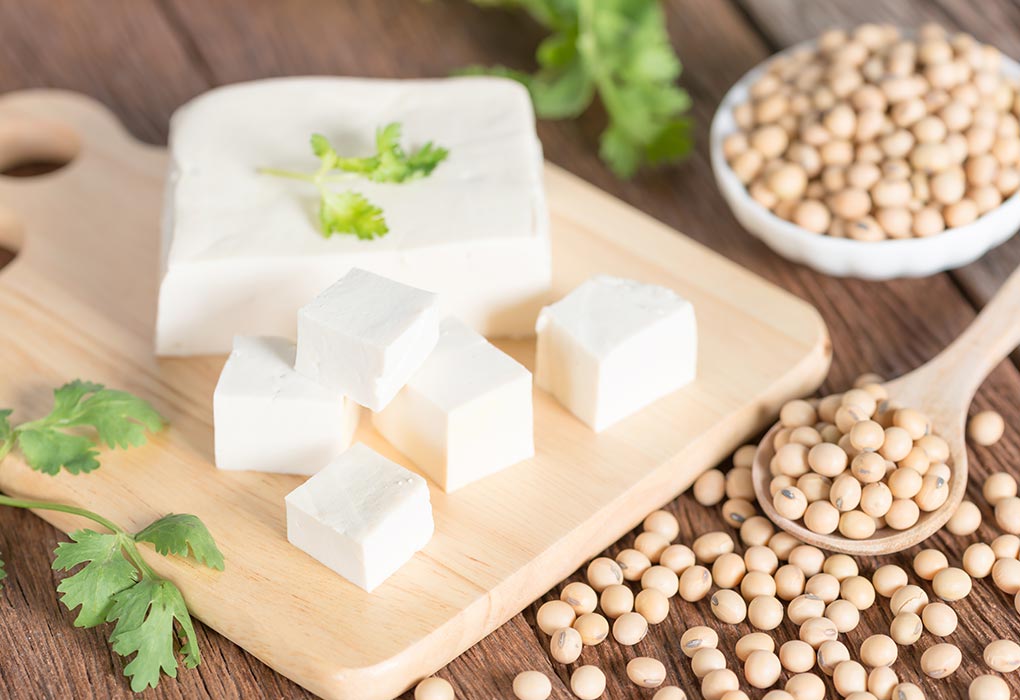
Tofu for Babies – When and How to Introduce?
Once your little munchkin starts reaching a stage where you need the transition from breast milk to solids (additional sources of nutrition), you may start looking for healthy food options. During this search, you may come across tofu. Tofu, which is mostly used in Asian cuisines, has now become a favourite food with many people around the world due to its versatility and nutritional benefits. It is packed with protein, calcium, and essential amino acids, making it a highly nutritious choice. However, can your baby benefit from this superfood? Is tofu good for babies, and when and how can you introduce it into your baby’s diet? Read on to find out the answers to your questions on tofu for babies!
What Is Tofu?
Tofu is soybean cheese, and it is made by coagulating soybean milk, the same way cottage cheese is prepared from milk. Tofu has high protein content, which makes it an ideal replacement of meat for those on a vegetarian diet. Tofu has emerged as a superfood for babies and young children, because of its many health benefits. Tofu is available in different flavours, texture and hardness. Following are the widely used varieties:
1. Firm or Hard Tofu
This kind of tofu has a hard texture like meat, and it is available in blocks, just like cottage cheese. It is mostly used in dishes with gravy or dishes that require good consistency for holding the dish together. You may use firm tofu for babies as a healthy snacking option.
2. Silken or Soft Tofu
This kind of tofu is softer, smoother, and has custard-like consistency. It is mostly used in sauces, desserts, smoothies, etc. You can also give silken tofu as baby food to your munchkin.
Can Babies Eat Tofu?
Yes, it is safe for babies and toddlers to consume tofu. However, you should be cautious of potential allergic reactions. Tofu is made from coagulated soy milk, which is a common food allergen. If a family member or the baby’s sibling has a soy allergy, it is best to consult a pediatrician before introducing tofu to your baby’s diet.
What Is the Right Time to Introduce Tofu to Babies?
Most babies have their first solid meal at around six months of age. If you wish to give tofu to your baby, you should wait until he is at least eight months old. Tofu has complex proteins, and babies may not be able to digest it at a younger age.
Nutritional Value of Tofu
Tofu is a nutrient-dense food packed with essential vitamins and minerals, making it an excellent addition to your baby’s diet. Here’s a look at the nutritional value of tofu. The table represents the approximate nutritional content available in ½ cup or 124 grams of tofu.
Nutrient
Value
Water
105 g
Energy
94.2 kcal
Carbohydrates
2.32 g
Protein
10 g
Potassium
150 g
Sodium
8.68 mg
Total Fat
5.93 g
Dietary Fibre
0.372 g
Cholesterol
0 mg
Calcium
434 mg
Iron
6.65 mg
Vitamin A
105 IU
Magnesium
37.2 mg
Phosphorus
120 mg
Zinc
0.992 mg
Copper
0.239 mg
Manganese
0.75 mg
Selenium
11 µg
Folate
186 µg
What Are the Benefits of Tofu for Infants?
Tofu is a highly nutritious food that can be beneficial for infants. Here are some of the key benefits of including tofu in your baby’s diet:
1. Rich in Protein
Tofu is loaded with protein, which is essential for your baby’s growth and development. Protein helps in building muscles, repairing tissues, and producing enzymes and hormones. Including tofu in your baby’s diet can ensure they receive an adequate amount of this vital nutrient.
2. High in Iron
Iron is crucial for healthy blood formation and preventing anemia. Tofu is an excellent source of iron, which supports the development of your baby’s brain and immune system. Ensuring your baby gets enough iron is important for their overall health and well-being.
3. Good Source of Calcium
Calcium is necessary for strong bones and teeth. Tofu provides a good amount of calcium, which is vital for your baby’s skeletal development. Including calcium-rich foods like tofu in your baby’s diet can help in maintaining healthy bone density as they grow.
4. Soft Texture and Versatility
Tofu’s soft texture makes it a great option for your baby, as it is easy to chew and swallow. You can give it to your baby in many forms, such as mashed, pureed, or cut into small pieces. This versatility allows you to incorporate tofu into various meals, making it easier to introduce to your baby’s diet.
What Are the Side Effects of Tofu on Babies?
While tofu is generally safe and nutritious for babies, it is important to be aware of potential side effects. Monitoring your baby for any adverse reactions when introducing tofu is crucial to ensure their safety and well-being.
1. Allergic Reactions
Tofu is made from soybeans, a common allergen that can cause allergic reactions in some babies (1). Symptoms may include hives, swelling, difficulty breathing, and digestive issues. If your baby shows any signs of an allergic reaction, stop feeding them tofu and consult a pediatrician immediately.
2. Gastrointestinal Issues
Some babies may experience gastrointestinal problems such as gas, bloating, or diarrhea after consuming tofu. This can be due to the baby’s digestive system not being fully developed to handle soy products. If your baby has a sensitive stomach, introduce tofu in small amounts and observe their reaction.
3. Thyroid Function Interference
Tofu contains goitrogens, substances that can interfere with thyroid function (2). In large amounts, these can potentially disrupt the production of thyroid hormones, which are essential for growth and development. While moderate consumption is generally safe, it is best to avoid excessive amounts of tofu in your baby’s diet.
4. Hormonal Effects
Soy products like tofu contain phytoestrogens, plant compounds that mimic estrogen in the body (3). Some studies suggest that high consumption of soy products could affect hormone levels in young children. Although the evidence is not conclusive, it is advisable to feed tofu in moderation to minimize any potential hormonal impact.
How to Serve Tofu to Babies?
Tofu has complex proteins, and babies may not be able to digest it at a younger age. Here’s how you can serve tofu to your baby at different stages:
1. For 6+ Months
Pureed or Mashed Tofu: Blend or mash tofu until it reaches a smooth consistency. You can mix it with breast milk, formula, or a familiar vegetable puree to create a gentle introduction to this new food.
Silken Tofu in Soups: Incorporate small amounts of silken tofu into soups or broths. The tofu will easily blend in, providing a creamy texture without being overwhelming.
2. For 9+ Months
Tofu Cubes: Cut tofu into small, bite-sized cubes that are easy for your baby to pick up and chew. These can be served as finger food or added to other dishes.
Tofu Scramble: Make a soft tofu scramble by lightly cooking tofu with finely chopped vegetables. Ensure the pieces are small and soft enough for your baby to handle and chew.
3. For 12+ Months
Tofu Stir-Fry: Lightly stir-fry tofu with a variety of soft vegetables. Cut everything into small, manageable pieces and avoid adding any strong seasonings or sauces.
Tofu Patties or Nuggets: Create small tofu patties or nuggets that your baby can easily hold and eat. These can be baked or lightly pan-fried in a healthy oil.
Mixed Meals: Incorporate tofu into your baby’s meals by mixing it with grains, such as rice or quinoa, and vegetables to create a balanced, nutritious dish.
How to Buy and Store Tofu?
Tofu can be easily procured from any supermarket, grocery or gourmet store in your locality. Usually, you may not be able to find baby-size servings of tofu. Therefore, you may be required to store the unused tofu. The unused tofu can be stored in a jar filled with water in the refrigerator for up to seven days. However, you must change the water of the jar on a daily basis. Fresh tofu renders a sweet and pleasant aroma, and if it smells sour or unpleasant, it may have gone bad or become stale. The best idea is to always taste tofu before serving it to kids or preparing a meal out of it. Its nutritional value entirely depends on its freshness.
Precautions to Take When Feeding Tofu to Your Babies
Feeding tofu to your baby can be beneficial, but it’s important to take certain precautions to ensure their safety and health. Here are some key points to keep in mind when introducing tofu to your baby’s diet (4):
1. Start with Small Amounts
Begin by offering small portions of tofu to monitor your baby’s reaction. This helps in identifying any potential allergies or sensitivities early on.
2. Check for Allergic Reactions
Since tofu is made from soy, a common allergen, keep an eye out for signs of an allergic reaction such as hives, swelling, or difficulty breathing. Consult your pediatrician if you suspect an allergy.
3. Introduce Tofu Gradually
Gradually increase the quantity of tofu in your baby’s diet. This allows their digestive system to adjust to the new food without overwhelming it.
4. Choose the Right Type of Tofu
Opt for organic and non-GMO tofu to avoid exposure to harmful pesticides and genetically modified organisms. Soft or silken tofu is usually best for babies due to its smoother texture.
5. Ensure Proper Storage
Store tofu properly to avoid contamination. Keep it refrigerated and adhere to the expiration date. Once opened, consume it within a few days to ensure freshness.
6. Monitor for Gastrointestinal Issues
Some babies may experience gas, bloating, or diarrhea after eating tofu. If you notice any of these symptoms, reduce the amount of tofu or temporarily stop feeding it and consult your pediatrician.
7. Balance with Other Nutrients
While tofu is nutritious, ensure it is part of a balanced diet that includes a variety of other foods. This ensures your baby gets a wide range of essential nutrients.
Tofu Recipes for Babies
1. Tofu and Fruit Smoothie
You can add a healthy twist to a usual fruit smoothie recipe by adding some tofu to it. This is a great way of feeding tofu puree to your baby.
Ingredients
1 ripe banana
1 ripe mango
½ cup tofu (use silken tofu for this recipe)
How to Prepare
Peel the mango and cut it into small pieces.
Peel the banana and slice it.
Put the fruits and tofu in the blender and churn them.
You may add more tofu as per the required consistency.
Feed this smoothie with a spoon to your baby.
2. Tofu and Tomato Soup
This is one the most nutritious tofu snacks for babies that you can make in a jiffy.
Ingredients
1 medium sized tomato, chopped
1 small onion, finely chopped
1 teaspoon olive oil
2/3 cup soft or silken tofu
½ cup soy milk
Few fresh basil leaves
How to Prepare
Heat oil in a flat pan.
Add chopped onions and sauté till they turn golden brown.
Add chopped tomatoes and basil leaves; cook until they turn mushy and tender.
Pour the soy milk and cook it with the rest of the mixture for a few minutes.
Remove from heat and mix silken tofu into the mixture.
Puree the mixture after cooling down by churning it in the blender.
3. Tofu and Vegetable Pasta
This scrambled tofu recipe for babies is not only highly nutritious, but also delicious. However, make sure your baby is old enough to be able to chew.
Ingredients
1 small onion, chopped
½ green bell pepper, deseeded and finely chopped
¾ cup tomato puree
1 cup whole wheat pasta (any shape)
Few basil leaves
1 teaspoon olive oil
How to Prepare
Boil pasta and keep aside.
Take a saucepan, heat oil in it.
Saute onions until they turn translucent.
Now, add peppers and cook for a few minutes.
Add crumbled tofu and keep cooking it on medium heat. If there is any excess water, you may remove it.
Add tomato puree and basil, add cook for 3 to 4 minutes.
Add pasta and mix well. Serve this warm.
4. Red Bell Pepper and Tofu Soup
This yummy soup can be served warm as well as cold.
Ingredients
¼ cup soft or silken tofu
1 medium-sized red bell pepper
1 cup water
¼ teaspoon black pepper, freshly ground
How to Prepare
De-seed the bell peppers and grill them for a few minutes or until tender.
Place them in a poly bag for a few minutes for the skin to become loose. Remove the skin.
Churn the bell pepper in the blender into a smooth puree.
Take a pan, put puree and water, and cook for a few minutes.
Add tofu, mix well, and cook until all the ingredients form a single consistency.
Add pepper and serve.
5. Cracker Coated Tofu Fingers
This super easy and super quick recipe may become your baby’s instant favourite.
Ingredients
1 cup tofu
6 to 7 crackers (Graham crackers work best, but you may use any cracker or your choice)
How to Prepare
Cut tofu into cubes or long fingers.
Take the crackers and put them in a zip lock bag, and gently crush them using a roller pin.
Empty the contents in a plate and roll the tofu chunks nicely into the cracker mixture.
You may improvise the above-mentioned recipes as per the taste and preference of your baby. You can also add tofu to Indian parathas by easily mashing it, seasoning it with salt and pepper, and stuffing it into the paratha dough before rolling and roasting.
If you are not sure about using a particular ingredient, discuss it with your baby’s paediatrician.
How to Prepare Tofu for Baby-Led Weaning?
Preparing tofu for BLW involves making sure it is cut into appropriate sizes and cooked in a way that suits your baby’s developmental stage. Here’s how to cook tofu for baby at different stages:
1. 6+ Months Old
For babies around 6 months, you can:
Puree: Blend tofu into a smooth consistency.
Mash and Mix: Mash tofu and mix it into other foods like oatmeal, quinoa baby cereal, lentils, mashed avocado, or hummus, or preload it onto a spoon.
Serve in Strips: Offer tofu as large strips that your baby can hold and explore.
2. 9+ Months Old
By 9 months, as your baby refines their pincer grasp and can pick up small food pieces with their thumb and finger, you can:
Cut into Small Pieces: Chop tofu into small, bite-sized pieces that are manageable for your baby to pick up.
Continue Larger Pieces: Keep offering larger pieces as well so your baby can practice biting and chewing.
Additionally, this is a great time to introduce mixed foods frequently, as babies are more open to trying and accepting new flavors and textures. If your child hasn’t yet experienced mixed foods, it might be more challenging to introduce them as they get older.
FAQs
1. Should you give frozen tofu to your baby?
Ideally, tofu should be consumed within a week after you have opened the packet and stored under refrigeration. But, if you wish to store it in a freezer, you may do so by keeping it in a zip-lock bag. It may change its appearance and texture, and thus it may turn spongy and darker. However, you may give frozen tofu to your baby. But, it is always preferable to serve fresh tofu, and avoid it frozen.
2. Can tofu be a choking hazard for babies?
Tofu is generally soft and easy to chew, but it can still pose a choking risk if not prepared correctly. For younger babies, ensure tofu is cut into small, manageable pieces or pureed to reduce the risk. Always supervise your baby while eating and consult with your pediatrician if you have concerns about choking hazards.
3. Is it necessary to use organic tofu for babies?
While organic tofu may be preferable to avoid potential exposure to pesticides and GMOs, it is not strictly necessary. The most important aspect is to ensure tofu is fresh, properly prepared, and served in an age-appropriate manner. If organic options are not available, regular tofu can still be a healthy part of your baby’s diet.
Sometimes, babies may be allergic to soy and soy products. Therefore, if your baby is allergic to such products, you should be careful that you do not give any food that may contain soy products in it.
References/Resources:
1. Soy; American College of Allergy, Asthma & Immunology; https://acaai.org/allergies/allergic-conditions/food/soy/
2. Messina. M, Redmond. G; Effects of soy protein and soybean isoflavones on thyroid function in healthy adults and hypothyroid patients: a review of the relevant literature (Thyroid); National Library of Medicine; https://pubmed.ncbi.nlm.nih.gov/16571087/; March 2006
3. Straight Talk About Soy; The Nutrition Source: Harvard T.H. Chan; https://nutritionsource.hsph.harvard.edu/soy/
4. When, What, and How to Introduce Solid Foods; CDC Nutrition; https://www.cdc.gov/nutrition/infantandtoddlernutrition/foods-and-drinks/when-to-introduce-solid-foods.html
5. Messina. M, Rogero. M, Fisberg. M, Watzberg. D; Health impact of childhood and adolescent soy consumption (Nutrition Reviews); National Library of Medicine; https://pubmed.ncbi.nlm.nih.gov/28838083/; July 2017
6. Tofu; Solid Starts; https://solidstarts.com/foods/tofu/
7. Tofu, raw, regular, prepared with calcium sulfate; Food Data Central; U.S. Department of Agriculture; https://fdc.nal.usda.gov/fdc-app.html#/food-details/172476/nutrients
Also Read:
Cheese for Infants
Dairy Products for Babies
Greek Yogurt for Infant
Introducing Paneer to Babies
Read more
World Breastfeeding Week 2026 – History, Significance & Themes
The World Alliance for Breastfeeding Action (WABA) organises the annual event of World Breastfeeding Week from August 1st to August 7th. The idea behind organising such an event is solely to promote, support, and encourage breastfeeding amongst new mothers throughout the world.
Why Is World Breastfeeding Week Celebrated?
The World Breastfeeding Week is organised and celebrated every year to protect, promote, support and encourage breastfeeding mothers everywhere across the globe. World Breastfeeding Week was celebrated for the first time in the year 1992, and since that time, it has been recognised by organisations and institutions worldwide. The WABA had decided to dedicate an entire week to increase awareness and spread more information about breastfeeding to communities worldwide, which gave birth to the World Breastfeeding Week (WBW). The World Alliance for Breastfeeding Action designs a new theme and slogan for the World Breastfeeding Week every year. The World Breastfeeding Week 2026 theme is “Breastfeeding for a Sustainable Start in Life: Strengthen What Works”.
History of World Breastfeeding Week
The importance of breastfeeding was globally recognised back in 1990, when the World Health Organization (WHO) and United Nations International Children’s Emergency Fund (UNICEF) created a memorandum known as the Innocenti Declaration to protect, promote and support breastfeeding. The Innocenti Declaration is a formal document that was created to achieve goals including:
Creating a national breastfeeding committee and appointing a national breastfeeding coordinator across countries.
Facilitating the provision of maternity care practice and taking measures to ensure that women are adequately nourished to feed their children and remain healthy themselves.
Formulating and enforcing laws to protect the breastfeeding rights of women.
Formulating an act to implement all the articles of the International Code of Marketing of Breast Milk Substitutes and WHO resolutions.
Enabling women to exclusively breastfeed their babies up until 4-6 months of age.
The World Alliance for Breastfeeding Action (WABA) was formed in the year 1991 to execute all the goals outlined in the Innocenti Declaration. WABA is responsible for spreading the awareness and importance of breastfeeding at a global level. Some of the important initiatives of WABA include:
Supporting and encouraging mothers to continue to breastfeed
Baby-friendly hospital initiatives
Guiding and educating the fathers to support the mothers, health care workers, and the community
Framing of laws and policies to protect and support breastfeeding mothers
How to Celebrate World Breastfeeding Week?
The World Breastfeeding Week (WBW) celebrations are meant to unite the breastfeeding community all around the world, enhance public support towards breastfeeding, and achieving the goals of the Innocenti Declaration. In the first year of its celebration, around 70 countries were involved in the celebration of WBW, but today this number has grown to 170 countries. There are many ways to celebrate the WBW; you can do any one or more of the following things.
1. Breastfeed Your Little One
The best way to celebrate World Breastfeeding Week is, of course, by starting to feed and nourish your little one! While we all know a mother is always there to feed her baby irrelevant of any dates or celebrations, if you are in that phase of your life where you’re nursing your baby, then you must definitely do so with gusto during this week!
2. Attend Events, Lectures, or Walks Sponsored by Various Agencies
Many institutions sponsor walks, seminars, etc. to create awareness during WBW. They provide tees with logos, bracelets, etc., to show their support towards the cause.
3. Go for a Breastfeeding Vacation
Take some time off from your routine life and go on a vacation with your family. Enjoy the bliss of nursing your baby during this time, without being bogged down by the tasks and worries you deal with daily. Take some time to unwind and relax, indulge in yoga, meditation or any activity that rejuvenates your mind, body and soul. And while planning for the vacation, make sure to include ‘shop for the perfect bra’ in your to-do list, as the right bra can definitely help maintain the health of your breasts, especially during this crucial time. If certain conditions don’t permit you to travel, you can plan a small vacation at home. After all, home is the perfect place to unwind and spend quality time with your little one and your spouse!
4. Post Your ‘Brelfie’
A trend started by the World Health Organisation (WHO) encourages moms to share their breastfeeding selfies or ‘brelfies’ on social media. It was a move to break the stigma regarding breastfeeding in public and also to spread the importance of breastfeeding for the physical and mental development of the child. So when World Breastfeeding Week rolls around, you too can post your brelfie on social media platforms.
5. Share Your Breastfeeding Experience
Breastfeeding is a natural phenomenon, and your experience with your baby is something that you must share with nursing mothers or expecting mothers. In spite of so many efforts to spread awareness regarding the importance of mother’s milk, only 50% of the population of babies are nursed beyond six months of age, and only half of them make it to one year of age. In many underdeveloped countries, mothers are not given any support when it comes to them nursing their babies; there may be issues and problems they’re facing that they don’t have information about. The more you talk about your experiences, the more you can reach out to such people and help them throughout their journey of motherhood.
6. Say Thanks to a Nursing Mom
Take this as an opportunity to say thanks to a nursing mother or a nursing caretaker whom you know. A small word of appreciation and a smile can create a big difference in the lives of many people. If you are one of them, then just take a moment to appreciate yourself for the wonderful gift you’re giving your baby!
7. Breastfeeding Book Club
Start a breastfeeding-themed book club where participants can read and discuss books related to breastfeeding, motherhood, and child development. This initiative can foster a sense of community among book club members and promote awareness about the importance of breastfeeding.
8. Breastfeeding Picnic in the Park
Organize a family-friendly breastfeeding picnic in a local park or public space. This casual gathering allows breastfeeding mothers to connect, share experiences, and enjoy a relaxed time with their babies. Participants can also invite friends and family to support and participate in the event.
9. Breastfeeding Themed Crafts
Host a crafting session for kids and parents to create breastfeeding-themed crafts, such as painting pictures of breastfeeding mothers and babies or making breastfeeding awareness bracelets. This activity can help children understand the natural process of breastfeeding and promote acceptance from a young age.
10. Breastfeeding Storytime
Organize a special breastfeeding-themed storytime event at local libraries or community centers. Invite storytellers to read books that celebrate breastfeeding, motherhood, and the bond between mothers and babies. This event can be engaging for children and informative for parents.
Themes of World Breastfeeding Week
The World Alliance for Breastfeeding Action designs a new theme and slogan to represent World Breastfeeding Week every year. They are specially designed to focus on a particular aspect of breastfeeding. After finalising the theme, the marketing materials such as brochures, posters, banners, advertisements, and websites are designed by the WABA to spread the topic of the year.
These themes, slogans, and materials can be used by government organisations, breastfeeding communities, hospitals, healthcare institutes, pharmaceuticals and other organisations to host seminars, events, lectures, and spread awareness about breastfeeding locally and internationally. The theme for World Breastfeeding Week in the year 2026 is “Breastfeeding for a Sustainable Start in Life: Strengthen What Works.” Some of the past themes of WBW include:
Protecting Breastfeeding: A Shared Responsibility
Support breastfeeding for a healthier planet
Breastfeeding – It’s Your Right
Breastfeeding in the Information Age
Breastfeeding – Education for Life
Breastfeeding – Nature’s Way
Breastfeeding – a Vital Emergency Response
Breastfeeding: Healthy Mothers and Healthy Babies
Mother-Friendly Workplace Initiative (MFWI)
It’s Right of all: Breastfeeding
Breastfeeding: Empowering Women
Breastfeeding and work. Let’s make it work.
Talk to Me! Breastfeeding – a 3D experience
Breastfeeding, a winning goal for life!
Discussing breastfeeding in public, and spreading awareness about it is still considered a taboo subject in many places in India. However, as educated individuals, we must come forward and work towards removing the social stigma surrounding this topic. As an enlightened and responsible citizen, your participation in local celebrations and events will make a significant difference.
Also Read:
Myths and Facts About Breastfeeding
How to Get Started With Breastfeeding
Different Breastfeeding Positions and Tips
Benefits of Breastfeeding for Both Mother and Baby
Read more
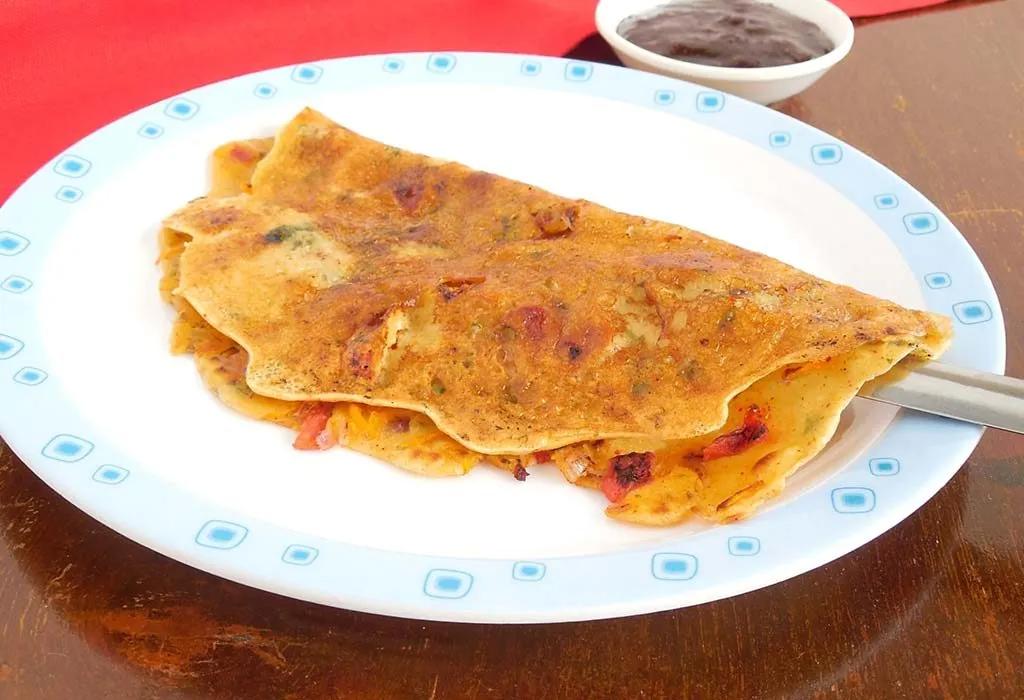
Besan Chilla/Besan Omelette Recipe
Besan, in its cooked form, is very tasty and is known to attract toddlers for its yummy taste. It is also a healthy staple, considering it is rich in protein. Also, it is gluten-free if you want to give a vegan diet to your kid. The protein-rich ingredient is sure to build strong muscles in your little one. Besan chilla or besan omelette for toddlers is a delicious breakfast or brunch recipe to improve the child’s stamina. Also, this can replace an eggless omelette in vegetarian households. Adding finely chopped vegetables of your choice will make this recipe more nutritious and colourful. Here’s a besan cheela recipe for babies that can offer a delicious and healthy meal option for their growing palates.
How to Make Besan Chilla/Besan Omelette for Babies?
Cooking Time
Type
Time (hh:mm:ss)
Preparation Time
00:20:00
Cook Time
00:15:00
Total Time
00:35:00
Cooking Method
Gas Stove
Type of Meal
Vegetarian
Suitable For
Babies above the age of 12 months
Meal Schedule
Breakfast or brunch
Recipe Type
Main Dish
Ingredients
Ingredients
Quantity and Volume
Chick Pea (Besan) Flour
1/2 cup
Water
1 Cup
Salt
To taste
Chopped coriander
A few leaves
Ajwain seeds
½ teaspoon
Ghee
3 tablespoons
Finely chopped vegetables (optional)
½ cup
Instructions
Now let’s look at how to make besan chilla. As mentioned earlier, it’s easy to make, and the recipe does not require any prior preparation.
Below are the step-by-step instructions to prepare besan chilla:
Sieve besan flour so that there are no lumps.
Add water, salt, ajwain, and coriander leaves to it.
Mix well and keep it aside for 15 minutes.
You can add finely chopped vegetables, such as onion, carrot, tomato, capsicum, etc., to make them more nutritious, depending on your baby’s taste.
Heat a pan and pour some ghee on it.
Take the mixed flour and adjust it to a flowing consistency.
Pour the batter over the heated pan and cook for 2 minutes.
Wait until it turns to a light brownish colour, then flip it.
Cook on the other side for another minute.
Fold it in half and take it out from the pan.
Hot besan chilla/besan omelette is ready to be served.
It can be served with any sauce or chutney.
It is best to use the whole batter at once and make as many chillas as possible. The batter loses its taste if refrigerated for later use.
Recipe Tips
Before making this easy besan chilla recipe, here are a few tips.
Do not use the besan without sieving it. It is important to use lump-free flour for easy mixing.
It is best to add boiled and cooled water as you are making this for babies.
Only roast the chilla a little, as roasting too much will give a burnt smell, and kids may not like it.
Use vegetables wisely. Make sure you wash all the vegetables before chopping them.
While mixing the flour, use a whisker and mix briskly so that lumps do not form after adding water.
Nutrition Information (Per 100 Grams)
Nutrient
Value
Energy
236 kcal
Protein
10.7 g
Carbohydrates
30.7 g
Fat
7.9 g
Calcium
31.5 mg
Vitamin A
214.9mcg
Folic Acid
76.5 mcg
Iron
2.7 mcg
Sodium
38.4 mg
Potassium
372.8 mg
Zinc
0.9 mg
Thiamine (Vitamin B1)
0.2mg
Riboflavin (Vitamin B2)
0.1 mg
Niacin (Vitamin B3)
1.2mg
Vitamin C
2.6mg
Health Benefits
This Home-made besan chilla/besan omelette recipe brings a lot of goodness in it for the health of your little one:
Besan is rich in protein and will give your toddler instant energy after playtime (1).
It is a healthy gluten-free (2) diet for vegans and an eggless alternative.
It can fight colds and coughs and clear the nasal tract, as besan is a powerhouse of antioxidants.
Added with nuts and seeds, they are great immune boosters, especially during winter (4).
Ajwain or Carom seeds will aid digestion (3). If your baby is constipated, besan chilla can be the best breakfast you should give.
Buying Guide
Check the expiry date of all products before you buy.
Try to purchase organic besan flour from a good store.
Make sure the flour is packed neatly.
Check for any insects in carom seeds before buying.
All the ingredients that are stored in the store should be packed hygienically.
Do not buy roasted gram flour for this recipe.
FAQs
1. Are besan chillas suitable for baby-led weaning?
Yes, besan chillas can be suitable for baby-led weaning, especially when cut into small, manageable pieces. Ensure the chilla is cooked until soft and easy to chew, and always supervise your baby during feeding to prevent choking hazards.
2. Can besan chilla be made ahead of time and reheated?
Yes, besan chilla can be made ahead of time and reheated. Allow the chilla to cool completely before storing it in an airtight container in the refrigerator. To reheat, warm it up in a skillet or microwave until heated through.
3. Can I customise the filling ingredients in a besan chilla?
Absolutely! Besan chilla is incredibly versatile, allowing you to customise the filling ingredients to suit your preferences. Popular options include chopped vegetables like onions, tomatoes, bell peppers, spinach, or grated cheese for added flavour.
Introducing a simple besan chilla recipe for toddlers can be a delightful way to incorporate healthy ingredients into their diet while exploring new flavours and textures. It is a good breakfast option, and your baby will love eating it without fuss. Besan tastes yummy in fritters, and adding ghee to this recipe will make it tastier. Use fresh besan as stored ones may have worms in them. Check the flour before you use it. After all, the health of our kids is of utmost importance.
References/Resources:
1. Malunga. L. N, Bar-El Dadon. S, Zinal. E, et al.; The potential use of chickpeas in development of infant follow-on formula; Nutrition Journal; https://www.ncbi.nlm.nih.gov/pmc/articles/PMC3913840/; January 2014
2. Is Chickpea Flour / Gram Flour Gluten-Free?; Beyond Celiac; https://www.beyondceliac.org/gluten-free-diet/is-it-gluten-free/gram-flour/
3. Yadav. R, Pradhan. C, Gupta. D, Kaushik. R; Health benefits of Indian aromatic plant Ajwain (Trachycpermum ammi); International Journal of Pharmacy and Technology; https://www.researchgate.net/publication/317041607_Health_benefits_of_Indian_aromatic_plant_Ajwain_Trachycpermum_ammi
4. Using Nuts and Seeds for Immune Support; Institute for Natural Medicine; https://naturemed.org/using-nuts-and-seeds-for-immune-support/
Also Read:
Besan Laddoo Recipe
How to Make Besan Palak Dhokla Recipe
Besan Dhokla Recipe for Babies and Toddlers
Read more
Tools And Trackers


.svg)


Sort By
 Latest
 Most Popular
 Trending
Please select atleast one Filter