

















.svg)
.svg)
.png)


Baby








Suggested articles for you

Can Fan in a Baby’s Room Lower SIDS Risk?
Most homes have air conditioners these days, and parents make their little ones sleep in AC rooms. But is it good to make a baby sleep in an AC room, or should you make them sleep in a room with a ceiling fan? There is no definite reason to say that AC increases the risk of SIDS, and fan in the baby room does not. But why do people say that you should make your child sleep in a room with a fan and not an AC? Let’s find out what is the relationship between fans and SIDS and the benefits of making a baby sleep in a room with a fan. But before, first understand what SIDS is.
What Is SIDS?
Infants are often susceptible to unexplained fatalities in their cribs, which is commonly called SIDS or Sudden Infant Death Syndrome. These casualties usually take place in the crib as the baby sleeps and, hence, are commonly called crib deaths, too. Although the cause of SIDS is not clear, there are certain risk factors both physical and environmental that increase a baby’s risk of succumbing to it.
Babies born with brain defects may not have controlled breathing and sleeping patterns and, hence, they are more prone to SIDS. Premature babies born with low birth weight may have underdeveloped brains that are not mature enough to control sleep and breathing, which increases the risk of SIDS. Babies suffering from respiratory infections may also succumb to SIDS. Apart from physical concerns, certain environmental concerns like sleeping on the stomach, on a soft mattress that sinks in, sharing a bed with parents, etc., which can cause the baby’s airway to be accidentally blocked can also lead to SIDS. Excessive heat in the baby’s room also tampers with the baby’s breathing, potentially leading to sudden infant death syndrome.
Benefits of a Fan in Your Baby’s Nursery
Installing a fan in your baby’s room does have a bunch of advantages. A lot of those help in keeping your baby safe as well as ensuring that he gets the deep sleep that is important for him.
Replacing an air-conditioner in your infant’s room with a fan is highly recommended. The technique by which an air-conditioner treats the air within the room is not conducive to the little one. It usually introduces newer molecules in the air and removes the existing moisture, making the instances of asthma or other respiratory issues as well as skin-related conditions more evident than before. A fan manages to keep the air moving around without getting rid of the natural humidity.
In summers, you may feel like setting up an air-conditioner or a cooler in your baby’s room. While the intent is a noble one, these methods could push the temperature to the extremes, making it difficult for your baby’s body to adapt and adjust once he is out of that room. A fan can bring down the temperature to a level that’s comfortable for the baby, without the prior risks.
A completely closed and a sealed room can make it unnerving for the child. Combined with the sound of the air-conditioner, the kicking-on of the compressor can result in disturbed sleep, too. A fan has a constant light white noise, which is quite similar to what a child hears within the womb. This brings in a sense of safety within the little one and allows him to fall deep in his slumber.
Though if you are using the AC, keep the fan on along with it and also keep the temperature maintained between 25 to 27 degrees Celsius.
How a Fan in a Baby’s Room Lowers the Risk of SIDS?
Wonder how and why does a fan reduce SIDS? While there is no evidence suggesting that a fan in a baby’s room can lower the risk of SIDS, certain factors that lead to SIDS are lowered.
One of the major reasons behind Sudden Infant Death Syndrome (SIDS), is the lack of ventilation in the child’s nursery. To use an AC in a room requires the room to be sealed fully, and that can get a little claustrophobic for the child. However, a simple tiny open window, combined with the airflow supported by the fan’s movement, can allow the air to move around easily and keep good ventilation within the room, therefore, fans reduce SIDS.
Many statistics have observed that the rate of infant mortality due to SIDS dipped by nearly 50% when parents chose to keep windows open rather than closed. Apart from ventilation, there is also a need to keep the levels of carbon dioxide under control within the room. A ventilated room with a fan can ensure your child gets oxygen throughout his sleep cycle.
Which Type of Fan Is Best for a Baby?
The following types of fans are ideal for a baby:
If you opt for a portable fan like a tower or table fan, ensure its base is stable, and it’s positioned out of reach from curious little hands, both for the fan blades and the unit itself. Similarly, ensure power cords are safely out of your baby’s grasp.
Ceiling fans designed for nurseries can prove more efficient in distributing air across bigger areas, especially in hotter months when preventing overheating is essential.
Precautions to Take
When resorting to using a fan in a child’s room, parents often wonder if a fan is safe for a baby’s room or should they go for a type of cooler instead. Using a fan instead of an AC in an infant’s room is a better option. However, you should take these precautions to keep a safe and secure environment for your child.
For your kids’ nursery, you may want to hang some decorative items or visually appealing objects on the base of the ceiling fan to entertain the child. However, that’s a risky endeavour since those objects are at risk of falling directly on your baby.
Make sure your ceiling fan is cleaned every month so as to rid of any dust and dirt that gets accumulated on the blades as well as the body of the fan.
If the nursery of your child is going to evolve to hold bunk beds for the children, make sure the fan is around 5 feet away from the top bunk. This will stop your kids from trying to reach out for the fan and playing around with it.
While you might opt for a table fan instead, a ceiling fan is a better choice since there’s no way your child would be able to reach it. But ensure that it is installed by professionals.
Keep the fan speed at a low to medium setting, so that the noise is minimal and the air doesn’t cool down extensively.
Steer clear of fans obtained from thrift stores or handed down by friends. Previously owned fans might harbour hidden internal electrical issues that are not easily visible.
Employ a fan guard – a mesh cover designed to fit over the blades. This serves as a protective shield for tiny fingers while maintaining uninterrupted airflow.
FAQs
1. Can I Leave the Fan on Overnight in the Infant’s Room?
Absolutely, it’s safe to keep the fan running overnight in your baby’s room. In fact, it can contribute to maintaining a comfortable and cool environment.
2. Does Baby Like Sleeping Under the Fan?
Indeed, the fan generates pink noise, a soothing sound that aids babies in falling asleep more quickly and enjoying longer periods of rest. Pink noise, similar to the sound of rain or the gentle whirring of a ceiling fan’s blades slicing through the air, has a calming effect on children, promoting deeper sleep.
Fans are a better option than ACs. So, make your baby sleep in a room with a ceiling fan, as it also lowers the risk of SIDS. Be on the safer side and stick to a natural technique of conditioning the air than getting used to an artificial one.
References/Resources:
1. Sudden Infant Death Syndrome (SIDS); kidshealth.org; https://kidshealth.org/en/parents/sids.html
2. Sudden infant death syndrome (SIDS); mayoclinic.org; https://www.mayoclinic.org/diseases-conditions/sudden-infant-death-syndrome/symptoms-causes/syc-20352800
3. Sudden Infant Death Syndrome (SIDS); childrenshospital.org; https://www.childrenshospital.org/conditions/sudden-infant-death-syndrome-sids
4. Sudden Infant Death Syndrome (SIDS); stanfordchildrens.org; https://www.stanfordchildrens.org/en/topic/default?id=sudden-infant-death-syndrome-sids-90-P02412
5. Sleeptime: Increase Air Circulation to Lower SIDS Risk; nationwidechildrens.org; https://www.nationwidechildrens.org/family-resources-education/family-resources-library/sleeptime-increase-air-circulation-to-lower-sids-risk
Also Read:
Room Temperature for Newborn Baby
Room Sharing With Baby – Important Tips for Parents
Why Your Baby Should Sleep In Your Room But in a Different Bed!
Read more





Teach Yourself Parentese To Communicate With Your Baby
Baby talk is also referred to as parentese or mother-ese and is usually developed with a cooing pattern which is different from normal adult speech. Studies have shown that infants actually prefer to listen to this type of speech rather than standard adult directed speech. This is not only important in creating an emotional bond between parents and the child but is also important in stimulating the language development centre in the brain of the child.
How Does One Speak In Parentese?
In order to understand Baby Talk and its importance in the language development of a child, first let’s understand what is ‘Parentese’. In this way of speaking, parents use well-formed, elongated consonants and vowel sounds. Also, we open our eyes wide with a smile on our face and over enunciate the words we are speaking. It’s often a sing-song and/or rhythmic tone in which words are stretched like we will say ‘heellooo baaabyy’ instead of ‘Hello Baby’. We also smile as often as we can when speaking with baby.
Talk about how your day has been with your baby or what you are currently doing. For example – If you are changing your baby’s nappy, you can explain how you are doing, what you are doing, what are the steps involved in changing the nappy or anything that you are doing along with your baby.
Parentese Is Different From Baby Talk
In baby talk the words are not clearly pronounced and sometimes they don’t make any sense at all, For example if someone wants to wish a baby good morning – they would say something like goocchy meow or something which is very strange and in no way is related to the original good morning word. This way of communication does not help the baby in anyway.
Benefits of Speaking in Parentese
Speaking in Parentese keeps your baby interested in what you are saying. The moment your baby is interested in what you are saying, she will feel more engaged and closer to you
Parentese helps in the language development of your baby. When you are elongating the words which you are speaking including the sounds of vowels and consonants, your baby’s brain is mapping the sounds and words and forming connections
It builds the neural connections in your baby’s brain which also enhances the memory retention of words. Each word and sound is registering in your baby’s mind
Listen to your baby babbling or cooing and then respond accordingly. Motivate your baby to speak or respond to what you are saying.
Sing songs and rhymes to your baby. Your baby’s ears are attuned to listening to melodious tunes. This will develop your baby’s interest in new vocabulary and teach them that learning can be fun as well
All babies are different and their learning ability and grasping power is different from each other. So while you are trying all of the above and may be some other things as well, give your baby his/her own time and space to develop.
Read more
500 Girl Names That Start With O
A name is never about grouping a lot of letters just for the sake of identification. Names provide a way to understand the person better, about their personality, dreams, and goals. Names starting with the letter O are something you must consider as it is very uncommon and extraordinary.
It is believed that this letter is a very influential and powerful one out of the alphabet. The letter is said to be associated with the number 6 which symbolises service to others and is full of nurture, protection, and love. Girls with names starting with O are truthful, benevolent, and intelligent with a beautiful personality.
Names starting with O is seen in many classical and sci-fi movies, literary works, and even fairy tales. With names that stand out from all the other ordinary ones, here are some beautiful names that will make you fall in love with your little princess all over again.
Popular Girl Names That Begin With O
O girl names have been climbing the baby name charts in recent years thanks to their charm, elegance, and modern appeal. Here’s a list of popular girl names that begin with O:
1. Oabile
A name from Botswana meaning “He has shared”, a beautiful reminder of generosity and community spirit.
2. Oafe
This serene name means “He has given” in Setswana, symbolising a life that is a precious gift.
3. Oageng
A Setswana name meaning “build” or “develop”, ideal for a future leader or visionary with a constructive spirit.
4. Oagile
Means “he or she has built” in Setswana, a name that stands strong with accomplishment and resilience.
5. Oak
Inspired by the mighty tree, this English name symbolises strength, endurance, and natural majesty.
6. Oame
A rare Setswana name, possibly meaning “mine” or “belonging to me”, a possessive and affectionate term of love.
7. Oghenemine
From the Urhobo people of Nigeria, it means “God stands by me”, a powerful declaration of divine presence and support.
8. Oghenerukevwe
A deeply spiritual name meaning “God’s will” in Urhobo, perfect for someone seen as a divine plan in action.
9. Ogheneruno
Translating to “God is my home”, this Urhobo name offers a sense of comfort, belonging, and divine shelter.
10. Ogheneruona
An Urhobo name meaning “God has done well for me”, a joyful expression of gratitude and divine favor.
11. Oghenetega
Means “God is worthy to be praised” in Urhobo, filling every mention with awe and worship.
12. Oghogho
An uplifting name meaning “joy” in Urhobo, bringing smiles and happiness wherever it is heard.
13. Ogow
Likely of Somali origin, with meanings tied to “intelligence” or “brilliance”, a name for the sharp-minded.
14. Ohara
Of Japanese origin, meaning “small plain” or “field”, an earthy, peaceful name with natural roots.
15. Oli
Short and spirited, Oli is often a playful nickname for Oliver or Olivia, and it brings a bubbly, lovable energy to any personality.
16. Omhle
From the Xhosa language, it means “beautiful”, a simple, elegant name that radiates charm and inner grace.
17. Omi
Omi is a Japanese name for girls that means “beautiful” or “beauty”. It’s a soft and lovely name that shows grace and charm.
18. Omira
Of African origin, it means “moonlight”, gentle, radiant, and a guide through the darkest nights.
19. Omotola
A Yoruba name meaning “a child is worth wealth”, beautifully valuing children as the greatest treasure.
20. Onaka
This name is linked to Japanese roots, often interpreted as “middle of the stomach” or “center”, symbolic of inner strength and balance.
More Popular Girl Names That Begin With O
Still looking for more tried-and-true O names that parents are loving? Take a look at more popular girl names starting with O:
Oakey
Oghosa
Omeria
Oakland
Ogie
Omia
Oaklynd
Ogin
Omohau
O’Breonna
Ogochukwu
Omunique
Oby
Ogonna
Onalee
Oc
Ohanali
Onaoluwa
Ocie
Ohona
Oneilwe
Odaliz
Ohlsen
Orange
Odaya
Okoye
Oritonda
Ode
Olanna
Osinachukwu
Unique Girl Names That Start With O
If you want a name that’s different and special, these are great choices. They’re not common and have their own charm. Here’s a list of unique female names that start with O:
1. Oas
Oas is a short, modern name that feels fresh and unique. Though rare, it evokes calmness, simplicity, and an air of mystery.
2. Oba
A name of Yoruba origin meaning “king”. It carries a strong and regal presence, perfect for someone with leadership and honor in their spirit.
3. Obreanna
A beautiful blend name often seen as a modern twist on Brianna. It suggests charm, creativity, and a touch of elegance.
4. Ocelia
A graceful name that may be linked to “heavenly” or “celestial” meanings. It has a soft, lyrical sound that feels peaceful and pure.
5. Octavie
Of Latin origin, meaning “eighth”. Often used for the eighth-born child, this name has a vintage charm and elegant classical feel.
6. Ogle
A rare name possibly derived from Old English, hinting at sight or watching. It feels observant, unique, and quietly powerful.
7. Ogo
A name of Igbo origin meaning “in-law” or “honour”. It carries deep cultural roots and is often a name of respect and connection.
8. Ogone
A Setswana name meaning “God’s gift”. It’s warm, spiritual, and perfect for someone treasured as a blessing in the family.
9. Ohenenana
A regal name from the Akan people of Ghana, meaning “royal child”. It signifies pride, dignity, and a noble heritage.
10. Ohood
An Arabic name meaning “promises”. It’s filled with hope and commitment, often chosen for someone seen as trustworthy and deeply valued.
11. Oijoshi
Likely of African origin, Ojoshi carries a rhythmic beauty. It feels artistic, strong, and full of individuality and purpose.
12. Oiza
Of Ebira origin, this name means “child of destiny”. It holds spiritual depth and suggests someone with a meaningful path ahead.
13. Omisha
A modern Indian name meaning “goddess of life and birth”. It reflects strength, femininity, and a sense of nurturing power.
14. Omna
Omna is a gentle name that suggests kindness and a peaceful nature. It has a calming tone and feels both modern and timeless.
15. Omodesayo
A Yoruba name meaning “a child has brought joy”. It’s vibrant, heartfelt, and celebrates the happiness children bring into a family.
16. Omowonuola
This Yoruba name means “a child who is worth wealth”. It speaks of great value, love, and appreciation for a treasured child.
17. Omphile
A Setswana name meaning “God gave me”. It carries a deep sense of gratitude and faith, perfect for someone seen as a divine gift.
18. Onah
A name found in various cultures, including Igbo, often linked to light or grace. It’s gentle, meaningful, and filled with quiet beauty.
19. Opemipo
A Yoruba name meaning “my praise is plenty”. It’s joyful and expressive, reflecting a heart full of gratitude and spiritual celebration.
20. Osandi
A rare name, possibly African in origin, suggesting calm or peace. It has a soothing sound and a gentle, thoughtful energy.
More Unique Girl Names With O
Can’t get enough of rare and interesting names? Here are more unique O names that are full of personality and meaning.
Oaklea
Ogooluwa
Onaleigha
Oakleigh
Ogreta
Onida
Oaklen
Ogunrinde
Onome
Ocala
Ohada
Oraina
Ocoee
Ohasi
Oreagile
Oconnor
Ohin
Osaseme
Octazea
Ojeida
Ovtavia
O’Dejah
Okapi
Oyana
Oesha
Okeke
Oyun
Ofry
Omaima
Oyut
Cute Girl Names Starting With O
Sweet, playful, and full of charm; these O names are perfect for a little one with a bubbly personality. Check out these cute girl names starting with O:
1. Oakley
A nature-inspired name meaning “oak clearing,” Oakley blends rustic charm with a modern edge that’s perfect for adventurers at heart.
2. Oamogetswe
A soulful Tswana name meaning “he or she has been given to me,” it’s filled with gratitude and the joy of a precious gift.
3. Occie
A rare, vintage-style name often considered a nickname, Occie brings a playful, timeless charm that’s wonderfully unique.
4. Ochanya
Rooted in Nigerian culture, Ochanya means “queen” in Idoma, bestowing regality and strength upon anyone who bears this powerful name.
5. Octavia
With Roman roots meaning “eighth,” Octavia evokes nobility and classical elegance, making it a standout choice with historic grace.
6. Odena
From Native American origins, Odena means “half-hearted” or “not fully decided,” carrying a sense of mystery and deep thought.
7. Ohema
This regal Ghanaian name means “queen” in Akan, radiating leadership and poise for those destined to stand tall.
8. Ojaswini
A radiant Indian name meaning “one who is full of vitality,” Ojaswini celebrates strength, health, and glowing inner light.
9. Okal
A strong and grounding name, Okal has roots in African languages and may symbolise unity, resilience, or lineage, depending on the cultural context.
10. Olami
Meaning “my wealth” in Yoruba, Olami reflects a sense of priceless value and cherished worth that comes from within.
11. Omni
A modern, futuristic name derived from Latin meaning “all” or “every,” Omni suggests limitless potential and boundless creativity.
12. Omo
Short and strong, Omo means “child” in Yoruba, making it a heartfelt name full of cultural depth and familial love.
13. Omysha
A melodic name of Arabic origin meaning “joyful,” Omysha brings happiness, peace, and a sweet aura wherever it’s heard.
14. Onaya
Elegant and gentle, Onaya is believed to mean “look to God” in Hebrew, offering a spiritual and graceful presence.
15. Onora
Derived from the Latin for “honour,” Onora is refined and noble, perfect for someone who carries dignity in all they do.
16. Ophelia
Made famous by Shakespeare, Ophelia means “help” or “aid” in Greek, blending tragic beauty with classic literary romance.
17. Ori
This short, powerful Hebrew name means “my light,” ideal for someone who lights up every room with warmth and hope.
18. Oreo
Playful and sweet, Oreo may be best known as a treat, but it’s also a charming and quirky name full of personality.
19. Orion
A celestial name tied to the Greek hunter and star constellation, Orion is strong, cosmic, and forever bold.
20. Oshea
A variation of the Hebrew name Hosea, Oshea means “salvation,” offering a sense of purpose and divine hope.
More Cute Names for Girls With O
If you loved the last batch of cute names, here are even more that are playful, gentle, and full of heart.
Oaklin
Ohana
Omogolo
Oaklynne
Ohenewaa
Omri
Oanh
Ohnnestee
Ona
Oarabetse
Ohviya
Onaedo
Oarabile
Oiivia
Onalenna
Oaratwa
Oilvia
Onalerona
Oarona
Oindri
Onaopemipo
Oatile
Oindrila
Oneki
Oatlegile
Oiram
Ong
Ob
Omnia
Oonagh
Cool Girl Names Starting With O
Looking for something modern and fun? Here’s a list of cool girl names that begin with O:
1. Oasha
A graceful and mystical name, Oasha is rare and intriguing, evoking a sense of natural elegance and whispering winds of originality.
2. Oasis
More than just a desert haven, Oasis symbolises emotional refuge and calm; a place or person that offers peace, renewal, and gentle escape from life’s chaos.
3. Oatha
With roots in Old English, Oatha means “rich” or “wealthy,” offering a vintage, dignified feel that quietly commands respect and admiration.
4. Obrien
An Irish surname turned first name, Obrien means “descendant of Brian,” representing strength, nobility, and an enduring family legacy.
5. Obsidian
Named after the volcanic glass, Obsidian is dark, strong, and powerful, perfect for someone with depth and an unbreakable spirit.
6. Oca
Simple and earthy, Oca is both a root vegetable and a name full of rustic charm, grounding energy, and nature-inspired appeal.
7. Oceahna
Inspired by the ocean, Oceahna is fluid and dreamy, capturing the vast beauty and mystery of the sea in a melodic name.
8. Octavio
Of Latin origin meaning “eighth,” Octavio carries a classic, confident sound, perfect for someone who stands out with timeless charm.
9. Odara
A radiant name from Yoruba meaning “beautiful” or “good,” Odara is full of joy, positivity, and inner beauty that shines brightly.
10. Oishani
Derived from Sanskrit, Oishani refers to the goddess Durga, embodying divine power, fierce protection, and graceful strength in every syllable.
11. Oishika
A Bengali name meaning “sacred” or “divine,” Oishika is rich in spiritual depth, exuding elegance and a serene, reverent aura.
12. Ojas
From Sanskrit, Ojas means “vitality” or “energy,” symbolising life force, strength, and radiant health in a concise and powerful way.
13. Okalani
Hawaiian for “heaven” or “from the heavens,” Okalani is lyrical and celestial, a name that brings a touch of paradise to life.
14. Olani
Rooted in Yoruba, Olani means “wealth brings honour,” carrying prestige, prosperity, and cultural richness.
15. Oni
Short and striking, Oni has multiple meanings across cultures, often symbolising “born on sacred ground” or “desire,” with mystery and charm.
16. Onycha
A rare and graceful name meaning “one with beautiful eyes,” Onycha captivates with elegance and charm, reflecting beauty that shines from within.
17. Ora
Latin for “prayer” and Hebrew for “light,” Ora glows with a spiritual purity, offering warmth, hope, and quiet wisdom.
18. Orchid
Elegant and exotic, Orchid symbolises beauty, refinement, and rare grace, making it a floral name that blooms with poise and mystique.
19. Oyisa
Of Xhosa origin, Oyisa means “victor” or “one who brings victory,” making it a bold, empowering name for someone destined to overcome and lead.
20. Ozzy
Cool and catchy, Ozzy is often a nickname for Oswald or Osborne, symbolising divine power and rockstar flair.
More Cool Girl Names Begins With O
Didn’t find the perfect cool name yet? No worries, we’ve got more stylish O names that are edgy, creative, and contemporary.
Ocea
Oishee
Oneil
Oceal
Oishiya
Onica
Ocean
Oja
Onisty
Océane
Ojal
Onithi
Octavian
Ojasbi
Oniya
Octavianna
Ojashvi
Onkabetse
Odaly
Ojasvita
Onkagile
Odania
Ojita
Onkarabile
Oew
Ojo
Onna
Ofa
Okla
Onnabella
Rare Girl Names That Starts With O
If you’re searching for a name that’s truly one-of-a-kind, rare O names offer beauty and mystery. These are for parents who want something unexpected and unforgettable.
1. Oanez
A graceful Breton name meaning “chaste” or “pure,” Oanez exudes simplicity and virtue, perfect for someone with a quiet strength and kind heart.
2. Oheo
Believed to be a variation of Ohio, Oheo evokes wide rivers, flowing strength, and natural beauty, ideal for someone with a free, adventurous spirit.
3. Olwethu
A meaningful Xhosa name meaning “ours,” Olwethu reflects unity, belonging, and shared love, a perfect choice for someone deeply cherished by many.
4. Ouida
Vintage and literary, Ouida is a charming name with French flair, meaning “famous warrior,” combining elegance with a bold, timeless spirit.
African Names for Girl That Begin With O
Rich in culture and meaning, these African names starting with O reflect heritage, strength, and spirit. They’re both beautiful and deeply rooted in tradition.
1. Ogechi
A vibrant Igbo name meaning “God’s time,” Ogechi reminds us that the best things in life come with patience, faith, and perfect timing.
2. Olamide
A rich Yoruba name meaning “my wealth has arrived,” Olamide is a beautiful declaration of blessing, prosperity, and dreams coming true.
3. Olayinka
Meaning “surrounded by wealth” in Yoruba, Olayinka carries elegance and fortune, wrapping the name bearer in grace, abundance, and dignity.
4. Omolara
A gentle Yoruba name meaning “child born at the right time,” Omolara honours divine timing and the deep significance of one’s arrival in life.
Pretty Names for Girls Beginning With O
Looking for names with soft, feminine charm? These pretty girl names with O are elegant, graceful, and full of timeless appeal.
1. Oceanna
A lyrical name inspired by the ocean, Oceanna brings waves of beauty, freedom, and tranquillity, perfect for a soul as deep as the sea.
2. Oda
With roots in Old German meaning “wealth” or “fortune,” Oda is a short yet strong name that quietly radiates abundance and grace.
3. Oella
Elegant and rare, Oella is believed to mean “light” or “torchbearer,” symbolising someone who brings warmth, guidance, and clarity to the world.
4. Ofek
A sleek Hebrew name meaning “horizon,” Ofek suggests endless possibilities, new beginnings, and a visionary spirit that always looks forward with hope.
5. Ofir
Ofir, a Hebrew name meaning “gold” or “riches,” sparkles with elegance and rarity, symbolising something precious, radiant, and deeply cherished.
6. Ogan
Rooted in Armenian and African traditions, Ogan means “fire” or “soul,” igniting a sense of passion, resilience, and unwavering inner strength.
7. Ojeni
A unique name possibly derived from African roots, Ojeni carries a sense of originality and mystery, perfect for a truly unforgettable presence.
8. Oke
Short and powerful, Oke is a Nigerian name meaning “mountain,” symbolising stability, greatness, and strength that cannot be moved.
9. Okemia
With a melodic flow, Okemia is thought to represent uniqueness and beauty, radiating individuality and a soft, empowering energy.
10. Olabisi
Of Yoruba origin meaning “joy has increased,” Olabisi is full of happiness, symbolising the arrival of joy and abundance into a family’s life.
11. Olachi
Meaning “the hand of God” in Igbo, Olachi reflects divine presence and protection, a graceful name rooted in faith and spiritual love.
12. Olga
Classic and regal, Olga is of Russian origin and means “holy” or “blessed,” symbolising strength, heritage, and a sense of noble dignity.
13. Olia
A dainty and graceful name possibly linked to “olive” or “holy,” Olia symbolises peace, purity, and enduring beauty in its simplest form.
14. Olinda
Of Spanish and Portuguese origin, Olinda means “beautiful” or “defender of the homeland,” a lovely mix of charm, strength, and poetic grace.
15. Oliviana
A fresh twist on Olivia, Oliviana brings elegance and nature together, symbolising peace, growth, and a classic beauty that stands the test of time.
16. Oorvi
A rare Indian name meaning “earth,” Oorvi grounds the spirit with stability and nurture, perfect for someone rooted in compassion and strength.
17. Opal
Named after the shimmering gemstone, Opal symbolises hope, creativity, and transformation, glowing with colourful energy and mystical beauty.
18. Oprah
Made famous by the media icon, Oprah is derived from Hebrew, meaning “fawn,” representing grace, gentleness, and a path to greatness.
19. Oracle
A modern, mysterious name meaning “one who speaks wisdom,” Oracle is bold and insightful, ideal for someone with deep intuition and vision.
20. Othelia
An old-world name meaning “wealth” or “prosperity,” Othelia carries an air of sophistication and abundance, suited for someone who radiates quiet elegance.
More Pretty Girl Names That Start With O
Can’t get enough of those pretty-sounding names? Here are even more pretty girl names that start with O:
Oceania
Ofira
Onyinyechi
Oceanne
Ofori
Onyx
Ocella
Oforiwaa
Onyxia
Oceola
Okelani
Oralia
Ocey
Okelia
Oriana
Och
Olea
Orianthi
Ochen
Oleander
Orifha
Ocho
Olyana
Oslin
Ochoa
Olympia
Osmari
Ochuwa
Oma
Ostara
International Girl Names That Begin With O
O names come from languages and cultures all over the world. This global list is perfect for families who love names with international charm.
1. Oana
A lovely Romanian name meaning “God is gracious,” Oana shines with simplicity and spiritual grace, offering warmth, kindness, and timeless charm.
2. Ofelia
A graceful Spanish and Italian name meaning “help” or “aid,” Ofelia carries poetic elegance and emotional depth, perfect for a soft yet strong soul.
3. Oihana
From Basque origin, Oihana means “forest,” conjuring images of nature, mystery, and wild beauty, ideal for a free spirit deeply connected to the earth.
4. Oksana
A strong and exotic Slavic name, Oksana means “praise be to God,” embodying confidence, resilience, and deep-rooted cultural pride.
5. Omer
Though often seen as masculine, Omer is used for girls too, meaning “speaker” or “flourishing” in various cultures, a name that blossoms with meaning.
More O Girl Names
Oceanie
Ojsuta
Onthatile
Ocia
Oka
Onyi
Ociana
Okafor
Onyinye
Oct
Okairy
Oona
Octa
Okarys
Opelo
Octaiva
Okcana
Opelong
Octava
Okeema
Ophie
Octavius
Okeoghene
Opeyemi
Octivia
Okera
Orabelle
October
Okhryssanna
Oralynn
Od
Oki
Oratile
Odalia
Okiki
Oreatlile
Odalies
Okikioluwa
Oreeditse
Odathi
Okivia
Orena
Odd
Oklahoma
Oreneile
Oddershede
Oko
Oreofe
Oddessy
Okpemi
Oreofeoluwa
Oddie
Okuda
Oreoluwa
Odeal
Okuhle
Oreoluwakitan
Odean
Okyanus
Oresiametse
Odeda
Ol
Oritri
Odee
Ola
Oriya
Odegbami
Oladele
Orkeed
Odel
Oladesire
Orkidea
Odeleya
Oladimeji
Orla
Odelia
Oladis
Orlanda
Odeline
Olaedo
Orleen
Odella
Olafimihan
Orli
Odelle
Olamiposi
Orozco
Odellia
Olanma
Orpah
Odelys
Olaoluwakitan
Orsa
Odemaris
Olaya
Ortega
Odera
Olc
Ortiz
Odessa
Oleano
Orzora
Odesser
Olebogeng
Os
Odessey
Oleena
Osa
Odessia
Olerato
Osagie
Odester
Olesego
Osamagbe
Odesy
Olesia
Osaretin
Odesza
Oliana
Osawese
Odeta
Olie
Osayamen
Odete
Oliu
Osayuki
Odeth
Oliva
Oscarine
Odett
Olive
Oshanna
Odeworitse
Olivea
Osiame
Odeya
Olivette
Osianny
Odgaard
Olivi
Osinachi
Odi
Oliviagrace
Osira
Odongunj
Oliviaj
Osiris
Odonnell
Olivianne
Osita
Odra
Oliviarose
Osun
Odri
Olivienne
Osuri
Odrija
Olivija
Oswin
Oduna
Olugaho
Otchaly
Odunayo
Oluhle
Othalive
Oefentse
Olukemi
Othella
Oes
Oluwatise
Otissie
Ofaiilagi
Oluwatobi
Otlile
Ofd
Oluwatobiloba
Otsile
Ofe
Oluwatodimu
Ottavia
Ofemija
Oluwatofunmi
Ottie
Ofentse
Oluwatomilola
Ottilie
Offeibea
Oluwatoni
Oul
Offek
Oluwatoromo
Oumaima
Offersen
Oluwatoyin
Oumou
Offie
Oluwatumininu
Oviya
Ofhindula
Olya
Owami
Ofunwa
Omairah
Owenkosi
Ofure
Omaiza
Owethu
Ogasawara
Omani
Oxana
Ogden
Omari
Oya
Oge
Omarianna
Oyin
Ogechukwu
Omaris
Oyindamola
Ogemdi
Omariya
Oyinlola
Oghenefejiro
Omayra
Oyku
Oghenekome
Ome
Oz
Oghenemaro
Omeera
Ozella
Ojetta
Omega
Ozlem
Oji
Omelia
FAQs
1. Do any O names have literary associations?
Certainly! Ophelia is famously known from Shakespeare’s “Hamlet,” and Olivia appears in “Twelfth Night.” These names carry literary elegance and depth.
2. Can O names pair well with long or short surnames?
Yes, O names can match both short and long surnames if balanced well. Shorter O names like Ora or Onyx pair nicely with long last names, while longer names like Oriana or Octaviana flow better with shorter surnames. Try saying the full name out loud to test the rhythm.
3. Are O names good for sibling name matching?
Yes, O names can pair beautifully with other names. You can choose sibling sets that match in rhythm (like Olivia and Amelia) or theme (like Opal and Ruby for gemstones). O names also balance well with names starting with vowels or softer consonants for a harmonious sound.
With a list containing hundreds of wonderful O letter names for girls from various origins and languages, you are sure to find the perfect one for your little girl with the most beautiful meaning.
Also Read:
Girl Names Start with L
Girl Names Starting with M
Girl Names that Start with N
Top Names for Girls Begins with P
Baby Girl Names that Begins with Q
Read more

10+ Best Parenting Books of All Time
Being a parent to a child is one of the most wonderful feelings. However, besides the joy and love, parenting involves unique challenges that keep changing as children grow up. Here is a list of 10 best parenting books that can help you navigate through your journey of being a parent.
Top Rated Books on Parenting That Every Parent Should Read
While children are getting smarter with each generation, parents need to up their parenting game too, to be able to handle them! These books will help you on your way to becoming a great parent for your child!
1. How to Talk So Kids Will Listen & Listen So Kids Will Talk by Adele Faber and Elaine Mazlish (1979)
This best-selling book is written by renowned experts Adele Faber and Elaine Mazlish who specialise in effective communication between parents and their children. This well-loved classic offers enduring insights on ways to deal with problems faced by parents while raising their children. Recommended by parents all over the world, this book offers practical, sensible, and hands-on solutions to children’s frustration and anger.
2. Calm Parents, Happy Siblings: How to Stop the Fighting and Raise Friends for Life by Dr. Laura Markham (2015)
A clinical psychologist and a mother of two, Dr. Laura Markham is an acclaimed author on parenting. She believes that a strong emotional bond between parent and child is key to raising a healthy and happy child. Raising siblings, as any parent would agree, is an extremely challenging task. In this book, the author emphasises on teaching children conflict resolution skills and creating a deep and meaningful bond with each child to cultivate a good family life.
3. Heart to Heart Parenting: Nurturing Your Child’s Emotional Intelligence From Conception to School Age by Robin Grille (2008)
This book stresses the importance of emotional bonding between parent and child. Heart to Heart Parenting is about celebrating the blissful journey of raising your children and trusting your instinctive parenting acumen. A psychologist and psychotherapist, Robin Grille offers insightful and practical ways to help develop your child’s emotional and social well-being.
4. Simplicity Parenting: Using the Extraordinary Power of Less to Raise Calmer, Happier, and More Secure Kids by Kim John Payne, Lisa M. Ross (2009)
Children today are overwhelmed with many choices and with very little time, leading to behavioural problems like social anxiety and stunted emotional growth. The book offers ideas and ways for salvaging the freedom and care-free environment that every child deserves to grow up in. An insightful read, this is a timeless book that has become a favourite among parents.
5. The Mommy Shorts Guide to Remarkably Average Parenting by Ilana Wiles (2016)
One of the funniest and most entertaining parenting books for moms, The Mommy Shorts Guide tells the story of an “average” mom from a refreshing perspective. Ilana Wiles’ humorous book on remarkably average parenting is a must-read for every mom struggling to be the perfect mother to her children. Although the book contains lots of practical advice, it does not offer a solid list of dos and don’ts about raising children. This book is more of a tribute to every mother and celebrates the less glamorous side of parenting.
6. Raising Your Spirited Child: A Guide for Parents Whose Child Is More Intense, Sensitive, Perceptive, Persistent, and Energetic by Mary Sheedy Kurcinka (1991)
Mary Sheedy Kurcinka is an internationally renowned author and educator on parent and child relationship. Translated into ten languages, this best-selling book includes real-life stories told from a refreshing and engaging perspective. The book draws on relevant and current research to offer effective parenting tips for handling tantrums and instilling discipline. It also helps build a positive, promising, and healthy environment for your children to grow up.
7. Unconditional Parenting: Moving From Rewards and Punishments to Love and Reason by Alfie Kohn (2006)
In this pioneering book, educator Alfie Kohn argues that traditional parenting methods often send out the wrong message. Children are loved only when they earn our approval, which may affect their mental and emotional wellbeing. An alternate parenting approach Kohn suggests involves shifting from the traditional approach to working with children by offering unconditional love and support.
8. First-time Parents by Miriam Stoppard (2009)
When you think of good parenting books, this is one that immediately comes to mind. In this book, Dr. Miriam Stoppard, a childcare specialist, offers first-time parents a practical guide to parenting. One of the best parenting books for new parents, this book addresses a wide range of topics. The book also talks about the role of the father, including emotional issues of adapting to becoming a new parent.
9. Parentology: Everything You Wanted to Know About the Science of Raising Children But Were Too Exhausted to Ask by Dalton Conley (2014)
In this witty and extremely entertaining book, Dalton Conley, a university professor, offers his unconventional but appealing approach to raising children. The book reveals pioneering research to help groom smart and self-assured children. The book, however, does not present a list of dos and don’ts or instructions for other parents. Instead, it is about his parenting experience.
10. Parenting With Love and Logic: Teaching Children Responsibility by Foster Cline and Jim Fay (1990)
Jim Fay, an educational consultant, and Dr. Foster Cline, a child and adult psychiatrist, stress the importance of “practice” while raising responsible children. This parenting book offers practical tips and tricks and shows you how to raise self-confident, motivated children without resorting to shaming and manipulation.
Enjoy a good read while you pick up trick and tips which will help iron out the rough road of parenting, with this selection of parenting books.
Also Read: Positive Parenting Tips
Read more

All Through the Night: Baby Lullaby Lyrics
‘All Through the Night’ is a soothing children’s song that you can sing to your little one. Let your baby know how much you love them by singing this gentle lullaby to them as they drift off to sleep. The soft melody and tender lyrics create a peaceful atmosphere, perfect for bedtime. If you are not familiar with the song, here are the lullaby ‘All through the night’ lyrics for baby! This beloved tune is sure to become a cherished part of your nightly routine, bringing warmth and calm to both you and your child. So, read on for the song lyrics of ‘All through the night’ song.
All Through the Night Lullaby Lyrics
Sleep, my child and peace attend thee,
All through the night
Guardian angels God will send thee,
All through the night
Soft the drowsy hours are creeping,
Hill and dale in slumber sleeping
I my loved ones’ watch am keeping,
All through the night
Angels watching, e’er around thee,
All through the night
Midnight slumber close surround thee,
All through the night
Soft the drowsy hours are creeping,
Hill and dale in slumber sleeping
I my loved ones’ watch am keeping,
All through the night
While the moon her watch is keeping
All through the night
While the weary world is sleeping
All through the night
O’er thy spirit gently stealing
Visions of delight revealing
Breathes a pure and holy feeling
All through the night
Angels watching ever round thee
All through the night
In thy slumbers close surround thee
All through the night
They will of all fears disarm thee,
No forebodings should alarm thee,
They will let no peril harm thee
All through the night.
Though I roam a minstrel lonely
All through the night
My true harp shall praise sing only
All through the night
Love’s young dream, alas, is over
Yet my strains of love shall hover
Near the presence of my lover
All through the night
Hark, a solemn bell is ringing
Clear through the night
Thou, my love, art heavenward winging
Home through the night
Earthly dust from off thee shaken
Soul immortal shalt thou awaken
With thy last dim journey taken
Home through the night
“Ar Hyd Y Nos”, which is popularly known as ‘All Through the Night’ in English is a famous Welsh song. The Welsh lullaby ‘All through the night’ was first recorded by Edward Jones in the year 1784. The song was translated in many other languages; however, the English translation was done by Harold Boulton in 1884. This song is also sometimes considered a Christmas carol. A widely popular song among the traditional Welsh male choirs, this mesmerising song is sung at Welsh festivals and also in many different parts of the world. This heartwarming melody is also used in one of the famous hymns known as, “Go My Children With My Blessings”.
FAQs
1. Can singing this lullaby help with a baby’s language development?
Yes! Lullabies like “All Through the Night” help babies learn language. The repeating words, gentle rhythm, and singing tone teach them how sounds and speech work. The slow, musical way you sing it helps them notice words and emotions. Plus, singing together builds closeness and helps their brains grow in ways that make talking and listening easier later on.
2. Why does “All through the night” use repetition so effectively for sleep induction?
The lullaby repeats soft, calming lines like “Sleep my child and peace attend thee,” which helps babies relax because they know what’s coming next—like a cosy, musical hug. This repetition tells their little brains, “You’re safe,” and actually calms their body’s stress response. Research shows that steady, predictable songs like this work better than random sounds to help babies drift into deep sleep.
3. What role does the lullaby play in parent-child bonding beyond sleep?
“All Through the Night” does more than help babies sleep—it builds love and trust through music. When parents sing it often, their baby starts to connect the song with feeling safe and close. It’s like a secret language without words! This singing ritual also helps parents feel more confident and calm, especially in those exhausting early months. Even as kids grow, many still ask for this lullaby when they’re upset—proof it’s not just a bedtime song, but a lifelong comfort.
It’s a melodious song with beautiful lyrics. Sing this song to your baby and watch him drift off to sleep!
Also Read:
Nursery Rhymes Songs for Babies with Lyrics
How to use Music for Baby’s Development
Golden Slumbers Lyrics – A Baby Lullaby
Clementine Lullaby Lyrics for Babies
Read more
16 Months Old Baby Food – Ideas, Chart and Recipes
As kids grow up, parents face the challenge of deciding what to feed them. It’s like a tricky circus act because, even though the child is eating solid food, it’s not always easy to make sure they get all the right nutrients. Parents have to juggle between giving their child a variety of foods and making sure those foods are appealing. It’s like trying to find a balance between what the child needs for proper growth and what they actually like to eat. Parents need to be creative and flexible to make sure their child gets the right nutrition while keeping mealtime enjoyable. In this article, we shall discuss all about foods for a 16-month-old.
Nutrient Requirements for 16-Months-Old Child
Be it regarding breakfast ideas or any other meals, it is necessary that your 16-month-old toddler gets the right nutrients in the proportion that he ought to have.
Fruits: Fruits not only help in providing fibre but some very essential vitamins that can be absorbed by the body easily. A couple servings of fruits such as bananas, kiwis, mangoes, and many others are recommended.
Whole grains: These still remain an essential ingredient in the meal options that constitute a child’s healthy diet plan. Even a simple bagel or cereal crackers can be effective in providing enough grain proportion for a child.
Fats: Apart from being energy reserves to tap into, fats are what make your child healthier and larger in the coming months. Using olive oil in meal preparations or including coconuts and avocados provide good quantities of fat.
Vegetables: With solid foods being edible for your kid, it is necessary to expand the type of vegetables he consumes. Go with green leafy ones as well as broccoli and cauliflowers after steaming them. Sauces are a great accompaniment as well.
Meat and eggs: These are cheap, easy, and the best sources of protein for your little one. A simple egg, few pieces of shredded meat, or tiny chunks of seafood can be a great addition to your kid’s diet.
Iron: Apart from including iron-rich food items, it is also necessary to pair them with vitamin C rich foods, since it allows the iron to be absorbed within the body. Any leafy vegetables, red meats, and citrus fruits are a great combination to be included together.
Dairy: The weaning of the child from the breast makes it necessary to include fortified milk products in his diet to keep his nutrition intact. Different cheeses, yoghurt and full-cream milk are essential in that regard.
Nuts and legumes: The chewing ability of kids is put to great use by the inclusion of such items in the daily meals. Right from flaxseeds to peas or even peanut butter, a small serving of these on a regular basis is quite beneficial in the long run.
How Much Food Does a Toddler Need at 16 Months?
Toddlers experience a reduction in the pace of their growth when they turn 16 months old. While their nutritional requirements are pretty much the same, their calorie intake hovers roughly between 1kcal to 1.5kcal at the most.
Best Foods for Sixteen-month-old Baby
When putting together lunch ideas for your 16-month-old baby, there are certain essential food items that are considered the best choices to be included in his diet plan.
1. Porridge
Being a complete package of multiple nutrients such as proteins, carbohydrates and fibre, porridge is not only healthy but also quite filling for the little one, early on in the day.
2. Seafood
Yes, certain fish products do contain mercury and arsenic, making them harmful for the little one. However, fishes such as herring, tuna and salmon are quite safe and contain enough omega-3 acids that benefit the brain development of the child (1).
3. Eggs
A simple food item that can provide a huge boost of energy and protein is an egg (2). Prepare it in whichever form that suits your child, the healthiness in their constitution provides great taste and ready-to-use energy, which should ideally become a lifelong habit. (Avoid the semi-cooked recipes though – sunny side up, soft boiled eggs, and poached eggs.)
4. Beans
Beans are great for either breakfast or even evening meals since they are pretty light on the digestive system and provide enough vitamins, fibre, and iron to fulfil the child’s daily requirement. Preparing soups with legumes are also a great way to include them in the diet.
5. Vegetables
Vegetables supply essential vitamins, including but not limited to vitamin C and folic acid (3). While eating steamed and boiled veggies is a great way to consume them, you can even make use of vegetable stock to provide him with the necessary immunity boost.
6. Poultry
Not only is chicken meat rich in protein, but it is also a great source of iron, which is necessary for kids at this age. Simple chicken recipes are not quite difficult to prepare.
7. Fruits
If your little one hasn’t started gorging on fruits yet, it is high time that he begins. Vitamins and minerals are not the only reason for it. The palate that different fruits provide, along with their smells and textures, help in evolving the taste buds of your child.
8. Yoghurt
Amongst many dairy products, yoghurt is recommended by dieticians and doctors alike. These can be paired with different food items to elevate their flavour as well as provide the benefit of probiotics entering his gut and enriching it to function properly (4).
9. Whole Milk
If you are still breastfeeding your child, then you are all set. But if not, start giving him full cream milk via a cup instead of a bottle. Drinking milk is extremely essential in keeping his growth on track, and keep his nutrient levels optimal.
10. Whole Grains
You don’t need to resort to the typical grain preparations when giving to your child. These can be acquired from a variety of items such as bread, muffins, sandwiches and so on. Make sure different options are included in his meal pan regularly.
16-Month-Old Baby Food Chart/Meal Plan
To help you get started by putting together a 16-month-old baby food schedule for your own kid, we have provided a sample that can be used as it is or even tweaked to better suit your lifestyle.
Diet for a 16-month-old – Week 1, Day 1
Breakfast
Whole wheat pancakes with honey or sugar and milk
Mid-morning
1 small apple
Lunch
Multigrain roti + dal + a sabzi of choice + a few slices of tomato + hand pounded rice
Evening
Mango / banana milkshake
Dinner
Methi (fenugreek) thepla + lauki (bottle gourd) kofta
Diet for a 16-month-old – Week 1, Day 2
Breakfast
Scrambled egg + multigrain toast + 1 glass of chocolate milkshake
Mid-morning
1 small bowl of muskmelon
Lunch
Roti + dal + a sabzi of choice + a few slices of cucumber + hand pounded rice
Evening
Sooji (semolina) sheera with milk
Dinner
Vegetable soup + fried rice + a few slices of carrot
Diet for a 16-month-old – Week 1, Day 3
Breakfast
1 cup of kabuli chana (chickpea)-capsicum poha with 1 glass of milk
Mid-morning
1 small bowl of papaya
Lunch
Multigrain roti + dal + a sabzi of choice + grated carrot + hand pounded rice
Evening
Bajra (pearl millet) porridge with curd
Dinner
Shahi paneer with paratha and tomato-mushroom soup
Diet for a 16-month-old – Week 1, Day 4
Breakfast
Ragi (finger millet) dosa or idli with chutney + 1 glass milk
Mid-morning
Apple
Lunch
Roti + dal + a sabzi of choice + a few slices of cucumber + hand pounded rice
Evening
Boiled carrots or sautéed broccoli with dahi-palak dip
Dinner
Grilled paneer sandwich with pumpkin soup
Diet for a 16-month-old – Week 1, Day 5
Breakfast
Bajra (pearl millet) puff porridge with almond or walnut powder
Mid-morning
Chikoo
Lunch
Multigrain roti + dal + a sabzi of choice + a few slices of boiled beetroot + hand pounded rice
Evening
Ragi (finger millet) porridge made using curd
Dinner
Pongal with vegetable soup
Diet for a 16-month-old – Week 1, Day 6
Breakfast
Jowar (sorghum) upma with vegetables and curd
Mid-morning
Peach or banana
Lunch
Roti + dal + a sabzi of choice + a few slices of cucumber + hand pounded rice
Evening
Grilled paneer (cottage cheese) with hummus
Dinner
Stuffed paratha with curd or lassi
Diet for a 16-month-old – Week 1, Day 7
Breakfast
Fruit custard
Mid-morning
Custard apple mashed, seeds removed
Lunch
Multigrain roti + dal + a sabzi of choice + a few slices of tomato + hand pounded rice
Evening
A glass of milk with homemade cookies or roti with sweet pickle
Dinner
Jowar(sorghum)-wheat roti + chole palak + a few cherry tomatoes
Diet for a 16-month-old – Week 2, Day 1
Breakfast
Vegetable upma + milk
Mid-morning
A few cubes of pineapple or apple
Lunch
Multigrain roti + dal + a sabzi of choice + a few slices of tomato + hand pounded rice
Evening
Ragi (finger millet) ladoo
Dinner
Baingan (brinjal) bharta with bajra (pearl millet) roti and kadhi
Diet for a 16-month-old – Week 2, Day 2
Breakfast
Ragi (finger millet) dosa + milk
Mid-morning
Sliced pear or apple
Lunch
Roti + dal + a sabzi of choice + a few slices of cucumber + hand pounded rice
Evening
Khandvi with chutney
Dinner
Pasta in white sauce with vegetable soup
Diet for a 16-month-old – Week 2, Day 3
Breakfast
Apple kheer + carrot paratha
Mid-morning
Orange segments
Lunch
Multigrain roti + dal + a sabzi of choice + grated carrot + hand pounded rice
Evening
Jowar (sorgum) pancake
Dinner
Rajma (kidney bean) cutlets with mixed vegetable soup
Diet for a 16-month-old – Week 2, Day 4
Breakfast
Dalia (broken wheat)
Mid-morning
Sliced papaya
Lunch
Roti + dal + a sabzi of choice + a few slices of cucumber + hand pounded rice
Evening
Grilled paneer (cottage cheese) with pudina (mint) chutney
Dinner
Drumstick soup with drumstick leaves and paneer (cottage cheese) paratha
Diet for a 16-month-old – Week 2, Day 5
Breakfast
Pongal with milk
Mid-morning
Deseeded and chopped jamuns
Lunch
Multigrain roti + dal + a sabzi of choice + a few slices of boiled beetroot + hand pounded rice
Evening
Apple milkshake
Dinner
Roti with lauki (bottle gourd)-chana (chickpea) dal with buttermilk
Diet for a 16-month-old – Week 2, Day 6
Breakfast
Puri bhaji with lassi
Mid-morning
Chopped mango
Lunch
Roti + dal + a sabzi of choice + a few slices of cucumber + hand pounded rice
Evening
Gur papdi with milk
Dinner
Paratha + paneer (cottage cheese) bhurji
Diet for a 16-month-old – Week 2, Day 7
Breakfast
Egg or paneer (cottage cheese) in any form
Mid-morning
Chopped peach or apple
Lunch
Multigrain roti + dal + a sabzi of choice + a few slices of tomato + hand pounded rice
Evening
Bajra (pearl millet) porridge with curd
Dinner
Gobi (cauliflower) paratha with homemade butter and curd
Diet for a 16-month-old – Week 3, Day 1
Breakfast
Poha with milk
Mid-morning
Rajgira (amaranth) sheera
Lunch
Multigrain roti + dal + a sabzi of choice + a few slices of tomato + hand pounded rice
Evening
Oats and fruit smoothie
Dinner
Dal khichdi with carrot halwa
Diet for a 16-month-old – Week 3, Day 2
Breakfast
Broccoli sooji (semolina) upma + elaichi (green cardamom)-kesar (saffron) milk
Mid-morning
Fresh coconut barfi
Lunch
Roti + dal + a sabzi of choice + a few slices of cucumber + hand pounded rice
Evening
Dhokla with green chutney
Dinner
Tomato-pumpkin-masoor dal (red lentil) soup with hand pounded rice pulao
Diet for a 16-month-old – Week 3, Day 3
Breakfast
Banana-vanilla milkshake
Mid-morning
Pumpkin soup with toast
Lunch
Multigrain roti + dal + a sabzi of choice + grated carrot + hand pounded rice
Evening
Fruit custard
Dinner
Palak (spinach)-paneer (cottage cheese) paratha
Diet for a 16-month-old – Week 3, Day 4
Breakfast
Egg or paneer (cottage cheese) paratha with green chutney
Mid-morning
Pear and papaya chaat
Lunch
Roti + dal + a sabzi of choice + a few slices of cucumber + hand pounded rice
Evening
Fresh coconut barfi
Dinner
Vegetable khichdi with dahi (curd) or kadhi
Diet for a 16-month-old – Week 3, Day 5
Breakfast
Sooji (semolina) sheera with milk
Mid-morning
Pineapple juice
Lunch
Multigrain roti + dal + a sabzi of choice + a few slices of boiled beetroot + hand pounded rice
Evening
Ragi (finger millet) satva
Dinner
Methi (fenugreek) thepla + lauki (bottle gourd) kofta
Diet for a 16-month-old – Week 3, Day 6
Breakfast
Wheat ladoo and milk
Mid-morning
Melon balls
Lunch
Roti + dal + a sabzi of choice + a few slices of cucumber + hand pounded rice
Evening
Potato-cheese lollipops
Dinner
Paratha + paneer (cottage cheese) bhurji
Diet for a 16-month-old – Week 3, Day 7
Breakfast
Fruit custard
Mid-morning
Phirni
Lunch
Multigrain roti + dal + a sabzi of choice + a few slices of tomato + hand pounded rice
Evening
Boiled corn and sprouts chaat
Dinner
Chicken curry with plain rice and vegetable soup
Diet for a 16-month-old – Week 4, Day 1
Breakfast
Jowar (sorghum) idli + chutney
Mid-morning
Pista (pistachio)-paneer (cottage cheese) pudding
Lunch
Multigrain roti + dal + a sabzi of choice + a few slices of tomato + hand pounded rice
Evening
Mathri with milk
Dinner
Dal khichdi with rajgira (amaranth)-lauki (bottle gourd) soup
Diet for a 16-month-old – Week 4, Day 2
Breakfast
Cornflakes with milk and sliced apple
Mid-morning
A few chopped strawberries or chopped banana
Lunch
Roti + dal + a sabzi of choice + a few slices of cucumber + hand pounded rice
Evening
Potato chaat with dahi (curd)
Dinner
Rice porridge with besan (gram flour) – methi (fenugreek) sabzi
Diet for a 16-month-old – Week 4, Day 3
Breakfast
Almond-date milkshake
Mid-morning
Ragi (finger millet) ladoo
Lunch
Multigrain roti + dal + a sabzi of choice + grated carrot + hand pounded rice
Evening
Paneer (cottage cheese)-date ladoo
Dinner
Pongal with vegetable soup
Diet for a 16-month-old – Week 4, Day 4
Breakfast
Omelette or besan (gram flour) chilla with bread and butter
Mid-morning
1 glass of apple milkshake
Lunch
Roti + dal + a sabzi of choice + a few slices of cucumber + hand pounded rice
Evening
Roasted poha (flattened rice) chivda with milk
Dinner
Paneer (cottage cheese) cutlets or grilled fish with coriander-tomato soup
Diet for a 16-month-old – Week 4, Day 5
Breakfast
Banana pancakes + milk
Mid-morning
1 glass of chocolate milkshake
Lunch
Multigrain roti + dal + a sabzi of choice + a few slices of boiled beetroot + hand pounded rice
Evening
Chicken soup
Dinner
Pulao with tomato soup
Diet for a 16-month-old – Week 4, Day 6
Breakfast
Multigrain muffin + a glass of milk
Mid-morning
Chopped papaya
Lunch
Roti + dal + a sabzi of choice + a few slices of cucumber + hand-pounded rice
Evening
Rose milk
Dinner
Ragi (finger millet) dosa with potato sabzi and sambar
Diet for a 16-month-old – Week 4, Day 7
Breakfast
Sattu (barley)-apple porridge with milk
Mid-morning
1 glass of milk
Lunch
Multigrain roti + dal + a sabzi of choice + a few slices of tomato + hand pounded rice
Evening
Gur papdi
Dinner
Methi (fenugreek) pitla with jowar (sorghum) roti
Food Recipes for 16-Months-Old Baby
Whether they are proper meals or even evening snacks for 16-month-old kid, these recipes will be quite effective in rustling up something quickly and being nutritive for your little one, too.
1. Moong Dal Dosa
An interesting variant on the typical dosa, this one is not only tastier but the interesting texture will leave your kid with a great taste.
Ingredients
Buttermilk
Hing
Garam masala
Coriander powder
Turmeric
Salt
Moong dal sprouts
Besan
How to Prepare?
Take the sprouted dal in a bowl and mix it together with besan.
Apart from salt, put together the rest of the condiments in the bowl, following up with buttermilk. Mix them all properly to create a thick batter.
Let it sit for 10 minutes and then add salt to it.
Take a pan and coat with ghee. Pour batter on it and cook it thoroughly. Flip it to cook each side properly.
Once it gets brown on either side, serve it with a chutney.
2. Aloo Peas Paratha
This is a popular recipe amongst many due to its wonderful taste and the ability to fill up your stomach in a great way.
Ingredients
Ghee
Whole wheat dough
Anaar powder
Amchur
Coriander
Peas, boiled
Garam masala
Coriander powder
Salt
Boiled potatoes
How to Prepare?
Take a large bowl and put together coriander, anaar powder, amchur, coriander powder, garam masala, salt and boiled potatoes. Mash them all together and mix it all well.
Roll some dough to make a roti and fill it with this mix. Cover it properly and add the boiled peas into it.
Roll it up again properly. Add some ghee to a pan and cook the paratha on it.
Serve it with some curd.
3. Pongal
This popular recipe from the southern region of India is not purely meant for festive occasions. It is a great meal option for your little one as well.
Ingredients
Curry leaves
Ginger
Jeera
Ghee
Moong dal
Rice
How to Prepare?
Let the moong dal and rice soak underwater for 30 minutes.
Until then, heat some ghee in a cooker along with jeera. Follow up with ginger and curry leaves when hot and sauté them well.
Put in the dal and rice mix along with 4-5 cups of water and let it cook for about 5 whistles on medium heat.
Take out the rice once cooked, separate the curry leaves and mash it all together.
4. Besan Paratha
If you’re tired at the end of the day and still need to cook something for your kid’s dinner, besan paratha is here to your rescue.
Ingredients
Ghee
Oil
Cardamom seeds
Garam masala
Coriander
Dhaniya powder
Salt
Onion
Besan
How to Prepare?
Apart from oil and ghee, put all the ingredients together in a bowl and mix them well.
Add some oil and knead the mix to form the dough.
Roll a small portion of the usual wheat dough and fill it up with the besan one.
Roll it fully to form a paratha and cook it on a pan with some ghee. Pair with butter and chutney for great taste.
5. Beetroot Rolls
A wonderful evening calls for some great snacks. Surprise your kids with these beetroot rolls that are downright delicious.
Ingredients
Oil
Bread
Rawa
Lemon juice
Chaat masala
Garam masala
Salt
Mustard seeds
Cumin seeds
Onion
Carrot
Beetroot
Boiled potatoes
How to Prepare?
Take a pan and add oil to it, along with onion, cumin and mustard seeds to saute them.
In a bowl, add carrot, beetroot, and potatoes along with seasonings and mix them well. Follow up with the onions.
Add moist bread slices to the mix and roll them up in a plate of rawa to cover them fully.
Fry these rolls deep in oil and serve with ketchup.
Feeding Tips
Apart from the usual dinner ideas, here are a few tips that can make the entire food experience better for your kids.
Try out old items that your kids have rejected in a different way
Present food items creatively to entice kids into eating them
Choose a variety of colourful foods to make the palate visually appealing
Put together tasty foods with the ones your kid dislikes
Offer small portions instead of large ones that would go waste
Make sure your kid drinks water at the end of the meal
FAQs
1. How Many Ounces of Milk Should I Give My 16-Month-Old?
Typically, 16 to 24 ounces of whole milk per day is recommended for a 16-month-old. Consult with your pediatrician for personalized advice.
2. Why Is Your 16-Month-Old Not Eating?
It’s common for toddlers to be picky eaters or have fluctuations in appetite. Possible reasons include teething, developmental changes, or a temporary aversion to certain foods. If concerns persist, consult with your pediatrician.
3. How Can You Get Your 16-month-old to Gain Weight?
Offer nutrient-dense foods, include healthy fats, and provide frequent, small meals. Consult your pediatrician for guidance, as they can assess your child’s growth and offer personalized advice.
4. Is It Safe for My 16-month-old to Have Finger Foods?
Yes, it’s generally safe for a 16-month-old to have finger foods. Ensure the pieces are small, soft, and easy to chew to prevent choking. Always supervise meals and introduce new textures gradually.
There are loads of Indian food recipes that can be great meal options for your little kid to gorge on. Just make sure they aren’t too spicy or strong on any particular flavour, and make sure to offer desserts in controlled portions.
Disclaimer:
Each child is different and so use these meal plans as a trusted guide as per your discretion. You can modify the meals according to your child’s preferences / requirements.
Never force-feed a child.
While preparing formula, please follow the instructions on the box and use the measuring spoon provided with it.
While introducing solid food to a baby, initially, one needs to prepare watery gruels/soups. As a child gets older, the caretaker/ mother has to increase the thickness of the liquids slowly according to the child’s capacity to swallow. Foods that are too thick can cause stomach upset/ unnecessary load; while excessively watery food might cause the child to remain hungry.
Some kids may eat less on some days and that is absolutely alright. However, if a child eats less for more than 3-4 consecutive days, please visit a doctor to guide further.
A child may eat less during the teething phase or if he/she may not be feeling well. You could increase breast milk /formula feeds on those days. Re-introduce the foods once the child is back to normal.
Don’t stop feeding if the child is suffering from diarrhoea.
You can alter the taste of the food by adding some natural flavours like cinnamon, jeera powder, lemon juice, curry leaves etc. if the child doesn’t accept the food initially.
If your child suffers from an allergy to nuts, gluten or eggs, please consult your doctor before feeding him/her any foods that may contain them.
References/Resources:
1. The benefits of incorporating seafood into your family’s diet; Children’s Hospital of Orange County; https://health.choc.org/the-benefits-of-incorporating-seafood-into-your-familys-diet/
2. How much protein does my child need?; Children’s Hospital of Orange County; https://health.choc.org/how-much-protein-does-my-child-need/
3. Children’s diet – fruit and vegetables; Department of Health, State Government of Victoria; https://www.betterhealth.vic.gov.au/health/healthyliving/childrens-diet-fruit-and-vegetables
4. Donovan. S, Rao. G; Health benefits of yogurt among infants and toddlers aged 4 to 24 months: a systematic review; National Library of Medicine; https://pubmed.ncbi.nlm.nih.gov/31038676/; July 2019
5. A Dietitian’s Best Advice If Your Child Is Underweight; Cleveland Clinic; https://health.clevelandclinic.org/dietitians-best-advice-child-underweight/
6. 8 Tips for Introducing Solid Foods With Baby-Led Weaning; Cleveland Clinic; https://health.clevelandclinic.org/8-tips-for-introducing-solid-foods-with-baby-led-weaning
7. Serving Sizes for Toddlers; American Academy of Pediatrics; https://www.healthychildren.org/English/ages-stages/toddler/nutrition/Pages/Serving-Sizes-for-Toddlers.aspx
Also Read:
17 Months Old Baby Food
18 Months Old Baby Food Ideas
12 to 24 month Baby Food Chart and Feeding Tips
Read more
Vernix Caseosa – What It Is, Benefits and Risks
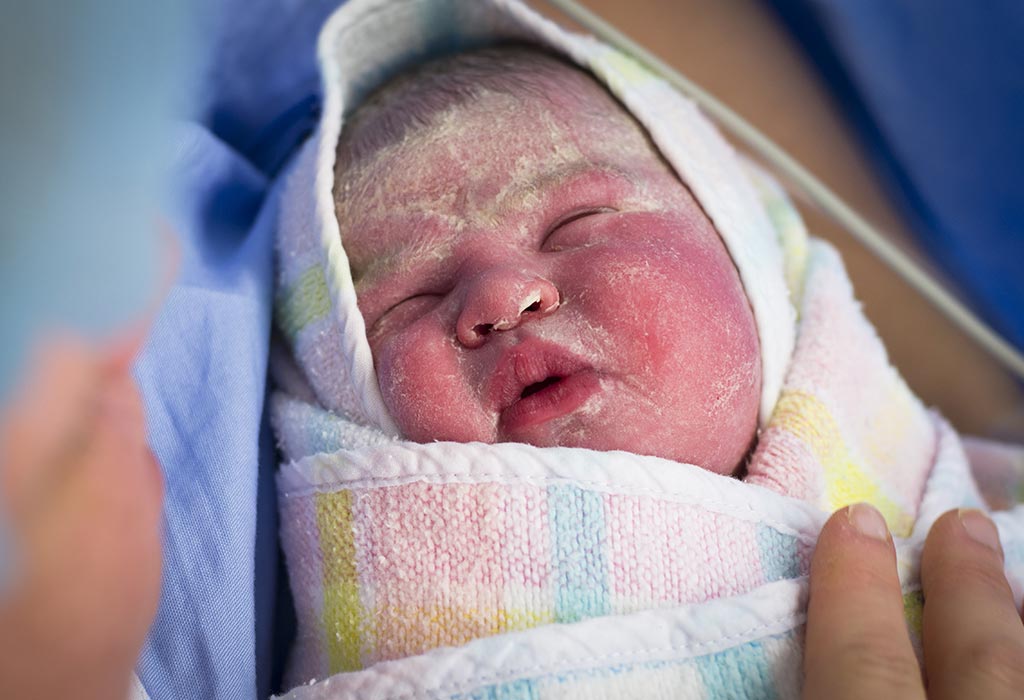
When a baby is born, they are often covered in a thick, cheese-like layer called ‘vernix caseosa,’ which may appear unusual at first glance. Many parents might feel the urge to ask the nurse to bathe the baby immediately to remove this substance. However, vernix vernix caseosa offers several benefits to your baby. This protective layer helps to moisturize the baby’s delicate skin, acts as a barrier against infections, and even aids in regulating the baby’s body temperature. So, while it may seem strange, leaving the vernix on baby for a little while can be incredibly beneficial for your baby’s health and well-being.
What Is Vernix Caseosa?
Here’s the vernix caseosa definition. Vernix caseosa, which is also called vernix, is a natural formation on the baby’s skin that can be seen during childbirth. It’s said to keep the formation on the skin for a while before rubbing it away. Vernix caseosa helps babies stay protected from bacteria and infections while keeping the baby’s skin soft and supple (1).
When Does Vernix Develop?
Vernix caseosa tends to form over the baby’s skin during the second or third trimester of the pregnancy (2). Some of the vernix dissolves into the amniotic fluid after 34 weeks of pregnancy, and the remaining of it is removed by the doctor once the baby is born.
What Does It Contain?
Vernix is a thin layer over the baby’s skin that plays a crucial role in protecting the baby’s body. The formation is mostly water content, but apart from water, there is fat content as well as proteins. There are other substances too that help with the baby’s immunity (3).
What Is the Colour of Vernix?
Vernix caseosa is mostly white in colour, but at times, the colour of the vernix may change. Vernix can appear to be yellowish-brown, and at times it may even get a slight greenish tinge to it. The colour can change after the baby has pooped for the first time. By this time, you can wipe the vernix away from the skin.
Does It Wash Away Easily?
It is possible to wash the vernix from your baby’s skin. However, it is best not to wash it away immediately. You can wait for a while and wipe it away from your baby’s skin instead of washing it away. The WHO has even said that the vernix caseosa after birth can be on the baby for as long as 24 hours. In fact, even weeks later, you might still find some layers of it here and there. It might not completely come out when you wipe it for the first time.
Should You Delay a Newborn’s First Bath?
The vernix caseosa keeps the baby’s skin soft and protected. Although many parents prefer that the baby should be taken for an immediate wash, it is best to delay the first bath for as much time as possible, as the vernix protects the baby during that time (4).
What If the Vernix Caseosa Is Missing?
If the labour is delayed, vernix caseosa may hardly be there on the baby. It can be completely missing, too. This might happen because the vernix may slowly dissolve in the amniotic fluid over time, especially when the delivery time approaches.
Benefits of the Vernix Caseosa
The vernix caseosa has many amazing benefits for the mother and even for the little baby. Some of them are explained below (5):
1. Helps in Delivery
As the vernix caseosa is quite slippery, it may act as a lubricant and help the pregnant woman deliver the baby with ease. Due to its presence, the baby may slide out of the birth canal a lot easier.
2. Fights Germs
Vernix caseosa also helps in fighting bacteria and other germs that are quite harmful to the baby. This is also because the vernix has an antibacterial property and highly protects the baby from any such dangers.
3. Acts as a Moisturizer
Vernix caseosa acts as a natural moisturizer that helps keep the child’s skin smooth and soft. Although it may be unpleasant to look at, it keeps the baby’s skin soft and healthy. Without the vernix, the baby’s skin might get chapped and even have wrinkles.
4. Keeps the Body Warm
In many cases, babies are kept in a warm place right after they are born because their bodies are still getting used to the temperature around them. The vernix is a natural layer that helps the baby stay warm.
6. It Protects the Baby
Vernix caseosa is unique to human beings. It has many amazing properties, including antimicrobial and anti-inflammatory properties that protect the baby.
Possible Risks of Keeping Vernix on a Baby’s Skin After Delivery
In most situations, allowing vernix to remain on a newborn’s skin is unlikely to cause harm. However, for infants with meconium staining or those born to mothers with chorioamnionitis, leaving vernix on the skin for extended periods could potentially increase the risk of bacterial overgrowth. Additionally, in certain cases, retaining vernix might elevate the risk of the baby acquiring maternal infections, including hepatitis or HIV.
Excessive vernix on the baby’s skin can, in rare instances, lead to complications such as neonatal aspiration syndrome (6). There have also been isolated reports of vernix caseosa contributing to conditions like granuloma, peritonitis, or even fetal heart infections in babies delivered via cesarean section. The potential risks can vary based on the infant’s health and circumstances, so it’s important to weigh the benefits and risks of leaving vernix on the skin before making a decision.
FAQs
1. Does vernix caseosa have a scent, and what does it mean?
Some parents notice a mild, slightly sweet scent from their newborn’s vernix. This natural aroma is thought to play a role in bonding, as it may help parents recognize and connect with their baby (7). The scent of vernix caseosa in newborns is temporary and fades as the vernix is absorbed or washed away.
2. Can vernix caseosa be collected and stored for later use?
While vernix is beneficial for newborns, there is no medical recommendation or practical method to collect and store it for future use. Its protective properties are most effective immediately after birth, and it naturally absorbs into the baby’s skin within the first 24-48 hours.
Vernix caseosa is beneficial for a baby’s skin and should not be washed away right away. You can ask the nurse to do it after some time. The vernix may even be present in skin folds days or weeks after the baby’s birth, and it’s alright. You can easily wipe it away.
References/Resources:
1. Bamalan. O, Moore. M, Menezes. R; Vernix Caseosa; National Library of Medicine; https://www.ncbi.nlm.nih.gov/books/NBK559238/
2. Infographic: Changes During Pregnancy; American College of Obstetricians and Gynecologists; https://www.acog.org/womens-health/infographics/changes-during-pregnancy
3. Pickens. W, Warner. R, Boissy. Y, Boissy. R, Hoath. S; Characterization of Vernix Caseosa: Water Content, Morphology, and Elemental Analysis (Journal of Investigative Dermatology); Science Direct; https://www.sciencedirect.com/science/article/pii/S0022202X15410528; November 2000
4. Delayed Bathing; International Childbirth Education Association Position Paper; https://icea.org/wp-content/uploads/2020/01/ICEA-Position-Paper-Delayed-Bathing-PP.pdf
5. Singh. G, Archana. G; Unraveling the mystery of vernix caseosa (Indian Journal of Dermatology); National Library of Medicine; https://pmc.ncbi.nlm.nih.gov/articles/PMC2763724/; 2008
6. Meconium Aspiration Syndrome; Cleveland Clinic; https://my.clevelandclinic.org/health/diseases/24620-meconium-aspiration-syndrome
7. Uebi. T, Hariyama. T, Suzuki. K, Kanayama. N, et al.; Sampling, identification and sensory evaluation of odors of a newborn baby’s head and amniotic fluid; Scientific Reports; https://www.nature.com/articles/s41598-019-49137-6; September 2019
Also Read:
Peeling Skin in Newborns
Mongolian Spot in Newborns
Skin Discolouration in Babies
Milia in Newborn and Babies
Read more
40 Names Starting With ‘Cor' for Boys
Every parent would want their baby’s name to stand the test of time. But most classic names are so popular that you may already know many people with the same names. For this reason, parents come up with certain beginnings or endings and look for names based on that. One such unique specification is ‘Cor’ since these are not very popular. Check out this list of names starting with ‘Cor’ so that your baby’s name remains a classic but stays unique!
Boy Names That Start With ‘Cor’ With Meanings
Here are some charming baby boy names that start with ‘Cor’.
1. Coran
‘Coran’ has a Hebrew origin and the meaning of the name is ‘light’. It is also believed to be an Irish name meaning ‘crescent moon’.
2. Corax
The name ‘Corax’ is believed to have a Greek origin and it means ‘crow’.
3. Corban
‘Corban’ is a Hebrew name and is derived from the Hebrew word ‘Korban’ which was used to describe the gift/offering from man to god.
4. Corbett
This name was derived from the Old French word ‘corbet’ meaning ‘raven’.
5. Corbin
‘Corbin’ has an English origin and the meaning of the name is ‘raven’.
6. Corcoran
‘Corcoran’ is an Irish name and the meaning of the name ‘descendant of Corcran’. The name itself was derived from the word ‘corcair’ meaning ‘purple’.
7. Corda
‘Corda’ is the short form of the Tuscan name ‘Bentaccorda’ and the meaning of the name is ‘well granted’.
8. Cordell
‘Cordell’ means ‘rope maker’ and it is of an English origin.
9. Corder
‘Corder’ is derived from the Catalan language and is believed to be the occupational name for the maker of string or cord.
10. Cordero
The name ‘Cordero’ has a Spanish origin and the meaning of the name is ‘little lamb’.
11. Cordovan
‘Cordovan’ is a Spanish name and it means ‘native of Cordoba’ where Cordoba is a city in Spain.
12. Coretin
This is a unique French name and it means ‘hurricane’ or ‘tempest’.
13. Corey
‘Corey’ is a Gaelic name derived from the word ‘coire’ and the meaning of the name is ‘dweller near or in a hollow’.
14. Corgan
The name is believed to be the variation of the Irish name ‘Corken’ and the meaning of the name is ‘descendant of Corcan’.
15. Corin
The name ‘Corin’ is an English name which was derived from the Latin word ‘Quirinus’, a Roman god. The meaning of the name is ‘spear’.
16. Cork
‘Cork’ is a short Irish name and it means ‘marsh’ or ‘swamp’.
17. Corley
‘Corley’ has a wonderful British origin and the meaning of the name is ‘benevolent’, ‘cheery’ or ‘carefree’.
18. Corliss
‘Corliss’ means ‘happy’ or ‘free from care’ and it has an English origin.
19. Cormac
‘Cormac’ has an Irish origin and the meaning of the name is ‘destroying son’.
20. Cormick
‘Cormick’ has a Gaelic origin and the meaning of the name is ‘chariot driver’.
21. Cormoran
It is a Cornish name and is believed to have been first used in ‘Jack the Giant Killer’, an 18th century fairy tale. It is also believed to be the French name for ‘seabirds’.
22. Corne
The name ‘Corne’ is an Old French name and it means ‘horn’.
23. Cornelio
‘Cornelio’ is a Latin baby name and the meaning of the name is ‘horn’.
24. Cornell
The name ‘Cornell’ has a Latin origin and it means ‘hornblower’.
25. Cornwallis
The name is believed to have an English origin and it means ‘man from Cornwall’.
26. Corradino
‘Corradino’ is a wonderful German name and it means ‘wise counsel’.
27. Corrado
‘Corrado’ is an Italian name and the meaning of the name is ‘sage counselor’.
28. Corrick
‘Corrick’ is an English baby name and it means ‘hill hollow’.
29. Corrion
The name is believed to be the Anglicized form of the surname ‘corra’ meaning ‘a spear’.
30. Corson
‘Corson’ has an old French origin and the meaning of the name is ‘short’.
31. Cort
‘Cort’ is an English name and the meaning of the name is ‘bold’ or ‘short’.
32. Cortez
‘Cortez’ is a popular Spanish name and it means ‘courteous’.
33. Cortland
‘Cortland’ has a German origin and it means ‘brave’, ‘courtier’, or ‘land of the court’.
34. Cortney
‘Cortney’ is of an English origin and it means ‘courtly’.
35. Corvin
The English name ‘Corvin’ means ‘raven-haired’.
36. Corvo
This is an Italian name and the meaning of the name is ‘rook’ or ‘raven’.
37. Corwin
‘Corwin’ has a Gaelic, Celtic origin and the meaning of the name is ‘heart’s friend’.
38. Cory
This English baby name means ‘seething pool’ or ‘from the round hill’.
39. Corydon
‘Corydon’ has a Greek origin and it means ‘lark’. It was derived from the Greek word ‘korudos’.
40. Corzen
‘Corzen’ is a Christian name and it means ‘a kinsman’ or ‘a cousin’.
Names starting with ‘Cor’ are classy and have great meanings. Hope you find the perfect boy name that begins with ‘Cor’, for your little bundle of joy, using this list!
Read more

Cheese Vegetable Pancake Recipe
A wonderful method to ensure your child gets all the essential veggies is to stuff it into a delicious appetiser that he finds irresistible. Cheese vegetable pancakes are easy to make and are a lifesaver for parents with children who are picky eaters. The crispy bites with a tender, tasty core are a combination most children and adults enjoy. Therefore, with some wholesome ingredients and a little bit of effort, you can whip up these delicious pancakes at any time of the day for a nutritious meal.
Cooking Time
Type
Time (hh:mm:ss)
Preparation Time
00:30:00
Cooking Time
00:15:00
Total Time
00:45:00
Type of Meal
Non- vegetarian
Cooking Method
Convection oven, gas stove
Suitable For
Kids over one year of age.
Meal Schedule
Lunch
Recipe Type
Appetisers, main meal
Ingredients
Ingredient
Quantity
Plain flour
1 cup
Baking powder
2 teaspoons
Whole milk (or soy/almond milk)
1 cup
Egg
1
Unsalted butter
2 tablespoons
Medium-sized onion
1
Broccoli head (small)
1
Red bell pepper
1
Grated cheddar cheese
50 g
Olive oil
2 tablespoons
Instructions
Preheat the oven to 200°C.
Peel the onion, remove the core of the bell pepper, and dice them into large chunks.
Transfer them to a baking tray and add a bit of olive oil before placing it in the oven.
Roast the veggies in your oven until they turn soft and start to brown, it will take about 25-30 minutes.
While the vegetables cook in the oven, steam the broccoli in a pressure cooker until it is soft.
Transfer all the cooked vegetables to a chopping board and chop them all into tiny baby size bits.
In a large mixing bowl, add the baking powder and the flour, and mix them thoroughly.
In another clean, dry bowl, mix the egg with the melted unsalted butter and milk and stir until they’re uniform.
Make a small crater in the flour-baking powder mix and gently add the egg mix while whisking it carefully to avoid lumps.
Add the chopped vegetable mix and grated cheese to the batter and mix it until they are completely combined into a thick paste.
On a non-stick frying pan, heat a little olive oil on medium flame.
Scoop the batter and spread it on the pan, make pancakes.
Make a few of these in the pan at the same time and keep an eye on their frying times.
Fry until the pancakes are golden brown on both sides and serve with a dip of your choice.
Recipe Tips
If you wish to turn this homemade cheese vegetable pancake baby food recipe to vegan replace the unsalted butter with coconut butter and dairy milk with almond or soy substitutes. The cheese can be substituted with vegan cheese and don’t add an egg.
Nutrition Information (Serving Per 100 Grams)
Nutrient
Value
Calories
198.2
Total Carbohydrate
30.4 g
Total Fat
6.2 g
Cholesterol
2.5 mg
Sodium
379.0 mg
Potassium
369.6 mg
Dietary fibre
5.9 g
Sugars
5.0 g
Protein
8.6 g
Health Benefits
There are a number of health benefits of these cheese vegetable pancakes for toddlers starting with the abundant supply of fats, which are essential for the development of the brain.
The range of vegetables in the pancake offers several different minerals, while the egg provides the much-needed proteins and amino acids. Whether it is had for breakfast, lunch, or as a mid-day snack, these pancakes are nutritionally loaded.
Buying Guide
Your simple cheese vegetable pancake recipe isn’t complete without fresh ingredients.
To ensure your child gets all the nutrients, pick undamaged vegetables or frozen ones (which often have all their nutrition intact) from the store. Choose organically-grown vegetables to protect your baby from the chemicals used in growing vegetables.
Wash the vegetables thoroughly to get rid of germs.
When buying cheese, avoid processed cheese, as it has plenty of artificial ingredients, excess salt, and preservatives. Cheeses made out of unpasteurised milk straight out of the farm should also be ideally avoided. Also, avoid using mould-ripened soft cheeses as all of these can cause allergies and infections.
You can now make these delicious and easy to make pancakes every time your child is hit by those hunger pangs.
Read more
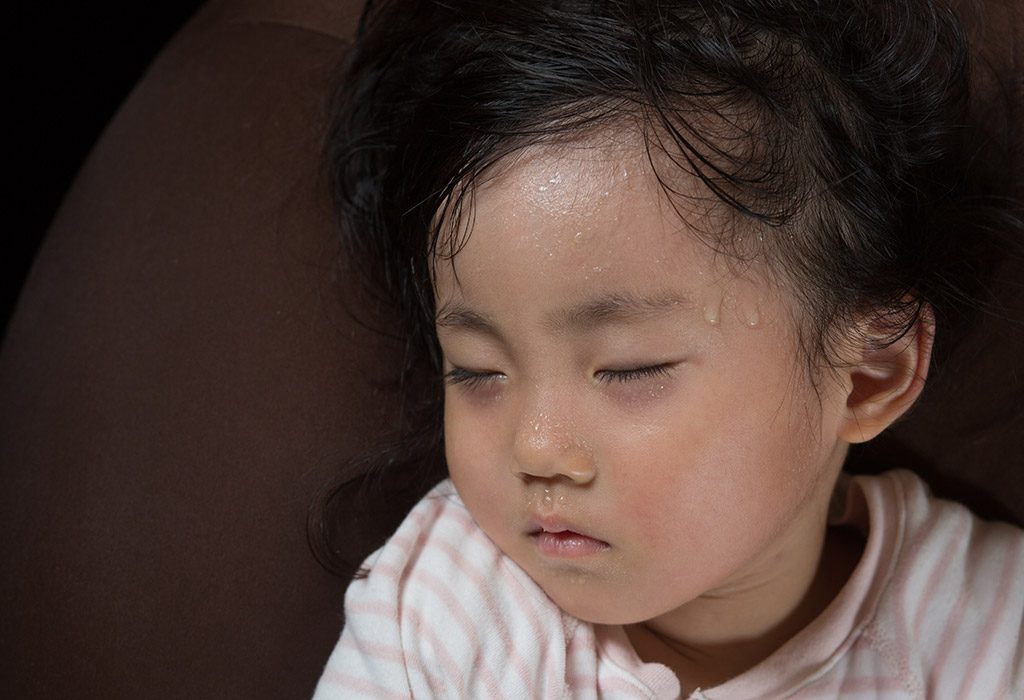
Heat Stroke in Babies – Symptoms, Complications and Treatment
A baby can get sick due to numerous environmental reasons or internal body function problems. One key aspect of measuring health is monitoring the baby’s internal body temperature. Much like an adult’s body, if the temperature goes out of control, your baby could have a heat stroke. Heat stroke is a severe medical condition that can quickly become life-threatening, especially in babies and young children. Due to their underdeveloped ability to regulate body temperature and higher vulnerability to environmental heat, infants are particularly susceptible to heat stroke during hot weather or prolonged exposure to high temperatures. In these circumstances, if you aren’t careful, your baby could suffer grave consequences. Understanding it is one of the first steps to combating heat stroke in babies.
What Is Heat Stroke?
The human body has a regulated internal temperature, which keeps the blood flowing, organs healthy, and helps keep you fit. Your baby’s body is still growing, but it still has an automated system to keep the temperature in check and a system for cooling down. When this system is compromised, your baby is at risk of an unregulated rise in body temperature. This can be extremely dangerous and potentially fatal. When your baby’s body begins to overheat beyond control and doesn’t cool down, it is known as a heat stroke (4).
Heat stroke in newborns is extremely dangerous and uncomfortable.
Causes of Heat Stroke in Infants
A key aspect of fighting a heat stroke is to understand its causes. Here are a few of them:
Dehydration
Extremely high external temperature
Malnutrition
Stuffy or suffocating clothing
Lack of oxygen in hot environments.
It is recommended that you consult a doctor if your baby happens to have a heat stroke or if you want to learn more about heat strokes in babies. Nonetheless, prior knowledge will help you gain better clarity on the condition. Read on for some signs and symptoms that can help you identify a heat stroke and seek prompt medical attention.
Signs of Heat Stroke in Babies
Beyond understanding the causes of a heat stroke, it is also extremely important to understand how to identify if your baby is having a heat stroke. Here are some of the symptoms of a baby overheating (2) (3):
A fever that is above 103 degrees Fahrenheit, in which your baby does not sweat, is one of the signs of heat stroke. In Celsius, this temperature would be above 39 degrees.
If your baby is extremely tired or fatigued for long periods of time in the summer months or after spending time in a hot room, she could be having heatstroke.
If you suspect your child of having a heat stroke, ensure you check her pulse for one minute. If it is rapid, it could be a sign of heat stroke.
Your child’s feeling burning hot and appearing red and dry is also one of the common heat stroke signs in infants.
Dizziness or disorientation are signs of heat stroke, especially in hotter temperatures.
Breathing may become shallow and quick as the body attempts to regulate temperature.
Overheating can cause abnormal brain activity, leading to seizures.
Severe heat stroke may cause a baby to pass out.
Vomiting or nausea can occur as a result of overheating.
It is important to understand that other signs of heat exhaustion in infants could manifest in the form of headaches, restlessness, vomiting or loss of consciousness. If these symptoms are relevant to your baby, please see a doctor immediately.
Also Read: Summer Foods to Prevent Dehydration in Babies
Complications of Heat Stroke in Infants
Heat stroke in infants is a medical emergency that, if left untreated, can lead to serious and life-threatening complications. Immediate intervention is crucial to prevent the following complications (7):
High body temperature can damage vital organs such as the brain, kidneys, and heart.
Heat stroke causes excessive fluid loss, leading to severe dehydration, which can affect the baby’s overall health and organ function.
High body temperature can lead to abnormal brain activity, resulting in seizures, which may cause long-term neurological damage.
Treatment for Heat Exhaustion in Newborn Babies
What to do in case of heat stroke in babies? It is highly recommended that you call an ambulance and have your baby checked at the nearest hospital in case of a serious heatstroke. Here are a few home remedies for heat stroke in babies (3):
Dress your baby in loose clothing.
Have your child lay under a fan or indoors in a room with air conditioning.
Pat down your baby’s forehead and shoulders with a cold, wet cloth.
For further information regarding treating minor heat strokes, contact your primary care physician.
Prevention of Heat Stroke in Babies
It can be extremely difficult to predict heat exhaustion in babies. Here are a few ways to avoid them (1) (2):
Dress your baby in loose clothing.
Keep the child indoors if it is especially hot outside.
Keep the child hydrated.
Ensure you expose your child to warmer or hotter weather gradually.
Limit the time your baby spends outdoors during the peak of the afternoons.
Sit with your child in a room with fans and air conditioning.
Avoid spicy foods during the hotter periods of the year.
FAQs
1. Is it safe to use fans or air conditioning to cool my baby down during heat stroke?
Yes, using fans or air conditioning is effective in cooling down your baby during heat stroke, as long as the baby is moved to a cooler environment and not exposed to direct, cold air. These methods help lower body temperature gradually without causing discomfort or shock to the system.
2. How long does it take for a baby to recover from heat stroke?
The recovery time from heat stroke varies depending on the severity and how quickly treatment is administered. With immediate care, such as cooling and rehydration, babies can begin to recover within hours, but medical monitoring is necessary to ensure there are no lasting effects (5).
3. Can I give my baby a cold bath if they have a heat stroke?
Cold baths are not recommended for babies with heat stroke, as a rapid decrease in body temperature can cause shock or further complications. Instead, use lukewarm or cool water to help lower their body temperature gradually while ensuring they are kept hydrated and seeking emergency medical care (6).
4. Can heat stroke in babies happen indoors?
Yes, babies can get heat stroke indoors. It isn’t limited to outdoor exposure. Babies can overheat indoors due to overdressing, poor ventilation, or a lack of cooling in hot weather. Since babies’ bodies aren’t developed enough to regulate their body temperature, heat stroke is very much possible both indoors and outdoors.
5. How quickly can heat stroke develop in infants?
It can develop very rapidly within minutes to hours, especially in extreme heat. Babies lose fluids quickly and cannot cool down efficiently, which increases the risk.
Heat exhaustion in newborns can be extremely dangerous if precautions aren’t taken. Talk to your doctor about the steps you need to take to avoid a heat stroke in your baby. Remember, prevention is the best cure.
Also Read:
Heat Rash in Babies
Baby Sweating While Sleeping
Common Skin Allergies in Babies
Baby’s Head is Hot, But No Fever
Read more
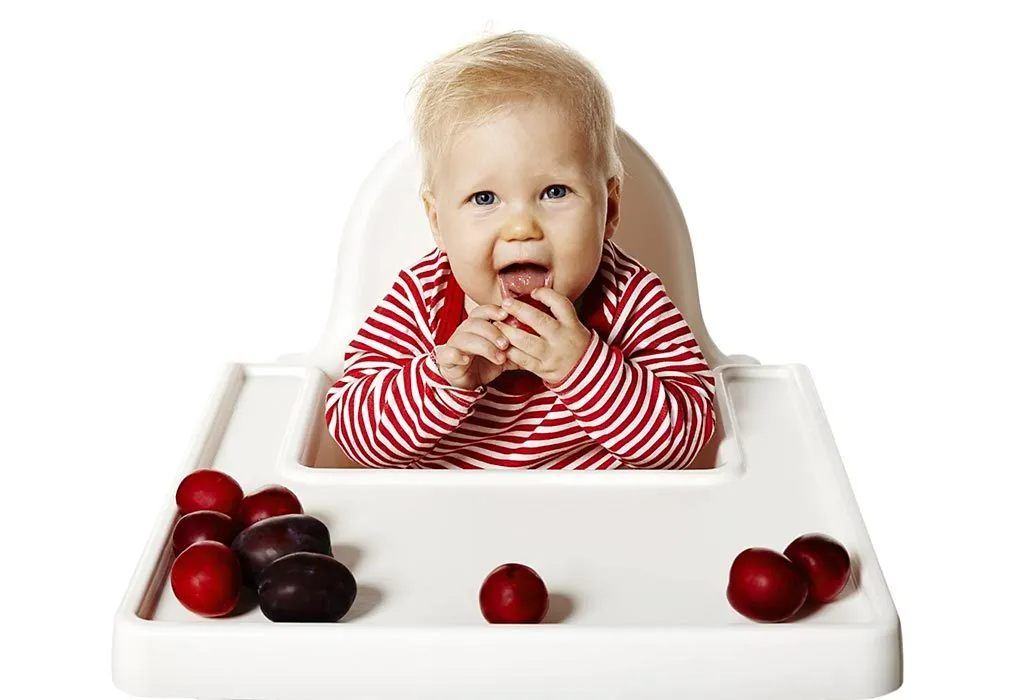
Plums for Babies – Benefits and Recipes
After introducing solids to your baby, you will have a list of items that you’d like your baby to taste. When it comes to fruits, many people have a soft spot for plums as they are good for health. Plums are an excellent source of hydration and essential vitamins and minerals that are known for the combustion of flavours – tarty and tangy. But whether plums should be given to infants or not remains a common question among parents. Read this article to know if plums are safe for babies and when you can start feeding them to your little one.
Is Plum Safe for Babies?
Absolutely! Plums are one of those fruits that contain a number of nutrients that are essential in supporting rapid growth in babies. Furthermore, their special taste can stimulate the taste buds as well and introduce a new flavour to your child’s palate.
When Can You Introduce Plum to Your Baby’s Diet?
Plums can be introduced when your baby turns 10 months old or so. The best way to do so is in the form of puree, but it shouldn’t be the first thing that your baby tries. Always get your doctor’s recommendation before introducing anything new to your child.
But before you do that, take a look at the nutritional value and health benefits of plums. It’s always better to be informed before consulting an expert to have your questions ready for him/her to address during your visit.
Nutritional Facts of Plums
Below are the nutrients present in 100 grams of raw, plum as per USDA (1):
Description
Quantity
Water
87.2 g
Energy
46 kcal
Fibre
1.4 g
Total Sugar
9.92 g
Potassium
157 mg
Phosphorous
16 mg
Calcium
6 mg
Magnesium
7 mg
Iron
0.17 mg
Folate
5 µg
Niacin
0.417 mg
Vitamin A
17 µg
Vitamin C
9.5 mg
Health Benefits of Plum for Babies
Here are the health benefits your little one is likely to gain upon eating plums:
Plums are extremely nutritious and provide a ton of nutrients in the smallest serving, too. They are high in quinic acid, sorbitol, chlorogenic acids, copper, vitamin K1, boron, and potassium (1). It also has phenolic content, which is a natural antioxidant (2).
The phytonutrients, including flavonoids, chlorogenic acid, and neo-chlorogenic, in plums are known for their high antioxidant activities that reduce inflammation (3).
They are high in fibre and thus provide relief from digestive problems, constipation, and even colon cancer (4).
Making baby porridge with plums is the easiest way to maintain all the existing nutrients and giving them to your child.
Dried plums, also called as prunes, act as digestive stimulants and are widely recognised for strengthening bones as it boasts high amounts of vitamin K which help in balancing calcium content in the body (5).
When you are finally ready to feed plums to your munchkin, you may find yourself in a dilemma again when you come across different varieties of plums. To make it easier for you, we’ve given some tips you can use to choose and store the fruit.
Best Types of Plums for Baby Food
Different varieties of plums tend to taste a tad different. The plum that you prefer might not be liked by your child. Trial and error is the best way to go about it. However, it has been observed that plums of the Burbank or Victoria variety tend to be a hit with kids since they are juicy enough and are comparatively sweeter than the other varieties.
How to Choose and Store Plums for Infant Food?
When buying plums, make sure that they are soft but not too much. When pressing a plum, it should press down just a bit and not stay hard. Check the tip of the plum. If it is soft, then that’s a sign that it is fresh.
The colour should be pleasing and rich without any blemishes on the surface. At times, a light white coating might be present on the skin, which is actually a good sign that the plum has stayed untouched.
Hard plums should be avoided since they are not ripe, and they won’t have a great flavour. Plums tend to ripen quickly. If you do end up buying unripe plums, let them stay in the open for a while. Later, store ripe plums in the fridge. If you want to use them after a few days, it is best to freeze them completely. Removing the pits before freezing them is advisable.
Once you have plums that are just right, ripe, and ready for your baby to eat, you might wonder how you could feed them. Well, fret not. These recipes will make your life so much easier!
How to Give Plum to Baby?
You can serve plum to your baby in different ways.
6 Months Old and Above: You can offer a half, super ripe and pitted plum to your little one. Make sure to leave the skin on to grip the fruit easily.
9 Months Old and Above: You can offer long, thin slices of ripe plum, preferably with the skin on.
12 Months Old and Above: For biting practice, give your tiny tot thin slices or halved of pitted plums. You can also cut ripe plums into bite-sized pieces and pre-load them on a fork so your toddler can learn to eat with a fork.
18 Months Old and Above: You can offer your child a whole ripe plum to enjoy. Make sure to give a demonstration on how to eat and what to do when they feel the pit. Teach them that pits need not be chewed or swallowed.
Precautions While Giving Plums to Babies
Plums are safe for babies, but there are some crucial points to keep in mind:
Remove the Pit: Always remove the stone before serving plums to your baby.
Use Fresh Plums: Avoid frozen plums; fresh ones are better for your infant.
Moderation is Key: Don’t overfeed plums, as their high fibre content can cause diarrhoea.
Introduce Gradually: Start with a teaspoon of plum puree. Follow the three-day rule to monitor for allergies before increasing the amount.
Avoid Canned Plums: Canned plums may contain preservatives and toxins that aren’t safe for babies.
By following these guidelines, you can safely include plums in your baby’s diet.
Easy and Tasty Plum Baby Food Recipes
Here are some simple plum recipes for your little one.
1. Thick and Tasty Plum Puree
This is a savoury plum puree recipe for the baby that will be relished by everyone.
What You Will Require:
Fresh Plums
Water at room temperature as well as ice-cold water
How to Make:
Wash the plums properly. Take enough water in a pan and bring it to a boil. Then, add plums, and let them boil for another 10-15 minutes.
Take the ice-cold water in another plan.
Gently remove the plums from the boiling water using a slotted spoon and put them immediately in cold water. Take care to not add the boiling water to the cold one.
Remove the plums and peel off the skin using your fingers or with a knife.
Slice them in half and deseed them. Put all the plums in a blender and blend them together to form a puree. You may add some water to thin the puree down or some breastmilk to make it creamy.
2. Oats With Bananas and Plums
This spectacular delicacy can double up as a snack or breakfast.
What You Will Require:
Fresh Plums
Oatmeal
Bananas
How to Make:
In a container, take oats and bananas. Mash them together a bit.
Add this mixture to a blender along with a few pieces of plums.
Run the blender till you get a smooth consistency. If needed, add some more oats to thicken it further, and serve.
3. Yoghurt With Roasted Plums
This is a delicacy that tastes and looks wonderful!
What You Will Require:
Fresh Plums
Honey
Plain butter
Vanilla essence (optional)
Yoghurt
How to Make:
Preheat the oven to around 190 degrees.
Take the plums and slice them in half, carefully removing the seed. Take an oven tray and place the plums on it in such a way that the cut portions face up.
Add a few drops of vanilla essence on each piece of the plums. Follow it up by adding some butter and a small dollop of honey.
Place the tray in the oven and let the plums get roasted for about half an hour. The plums should start getting tender by then.
Remove the tray and let the plums cool down. Then, peel off their skin and mash them together in a bowl.
To this puree, add some yoghurt and mix it well. Then serve.
4. Baked Plums Garnished With Cinnamon
This is the dessert that will leave everyone salivating.
What You Will Require:
Fresh Plums
Apple juice
Cinnamon in powdered form
How to Make:
Preheat the oven to 200 degrees.
Take the plums, cut them in halves and carefully remove the seed. Place the plum halves in an oven tray.
Add some apple juice over the plums to cover them properly. Follow it up by sprinkling some cinnamon powder.
Cover the tray and place it in the oven. Bake this for about half an hour as the plums start getting soft.
Take off the tray and let the plums cool down. Then, peel off the skin and mash all the plums together.
5. Plum Jam
Your tiny tot is going to be obsessed with this healthy and tangy plum jam!
What You Will Require:
Fresh Plums – 1 cup
Ground allspice -1 tbsp
Cinnamon in powdered form – 1 tsp
Water
How to Make:
Halve and pit the plums. In a pan, add water, sugar, and the plums.
Boil until the plums soften.
Remove the mixture from the heat and puree it. Once blended, return the puree to the pan, adding allspice and cinnamon.
Cook on low heat until the mixture thickens like jam. Let it cool before storing.
6. Banana Plum Smoothie
This lush banana plum smoothie is super refreshing, tasty, and fulfilling for babies and picky toddlers.
What You Will Require:
Frozen plums – 1 cup
Frozen ripe banana – 1 cup
Milk – 1 cup
How to Make:
In a blender, add frozen bananas and plums. Blend once or twice.
Next, add milk to the mixture and blend it again nicely.
Voila! Your baby’s banana plum smoothie is ready!
FAQs
1. What about raw plum for baby?
A raw plum for baby is not recommended as it is super suitable for babies’ taste palate and may cause stomach issues.
2. Do plums pose a choking hazard for babies?
Yes, plums pose a shocking threat to babies as they can be either slippery or firm, making them a choking hazard. When serving plums or any dishes made with plums, make sure there are no heavy chunks that could cause a choking scene and make sure to stay with them when they have any pitted or non-pitted fruit for safety.
3. How do I store plum food for my baby?
Store the baby plum foods like jams or smoothies in an airtight container in the refrigerator and label it with the preparation date. For plum baby food specifically, you can refrigerate them for up to three days and freeze them for up to three months. Use the preparations within a reasonable time.
4. Can I feed my baby plum products that contain sugar or preservatives?
American Academy of Pediatrics advises against the use of added sugars in the form of furctose, sucrose, dextrose, glucose, honey, brown sugar, lactose, raw sugar, corn syrup, malt syrup, maltose, and molasses, as they may cause adverse health effects on a baby’s health and development (6). As far as preservatives and additives go, they, too, are extremely health-damaging for babies (7).
The nutritional benefits of plums make them a perfect fruit to give to your baby. However, always get your doctor’s confirmation before introducing them to your little one. It is ideal to wait until your child is a year old. This will allow him to enjoy the fruit in all its glory, and he will look forward to other wonderful recipes, too.
References/Resources:
1. Plums, raw; USDA; https://fdc.nal.usda.gov/fdc-app.html#/food-details/169949/nutrients
2. Igwe. E, Charlton. K; A Systematic Review on the Health Effects of Plums ( Prunus domestica and Prunus salicina );
Phytotherapy Research; ResearchGate; https://www.researchgate.net/publication/298899398_A_Systematic_Review_on_the_Health_Effects_of_Plums_Prunus_domestica_and_Prunus_salicina; March 2016
3. Keservani RK, Sharma AK, Kesharwani RK. Medicinal Effect of Nutraceutical Fruits for the Cognition and Brain Health. Scientifica (Cairo).; Pubmed Central; https://www.ncbi.nlm.nih.gov/pmc/articles/PMC4757744/; 2016
4. Stacewicz-Sapuntzakis M. Dried plums and their products: composition and health effects–an updated review. Crit Rev Food Sci Nutr.; PubMed; https://pubmed.ncbi.nlm.nih.gov/24090144/; 2013
5. Wallace. T. C; Dried Plums, Prunes and Bone Health: A Comprehensive Review; Nutrients; https://www.ncbi.nlm.nih.gov/pmc/articles/PMC5409740/pdf/nutrients-09-00401.pdf; April 2017
6. How to Reduce Added Sugar in Your Child’s Diet: AAP Tips; American Academy of Pediatrics; https://www.healthychildren.org/English/healthy-living/nutrition/Pages/How-to-Reduce-Added-Sugar-in-Your-Childs-Diet.aspx
7. Common food additives and chemicals harmful to children; Harvard Health Publishing; https://www.health.harvard.edu/blog/common-food-additives-and-chemicals-harmful-to-children-2018072414326
Also Read:
Pear for Infants
Beetroot for Babies
Introducing Grapes to Babies
Are Bananas Good for Babies?
Read more
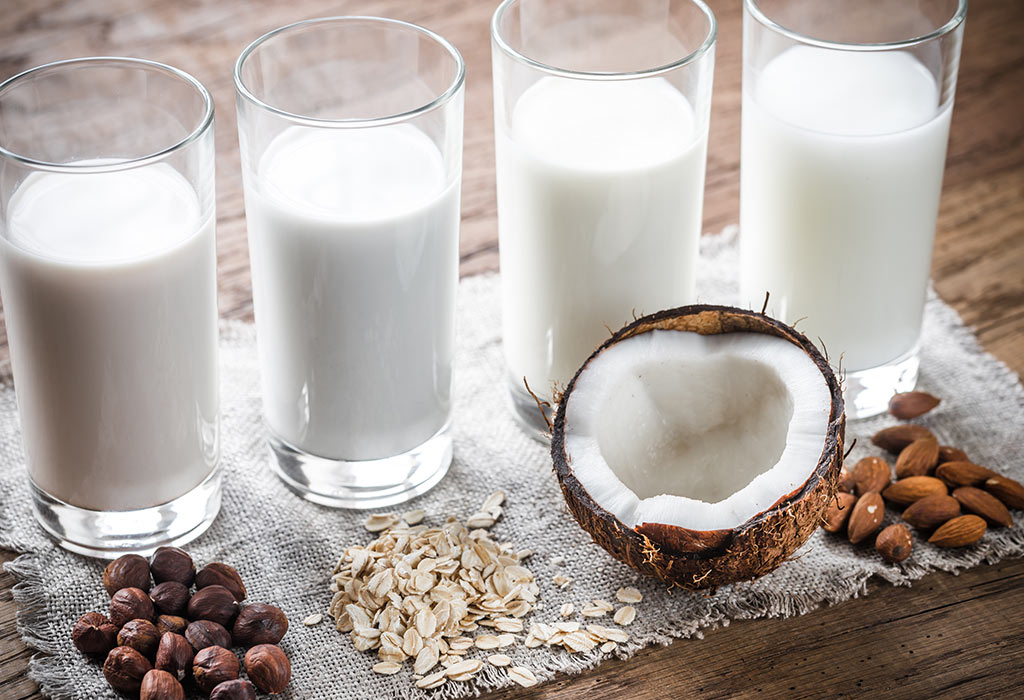
Milk Alternatives for Toddlers
As per the ‘old-school’ way of parenting, giving cow’s milk or buffalo’s milk to toddlers is common, especially in India. Whenever a mother decides to wean her baby off breast milk, she is usually suggested to introduce cow’s milk as the main drink to her toddler, and for good reasons, of course. Milk is known to strengthen the bones and teeth in children and is a very nutritious drink. But many new parents today consider giving milk alternatives to their kids for various reasons. And medical reasons might make milk alternatives necessary, however, the worry of balanced nutrition is pretty real in parents’ minds. Not every milk alternative can provide the same nutrition that a child can get from cow’s milk, but if you have to give milk alternatives to your child for one reason or the other, find out what milk alternatives would be the best.
When to Give Milk Alternatives to Your Child
Doctors usually suggest milk alternatives for toddlers with allergies or lactose intolerance. Kids who are allergic to milk proteins or are lactose intolerant may have trouble synthesizing the nutrition present in the milk, and can even face various side effects. In these cases, parents may have no choice but to give milk alternatives to their toddlers.
Best Milk Alternatives for Toddlers
Today, you will find a range of options in milk alternatives to choose from and it can be difficult for you to decide which would be the best for your child. Each alternative has some benefits to offer over traditional milk, but they are not a complete solution and might fall short in different ways. We have suggested some milk alternatives for toddlers (with their pros and cons to help you make an informed choice), which you can consider after checking with your child’s paediatrician.
1. Rice Milk
This type of milk is a popular milk that is derived from the grains of rice.
Pros
For children who suffer from numerous allergies and are susceptible to reactions from different types of milk, rice milk is the safest option in that regard. There are extremely rare chances of any child developing any allergy towards rice milk. Furthermore, the majorly neutral taste that it has allows it to be used in various preparation as well.
Cons
Rice milk doesn’t have any particular taste as such and hence kids may throw tantrums when rice milk is offered to them. At the same time, when compared with the same quantities of other milk alternatives, rice milk has a far larger amount of carbohydrates but quite a low amount of fat and proteins.
2. Coconut Milk
Coconut milk is a popular option in India. Coconut milk is acquired from grating and pulping a matured coconuts.
Pros
Coconut milk is a great choice for kids who suffer from traditional milk allergies. This creamy milk is rich in calcium, magnesium, and manganese.
Cons
While coconut milk is rich in fats and other vitamins, the proportion of proteins and calcium in its constitution is not as much as it should be, when compared with the traditional milk. This can put kids at a risk of deficiency, which makes it necessary to complement the intake of coconut milk with other sources that provide the missing elements.
3. Almond Milk
A highly prized type of milk-based on plant sources, almond milk, is generally obtained by blending almonds and water.
Pros
The ease of preparation of almond milk is the greatest advantage it brings. If you want to give it to your child, you should give homemade almond milk.
Cons
Since the only source of nutrition in this milk is from almonds, there is a huge gap when it comes to satisfying the daily requirement of proteins and even saturated fats. While many commercial milk brands fortify their products with these elements, it becomes essential to complement them via other sources in the child’s diet.
4. Soy Milk
Soy milk is one of the highest-selling and popular alternatives to traditional milk. Soybeans are soaked and ground together, then boiled and filtered to obtain the milk.
Pros
The popularity of this milk has made it the go-to choice for many people, and its ease of availability makes it easy to give it to your child at any point in time. The constitution of this milk is quite close to that of the traditional milk from the cow, which is why many families opt for using this milk in other preparation items as well.
Cons
Soy allergies are not unheard of, and if your child suffers from it as well, this milk will obviously be a bad choice. Although many brands fortify their soy milk products with calcium and Vitamin D, the amount of fortification may not be enough for your kid. Checking the value on the label should help you ascertain what’s right for your child.
5. Lactose-Free Milk
By introducing an enzyme in traditional milk that helps break down that protein, lactose-free milk is obtained easily.
Pros
There is barely any difference between cow’s milk and the lactose-free equivalent of it. The nutritional constitution is identical, and the taste is usually a tad sweeter than the original.
Cons
Many commercial brands market their milk products as “lactose-free” but make use of plant-based sources or other elements for the actual milk. Furthermore, this milk is not useful for children who are allergic to other elements present in the milk or are lactose-intolerant.
How to Decide Which Is the Best Milk Alternative for Toddlers
When deciding the right type of milk alternative for your little one, here are some factors you should keep in your mind.
The nutritional requirement based on his age
The typical diet of the child
Financial choice of opting for fortified milk
Choosing among different milk alternatives for babies or toddlers should be governed by the very reason why you are opting for one. It is best to go with a choice that is as close as possible to the cow’s milk. The best option would be consulting a nutritionist or doctor for the same and making the right choice for your child.
Also Read: How to Make your Child Drink Milk?
Read more

100 Kannada Girl Names With Meanings
Choosing the right name for your little girl is one of the most heartfelt decisions a parent can make. When it comes to baby girl names in Kannada, that meaning becomes even more special. Whether drawn from nature, mythology, or virtues like wisdom and kindness, Kannada girl names often hold timeless charm while still feeling modern and fresh. For parents who wish to blend tradition with individuality, Kannada names offer a perfect balance — meaningful yet melodious, ancient yet ever relevant. In this guide, you’ll discover names that not only sound beautiful but also carry blessings and stories that will grow with your child.
Beautiful Baby Girl Names in Kannada
If you’re searching for meaningful and graceful options, this list of female baby names in Kannada blends traditional charm with modern warmth. Each one carries a unique story — perfect for parents looking for new baby girl names that feel heartfelt and timeless.
Aaradhya (ಆರಾಧ್ಯ) – Worshipped one; a person who is deeply loved and respected by everyone.
Aadhira (ಆಧಿರಾ) – Refers to the soft glow of moonlight and divine radiance.
Aamani (ಆಮಾನಿ) – Symbol of peace, calmness, and a serene heart.
Aanya (ಆನ್ಯಾ) – Graceful soul known for compassion and kindness.
Abhigna (ಅಭಿಜ್ಞಾ) – Wise and knowledgeable; blessed with intelligence and insight.
Aishani (ಐಶಾನಿ) – Another name for Goddess Durga; the one with divine strength.
Akshara (ಅಕ್ಷರ) – Eternal and indestructible; also means sacred letters or alphabets.
Alaka (ಅಲಕ) – A beautiful girl with soft, curly hair and charm.
Amulya (ಅಮೂಲ್ಯ) – Priceless and precious; someone who holds immense value.
Anagha (ಅನಘಾ) – Pure-hearted girl free from sin and negativity.
Ananya (ಅನನ್ಯಾ) – Unique and incomparable; a symbol of devotion.
Anika (ಅನಿಕಾ) – Graceful girl; another name of Goddess Durga.
Anitha (ಅನಿತಾ) – Gentle and guiding; known for warmth and sincerity.
Anvika (ಅನ್ವಿಕಾ) – Strong, complete, and determined to succeed in life.
Aparna (ಅಪರ್ಣಾ) – Name of Goddess Parvati; signifies simplicity and devotion.
Archana (ಅರ್ಚನಾ) – Worship or offering; represents a prayerful soul.
Arpita (ಅರ್ಪಿತಾ) – Dedicated and devoted; one who surrenders with love.
Ashika (ಆಶಿಕಾ) – One who is full of hope, love, and affection.
Ashwini (ಅಶ್ವಿನಿ) – Name of a star; symbolises energy and brightness.
Avani (ಅವನಿ) – Refers to the Earth; represents grounding and strength.
Bhuvana (ಭುವನ) – The world or universe; symbol of creation and life.
Bhavya (ಭವ್ಯಾ) – Grand, elegant, and radiant in personality.
Charitha (ಚಾರಿತಾ) – One who has a good character and moral strength.
Chaitra (ಚೈತ್ರಾ) – Spring season; represents freshness and positivity.
Chandana (ಚಂದನ) – Fragrant sandalwood; symbol of purity and calmness.
Daksha (ದಕ್ಷಾ) – Talented and capable; a person with strong abilities.
Darshini (ದರ್ಶನೀ) – One who is blessed with divine vision.
Deeksha (ದೀಕ್ಷಾ) – Initiation or dedication; represents spiritual learning.
Deepika (ದೀಪಿಕಾ) – A small lamp; brings light and hope everywhere.
Devanshi (ದೇವಾನ್ಶಿ) – Part of God; pure and divine soul.
Divija (ದಿವಿಜಾ) – Born in heaven; symbolises purity and grace.
Diya (ದಿಯಾ) – A lamp or light that dispels darkness and fear.
Disha (ದಿಶಾ) – Direction or path; symbolises guidance in life.
Eesha (ಈಶಾ) – Another name for Goddess Parvati or purity itself.
Ekta (ಏಕತಾ) – Unity and togetherness; symbolises strength in harmony.
Gagana (ಗಗನ) – Sky or heaven; limitless and vast in thought.
Gauri (ಗೌರಿ) – Fair and beautiful; another name for Goddess Parvati.
Geetika (ಗೀತಿಕಾ) – A little song; symbolises music and happiness.
Harini (ಹರಿಣೀ) – Doe or deer; gentle, graceful, and calm-hearted.
Hema (ಹೇಮಾ) – Golden or shining; one who brings brightness.
Ishita (ಇಷಿತಾ) – Desired or superior; one who is powerful and wise.
Indira (ಇಂದಿರಾ) – Goddess Lakshmi; symbol of prosperity and grace.
Janhavi (ಜಾನ್ಹವಿ) – Ganga River; sacred and purifying spirit.
Jagruti (ಜಾಗೃತಿ) – Awareness or alertness; symbol of knowledge.
Jyothi (ಜ್ಯೋತಿ) – Light or flame; represents clarity and brightness.
Kalyani (ಕಲ್ಯಾಣಿ) – Auspicious, blessed, and graceful by nature.
Kavya (ಕಾವ್ಯಾ) – Poetry; symbolises creativity and expression.
Keerthi (ಕೀರ್ತಿ) – Fame or glory; represents good reputation.
Krithi (ಕೃತೀ) – Artistic creation; one who loves art and beauty.
Lavanya (ಲಾವಣ್ಯಾ) – Graceful and beautiful; full of elegance.
Lekha (ಲೇಖಾ) – Writing or script; symbolises creativity and destiny.
Lisha (ಲಿಶಾ) – Sweet, honest, and pure-hearted girl.
Madhuri (ಮಾಧುರೀ) – Sweetness and charm; brings joy to others.
Mahika (ಮಹಿಕಾ) – Dewdrops; symbolises freshness and purity.
Manasa (ಮಾನಸ) – Mind or intellect; one with calm and strength.
Manvi (ಮಾನ್ವೀ) – Kind and gentle human being; humane in nature.
Megha (ಮೇಖಾ) – Cloud; symbolises calmness and abundance.
Meera (ಮೀರಾ) – Devotee of Lord Krishna; symbolises devotion and love.
Mihira (ಮಿಹಿರಾ) – Sun or radiant light; represents energy and strength.
Mitali (ಮಿತಾಲೀ) – Friendly and wise; known for good companionship.
Namitha (ನಮಿತಾ) – Humble and respectful girl with a kind heart.
Navya (ನವ್ಯಾ) – New and fresh; symbolises modern spirit.
Neela (ನೀಲಾ) – Sapphire blue; represents calm and stability.
Nidhi (ನಿಧೀ) – Treasure; symbolises wealth and inner value.
Nikita (ನಿಕಿತಾ) – Victorious and determined; represents strength.
Nishita (ನಿಶಿತಾ) – Alert, sharp-minded, and quick thinker.
Oviya (ಒವಿಯಾ) – Artist or beautiful drawing; creative soul.
Pavitra (ಪವಿತ್ರಾ) – Pure, sacred, and spiritually strong.
Poornima (ಪೂರ್ಣಿಮಾ) – Full moon; symbol of completeness and beauty.
Pranita (ಪ್ರಣಿತಾ) – Led forward; represents positive progress.
Prarthana (ಪ್ರಾರ್ಥನಾ) – Prayer; symbolises faith and devotion.
Punya (ಪುನ್ಯಾ) – Virtuous and blessed with good deeds.
Radha (ರಾಧಾ) – Devotee of Lord Krishna; embodiment of love.
Rachita (ರಚಿತಾ) – Created; symbolises creativity and originality.
Raksha (ರಕ್ಷಾ) – Protector; one who guards and supports others.
Ramya (ರಮ್ಯಾ) – Beautiful and delightful in personality.
Rashi (ರಾಶೀ) – Zodiac sign; symbolises destiny and fortune.
Renuka (ರೆಣುಕಾ) – Mother of Parashurama; symbol of motherhood.
Rhea (ರಿಯಾ) – Flowing stream; symbolises joy and liveliness.
Rohini (ರೋಹಿಣಿ) – Star; symbolises charm and strength.
Roshni (ರೋಶ್ನೀ) – Bright light; represents positivity and hope.
Saisha (ಸೈಶಾ) – Truth of life; meaningful and purposeful being.
Sakshi (ಸಾಕ್ಷೀ) – Witness; one who observes with understanding.
Sanchita (ಸಂಚಿತಾ) – Collection or accumulation of good deeds.
Sandhya (ಸಂಧ್ಯಾ) – Evening time; symbolises calm and peace.
Sanika (ಸಾನಿಕಾ) – Flute; musical and artistic nature.
Shanaya (ಶನಯಾ) – Eminent and distinguished; bright future.
Sharanya (ಶರಣ್ಯಾ) – Protector and shelter-giver; compassionate soul.
Shreya (ಶ್ರೇಯಾ) – Auspicious and fortunate; one who brings joy.
Shubha (ಶುಭಾ) – Auspicious, pure, and blessed with goodness.
Siri (ಸಿರಿ) – Wealth or prosperity; brings fortune.
Sneha (ಸ್ನೇಹಾ) – Love, friendship, and warmth in nature.
Soumya (ಸೌಮ್ಯಾ) – Gentle, calm, and graceful personality.
Srishti (ಸೃಷ್ಟಿ) – Creation; symbolises creativity and vitality.
Suhasini (ಸುಹಾಸಿನೀ) – Smiling girl; cheerful and positive nature.
Tanvi (ತಾನ್ವೀ) – Delicate and beautiful; soft and graceful.
Tejaswini (ತೇಜಸ್ವಿನೀ) – Radiant and full of brilliance.
Trisha (ತ್ರಿಷಾ) – Desire or thirst for knowledge and growth.
Vaishnavi (ವೈಷ್ಣವೀ) – Devotee of Lord Vishnu; pure and spiritual.
Yashaswini (ಯಶಸ್ವಿನೀ) – Victorious and successful in all endeavours.
FAQs
1. How can I find meaningful newborn baby girl names in the Kannada language that suit both tradition and modernity?
The best way to find a name that feels right is to start by understanding your family’s cultural roots and values. Kannada names often carry deep spiritual or nature-inspired meanings. You can also ask elders for suggestions, as traditional names often come with blessings and stories passed down through generations.
2. What are some timeless baby names in Kannada for girls that never go out of style?
Classic Kannada names like Gauri, Aparna, and Kavya remain evergreen because they blend simplicity with significance. Even as trends evolve, traditional names rooted in culture tend to maintain their charm.
3. Can you suggest some short and cute names for a Kannada baby girl?
Parents today often love short and cute names that sound sweet and easy to say. Options like Diya (light), Siri (wealth), Lisha (innocent), and Nita (moral) are lovely and effortless. These names have gentle sounds and meaningful origins, making them perfect for both daily use and formal occasions. Short names also fit beautifully with longer surnames, which is a common preference among modern families in Karnataka.
The beauty of Kannada girl names lies in their soft sounds, deep meanings, and the pride they bring from generations past. Whether you prefer something timeless or new, what matters most is how the name feels when you say it with love. It should reflect your child’s spirit — gentle, strong, and full of promise. As your little one grows, her name will become more than a word; it will be part of her story and identity forever.
Also Read:
Bengali Girl Names
Hindu Baby Girl Names
Indian Baby Girl Names
Malayalam Baby Girl Names
Read more
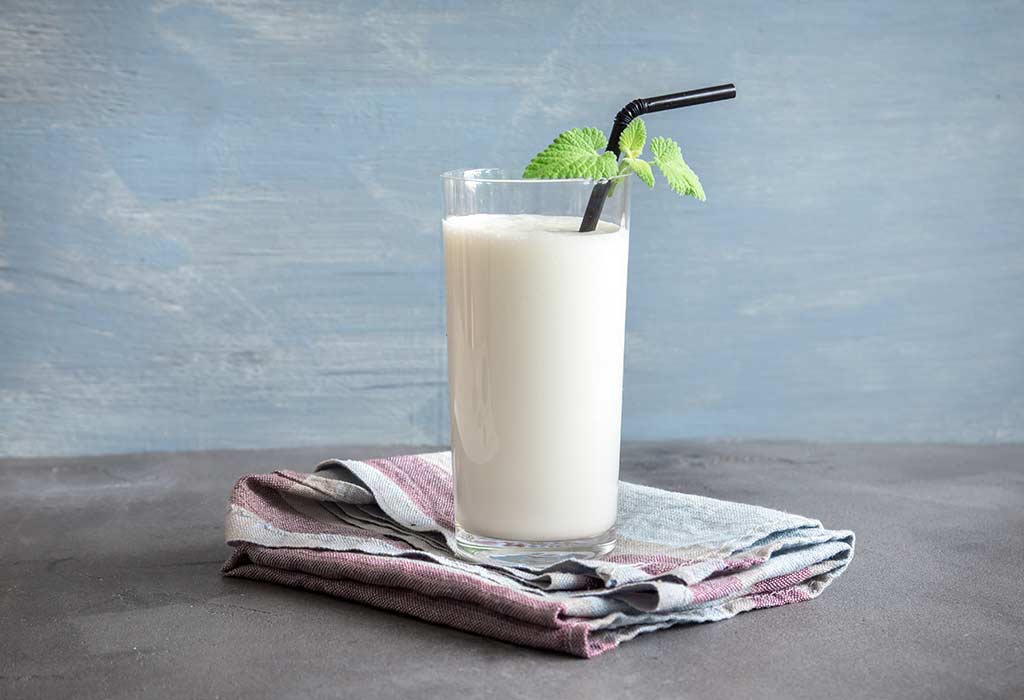
Homemade Lassi Recipe
Most babies love the creamy texture of curd and relish eating this yummy food option. Curd can be used in many versatile ways and can be turned into various sweet and savoury delights. In this post, we will share an easy Homemade Lassi recipe that can be whipped anytime with very few ingredients. Apart from quenching thirst, this tasty beverage is also loaded with umpteen health benefits too. Browse this post to learn this super simple recipe!
Cooking Time
Type
Time (hh:mm:ss)
Preparation Time
00:05:00
Cook Time
00:10:00
Total Time
00:15:00
Cooking Method
Gas and Blending
Type of Meal
Dairy
Suitable For
Babies over one year of age.
Meal Schedule
Mid Morning Snack
Recipe Type
Beverages
Ingredients
Before you learn how to make Homemade Lassi, you should know what all you need to make this simple beverage:
Ingredient
Quantity and Volume
Curd
1 cup
Water
1 cup
Cumin
1/2 tsp
Salt
A pinch
Mint leaves
6 to 7
Instructions
Here is the step by step procedure to make homemade lassi:
Heat a flat plan, spread cumin seeds and roast on low flame until they turn aromatic and crispy.
Let the cumin seeds cool down, then grind them to make a fine powder and keep it aside.
In a blender jar, put curd, water, mint leaves, salt and cumin powder. Churn all the ingredients together for a few seconds.
Serve tasty homemade lassi to your munchkin.
Recipe Tips
Keep note of the following tips when making Homemade Lassi for babies and toddlers:
You can replace salt with sugar or jaggery to make sweet lassi if your baby relishes sweet taste. Adding cardamom powder and few strands of saffron can enhance the flavour of sweet lassi.
You can also add fruit pulp such as mango, strawberry, kiwi, etc. to add a fruity twist to the sweet lassi.
Skip adding salt or sugar when making lassi for a baby who is less than one year of age.
Use homemade curd for making lassi. Also, the curd should not be sour as it may irritate your baby’s throat.
Adding salt or sugar is absolutely a personal choice; you may also skip it altogether. However, whenever giving curd or other dairy products to your munchkin, always check with your paediatrician before that.
Nutrition Information (Per 100 Grams)
The following table shows what all nutrition is there in homemade Lassi baby food recipe:
Nutrient
Value
Calories
150 Kcal
Carbohydrates
30 g
Protein
3 g
Vitamin A
100 IU
Calcium
130 g
Sodium
50 mg
Potassium
170 mg
Fat
3 g
Vitamin C
0.8 mg
The table-above mentions approximate nutritional content present in 100 grams of homemade lassi. Actual values may slightly vary.
Health Benefits
Lassi comes with an impressive nutritional profile, and in this section, we will be discussing how your baby can benefit from this yummy recipe:
Lassi contains lactic acid, which is great for balancing the acid-alkali balance. It is great for keeping any gastric troubles and stomach irritation at bay.
Lassi is loaded with lactic acid and good bacteria. Both these qualities help in building better immunity in babies and thus better ability to fight with infections and diseases.
Lassi is made from curd, which is made through the process of fermentation and thus just like curd, it is easier to digest and light on your baby’s tummy too.
The calming and soothing properties of lassi help babies’ to sleep better.
Including lassi in your baby’s regular diet can help in keeping skin allergies and other skin conditions such as eczema at bay.
Loaded with all the essential nutrients such as carbohydrates, protein, calcium, potassium, etc., lassi is a great wholesome meal option for your little one.
Buying Guide
Here are some tips that we would like to share when you go to buy ingredients to make lassi for your munchkin:
Homemade curd is best for making healthy recipes, especially for your baby. However, if you need to buy curd from the market, make sure you check the best-before-date to know the date of packing.
Always buy curd from well-known brands and the ones that are organic. This is because you do not want to expose your baby to the harmful effects of chemicals by not buying organic products.
Lassi is a very simple recipe that you can make in absolutely no time! So, next time you wish to give something refreshing and nutrition-laden to your munchkin, try this yummy homemade lassi recipe!
Read more
How to Dress a Newborn in Summer – Important Tips for Parents
How do you dress a newborn in summer? This is a common question for new parents trying to keep their little ones cool and comfortable in hot weather. Clothes for adults in the summer are pretty standard. But figuring out what babies wear during summer can be a task since they have just been introduced to the world. Put on fewer clothes, and the baby might shiver, and putting on too many could make him uncomfortably hot. Dressing an infant in summer requires careful attention to comfort and safety. Striking the right balance is possible if you understand the precautions to consider during the summer. Let’s take a quick check on dressing a newborn in the summer so your little pocket of sunshine stays comfortable in the sizzling summer, and you stay worry-free!
How to Know if a Baby Is Overheated?
When your baby starts feeling hotter than usual, there are very evident signs that would present themselves. They are as follows:
A tired and exhausted baby who seems to get irritated more often.
Flushed cheeks and the skin is warm to the touch.
Breathing has increased in pace and in rapid, short bursts.
They are overstimulated to the slightest touch, sound, and movement.
What Type of Clothing Should You Choose for Your Baby in Hot Weather?
Choosing the appropriate clothes for a newborn in summer can feel a bit challenging. But sticking to a few common, tried-and-tested hacks and tricks can help you make better choices for your little one (1).
Use yourself as a benchmark to figure out what your baby would be comfortable in. If the summers are quite hot and you find yourself wearing shorts and a loose shirt, pick something similar for your baby as well.
Going with dresses that have short sleeves will help your baby’s body get the air circulation it needs. Do not forget to pair that up with a baby-safe sunscreen on your baby’s exposed areas when heading out. Besides a sunscreen, do get them a hat as well.
If your summer picnics include visiting a garden or a forested area, carry a baby-friendly insect repellent. Otherwise, choose a light hoodie or full pyjamas to cover the body completely.
Keeping one to two extra sets of clothing always comes in handy. Avoid socks altogether and choose a single body suit of a light fabric for the baby’s nighttime.
Just as the clothes need to be light in colour and fabric, make sure any baby carrier or sling you use to hold is lightweight, breathable, and made of cotton fabric so it doesn’t irritate the baby’s skin.
How to Dress an Infant in Summer During the Day?
When it comes to what to dress a summer newborn in, there are plenty of choices on the shelves, but we have to make an informed pick so you don’t spend unnecessarily on clothes that you are not going to use for your baby. Stick to a few common tips on dressing a baby in summer to ensure your baby’s safety and comfort so that you can make a good decision quickly (2) (3).
1. Going Ahead Just With a Nappy and Nothing Else
Summers can be sizzling, really sizzling, for babies, making them uncomfortable. The best way to keep your little one comfortable in those times is to literally remove every single cloth he is wearing and let him roll around in his nappy. While putting him to sleep, you can cover him with an extremely light cloth just so that it makes him feel cosy. Being in a nappy isn’t going to be any problem, and your little one can play around without worrying about the heat.
Also Read: Summer Themed Baby Photoshoot Ideas
2. Upgrading Your Pram Into a Vehicle Fit for the Summers
When you think of taking your baby outdoors, it becomes even more important to protect him from the strong, direct sunlight and heat waves. Using a pram requires taking some extra steps, such as removing any additional cushioning from the pram. While this is meant for the baby’s comfort, the cushioning itself can heat up pretty quickly in the summer and make it uncomfortable for the little one. Let your child wear breathable clothes that cover the body fully.
3. Opt for Simple Cloth-Based Nappies Instead of Commercial Diapers
We understand that commercial diapers do have the added advantage of holding a lot more urine and poop as compared to a cloth nappy. But the summers can cause such diapers to keep the area around the baby’s butt warmer than usual. Their snug fit also makes it difficult for air to flow around the area, keeping it sweatier than usual. A nappy can take of the basics as well as keep your baby comfy at all times.
4. Cut Down on Baby Powders and Lotions During Summers
Yes, powders and lotions help keep your baby’s skin soft and healthy at all times. But summers, in general, tend to make the skin a lot more sensitive than it usually is. In such a scenario, the powders and lotions can end up irritating the skin instead of making it better. Therefore, reducing the number of such products in the summer is in your baby’s best interest.
Also Read: How to Take Care of a Newborn in Summer
5. Choose the Right Type of Clothes for Your Baby to Wear
Too many clothes don’t matter; the right types of clothes for the right age and weather matter. Summers requires baby clothing to be light, breathable, absorbing, and soft so that it allows his body to breathe and absorb sweat better than anything else. Stuff away all those synthetic and silk clothes for some other time and stock up on cotton clothing that is lightweight and comfortable.
6. Stick to Light Colours
Dark-coloured clothes absorb heat, making your baby feel hotter. Light-coloured clothing, such as white, pastels, or soft shades, helps reflect the sun’s rays and keeps your baby cool. Soft colours also reduce the risk of heat build-up and help prevent excessive sweating.
7. Keep Baby’s Head Covered
Your baby’s head is sensitive to the sun, so using a lightweight hat with a wide brim is essential when going outdoors. The hat should be made of breathable fabric, like cotton or linen, and should not be too tight. A good sun hat will protect their head, face, and neck from direct sunlight while keeping them cool.
Dressing a Newborn in Summer at Night
Now, how to dress a newborn for bed in summer? Well, nighttime dressing for babies revolves around two major things: your baby’s room temperature and their ability to stay comfortable without getting too hot or too cold.
Since babies haven’t yet developed to be able to regulate their body temperature, it is safe to dress them slightly cooler than going too warm on that scale. Overheating during sleep can increase the risk of SIDS, so light, breathable cotton layers at night are sufficient to keep them cool and comfortable. Besides cotton, muslin and bamboo fibre clothing are also good for summer during the day and at night.
Short-sleeve bodysuits, long-sleeve onesies, knotted gowns, lightweight, bamboo or cotton swaddles (if needed) are great nighttime summer clothing items.
Avoid socks and mittens at night. Make sure their room is slightly cool and neither too hot nor too cold. If your little one’s room has a fan or an air conditioner, make sure the air circulates well in their room, and the AC air doesn’t blow directly on them.
One more thing, make sure to frequently check your little one while they are sleeping and ensure they are not shivering and neither sweating too much. If you see them sweating while sleeping, take off one or two layers of clothing or blanket, or if they seem shivering, you may add a layer of blanket.
How to Protect an Infant From Summer Sun?
Peak summer becomes difficult for adults, think about young babies; it can be unbearable. In worst cases, it can quickly lead to heat rashes, heat strokes, diarrhoea, and other health issues if appropriate precautions are not taken at the right time. Here’s how you can safeguard your little peanut from the sizzling summer sun (4) (5) (6):
Keep your baby hydrated at all times with water and feeding sessions. Breast milk is enough to hydrate babies under 6 months of age.
Always find a spot with good, thick shade to keep your baby at all times.
Baby-safe sunscreen can be used to protect them from sunburn and heat rashes from the UV rays.
Babies with sensitive skin can also opt for special UV-protective clothing.
A simple hat that properly covers the face and head can go a long way toward keeping the baby protected from the strong sun.
How to Choose the Right Fabrics of Cloth in Summer for a Baby?
Choosing the right fabric for dressing newborns in hot weather is essential to keep them cool, comfortable, and free from skin irritations. Below are some of the best fabric options to keep your little one cool and cosy during hot weather.
1. Cotton
Cotton is a natural, breathable fabric that allows air circulation, helping to keep your baby cool in summer. It is soft, absorbent, and gentle on delicate skin, making it an ideal choice for baby clothing. Opt for organic cotton, which is free from chemicals and extra gentle on sensitive skin.
2. Muslin
Muslin is a thin, breathable fabric perfect for summer. It allows proper airflow, preventing overheating while keeping your baby comfortable. Muslin is commonly used for swaddles, blankets, and lightweight baby clothes, making it a must-have for warm weather.
3. Bamboo
Bamboo fabric is incredibly soft and naturally moisture-wicking, keeping your baby dry and cool. It helps regulate body temperature, making it a great option for hot and humid climates. Additionally, bamboo is hypoallergenic and gentle on sensitive skin, making it a safe choice for babies prone to allergies or rashes.
FAQs
1. Can my newborn wear short sleeves or sleeveless outfits?
Yes, short-sleeved or sleeveless outfits are fine for warm weather, as long as your baby is kept out of direct sunlight. Make sure to use a lightweight hat or shade to protect their skin when outdoors.
2. How do I dress my newborn for outings in summer?
For outdoor trips, dress your baby in loose, breathable clothing, and always use a hat for sun protection. Keep them in the shade as much as possible, and avoid going out during peak heat hours (10 AM–4 PM).
3. How can I prevent heat rashes on my baby’s skin?
To prevent heat rashes, dress your baby in loose, breathable clothing and keep them in a cool, shaded environment. Avoid overdressing, change damp clothes quickly, and use fragrance-free baby powder if needed to absorb excess moisture (7).
Knowing how to dress a newborn in summer can help you not just plan his wardrobe accordingly, but also get a good idea of picking out the right dresses for any season around the year. A comfortable and safe child is always happier physically and emotionally.
Also Read:
Summer Foods for Baby
Baby Care Tips in Summer
Summer Essential for Little One
Baby Summer Skincare Essentials
Read more

150 Cute, Nice and Beautiful Names for Boys
Babies are the most adorable beings on the planet. They are cute and beautiful in their own little ways. Therefore, most parents search for baby names bring out their innocent and pure nature. Cute names for baby boys should not just define a child’s individuality; they should have a beautiful meaning too. If you are expecting a boy, there will be a host of name suggestions and references coming your way from close friends and family, and you will be visiting a large number of websites to search for that one, perfect name. Well, to make it easy for you, we have here, a list of beautiful, nice, and cute baby boy names you can choose from. What are we waiting for then? Let’s get started.
Cute Boy Names With Meanings
These cute male names for baby boys given here with their meanings should help you make this important decision of a lifetime with absolute ease.
1. Aaron
This pleasant-sounding Hebrew name means ‘high mountain’, symbolising resilience and a solid foundation for life.
2. Abner
Abner is a Hebrew name meaning “father of light”. It conveys wisdom, guidance, and enlightenment, often representing someone who brings clarity or hope.
3. Aiden
Aiden suits boys known for their stylish looks and means ‘fire’, ‘the fiery one’, or ‘born of fire’.
4. Albert
Albert is of Germanic origin, meaning “noble” and “bright.” It suggests a person with a noble spirit and a bright intellect, often admired for their leadership and wisdom.
5. Alexander
This is a classic Greek name, and it means ‘defender of man’. The two popular names that often come to mind when one thinks of this name are Alexander the Great and Alexander Graham Bell.
6. Alfred
Alfred comes from Old English, meaning “wise counselor” or “elf ruler.” It represents wisdom, leadership, and kindness, often symbolising a thoughtful and fair-minded individual.
7. Andrew
Andrew means ‘manly’ and ‘powerful’. This name appears as one of the apostles who would later be christened Saint Andrew.
8. Anthony
This name is a derivative of the Greek Antonius. Anthony means ‘flower’ and is associated with Anthos.
9. Arlo
Arlo is often interpreted as meaning “fortified hill”. It symbolises strength, stability, and resilience, associated with someone grounded and enduring.
10. Asher
This English and Germanic occupational surname belonged to the ash maker. Asher is the son of Jacob in the Bible who started the Tribe of Asher.
11. August
Perfect for babies born in this summertime month, August means ‘great’.
12. Basil
Basil is of Greek origin, meaning “royal.” It signifies leadership, power, and dignity, often representing a person with a noble or commanding presence.
13. Barney
This cute name means ‘son of comfort’. Derived from the Slavic name Barni, it is a common short form for Barnard.
14. Baxter
This Anglo-Saxon and Scottish name comes from the English surname meaning ‘baker’.
15. Benjamin
This name suggests trust. Benjamin in the Old Testament was Jacob’s son and the founder of a Hebrew tribe.
16. Bernard
Bernard is of Germanic origin, meaning “brave as a bear.” It conveys courage, strength, and resilience, symbolising someone who is fearless and determined in the face of challenges.
17. Bertram
Bertram is a cuddly and cute boy’s name meaning ‘bright raven’, representing wisdom, intelligence, and a touch of mystique.
18. Bruno
Bruno means ‘brown’ and is German in origin. German philosopher Bruno Bauer, Brazilian actor Bruno Campos, and American singer Bruno Mars have popularised this name.
19. Bryson
Bryson is of Old English origin, meaning “son of Brice.” It symbolises strength, bravery, and a family-oriented nature, often linked to someone with a strong and protective character.
20. Byron
The name Byron has an English origin, meaning ‘barn for cows’, symbolising humility, simplicity, and a connection to nature and stability.
21. Caleb
Caleb is a mythical name finding its roots in the Bible. The name means ‘devotion to God’.
22. Campbell
Campbell is of Scottish Gaelic origin, meaning “crooked mouth.” It often represent a person who overcomes challenges or expresses themselves uniquely.
23. Carney
Carney is of Irish origin, meaning “victorious” or “warrior.” It conveys strength, determination, and success, often linked to someone who is driven and successful in their pursuits.
24. Carter
Carter is an English name which means ‘Cart-user’. Reminding us of President Jimmy Carter, it has a funky, fresh, and effortless appeal, too.
25. Charles
This royal name comes from Germanic Karl. Little Charles has a hunger for learning and works hard towards his goals. It means ‘free man’.
26. Chris
Derived from the Latin Christian or Greek Christianos, Chris means ‘bearer of Christ’.
27. Christopher
An English variant of the greek Christophoros, Christopher means ‘Christ-bearer’.
28. Clyde
Clyde is of Scottish origin, meaning “warm” or “friendly.” It symbolises kindness, loyalty, and comfort.
29. Cooper
This occupational name has an English origin and means ‘barrel maker’.
30. Damian
Damian is of Greek origin, meaning “to tame” or “subdue.” It represents someone who is calm, gentle, and self-controlled.
31. Damon
This Greek baby names, Damon means ‘to tame’ or ‘gentle’, reflecting calmness, kindness, and a balanced, composed personality.
32. Daniel
Daniel originates from the Hebrew word Daniyyel which means ‘God is my judge’. He is strong yet friendly, thanks to its nicknames Dan and Danny.
33. Dashiell
Dashiell is of French origin, meaning “messenger.” It symbolises intelligence, communication, and the ability to guide others.
34. David
This name with a Hebrew religion means ‘beloved’ or ‘beloved uncle’. This Biblical name is familiar with David and Goliath who won a battle against a giant.
35. Dawson
Dawson is of English origin, meaning “son of David.” It represents strength, heritage, and leadership.
36. Declan
This name means ‘full of goodness’, and it has an Irish origin.
37. Dewey
Dewey is of Welsh origin, meaning “beloved” or “dear.” It symbolises affection, warmth, and kindness.
38. Dmitri
This sassy Russian is an all-time favourite. Dmitri comes from the Greek name Demetrius and holds the meaning of ‘earth lover’.
39. Dominic
Mostly popular among Latin-Romans and Roman Catholics, Dominic means ‘belonging to God’ or ‘of the master’.
40. Duke
Duke is a worldly name preferable by noble societies and royals. This aristocratic boy’s name means ‘nobleman’.
41. Dylan
This Welsh name means ‘Born of the great sea’. Dylan has been used in Welsh mythology appearing as God of the sea.
42. Earl
Another with an aristocratic feel, Earl means ‘nobleman’ or ‘warrior’. You may find this name common in Europe.
43. Easton
This Hebrew name means ‘from the East town’, symbolising new beginnings, brightness, and a pioneering spirit.
44. Ebenezer
Well, nothing could beat this vintage-feel name. Ebenezer is a sophisticated name meaning ‘rock of help’, symbolising a ray of hope.
45. Elias
Elias is of Hebrew origin, meaning “Jehovah is my God.” It represents faith, spirituality, and devotion, often symbolising a person who is guided by strong moral and religious principles.
46. Elmer
Elmer is of Old English origin, meaning “noble”. It is often linked to someone with an honourable reputation.
47. Emilio
This short name is derived from the Latin name Aemilius and means ‘rival’.
48. Ernest
Ernest is of Germanic origin, meaning “serious”. It conveys a sense of dedication, sincerity, and commitment.
49. Ethan
Derived originally from the Hebrew, Ethan means ‘enduring and strong’.
50. Evan
This Welsh name is derived from ‘Lefan’ and means ‘God is gracious’. In Gaelic, it means ‘youth’.
Beautiful Boy Names with Meanings
These preety male names for baby boys given here with their meanings.
1. Ezra
Ezra’s meaning of ‘help’. This sweet Biblical name has a surprisingly modern sound.
2. Felix
Felix is of Latin origin, meaning “happy” or “fortunate.” It symbolises joy, good fortune, and optimism.
3. Fernando
The name has a Spanish origin, and it comes from the word ‘faro’ which means ‘journey’ and ‘nand’ meaning ‘ready’ indicating a spirit of adventure.
4. Ferris
Ferris is a Celtic name meaning ‘rock’, which is possibly derived from Fergus. This anglicised form of Irish O Fearghuis or ‘descendant of Fearghus’ has its English variant as Farrar.
5. Finley
This Scottish royal name is common and favoured. The meaning of the name is ‘white warrior’.
6. Fletcher
Fletcher is of Old English origin, meaning “maker of arrows.” It symbolises precision, skill, and craftsmanship.
7. Ford
Ford is of Old English origin, meaning “river crossing.” It often represents someone who can handle life’s challenges with ease and determination.
8. Francisco
Meaning ‘Frenchman’ or ‘free man’. Francisco is the name of Portuguese and Spanish origin.
9. Gavin
Gavin is short, handsome, and masculine. It means ‘battle’, representing courage and determination.
10. George
George, with its Greek origin, means ‘farmer’. The name has made a comeback with the British royal couple naming their son as George.
11. Gilbert
Gilbert comes from Old French and means ‘shining pledge’. You may have heard of Elena Gilbert from the mystical TV series, The Vampire Diaries.
12. Graham
Graham is of Scottish origin, meaning “gravelly homestead.” It symbolises stability, practicality, and groundedness.
13. Gray
Gray is of Old English origin, meaning “wise.” It symbolises wisdom, maturity, and experience.
14. Gregor
A Russian diminutive of Gregorious, this name means ‘watchful’, signifying vigilance and awareness.
15. Harmon
This name with a harmonic feel has a German origin. It means ‘soldier’ or ‘warrior’.
16. Harrison
Harrison has an aboriginal origin. It means ‘son of Harry’. The name has a nice formal vibe to it, doesn’t it?
17. Harvey
Originating from the Normans, Harvey means ‘battle worthy’, highlighting bravery, strength, and the readiness to face any challenge.
18. Heathcliff
Heathcliff never disappoints us with handsome and mysterious vibes. It means ‘heath near a cliff’.
19. Henry
This name means ‘home ruler’ from the German Heinrich. Popular among kings, a host of kings and emperors with this name have ruled across time and continents.
20. Herbert
Herbert is of Germanic origin, meaning “bright army.” It signifies strength and leadership.
21. Hudson
Charming and stylish, Hudson means ‘Son of Hudde’ and has an English origin.
22. Ian
This Scottish name means ‘God is gracious’ and feels cute with its short, sweet, and vowel initial.
23. Irving
An apt name for your handsome child, Irving means ‘handsome’ in Irish.
24. Isaac
Derived from the Bible, Isaac was the son of Abraham and Sara. The Green ecclesiastical form of Hebrew Yitzchak means ‘he will laugh’.
25. Isaiah
Hebrew names are fast gaining popularity, and this name means ‘Yahweh is salvation’.
26. Ivan
This Slavic name means ‘God’s Gracious Gift’ or’ God is Gracious’. With six Russian rulers named after Ivan, it certainly bears a regal appeal.
27. Jacob
The name Jacob means ‘supplanter’ in its Hebrew origin Ya’aqob. Jacob was one of the important patriarchs of the tribes of Israel in the Bible.
28. James
Derived from the Hebrew name Jacob, James means ‘supplanter’, the one who follows.
29. Jason
This Biblical name means ‘healer’. It comes from the Greek ‘Laso’ which means the Goddess of healing.
30. Jasper
Jasper is of Persian origin, meaning “treasure”. It symbolises wealth, beauty, and mystery.
31. John
A derivative of the Hebrew name Yochanan, John means ‘God is Gracious’. It stands for character and strength as well.
32. Kai
This name of Hawaiin origin means ‘sea’. In Europe, Kai has a Frisian origin used as a diminutive of Kaimbe which means ‘warrior’. And, in Japanese, it stands for ‘forgiveness’.
33. Kevin
Kevin has an Irish origin which means ‘handsome’ – derived from the name Caoimhin who is the patron saint of Ireland.
34. Kingston
Commonly used as elegant British surnames, this English name means ‘king’s town or settlement’.
35. Larkin
Larkin is of Irish origin, meaning “fierce” or “brave.” It conveys strength, courage, and determination.
36. Lazarus
This Hebrew name has a Biblical reference and means ‘God is my help’.
37. Levi
This Biblical means ’joined together’, and has a Hebrew origin. Its ultra-cool vowel ending is apt for kids bursting with energy.
38. Liam
This Irish name means ‘resolute protection’, ‘strong-willed warrior’, or ‘guardian’.
39. Luke
Derived from the Greek name Loukas, Luke evokes strength and has been popular in Star War movies as well as the New Testament. It means ‘the bright one’.
40. Marcin
Marcin is a casual and joyful-sounding name derived from the Latin name Martinus. It means ‘warlike’.
41. Martin
Martin is of Latin origin, meaning “of Mars” or “warlike.” It is often associated with someone with a strong, determined character.
42. Marvin
Derived from the Welsh name Mervyn, this name means ‘a person from Finland’ or ‘Great Lord’.
43. Matthew
This name of Hebrew origin means the ‘gift of God’ and has Biblical ties appearing in the New Testament.
44. Maverick
This American name means ‘independent’. Distinct in sound and bursting with energy, Maverick certainly shapes a boy’s identity who doesn’t follow the crowd.
45. Michael
This Hebrew name means ‘the one who is like God’, symbolising divinity, righteousness, and unparalleled strength of character.
46. Mike
This cute name originates from Hebrew, and it means ‘he who is like God’.
47. Nathan
This Hebrew name means ’He gave’ or ‘given’. Nathan is a Biblical name appearing as the son of David.
48. Nicholas
Derived from the Greek name Nikolaos, this name means ‘victory of the People’. It has become popular with Saint Nicholas and Bishop of Myra in Lycia.
49. Niles
Dignified and stately as it sounds, this name has an English origin, and it means ‘ river’.
50. Noah
This worldly Biblical name is known for its calm and peaceful vibe. The name means ‘comfort’.
Nice Boy Names with Meanings
These nice male names for baby boys given here with their meanings.
1. Nolan
This Irish name is soft in its sound and means ‘descendant of the famous one’.
2. Oliver
Derived from Oliva or Olive Tree in Latin, Ollie being its common nickname.
3. Orion
Orion is a Greek mythological name meaning ‘son of fire’ or ’rising star’. Apart from being the name of a constellation, Orion was the mighty hunter and son of Poseidon.
4. Oscar
This Gaelic name means ‘gentle friend’. Made famous by the Irish poet Oscar Wilde it sounds cute and charming at the same time.
5. Parker
This English name means ‘park keeper’. Named as an old English occupational surname, it has a beautiful yet down-to-earth feel.
6. Pax
This short and cute name is derived from Latin meaning ‘peace’. This name appears in Roman mythology as the Goddess of peace.
7. Payton
Payton is of Old English origin, meaning “fighting man’s estate.” It symbolises strength, courage, and resilience.
8. Peter
This name is derived from the Greek word Petros meaning ‘stone’. St Peter was the keeper of the Gates of Heaven. A well-known Christian name, Peter signifies dependability.
9. Phoenix
Symbolic of immortality, this name has a Greek origin and means ‘dark red’. Commonly referred to as the mythic bird that rose from the ashes, Phoenix will be a fighter.
10. Quantrell
This unusual surname has an old French origin and translates into English as ‘elegant’.
11. Quentin
Quentin is of Latin origin, meaning “fifth.” It symbolises order, structure, and reliability, often associated with someone who is balanced, organised, and dependable.
12. Quinn
This name is derived from the Irish surname O’Quinn which comes from the Gaelic O’Cuinn (descendant of Conn). It means ‘wisdom’, ‘intelligence’, and ‘reason’.
13. Quinton
This name is often used as a surname. Considering its English origin, it means ‘Queen’s manor’.
14. Ralph
Ralph is of Old Norse origin, meaning “wise wolf”. It symbolises wisdom, courage, and leadership.
15. Reynard
Reynard is a handsome name with a classic and high-class feel to it. The name means ‘powerful advice’.
16. Robert
Widely used in Continental Europe, this name of English and German origin means ‘bright flame’.
17. Rowan
Born of Scottish-Irish origin, Rowan means ‘from the Rowan Tree’ which is a tree with red berries.
18. Ryan
This Irish name means ‘little King’ or ‘descendant of the king’. Somewhat cute and playful, little Ryan is always on the lookout for fun and adventure.
19. Sage
Don’t get distracted by its herby properties; it has much more potential in representing people other than treating them. Sage means ‘intelligent’.
20. Samuel
This Biblical name has a Hebrew origin Shemu’el, which means ‘name of God’.
21. Sasha
Sasha is one of the most popular Russian names meaning ‘defender of man’.
22. Sebastian
This well-refined Greek name is derived from Sebastos, which means ‘venerable’ or ‘honourable’.
23. Sergei
Sergei is of Russian origin, meaning “servant” or “protector.” It is often linked to someone who is devoted, trustworthy, and protective of others.
24. Shawn
This Irish name means’ God is gracious’ or ‘Gift from God’, reflecting divine blessings and a generous heart.
25. Terence
Complement your little one’s calm and starry personality with this name. Terence means ‘soft and tender’.
26. Thomas
Recorded in the Greek New Testament as the name of Thomas the Apostle, this name means ‘twin’ and ‘leader’.
27. Tom
Derived from Greek origin, Tom means ‘purity’ or ‘innocence’, signifying a kind-hearted, honest, and untainted soul.
28. Tyson
Originating from the French word ‘tison’ meaning ‘firebrand’, this name suggests a charming and loving personality for a boy.
29. Uri
This name has a Hebrew origin and means ‘my light’ or ‘my flame’. Little Uri is sure to light up your life with immense joy.
30. Usain
Usain means ‘beautiful’. This name of Arabic origin has been made famous by the Jamaican runner Usain Bolt.
31. Umar
This boy’s name of Arabic origin means ‘flourishing, or ‘thriving’ bringing in the hope of prosperity and longevity in your son’s life.
32. Van
Immediately thought of Van Damme? We did, too! This mid-century boy’s name means ‘of’.
33. Victor
This early Christian name has a Latin origin which means ‘conquerer’, and symbolises Christ’s victory over death.
34. Vincent
Vincent means ‘conquering’ or ‘victorious’. Originating in the Middle Ages, this name suits boys who are smart, nice, and friendly in nature.
35. Valentino
This name with a Spanish origin means ‘strength’ and ‘health’. This Italian surname can predict good well-being for your son’s future.
36. William
This name with a Germanic origin as Willehelm means ‘desire’ or ‘strong-willed warrior’. From William the Conqueror to William Shakespeare, this name certainly sounds classy.
37. Walter
Walter has a German origin meaning ‘powerful warrior’ or ‘army ruler’. This steadfast name has a touch of grandness that might suit your son’s personality.
38. Warren
Dating back to the 19th century, this name comes from French and English origin and means ‘park-keeper’.
39. Wren
For your child’s kingly personality, this eccentric Welsh name means ‘rule’, symbolising leadership, regal charm, and a natural sense of authority.
40. Xavier
This name descends from Arabic, Spanish, and Basque origin. It means ‘bright’ or ‘splendid’.
41. Xylon
The name Xylon means ‘the forest’ and has a Greek origin. It represent growth, vitality, and a deep connection to nature’s strength.
42. Xenos
The names Xenos means ‘hospitality’ or ‘guest’. Coming from a Greek origin, it sounds modern and distinct from others.
43. Yardley
This English name means ‘fenced meadow’. This beautiful name can be given to boys who love nature.
44. Yanis
This boy’s name of French and Hebrew origin means ‘Gift of God’. Boys with names are dynamic, versatile, and intelligent.
45. Yael
This name of Welsh origin means ‘mountain goat’ or ‘fertile moor’. Boys with this name tend to become scholars and teachers.
46. Zane
Zane is a Hebrew version of the Biblical name John and means ‘gift from God’.
47. Zander
Zander is a short form of Alexander, the legendary warrior. It has a Greek origin and means ‘defender of men’.
48. Zephyr
This name has a Greek origin and means ‘west wind’. Parents looking for their son’s name that is light and breezy can choose Zephyr.
49. Zenith
An inspirational name for your son, this name of English origin means ‘highest point’.
50. Zion
This name of Hebrew origin means ‘utopia’ for the religious group of Jamaica, the Rastafarians. It was also the ‘highest point’ in central Jerusalem.
FAQs
1. What factors should you consider when choosing a cute boy’s name?
When choosing a cute boy name, consider its meaning, cultural significance, uniqueness, and ease of pronunciation. Think about how it sounds with your last name and whether it suits your family traditions or values.
2. Do cute boy names impact a child’s personality or success?
While names don’t directly shape personality or success, they can influence perceptions and opportunities. A well-chosen name can boost confidence and leave a positive impression, while overly unique or difficult names might lead to mispronunciations or biases. Ultimately, personality and success are shaped more by upbringing and personal effort.
3. What are some common mistakes parents make while choosing a cute name for boys?
Common mistakes while choosing beautiful boy names include choosing overly trendy names that might feel outdated later, selecting names with ambiguous spellings or pronunciations, and not considering how the name pairs with the last name. Parents may also overlook teasing possibilities or fail to think about how the name will suit the child as an adult.
4. What are a few tips for parents struggling to choose a cute boy’s name?
Start by listing nice boy names you love and look for their meanings or origins. Try saying the name aloud with your last name to ensure it flows well. Consider family traditions or names with personal significance. Don’t rush; sometimes, the perfect name becomes clear after meeting your baby.
We hope this list of cute, soft baby boy names has been able to help you enjoyably fulfil your responsibility. Remember that choosing cute baby names for a boy is a memorable experience, so trust yourself and make your child feel special in every way.
Also Read:
Soft Boy Names with Meanings
Long Names for Boys with Meanings
Elegant Names for Baby Boys with Meanings
Read more

The Link Between Hiccups and Brain Development in Babies
Hiccups can be irritating even for adults. They appear out of nowhere and don’t stop for long!
Now, imagine being a baby, new to your body and new to your environment; won’t having hiccups be even more confusing and annoying? A baby is too young to know what is happening when they are having hiccups. This may leave them feeling agitated or even make them cry.
Mayo Clinic defines hiccups as involuntary contractions of the diaphragm, which is the muscle that separates your chest from your abdomen. It plays a vital role in helping you breathe.
When we have a bout of hiccups, the diaphragm contracts, and with each contraction, there is a sudden closure of the vocal cords, which produces the characteristic ‘hic’ sound. It is one of the first habits we pick up. In fact, foetuses in the womb hiccup too!
There are a lot of myths and misconceptions associated with hiccups. Some believe that they are harmful to babies, while some believe that it indicates that someone is thinking of you. The former is definitely not true. As for the latter, we’ll leave that one up to you to decide!
Hiccups in Babies
Parents, do not worry if your baby is hiccupping!
Hiccupping is one of the first habits your little one will develop. No one has control over hiccups, especially not babies. However, you must know that hiccupping is normal and is actually an indicator that your baby is growing and developing well.
Hiccupping plays an important role in your baby’s brain development and respiratory regulation. It is an involuntary reflex and is actually quite common in babies. It is a sign that your baby is healthy and is developing well.
Hiccups and Brain Development
When a baby is born, their body’s circuits that process bodily sensations are not fully developed. The development and establishment of these networks are crucial milestones for newborns.
Each time a newborn baby hiccups, a large wave of brain signals is triggered. The brain activity resulting from a hiccup helps the baby’s brain to learn how to monitor and eventually control the diaphragm (breathing muscle) so that, eventually, breathing can be voluntarily controlled by moving the diaphragm up and down.
How Gripe Water Can Help With Hiccups in Babies
Although hiccups are a developmental necessity, they can cause discomfort and irritability in babies. Although not harmful, hiccups can be very uncomfortable, especially if they reoccur. Gripe water is one remedy that you can use to curb hiccups.
Gripe water is a beneficial tonic that can be used to cure a variety of digestive or intestinal issues in babies. It can be given to newborns and toddlers safely, as it has been for decades! Woodward’s Gripe Water contains soothing ingredients like dill seed oil that provides relief to little ones almost instantly! It also helps with colic and gas issues effectively.
The next time your baby has hiccups, you can be glad that your little one is growing and developing properly. And for those moments of endless crying and discomfort, you can turn to good old Woodward’s Gripe Water for relief!
References:
https://www.mayoclinic.org/diseases-conditions/hiccups/symptoms-causes/syc-20352613#:~:text=Hiccups%20may%20result%20from%20a,hiccups%20may%20persist%20for%20months.
Read more

Back-to-School Health Checklist for Parents
Back-to-school time spells children being excited to meet their friends and teachers, join classes, and participate in extracurricular activities. While children look forward to the activity front, parents are responsible for taking care of their child’s health before school starts, including their sleep routine, immunity, and overall health.
This back-to-school checklist is designed to assist you in taking care of your child’s health.
How to Prioritise Your Child’s Health as School Starts
Your little one’s health is a priority. If your child is 5 or below, look out for developmental milestones. Talk to your child’s paediatrician about what to expect, what to eat, or any health or cognitive concerns you are facing with your child.
Back-to-School Children’s Health Checklist – Steps to Ensure a Healthy School Year
When schools start, there is so much for parents to keep in mind, such as:
1. Help the Child Overcome School Anxiety
Comforting your child about the school, exciting them about the adventures that await, packing their bag together with their favourite items, and explaining what to expect on their first day can help them overcome their anxiety and go to school with a fresh mindset.
2. Schedule Health Check-up With Your Child’s Paediatrician
Parents’ attention is always on their children when they are in school – ‘Are they studying well?’ ‘Have they eaten yet?’ ‘Are they feeling healthy?’
Thus, an annual health check-up is recommended to stay updated with your child’s growth progress and other health concerns. It also reduces parents’ worry for their children once they know their little one is fit and fine.
3. Nutrition
Little changes in your child’s meals may bring a positive difference in their health and benefit them in the long run. Pack food items in their lunch that combine protein, carbs, calories, fat, and fibre. Colourful and seasonal fruits and veggies, whole grains, nuts, and dairy products keep energy levels high throughout the day to focus well on studies and activities.
4. Make Sure Your Child’s Vaccinations Are Up to Date
Children at school sit together, play, share food, and do many different social activities. When out of school, they may consume street food. And street food may cause infectious diseases which are foodborne and waterborne, such as hepatitis A, typhoid, polio, etc. These are vaccine-preventable diseases, and hence it’s essential for parents and guardians to keep a check on their child’s vaccinations.
A child’s health and academics are of prime importance and cannot be compromised because of the risk of serious diseases. Vaccinations may prevent the disease, reduce its severity and protect your child and others. Hence, ensuring your child’s all vaccinations are up to date is essential.
MyVaccinationHub is a helpful tool that will help you save time on tracking your child’s timely vaccination with age and the required number of doses. For more information, please consult your paediatrician.
5. Prevent School-going Kids From Catching Flu
In peak flu seasons, children may be at a high risk of contracting the illness, which interferes with their studies. Also, children may play with each other or touch contaminated surfaces or eat outside food, which may expose them to the flu.
To prevent flu, annual vaccination, along with good hand hygiene and social distancing, are different ways of protecting school children from unnecessary pain caused due to illness. Experts recommend annual flu shots for children below 5 years of age. So, before the onset of flu season, please consult your paediatrician for more information.
6. Don’t Cut on Play and Fitness
Play is as much important as studies. Children need at least an hour of physical space. Instead of video games and cartoons on TV, entice them to indulge in outdoor physical activities. It reduces stress and helps children stay fit.
7. Communicate With School Regarding Your Child’s Medications
If your child is allergic to any substance found on the school grounds or has any long-term medical condition, make sure your child’s school has updated information. It will be useful in case of emergency.
8. Promote a Good Sleep Routine
During holidays, routine bedtime may take a back seat, and children get used to waking up late. Children need at least 10 hours of sleep at night, while teens need around 8 to 10 hours of sleep.
A few weeks before school starts, gradually ease your children into a fixed bedtime and wake-up routine.
9. Take Care of Your Child’s Back
Children are prone to back pain because of heavy backpacks. Heavy schoolbags can induce pain in the shoulders, back and joints. Buy your little champ backpacks that are padded and offer good shoulder support. Also, arrange your kid’s bag in a way there is no uneven weight on either side.
Other Important Things to Remember
Infectious diseases come with minimal warnings. So, teach your child the basics of personal hygiene so they can avoid germs that could make them sick. Some standard hygiene practices you can teach them are:
Wash hands thoroughly for at least 20 seconds at school and at home.
Avoid touching their face with dirty hands.
Always sneeze into handkerchiefs, tissues, or sleeves.
Wash hands or use hand sanitiser before eating and after using the toilet.
Keep nails clipped and clean.
Apart from maintaining hygiene practices, make sure your kid is also vaccinated with necessary shots to avoid community spread and unnecessary pain from illnesses.
Help your child start school with their best foot forward by using this back-to-school health checklist. Plus, by maintaining your child’s health and vaccination record, you are setting examples that will not only keep them safe but will also inculcate healthy habits, benefitting them in the future.
Please consult your doctor for more information.
If you found this article helpful, share it with fellow parents!
References:
https://www.webmd.com/parenting/features/back-to-school-health-checklist
https://northmemorial.com/back-to-school-health-checklist/
https://www.onhealth.com/content/1/back_to_school_vaccine_health_checklist
https://www.wakehealth.edu/stories/back-to-school-health-checklist
https://www.mckenziehealth.org/news-blog/2020/august/back-to-school-health-and-wellness-checklist/
Disclaimer: Issued in public interest by GlaxoSmithKline Pharmaceuticals Limited. Dr. Annie Besant Road, Worli, Mumbai 400 030, India.
Information appearing in this material is for general awareness only. Nothing contained in this material constitutes medical advice. Please consult your doctor for any medical queries, any question or concern you may have regarding your condition. The disease list indicated for vaccination is not complete, please consult your doctor for the complete vaccination schedule. Views/opinions expressed by the doctor are independent and not influenced in any way by any organization.
NP-IN-ABX-OGM-220063, DoP Sept 2022
Read more
Lauki Moong Dal Soup Recipe
Soups and broths are the best way to introduce vegetables into your baby’s daily diet as they are easy to feed, gulp down and digest. If you’re looking for a bowl of healthy soup recipe that will keep your baby hydrated in all kinds of weather, lauki moong dal soup can be a good idea. The mild and soothing taste of this soup serves as an appetizer, tantalizes the taste buds and fights infections due to the presence of various nutrients present in its ingredients. This Indian style recipe is not just easy to cook but makes a substantial meal for picky eaters. Gourd adds depth to this soup, the moong dal keeps it light while the spices add flavor to this wholesome soup. Learn how to make lauki moong dal soup in a surprisingly easy way and your child would crave for this warm and creamy treat more often than you think.
Cooking Time
Type
Time (hh:mm:ss)
Preparation Time
00:10:00
Cook Time
00:20:00
Total Time
00:30:00
Cooking Method
Gas Stove
Type of Meal
Vegetarian
Suitable For
Weaning babies older than six months of age
Meal Schedule
Breakfast, Lunch or dinner
Recipe Type
Side Dish
Ingredients
Type
Quantity
Bottle Gourd
1 Cup
Moong Dal
2 Tbsp
Butter
1 Tbsp
Water
1 Cup
Salt
As Per Taste
Pepper
1 Tsp
Garlic
2 Cloves
Ginger
½ Inch
Shallots
2
Cumin Seeds
¼ Tsp
Coriander Leaves
1 Tbsp
Instructions
Refer to the step by step directions given here that will guide you to make the perfect lauki moong dal soup just the way you want.
Wash, peel and cut the bottle gourd into cubes.
Wash the moong dal and drain out the water.
Heat butter in a pressure cooker followed by cumin seeds and wait till it splutters. Throw in sliced shallots followed by chopped ginger and garlic. Stir for some time till they become translucent and gives out a nice aroma.
Add in rinsed moong dal followed by cubed bottle gourd and fry for another minute.
Add water and close the lid of the pressure cooker.
Wait for 2 whistles in medium flame.
Once the steam is released, transfer the contents of the cooker into the blender. Add more water and grind it into a smooth puree.
Add salt and pepper as needed and garnish with coriander leaves.
Pour it into a bowl and serve warm.
Recipe Tips
This simple lauki moong dal soup recipe can be made using commonly found vegetables and lentils found in your kitchen.
Add soaked and deskinned almonds to lend the soup more nutrition value.
Dilute the soup more with water for smaller babies. Avoid the salt for babies less than 1 year of age.
This homemade lauki moong dal soup baby food recipe can be made tangier by adding a few drops of lemon juice to it. Adding a tomato will also give it a sour flavor.
You can season it with roasted and powdered cumin seeds or crushed red chilies.
Olive oil can be used instead of butter. A pinch of sugar in the soup adds to the taste of older children.
Maintain proper hygiene while cooking for your baby like washing your hands or sterilizing the utensils.
Nutrition Information (Per 1 Serving)
Type
Value
Calories
16 kCal
Carbohydrates
3 grams
Protein
4 grams
Sodium
16 mg
Potassium
158 mg
Calcium
3%
Vitamin C
13%
Calcium
3%
Iron
2%
Health Benefits
This lauki moong dal soup prepared with loving care is guaranteed to rejuvenate your baby’s energy as well as meet the daily calorie requirement in the diet. Let us see what wonders it does to a baby’s health:
Soup is an effective remedy for the common cold as it contains an inflammatory agent. Bottle gourd soup normalizes the acidity of the stomach.
With about 90% water content, few calories, less fat and high fiber, bottle gourd reduces body heat by replenishes the water requirement of our body, especially during diarrhea.
As bottle gourd has Vitamin C, it induces a charming skin for babies.
The high fiber content of bottle gourd treats constipation and offers the best way to treat urinary infection by flushing out the toxins.
Moong dal is full of protein that induces growth in the weaning stage of babies.
Buying Guide
This buying guide is your ideal companion for picking the right ingredients that you need for cooking the best lauki moong dal soup for your beloved child.
If you’re buying branded moong dal, then look for its expiry date to avoid stones or insects in them.
Spices need to be bought in small quantities that have a strong aroma.
It is always better to use clarified pasteurized butter.
Freshly sourced veggies from local farmers market or organic vegetables are always a better option. Ensure the skin of the bottle gourd is pale green and smooth free from any spots.
Homemade Lauki moong dal soup for babies is a sumptuous and satiating treat for babies. It is certainly a better alternative to any readymade soup packets that have artificial flavors, thickening agents and harmful preservatives.
Read more

Your Baby's Secret Weapons are Crazier Than You Know
Just when you thought your baby is defenceless, they let you experience some oddities that are not only weird, but are also tear-jerking! Check out what do babies do that keep the new moms fretting – all in good fun, of course!
Babies are adorable and cute, little darlings. But they can be weird and tough to handle at times. Your little bundle of joy is full of surprises. But, again all surprises are not supposed to be pleasant. Some of these can really give you head-scratches as your baby has zero life experience. Whatever it may be, simply enjoy this phase till the moment it lasts. Check out the list of baby oddities that you might come across.
Some Really Weird Things Baby Do
1. They Are Little Explosive Machines
Your baby may look so delicate, but when it comes to spit-up and poo… time, they can be a nightmare. Just when you are done with feeding and making him burp, he will throw up. So, even if you cleaned the mess few seconds ago, you have to do it again. Don’t go crazy if it gets all over you! Maybe, it’s bathing time for both mommy and baby.
2. Changing Diapers Can be a Battle
Argh, that awful smell! Even though you hate it, you can’t escape. When there is shit blowout, you can only carry the diaper bag for a quick change and never let the humour in you go away. Trouble isn’t just over there. They like to play with that wastage. Who knew this sweet tiny human can do something so foul!
3. Their Smile is Angelic, But Those Nails Are Most Devilish
Like you, your baby’s nails need to be clipped and trimmed every week. But, what do babies do when it’s time for the cutting process? Neighbours might think you are torturing the baby. You’ll have to wrestle with the baby’s kicks, a lot of crying, sharp shrieks, and mostly getting clawed by those surprisingly sharp fingernails.
4. Rough Sleeping Time for Mama
Every mother must have experienced sleep deprivation. They do sleep a lot, but not the way you would want them to sleep. So, they can wake you up regardless of what hour it is, and you’ll need to settle them down. And then when you think you can finally go to sleep, they will wake you up!
5. Breastfeeding Can be Hysterical
Motherhood doesn’t necessarily mean you enjoy breastfeeding. It may hurt at the beginning, whether you are doing it right or wrong. When your body gets used to it, your little baby will make you scream hysterically. When their teeth start to grow, there is high risk of your nipples getting nipped. Newborns will drive you crazy!
6. They Smell Delicious, But Not when They Fart
There is nothing sweeter than the smell of a baby. Unfortunately, they will fart from time to time without being discreet. Yes, burping and hiccups will also accompany. They are going to bother you and the father.
These are a few things to know about newborns that you may not have known. If you are a mother for the fist time, enjoy this phase as you’ll never experience this again. Happy mommying!
Read more
Tools And Trackers


.svg)


Sort By
 Latest
 Most Popular
 Trending
Please select atleast one Filter