
















.svg)
.svg)
.png)


Development Month By Month
Suggested articles for you

Role of Parents in Child Development
Parents play the most important role in the overall development of their child. It is the right guidance of parents that develops the character of the child. Parenting is an ongoing job. It is not something you can get away from once the time comes because children need their parents, from time to time, to stay on the right track. Here’s all that you need to know about the role of parents in the development of their child. We have covered information on how parenting influences child development and some tips on parent’s role in development of child below. Let’s read!
Importance of the Role of Parents in Child Development
Parenting and child development go hand in hand. The proverbs that the apple does not fall far from the tree and that the branch grows as the twig grows can well-describe the effects of parenting styles on child growth and development.
All development is interrelated and cannot be defined under water-tight categories. So let us focus on how parents can actively participate to ensure that the child’s growing years are worthy. The role of parents in child development is responsive, responsible and never-ending. It governs responses, actions, thinking and decision making of a child in the following areas.
1. Cognitive Development
When children are growing up, positive parenting improves their cognitive, social and problem-solving skills. Positive parenting also affects their responses and helps them grow up to be better humans. Interaction and stimulation are very important in the early years. It is all about recognising problems, handling all situations well and picking up the traits of discipline, time management and effective problem-solving through simple routines at home.
2. Socio-Cultural Development
Children observe spousal interaction and how arguments are settled in the family. It teaches them a variety of good values that are imbibed and crucial to growing up. The child learns how to behave with others, playing to a common goal, team spirit, picking the right friends and a lot more.
3. Physical Development
Reaching age-related milestones is not the only goal. Children learn about being healthy, exercising regularly, being a team player, having the right diet and growing in a conducive environment through play-and-learn. The right guidance from parents can inculcate in children a good regimen of exercise and diet to achieve ideal physical development. Parents should remember that children lead by example.
4. Mental Development
Parenting styles help the child learn innovatively, accepting failures and overcoming them, understanding discipline, accepting feedback and the award-and-punishment concept. It governs their response to stimuli, thus moulding their minds.
5. Spiritual Development
Understanding religion, prayer, knowing right from wrong, being empathetic, having the right ethical values, valuing your parents and strengthening goal-setting liberates the free spirit in children. Teaching your children to be more accepting and believing in the greater good can help them gain a sense of purpose. Try not to conform them to any particular religion and let them explore spirituality on their own.
Some Useful Parenting Tips to Make Your Child’s Growing Years Worthy
Children naturally turn to the father to play and to the mother if they sense stress, fear, etc. But, gone are the days when fathers were bread providers, and mothers did all the nurturing and interaction.
The role of a father in child development is very important. Children will always look up to their father for motivation. Similarly, the role of a mother in child development has moved on and is not restricted to nurturing and caretaking alone. From that first touch and look, to later years, a parent is responsible for making the tiny infant into a well-grown, responsible and caring adult. This list of child development tips is not gender-specific and is equally applicable to both parents.
1. Be Positive
Children can easily sense negativity. No matter how young your child is, discuss your problems with him and how you handle them. Encourage your child to participate with you in different small household tasks. Teach him how to be creative and how to solve problems with a positive attitude.
2. Be Sensitive to Your Child’s Needs
Irrespective of how small your child’s needs are, understanding and fulfilling them is very important to help your child realise that you are there for him at all times and that his needs never go unheard.
3. Be Emotionally Present
Encouragement and love yield good fruit only when they are cultivated, worked on, nurtured & pruned. Show your child that he is loved all the time and that you are always there for him, no matter what.
4. Communicate Effectively
Talk to the child and hear what he has to say before jumping to conclusions. In every conversation, make sure you think from your child’s perspective and let him express himself. Remember, positive feedback is always better than negative punishment or blames.
5. Be Affectionate to All
Children pick up what they see/hear at home. To a child, using harsh words, quarrelling loudly, constantly fighting, incorporating bad habits, and swearing feels absolutely normal if he sees the same at home.
6. Set Routines for Play, Eating and Sleep
A good routine can help set good habits for the future. If you stick to a fixed routine, eat and sleep on time, refrain from watching the television during meals, then your child too will pick up these lessons and follow a routine.
7. Make Family Outings a Part of Your Routine
Remember, the family that eats and prays together stays together! Encourage your child to have family meals together and teach him the importance of spending quality time with family members.
8. Talk to the Child Even When Tired
Hard work gives immense satisfaction, and the reward for you is watching your child learn how to deal with problems, how to deal with financial insecurities, how to interact with others and how to be a little like you. So talk to your child no matter how tired you are at the end of the day. He will learn the same and be there for his family, just like you.
9. Build Trust, Love and Fair-Play in Relationships
Best examples are between the parents, in dealing with siblings and especially in quarrels. If you behave rationally with all the family members, then your children will learn the same and will end up loving and caring for all without discriminating.
10. Help Your Child Understand The Importance of Speaking Right and Honestly
Make sure your child values honesty, especially when it comes to matters that involve relationships and money. Teach him that no matter what, he should speak the truth and stick to what he says. Also, inculcate in your child a sense of responsibility.
11. Assure Your Unconditional Love and Support
If your child fails at something, make an effort to understand why and what to do before you criticise him. But over that, tell him that mistakes do not reduce the love between people.
12. Respect Your Child’s Feelings
Accept your child’s feelings, whether good or bad—and let them come out of them in their own way. It is the emotions in a person that guide them to take either the right or the wrong actions. But, as a parent, you should be there for your child to listen to them calmly and let them vent out their feelings.
Parents must remember that supportive families encourage each other to learn and offer the possibility to be better. Therefore, you must create an environment that motivates your child to participate, educate, and practise all the good habits you want him to inculcate.
Also Read:
Important Tips on How to Be a Good Father
Impact of Working Parents on Child Development
Parents Role in Child’s Education at Home and School
Read more




Erikson's Stages of Psychosocial Development: A Guide for Parents
Parenting is a journey filled with challenges and rewards, and understanding a child’s emotional and psychological growth can help parents provide the right support at each stage. If you regularly go through parenting magazines, you would be familiar with the name Erik Erikson in relation to psychosocial development. As a developmental psychologist, Erikson was well known in child psychoanalysis and is popular for Erikson’s eight stages of life theory of psychosocial development.
The term psychosocial development refers to how a person’s individual needs (psycho) come to gel with the demands or needs of society (social). Erikson’s stages of psychosocial development are stages everybody goes through from infancy to adulthood, and as you continue reading, you will recognise those from your own experience.
Erikson’s Eight Stages of Psychosocial Development
Similar to Sigmund Freud, Erikson theorised that personality development took place in stages. However, unlike Freud’s theory which is psychosexual, Erikson’s theory revolved around social experiences throughout the life that impacts people’s development. His interest was around how the personality development of people was influenced by social interactions and relationships (1).
He theorised that personality development takes place in a predetermined order that comprises of eight stages of psychosocial development from infancy to adulthood. Every stage builds on the previous stage and lays the foundation for future periods of development. Going from one stage to the other is characterised by a ‘conflict’ or a ‘crisis’ which would act as a pivotal point to the next stage. It’s important to remember, however, that the crisis could have a positive or negative outcome for personality development, as according to Erikson, the conflicts either develop a psychological quality or fail to develop it.
When the conflicts are successfully dealt with, people will emerge out of the stage with psychological strengths (essential virtues) that they can use to resolve conflicts and mitigate risks in the future. If the conflicts aren’t dealt with positively, the essential skills needed to establish a strong sense of self isn’t learned. Erikson also thought that a sense of competence is also developed at each stage which motivates behaviours and actions, while the person becomes competent in different areas of life.
When they fail to complete a stage of development, it results in a diminished ability to complete the next stage, and individuals end up with unhealthy personalities and a poorly formed sense of self. On the bright side, these issues can be resolved and the stages completed successfully at a point in life.
Here is what the Erikson stages chart for all people looks like (2) (3) (4) (5):
Stages
Psychosocial Crisis
Virtue Developed
Age
1
Trust vs. Mistrust
Hope
Infant- 18 months
2
Autonomy vs. Shame
Will
10 months – 3 years
3
Initiative vs. Guilt
Purpose
3- 5 years
4
Industry vs. Inferiority
Competency
5 – 12 years
5
Identity vs. Role Confusion
Fidelity
12 – 18 years
6
Intimacy vs Isolation
Love
18 – 40
7
Generativity vs. Stagnation
Care
40 – 65
8
Ego Integrity vs. Despair
Wisdom
65
Stage 1: Infancy: Trust Vs. Mistrust
The first of the Erikson’s stages starts at birth and continues until the baby has gone past his first birthday. It’s needless to say that at this stage, they are completely dependent on the mother for food, comfort, warmth, and security. The baby is born vulnerable and uncertain about the world and expects the parents to offer consistent care and stability.
Age Range
Birth to 18 months old.
Basic Virtue
With predictable and consistent care babies develop trust and with it the basic virtue of hope.
Desired Outcome
The trust built here is carried at later stages in life into relationships with people which offers a sense of security in times of threats. If the care has been inconsistent or unreliable or unpredictable, infants develop anxiety, mistrust, and suspicion. In the long term, they lose confidence in people around them and themselves.
Stage 2: Toddlerhood: Autonomy Vs. Shame And Doubt
When babies begin to assert their independence or prefer to do things by themselves and insist upon it, it is the milestone of autonomy. At this stage, they would show preferences towards food, clothes, and even the footwear they want.
Age Range
From 18 months to 3 years.
Basic Virtue
Being successful in this stage will lead to the development of the virtue of will. When ample support and encouragement are offered, they become more independent, confident, and secure in their own ability to navigate their environment.
Desired Outcome
Physical and cognitive growth marks this stage as they start to become partially independent from their parents. They are able to feed themselves, go to potty without help, and even dress. Having trust and a sense of self-awareness, they rely more on their own judgement.
Stage 3: Preschool Years: Initiative Vs. Guilt
The preschool years are when children learn social play and collaborate with others to play collective games. This is when they learn to control outcomes and take initiatives. At this stage of development, children learn to be more assertive in any negotiative environment.
Age Range
3 to 5 years old.
Basic Virtue
When children have a chance to balance their initiatives with a readiness to work with others, the virtue of purpose emerges from the ego. Success at this stage helps children feel confident and capable of leading others for a collective goal. Failure to acquire the virtues of this stage leaves them with a sense of self-doubt, guilt, and a lack of drive.
Desired Outcome
With success in this stage, children can play in groups, socialise, make up games, and stick to the rules of the play.
Stage 4: Early School Years: Industry Vs. Inferiority
The fourth stage of development occurs during early school years where they are more competitive and engage in the same things their peers do. They have also learned how to read, write, and do maths with teachers playing an important role in their learning outcomes.
Age Range
5 to 12 years.
Basic Virtue
With proper guidance by parents and teachers, children develop the virtue of competence which also reflects in their belief in their own ability to take up challenging tasks ahead of them. If they do not develop any skills, they start feeling inferior.
Desired Outcome
At this stage, the peer groups begin to take greater significance and their competence will help them gain a sense of self-esteem. They also compare themselves with their peers and have the need to validate their competency. Competence is demonstrated by building skills, applying them to make things, and getting results.
Stage 5: Adolescence: Identity Vs. Confusion
The fifth stage is adolescence during which they search for a sense of self and personal identity by looking through their values, beliefs, and goals and adopting new ones that better suit their sense of self. The transition from childhood to adulthood both physically and mentally will drive children to become more independent and acquire a sense of identity.
Age Range
12 – 18 years.
Basic Virtue
Success in this stage pertains to developing a strong sense of identity and their ability to take challenges while committing to their ideals, principles, and beliefs. Failing to establish an identity at this stage can lead to being a young adult confused about their future and also become susceptible to the ideas of influential people. Success in this stage leads to the virtue of fidelity.
Desired Outcome
The individual is capable of successfully abiding by society’s standards and expectations. The personal identity acquires and creates a sense of self that will endure throughout the lifetime.
Stage 6: Young Adulthood: Intimacy Vs. Isolation
This is the stage most people are quite familiar with, having a strong sense of identity and then, looking for a romantic partner to share their lives with. This stage presents a tougher challenger than all the previous ones as individuals need to invest their time and emotions into committed relationships.
Age Range
18 – 40 years.
Basic Virtue
Completing this stage successfully builds the virtues of love and commitment. Young adults also settle down at this stage and make compromises for long term family-oriented goals. Without completion of the previous stage and having a strong sense of identity, it is not possible to build strong committed relationships. The lack of identity and security coupled with the absence of warmth and intimacy triggers isolation.
Desired Outcome
The virtue of love developed during this stage helps young adults to offer both emotional and physical love and accept the same in return. They also become good at forming healthy reciprocal relationships with others.
Stage 7: Middle Adulthood: Generativity Vs. Stagnation
During adulthood, people continue building their lives with the focus mainly on career and family. Those who are able to do it successfully feel the need to contribute to the world starting from their community.
Age Range
40 – 65 years.
Basic Virtue
Having their career and lives in order, individuals tend to look for leaving behind a legacy. The urge to contribute makes them active in religious or other humanitarian or environmental causes to make the world a better place for future generations. When handled successfully, the developed virtue of this stage is care. Individuals also experience a sense of accomplishment regarding their career and personal life. Important milestones include having their children grown into adults.
Desired Outcome
Upon achieving the major milestones in life, they are able to offer strong support to their children, their community, and society. Failure to complete the stage results in a mid-life crisis and struggle to find a new purpose in life which can lead to stagnation.
Stage 8: Late Adulthood: Integrity Vs. Despair
The final stage makes the beginning of old age which is dominated by reflecting on life. People look back at their lives often and feel a sense of joy or regret depending on how successful they have been in all aspects of their life.
Age Range
Over 65.
Basic Virtue
Those who have made it this far having successfully completed all stages will feel a sense of pride and a strong sense of integrity. The virtue developed at this stage is wisdom as they look back at their lives with a general feeling of satisfaction and fewer regrets. Those who have been unsuccessful so far would feel a sense of despair of having wasted their lives and have many regrets.
Desired Outcome
Having successfully resolved the crisis from the previous stage, individuals at this stage have the wisdom to guide younger generations. They are also characterised by broad-mindedness, composure, and peace of mind. They are also capable of reflecting positively on their lives in the face of death.
FAQs
1. Why is Erik Erikson’s development theory important for parents?
Understanding Erikson’s psychosocial stage helps parents support their child’s emotional and social growth. By recognising the challenges and needs at each stage, parents can provide appropriate guidance, encouragement, and reassurance, fostering a strong foundation for lifelong development.
2. Do these stages apply to all children universally?
While Erikson’s stages provide a general framework, every child is unique. Parents should use these stages as a guide while adapting their approach based on their child’s needs.
3. How can parents help children transition smoothly between stages?
Parents can support transitions by being aware of developmental shifts, offering emotional support, setting age-appropriate expectations, and encouraging open communication.
Erik Erikson’s stages of development is the theory that personality development occurs in a predetermined order. It is built on the success of the previous stage and is an essential component of the psychosocial development of people. Going through each stage builds an essential virtue that helps people navigate the complexities of life.
References/Resources:
1. National Library of Medicine – Erikson’s Stages of Psychosocial Development
2. ResearchGate – Erik Erikson’s Stages of Psychosocial Development
3. Walden University – Master of Science in Education Insight: Erikson’s 8 Stages of Psychosocial Development
4. Pressbooks – ERIKSON’S THEORY OF PSYCHOSOCIAL DEVELOPMENT
5. Scientific Research Publishing – The Eight Stages of Psychosocial Protective Development: Developmental Psychology
Also Read:
Stages of Parental Development
Major Stages of Child Development
Role of the Family in a Kid’s Development
Factors Affecting Growth and Development of Child
Read more
Bayley Scales of Infant and Toddler Development
Every kid develops and grows differently. Some kids show signs of developmental delays or behavioural disabilities as compared to other kids of their age. This makes parents anxious, and they start worrying. For the assessment of the infant’s development and to test their behavioural growth, Bayley Scales of Infant Development (BSID) is used by the doctors. The Bayley Developmental Scale is a widely used and highly regarded tool designed to assess the developmental functioning of infants and toddlers from the age of 1 month to 42 months. In this article, we’ll walk you through how the Bayley Scales of Infant Development work and what results they can reveal about a child’s development.
What Is Bayley Developmental Scale?
The Bayley Development Scale or the Bayley Scales of Infant & Toddler Development is a child assessment method to measure the development functioning of a child aged between 1 to 42 months. The assessment measures the development of motor, cognitive, social-economic, language, and adaptive behaviour in babies and young kids. The Bayley Development Scale involves a series of interactions and tasks between the examiner and the child. The tasks involve basic responses to complex responses from the child and the examiner observes the child during these tasks. It is used to tell about the current mental and motor developmental functioning and thereby assist in the diagnosis and treatment of the child (1).
Five Components of the Bayley Scales of Infant Development
There are five components of the Bayley Scales of Infant development test and the test or tasks take from 45 minutes to 1 hour to complete. After the completion of the tasks, the examiner is able to tell the parents about the development quotient of the child (2).
The Three Subtests
The three subtests of Bayley Scales of Infant Development are (3):
The Cognitive Scale: This measures the child’s cognitive ability such as engaging in pretend play, or look for fallen objects.
The Language Scale: This measures the ability of the child to understand and speak the language or follow instructions.
The Motor Scale: This measures the gross and fine motor abilities of the child.
Two Additional Tests
There are two additional tests of the Bayley Scales of Infant Development, which may or may not be administered varying from child to child. These are:
The Social-Emotional Scale: This measures the child’s social ability or the ability to engage socially with others and the ability to engage in age-appropriate play.
The Adaptive Behaviour Scale: This measures the level of development of everyday life skills of the child such as cooperating, following rules, or adapting to new situations.
How Does the Bayley Test Work?
The Bayley Developmental Test involves a series of tests and tasks during which the examiner observes and rates the child’s performance. Then the scores of all the tasks are totalled. These raw scores are compared to the already available table of scores of children of the same age to compare the child’s development to other children of the same age. Thus, the examiner is able to assess whether the child has developmental delays or not and their significance. This assessment is used by the child’s paediatrician to identify early signs of any neuro-development delays or disabilities and suggest a treatment. The Bayley test apart from testing development disorders is also used to test the child of autism and non-verbal learning disorders.
How to Prepare for the Test?
The examiner to prepare the parents and the child first explains the entire procedure and what will happen during the test to the parents. This is done so that the parents know what will happen beforehand and don’t question in between the test to divert the attention and refrain from talking to the child to avoid skewing the results. The non-involvement of the parents helps the examiner to establish a good rapport with the child during the procedure and get an accurate result.
Are There Any Limitations of the Bayley Test Results?
As the kids are young and have different development rates, so in most cases, the development delay might be temporary. So the Bayley scales of infant and toddler development interpretation should be taken as an assessment of the child’s current functioning. The age range for Bayley is 1 to 42 months, so a small number of kids may have developmental delays that continue to later years and diagnosed with development disability in school.
FAQs
1. Can the Bayley Scales diagnose developmental disorders?
While the Bayley Scales is not a diagnostic tool for specific disorders, it can help identify children who may be at risk for developmental delays or disorders. If the assessment reveals concerns, it can guide further diagnostic testing or interventions, leading to early support that can make a big difference in the child’s future development.
2. How long does the Bayley Scales assessment take?
The Bayley Scales assessment typically takes between 45 minutes to 1.5 hours, depending on the child’s age and the level of cooperation. The testing is divided into different sections for each developmental domain, with breaks if needed to ensure the child remains comfortable.
3. How often should the Bayley Scales be administered?
The Bayley Scales is typically used as a one-time assessment to evaluate a child’s development at a specific point in time. However, in cases where developmental concerns are identified, follow-up assessments may be recommended to track progress and determine if additional support is needed.
Most kids have dramatically different development rates, so there is no set age or development pattern. But if parents feel their child is not growing or developing properly, they should not hesitate to take the opinion of the child’s paediatrician. Early detection of any delay or disability in the child’s development results in better cure and proper treatment.
References/Resources:
1. National Library of Medicine – Bayley Scales Of Infant and Toddler Development
2. Institute of Myology – Bayley scale
3. American Physical Therapy Association – Bayley Scales of Infant and Toddler Development-III (ed 3) (Bayley-III)
Also Read:
Toddler Growth and Development Stages
Major Stages of Kid’s Development
Newborn Baby Growth and Development
Read more
How to Assist Your Child in Developing Locomotor Skills
Locomotor skills start developing in babies as young as 11–12 months of age. Locomotor skills are an important part of the gross motor skills and should be developed from early on. If you have a little bundle of energy in your house, you must act soon to help develop locomotor skills in your child at the right time. Locomotor skills form the basis of sports and leisure activities that a child takes part in as he grows up, hence the importance of these skills cannot be emphasised enough. Let’s understand in detail what are locomotor skills and how you can develop these skills in your child.
Video : How to Help Your Child Develop Their Locomotor Skills
What Are Locomotor Skills?
There isn’t an exact definition of locomotor skills, but they can be defined as the basic ways of movement and coordination that form a foundation for the physical health of the kids. As mentioned above, locomotor skills are a part of gross motor skills which begin to develop in children after they turn one year of age. Walking is the first locomotor skill that develops in a baby, and soon others follow too.
Various Types of Locomotor Skills
The various types of locomotor skills that a child develops as he grows up are mentioned below:
1. Walking
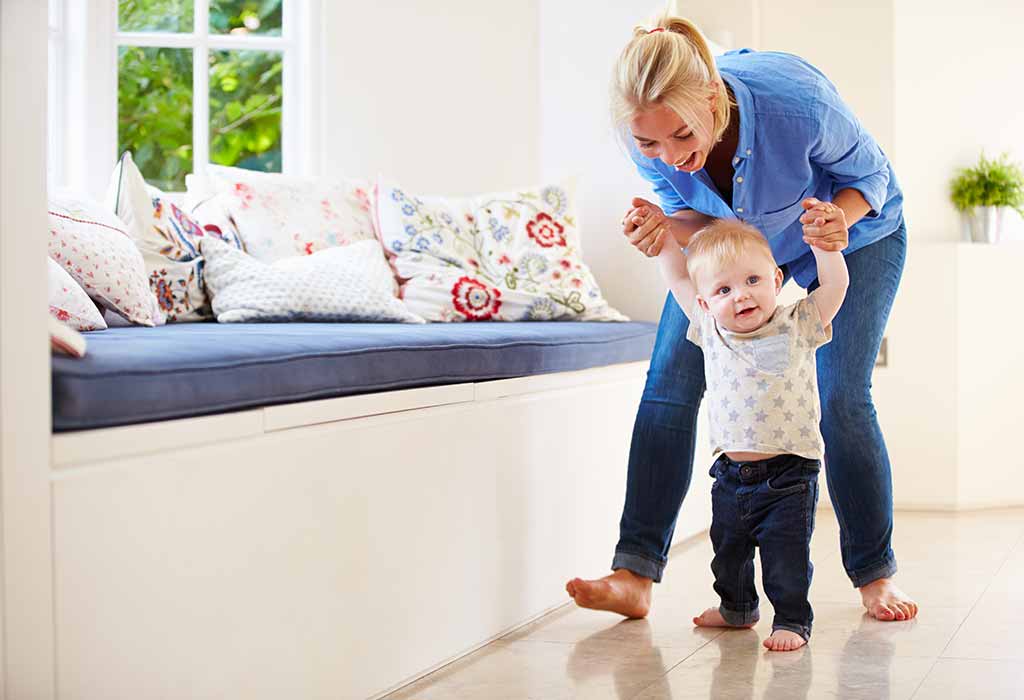
Babies attempt to stand with the support of counters, tables, and chairs, or by holding their caregivers’ hands when they are about 10 months of age. It most likely will take a lot of effort to start standing or walking independently but children can be quite persistent when required.
2. Jumping
Kids love to jump. It’s something they learn instinctively and need not be taught. Expect your little one to perform that little dance of victory and jump of joy when he is happy. To avoid any inadvertent injury while jumping you may teach him the correct jumping technique.
3. Hopping
By the age of 4 years, most children learn to hop. Jumping up and down on one foot and by keeping one leg up in the air is known as hopping. After jumping, the next skill your little one might try is hopping. You can teach him how to hop if he doesn’t know it yet.
4. Running
At age of 18-24 months, a baby learns to run. Initially, the baby might lose the balance or fall forwards not able to control the momentum of the body. After a few attempts, your kids will start running. Kids find running to be a very enjoyable sport. However, it’s highly recommended that you ensure that your kids maintain correct posture while running. Children can be quite clumsy in the beginning so as parents you must keep an eye on your child when he starts running.
5. Galloping
Galloping can be a little challenging to teach but it’s worth the fun. Once your child is comfortable with jumping and hopping the next step is to teach galloping.
6. Leaping
Leaping is when one jumps forward or backwards with one leg outstretched in front, taking off one foot and landing on the other. Leaping requires some training and one also needs to consider some safety measures while teaching it to babies and kids. It is highly recommended that you let your child start practising leaping a soft mattress, to begin with.
7. Skipping
By age of 5 years, most children tend to learn how to skip a rope. A combination of walking, hopping, and a little bit of jumping is skipping without a rope. If using a skipping rope then it can be more chaotic. Practising skipping can be a little tricky for kids, but you can teach your child how to skip by showing him how to do it. Ask them to observe your feet and then the way you hold your rope as you skip.
8. Sliding
Galloping sideways is termed as sliding. A slide in the park is the most effective way to make the children understand the concept of sliding. You may also check out the toddler slides for your very young kids before they go for some actual stuff.
When Do Locomotor Skills Start Developing in Kids?
Locomotor skills start developing in kids from a very young age. Most children require some assistance and instructions to learn difficult physical skills. If you have toddlers and pre-schoolers, then make sure that they get enough opportunities to put these locomotor skills into action. If your child has turned one year of age, he should start walking independently by now. By the time 4 years, he should start running, hopping, or jumping. And, as he crosses 6-7 year mark, he should master more complicated skills like skipping, galloping, sliding, and leaping.
Games and Activities to Encourage the Development of Locomotor Skills
Children require proper instructions and assistance to master locomotor skills. As parents to a toddler, you must act at the right time to help develop these skills in him. In order to encourage your child to work on these skills, you need to engage him in games and activities that help in the development of locomotor skills.
Simple games like ‘Simon says’, a game in which everybody is supposed to follow the actions of their leader is a great way to encourage physical play that can help build these skills. While you are taking a stroll with your child in a park, you can show him different movements like walking on the tiptoe, swinging your arms, slowing down, speeding up or walking sideways, etc. You can play interesting games like relay race and hopscotch with your kids as these games require more locomotion skills. While going for brisk walks, you can teach them more challenging skills like galloping.
While at home, you can play various games that focus on developing locomotor skills. For instance, a game that requires your child to draw different blocks and hop on each of them until he reaches his destination can help him work on his locomotor skills. You can also encourage him to perform high knee skipping, marching, or rope skipping while at home. You can also tell your child to count how many hops he can do on one foot and then switching to the other. Another great game is to jump from one spot to another.
What Should Parents Do If They See Their Child Struggling With These Skills?
If you notice any concerns in the child’s physical development then you must consult a doctor, no doubt. But there are some other activities that you can try at home to develop your child’s locomotor skills:
1. Help Your Child Walk Skillfully and With Steadiness
Simple and easy techniques like placing a beanbag or some other small objects on the floor while walking will help him step over and walk away. You may also draw wavy lines with a piece of chalk on the floor and challenge your kids to follow them. Alternatively, you may also make paper footprints and ask him to follow it while inside or outside.
2. Work on Your Child’s Running Skills
Encourage games like racing, soccer, and other sports that involve running. Getting the kids with a goal in their mind like the winner gets their favourite toy or ice-cream can push him to work harder. However, make sure you don’t offer rewards always or else your child may start doing things only for rewards!
3. Help Your Child to Practise Skipping
You can encourage your little one to practise skipping by playing their favourite songs or music, the music and rhythm help children in following the step or hop pattern. For improving the balance, you may also have your child skip while touching a wall.
4. Teach Galloping Techniques
Using hula hoops around the waist is an interesting way to begin with. Get inside the hoop and ask your child to hold the hoop from behind. The child can hold the hoop and follow you as you gallop forward. This practice will help your child see how your feet are moving. Next, you can exchange the position and let him be the galloping horse.
5. Encourage Jumping at Home
Jumping is an excellent exercise that kids can indulge in. You can encourage your child to jump off the bed and in your arms. You may also make use of a small trampoline to show him how he can jump safely. Slowly you can move on to higher surfaces once he becomes accustomed to jumping. You may also use interesting pictures or portraits on the wall at a targeted spot and ask him to jump up and tag them.
Now you know everything there is to know about locomotor skills. If you’re parents to a toddler, make sure you encourage him to explore and work on his locomotor skills. In case he struggles with any locomotor skill, try the above techniques to help him master it. But always look after the safety of your child while he tries out different activities to master locomotor skills. You can make him wear a knee and elbow guard. And ensure that he plays in an area that is clear of any dangerous objects that has the potential of causing injuries.
Also Read:
Developing Co-operative Skills in Toddlers
Help Your Child To Develop Social Skills
How to Develop Reasoning Skills in Toddlers
Read more
Role of Social Referencing in Child's Overall Development
You may have noticed that every time your toddler comes across something new, be it an object or a person or a situation, he will look at you for your reaction or approval before he interacts with it. That is called social referencing, a tool that helps babies explore the world around them in a safe manner by relying on the caregiver’s cues. Social referencing in a child’s development holds a significant space as it gives the nod to the children to interact with their surroundings and regulate their emotions and behaviour accordingly. By better understanding how social referencing psychology works in babies, you can learn to use it to make them develop better.
What Is Social Referencing?
Going by the social referencing definition according to the American Psychological Association (APA), it is the process through which infants read their parents’ or caregivers’ responses to regulate their own responses towards persons, objects, and situations (1) (2). It is an important mechanism that allows infants to understand and explore the world around them (3).
The social expressions of parents towards their infants or toddlers influence their upbringing. For instance, if a child is playing in an amusement park, falls or gets hurt, he may look up at his parent’s expression to determine how intensely they should react. It’s also known that despite the event that upsets/hurts the child, the child will regulate their reaction by looking at the expression of the parent. Social referencing can take on many different forms starting from subtle cues in the form of facial expressions and gestures to major emotional outbursts or events. It can also occur anywhere such as home, school, playground, water parks, social gatherings and everywhere else.
Children at a very young age are quite vulnerable and impressionable without a baseline for how much they need to feel or express and this is where social referencing comes into play. As they learn from their parents, they would develop responses to situations based on how their social referencing has been. An overly reactive parent who exaggerates things will influence the child to become hyper-conscious about everything as they grow older and well into their adulthood while a parent who does the opposite will raise a child who is more relaxed and not overly sensitive.
According to a study, infants often look at their parent’s or caregiver’s faces when they expressed something positive, whereas, old infants looked at their parents when they expressed fearful or negative reactions (4).
Social Referencing in Different Stages of Child Development
Infants as young as six months use social referencing to understand their parents and surroundings and their development continues throughout childhood and even into adolescence. Here is how social and emotional development occurs as children grow.
During Infancy
From birth to 6 months of age, your baby can look at his hands and legs, suck his fingers and respond to your smiles and touch. He can also smile at the different sounds you make and try to find out where he is being touched.
From 6 months to one year of age, he would have learnt to express pleasure, unhappiness and even anger while also being able to distinguish between strangers and family members. He also responds to your gestures to please you and feels sadness when taken away from you.
After Infancy
Between the ages of 1 and 2 years, he takes your cues before approaching a new object or going to a stranger. Express happiness when you praise him for something good that he does and imitate your speech and actions.
Between the ages of 2 and 4 years old, your child will display different moods and interests and express some autonomy while still using social referencing for everything.
From 4 to 8 years of age, your child will learn to interact and play with other children and stay friendly. He will also learn to follow the rules and play as part of a team and express specific interest in activities or subjects.
Importance of Social Referencing in Your Child’s Development
One of the best examples of social referencing is when your child looks at something shiny on the ground and turns around for your reaction on whether it is okay for him to touch it or pick it up. Your frown or smile can reinforce his reaction to the new object and proceed to touch or avoid it. Similarly here is how social referencing plays a role in your child’s development:
Social referencing is a critical component of your child’s emotional development. Your child will start learning the meanings of different emotive expressions, the words and sounds that follow, and how to associate with things.
Social referencing is an important part of the decision making and will build your child’s confidence in your inputs. This mechanism develops into a process that forms the basis of their decision-making skills in life.
Social referencing in toddlers also lays down the foundation for complex thought and understanding the connotations of different emotive expressions. Although it is not obvious at that age, the foundation laid down at home, and other social environments will have a profound influence on the development of the child.
How Can Parents Use Social Referencing As a Teaching Tool for the Betterment of Their Children?
Whether you are aware of it or not, social referencing is an ongoing developmental process in children. Your emotional states, gestures, actions and the situations that come up in the family are constantly working as social referencing. By being aware of it and controlling your actions, it is possible to use it for your child’s benefit. Here is how:
Use plenty of facial expressions while interacting and playing with your child both when home and outside. Let your expressions be clear in the message that you are trying to convey, so he knows exactly how to map each expression to each emotion. This also applies to spontaneous events and things that catch you off guard and your untended, instinctive reaction.
Your behaviour around others and social situations also have a significant influence on what your child learns from it. If your tone of voice and body language doesn’t sync, it could confuse the child. For example, if you speak to a neighbour or another person with a smile and immediately change your expression after they leave or show annoyance, your child will instantly pick on the ambiguity and get confused.
Social referencing is very useful in building healthy eating habits in children. You can let your child know which foods are healthy and which should be consumed in moderation all through your expressions.
Your reactions towards people, events and situations will imprint strongly on your child. Therefore practice being mindful and calm even under pressure and try not to lose it hysterically. On the other hand, it’s also important to teach him that feeling hurt and crying and expressing sadness is also an important thing.
When Is Social Referencing Useful and When Is It Not?
Social referencing can occur both through negative and positive gestures and expressions. What is interesting is that as babies get older, negative reactions seem to have a stronger effect than positive ones. That makes sense when it comes to negative vs positive social referencing because as children get older, they tend to indulge in riskier activities which would make you react quickly and more dramatically. Therefore positive social referencing takes a backseat as more and safer activities become autonomous. You can also see this in social referencing during mealtime when positive reactions to certain foods will spike their interest in them. However, as they get older, no matter how often you portray a dish as delicious, it takes a while to get them to try it. On the other hand, even a small negative remark about food will remain in their memory for a long time influencing their choices.
FAQs
1. How does social referencing influence language development?
If you have ever seen children mimicking the style of speaking like a grandmother or an uncle, that means they have picked the social language cues from them. Social referencing plays a significant role in language development in children, as it helps children copy adults’ gestures, tones, and sounds, along with cues and affirmations. This, in turn, helps children’s understanding of language and the development of communication skills.
2. Is social referencing permanent?
Well, yes. Social referencing can continue for a very long time for an individual (5). However, there can be seen a subtle shift in the way social referencing happens in teenagehood and adulthood as cultural and social contexts change. For instance, instead of relying on direct cues from others, mature children make use of the subtle and indirect cues from others.
3. What does social referencing in toddlerhood look like?
During toddlerhood, children look for their caregiver’s expression before approaching a stranger or a strange object, or anything new to them. Whenever they make new friends, they show it to their caregivers. Similarly, when they see something new, they make expressions and look for their caregiver’s expressions for a better understanding of their emotions and behaviour.
Social referencing is an integral part of a child’s development. With everything that you have learnt about it, you can choose to express yourself better to mould your child’s emotional development as they grow older.
References/Resources:
1. APA Dictionary of Psychology; American Psycological Association; https://dictionary.apa.org/social-referencing
2. Stenberg. G, Forslund. T; Social Referencing; Encyclopedia of Infant and Early Childhood Development (Second Edition); https://www.sciencedirect.com/science/article/abs/pii/B9780128093245236493; 2020
3. Hertenstein. M. J; Social Referencing; In: Goldstein, S., Naglieri, J.A. (eds) Encyclopedia of Child Behavior and Development. Springer Link; https://link.springer.com/referenceworkentry/10.1007/978-0-387-79061-9_2704
4. Walden TA, Ogan TA. The development of social referencing. Child Dev.; PubMed; https://pubmed.ncbi.nlm.nih.gov/3168639/; October 1988
5. Walle. E. A, et al.; Social Referencing: Defining and Delineating a Basic Process of Emotion; UC Merced; https://idlab.ucmerced.edu/sites/idlab.ucmerced.edu/files/page/documents/walle_reschke_knothe_-_revision_2.pdf
Also Read:
Role of Parents in Child Development
Types of Play for Child Development
Impact of Working Parents on Child Development
Factors That Affect Growth and Development in Children
Read more

Late Bloomer Child – Causes and Parenting Tips
If your child isn’t hitting his developmental milestones at times, most parenting books or websites say he should, don’t worry too much. They are just guidelines for the average development of children. Every child is unique and is going to develop at their own speed. Some develop early, and some are late bloomers. A “late bloomer” child is one who takes longer than other kids to reach certain milestones, like talking, walking, or reading. If your child is a little late, it doesn’t mean there is anything wrong with him. In this article, we will talk about the causes of late blooming and share helpful parenting tips for raising late bloomer kids with care and patience.
How to Tell If Your Child Is a Late Bloomer?
Watch out for the following to know if your child is going through late bloomer child development (3):
Has not rolled over on his own by the age of five months
Can’t sit up with support by the age of eight months
Is not interested in experimenting with crayons and does not even try to feed himself by the age of one year
Has not yet attempted to walk by the age of eighteen months
Has not spoken a single comprehensive word by the age of two (1)
What Factors Influence a Child’s Development?
Some factors that may influence a late bloomer child development include (2):
1. Temperament
The nature of your child will directly affect the way your child develops. For example, children with a more persistent nature may refuse to relent until they have mastered a certain skill, say rolling over. This means that they will reach their milestones faster. However, some children may not have such persistent natures and are more likely to give up faster, slowing down the speed at which they master a certain skill and reach a certain milestone.
2. Environment
Babies who are pampered by adoring family members may not reach their milestones as fast because they are being coddled and not given the opportunity. They are rarely given a chance to reach for their ball, as someone will always reach out to give it to them, or they rarely learn how to communicate properly, as someone is always there to ensure they have everything they need, leaving them with no need to try and call out for his or her mother. Children need to get the opportunity to try things for themselves, as it will help them to reach their milestones faster.
3. Muscle Tone
If your child has low muscle tone, it will make it much harder to initiate or even maintain movement. Children with weaker muscle tone may be floppier than others, and when you try to move their limbs when he is relaxed, there is no tension, and it is very easy to do so. Consult with your doctor for the best kind of physical exercise you can do for your child to help strengthen their muscles. If done so regularly, you will see a change quite fast.
4. Personal Interests
Children all have different personal interests, just as adults do. For children who love to stay close to their mommies, learning how to walk may make them soon realise that it is taking them further away from her and separation anxiety may begin to show. Some children may become so fascinated by drawing with pencils or crayons that they may not really take an interest in learning how to walk as they are more content with their art. Those who are more apt to enjoy their mobility may focus on that and not be very interested in verbal exercises.
5. Parental Interactions
It stands to reason that a lot of your child’s development will also depend on the time they spend with you. Children who are not given enough time by their parents will have to learn on their own, which will slow down their development. Those whose parents opt to spend more time with them, playing and encouraging them to speak, will reach their milestones at a greater speed (5).
6. Nutrition and Health
A child’s nutrition and health will directly impact their minds and bodies. A healthy child is much more likely to reach the developmental milestones than a child who is sickly or undernourished. A child’s eating and health in early childhood may have long-lasting effects (6).
Parenting Lessons for a Late Bloomer Child
Here are some lessons a parent should keep in mind while dealing with a late bloomer:
1. Everyone Is Different
You may have more than one child, and if your second is not reaching milestones at the same time the first one did, you may panic, but no two children are alike, and each will get to the same stage by the age of three, even if he or she did it slowly differently.
2. Don’t Be Pushy
There is a difference between encouragement and being pushy. While it will benefit your child greatly to be encouraged, do not try to push your child to do things faster. Children must go at their own speed so that they can truly grasp what it is they are learning.
3. Do Not Label
Children should never be labelled and called unintelligent as each person and child has their own strengths and weaknesses. Studies show that negative labelling has a negative impact on children and their sense of self-worth. This, in turn, will impact their development.
When to Worry?
Despite children developing at their own pace, there is a certain age bracket by when most children should reach certain milestones. A very young child may take some time to respond to something, but as time passes, the response is meant to get faster. Children should be making eye contact and smiling at their caregivers and parents, they should be trying to interact or move about in some way, and so if your child is not showing any of these signs, and is not even making an attempt, you should consult your doctor (4).
FAQs
1. Are late bloomers less intelligent?
No, being a late bloomer has no connection to intelligence. Many late bloomers catch up to their peers and often excel in different areas later in life.
2. How do I help my child build confidence as a late bloomer?
Celebrate small achievements, no matter how minor, and avoid comparing them to other kids. Help them understand that everyone grows at their own pace, and encourage activities where they can feel successful.
3. Can late bloomers still excel in school?
Many late bloomers do very well academically once they find their footing. With the right support and encouragement, they often catch up to their peers and sometimes even surpass them.
Late bloomer baby and the early bird will become indistinguishable by the age of five. Until then, if your child seems to be taking his own sweet time with something, don’t fret. As long as you see your child developing, even if it is slow, you can be sure he will be just fine.
References/Resources:
1. Late Blooming or Language Problem?; American Speech-Language-Hearing Association; https://www.asha.org/public/speech/disorders/late-blooming-or-language-problem/
2. McIsaac. J; Is my child a late bloomer?; Exceptional Lives; https://exceptionallives.org/blog/developmental-delay-late-bloomer/
3. Is Your Baby’s Physical Development on Track?; American Academy of Pediatrics; https://www.healthychildren.org/English/ages-stages/baby/Pages/Is-Your-Babys-Physical-Development-on-Track.aspx
4. Concerned About Your Child’s Development?; Centers for Disease Control and Prevention; https://www.cdc.gov/ncbddd/actearly/concerned.html
5. Lanjekar. P. D, Joshi. S. H, Lanjekar. P. D, Wagh. V; The Effect of Parenting and the Parent-Child Relationship on a Child’s Cognitive Development: A Literature Review; PubMed Central; https://www.ncbi.nlm.nih.gov/pmc/articles/PMC9678477/
6. Roberts. M, Tolar-Peterson. T, Reynolds. A, et al.; The Effects of Nutritional Interventions on the Cognitive Development of Preschool-Age Children: A Systematic Review; PubMed Central; https://www.ncbi.nlm.nih.gov/pmc/articles/PMC8839299/
Also Read:
Reasons for Late Teething in Babies
Speech and Language Delay in Children
Understanding Developmental Delays in Children
Slow Learner Child: Characteristics and How to Deal?
Read more
Your 52 Week Old Baby – Development, Milestones & Care
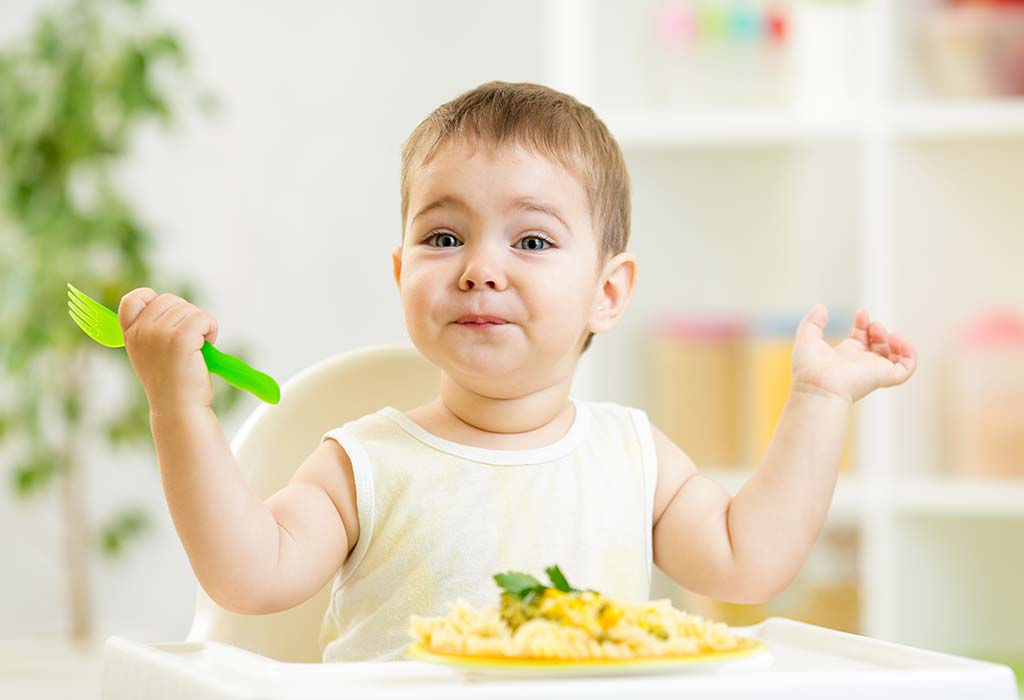
Your baby is officially a one-year-old. Happy birthday to your little one. It’s been a year since you welcomed your baby and you must have witnessed so many changes in him in just one year. Your child has achieved developmental milestones and is growing each day. Your baby is now a toddler and has her own personality. She will have her likes and dislikes when it comes to food. He will understand when you talk to him and will soon start walking. Your baby might also point at literally everything he sees and asks ‘What’s that?’ in his adorable baby lingo. There’s a lot of developmental changes your child will go through at 52 weeks. Learn about them in this article!
Your 52-Week-Old Baby’s Development
During this time, your baby’s eating as well as sleeping habits may change. Children between 12 and 14 months may start having dreams actively in their sleep. These dreams can sometimes startle and wake up your child. During such moments, you should comfort him until he falls asleep again. At this stage, your baby, now a toddler, will be fast developing his personality. His language skills will be developing at a fast rate and he may be soon able to communicate with people who don’t understand his gestures or know that ‘wah’ means water to him. Physically, if he is a wobbly walker now, he will soon graduate to being able to run, jump and dance. His concept of self will also grow stronger, making it easier for him to interact with strangers or play with other toddlers. But he will always want your love and support, that will remain unchanged.
[Also Read: 12 Months Old Baby Development]
Your 52-Week-Old Baby’s Developmental Milestones
Below are the 52-week-old baby milestones you should be watching out for:
Your baby will be able to communicate symbols for words using hand gestures.
Your baby will be able to return your high-five hand gesture.
He will take his first steps around this age.
Your baby will have developed fine motor skills. He might be able to pick up grapes between his thumb and forefinger, i.e., using a pincer grasp.
Your baby will understand object permanence.
Your baby will be able to understand around 25 words and can respond to simple one-step instructions.
He can recognize his favourite things and places.
Your baby will be able to point at something and look at you asking a question, even though he doesn’t use words to ask.
[Also Read: 12 Months Old Baby Milestones]
Feeding
Now that your baby is over 12 months old, he should be eating a wide range of foods but you should continue feeding him. You can start reducing his dependence on the bottle by gradually replacing his nighttime feed with milk or water from a cup. Your toddler will be a picky eater at this stage, so keep offering him a variety of healthy meals. Don’t pressurize him to eat more than what his appetite can take, and keep snacks and junk food away. You may worry that he is not eating enough; don’t worry. As long as he appears to be normal, he’s fine. Consider introducing cow’s milk into his diet during the weaning process. If you do, make sure you give him only pasteurized whole milk, as growing children need the extra fat and cholesterol that whole milk offers.
[Also Read: 12 Months Old Baby Food Ideas]
Sleeping
At this stage, your baby may not sleep through the night. Sleep disruption one month before and up to three months after crawling is typical, research suggests – your baby will have a total of 23 weeks of ‘fussy periods’ in his sleep throughout his first year of life. This is due to the mental and physical development, and growth spurts that your baby will experience. Not to mention, teething. On average, 12-month-old babies should have eight primary teeth by their 1st birthday. Eight more teeth will come by his second birthday, which means that more teething pain at night, and more disturbed sleep for you and your toddler.
[Also Read: 12 Months Old Baby Sleep]
Tips to Follow to Take Care of Your 52-week-old Baby
This is how you can care for your 52-week-old baby.
Watch your fingers when they are close to your baby’s mouth and your nipples when you are breastfeeding as he may bite because of teething pain.
If you want to wean your baby, check with your baby’s doctor and switch to cow milk.
Avoid giving your child processed packs of juice as they have a high sugar content that can fill him up, making him not want to eat food.
Introduce protein into your child’s diet from a variety of sources like peas, cheese, eggs, beans, and yoghurt.
Give your baby fresh fruits; they are a great source of essential vitamins.
Always humour your baby when he points at something and looks at you expectantly. Answer him cheerfully and in proper sentences.
Keep pointing at objects and naming them so your baby becomes familiar with them. This simple activity will help in your child’s language development.
Keep narrating stories to your baby from picture books.
Set a proper bedtime routine which includes a bath, drinking a cup of milk, brushing teeth and a bedtime story.
Tests and Vaccinations
Your little one is one. Apart from celebrating his first birthday, you should also take him to a paediatrician to see how he is developing.
1. Tests
Your doctor will measure your baby’s height, weight, and head circumference to track his growth and will ask you questions on his diet, sleep habits, and behaviour.
2. Vaccinations
Your toddler will most likely need boosters at 52 weeks for vaccinations he has already been given in the past one year. These include vaccine shots for Hepatitis A, Hepatitis B, Hib, Polio, influenza, and DTaP. He will also need the first doses of the MMR and chickenpox vaccine.
Games and Activities
Below are some games and activities you can play with your little one:
Press your baby’s hand or foot in some poster ink and make a print on a piece of white paper. You can then frame this print or save it for posterity.
As this time will be around your baby’s first birthday, teach him how to sing ‘happy birthday’. Sing it to him before bed, when he wakes up, or wherever you can. He will soon learn to mimic you, clapping his hands in time.
Hold your baby’s hands while he is in standing position and slowly cruise him around so that he learns the movement of walking and can start in his own time.
Play peekaboo or hide-and-seek with your mobile baby around the house. Make sure that you baby proof your house.
[Also Read: 12 Months Old Baby Activities]
When to Consult a Doctor
In your 52-week-old infant’s development, consult your doctor if you ever notice the following:
Your child has an allergic reaction to strawberries, honey, cow milk, eggs, nuts or any other food. This is the age when certain food can cause allergies, which can range from rashes to watery eyes, a swollen tongue, face or hands, or even difficulty in breathing. Consult your doctor if you observe any such things in your baby.
If your child is losing weight and shows symptoms of fever or diarrhoea and refuses food, take him to a doctor as he could be suffering from an infection.
It is always better to check with the doctor once before you introduce cow milk in your baby’s diet. If you have obesity or any cardiovascular issues, your doctor may advise reduced-fat milk for your baby.
Taking care of a baby is not easy, but as you celebrate your child’s first birthday, enjoy a little and take pride in the fact that you and your spouse managed well in the past year. Your baby has entered toddlerhood and now you are going to get even busier, running around him. But we know that you and your partner will manage just fine!
Previous Week: 51 Weeks Old Baby
Read more
Sensorimotor Stage of Development – How Parents Can Help
The sensorimotor stage is the first stage of development out of four stages as per the theory of cognitive development by Piaget. This is the stage at which an infant starts to learn about herself and her surroundings, through her senses, i.e., seeing, sucking, touching, feeling and other senses. In this phase, a child gains knowledge using the sensory skills she is born with, which adds to her overall cognitive growth.
What is the Sensorimotor Stage in a Child’s Cognitive Development?
As per the theory, Piaget’s sensorimotor stage of cognitive development refers to the first two years of an infant’s life during which the child starts to perceive herself and the environment around her through sensory abilities and motor activities.
What Are the Substages of Sensorimotor Stage?
The sensorimotor stage has six different substages which are associated with the development of a new skill. Following are the 6 substages of the sensorimotor stage:
1. Reflexes
This substage follows from the time of birth up to 1 month. During this time frame, an infant relies on her inborn reflexes such as looking or sucking to understand the environment surrounding her.
2. Primary Circular Reactions
This substage covers the time frame from 1-4 months. During this phase, a child learns to coordinate sensation with new schemas. According to Piaget, at first, infants are interested in their own bodies and activities they perform using their body parts repeatedly. For example, many infants like to put their hands, or feet in their mouth, or make loud noises such as ‘mamamamama’, or ‘bababaababa’, etc. All these activities are pleasure-driven. They keep repeating these activities because they love doing them.
3. Secondary Circular Reactions
During this phase, which kicks in around the 4th month and lasts up to the 8th month, infants start to take an interest in their surroundings. Typical gestures infants engage in at this time include moving the toys or other objects with their hands or other body parts, or splashing water when you give them a bath.
4. Coordination of Secondary Schemes
At this substage, which is between eight and twelve months, infants try to combine their skills learned so far to achieve the desired result. For example, at this stage, your child might try to pull her toys to suck on them. At this stage, they also become aware of certain objects and their qualities. For example, they realise that circular objects such as a ball will roll over upon moving.
5. Tertiary Circular Reaction
At this fifth substage of sensorimotor development, infants take their curiosity to the next level. They experiment to see that what would happen if, for example, they drop an object from different heights, or make different noises to get your attention, and so on. This cognitive development phase takes place between the age of 12 and 18 months.
6. Developing Mental Representation
In this last developmental phase, which takes place between the age of 18 and 24 months, infants start to develop a comprehensive image of their environment, to the extent possible at their age and level of knowledge and/or experience. For example, you may notice that if you change a certain toy with something else, your child might not welcome this change and confront you with teary eyes! What it means is that they are now beginning to become aware of their surroundings and are able to notice changes in it.
Development of Object Permanence
According to Piaget, during the sensorimotor development, infants achieve the sense of object permanence, which refers to the realisation of the existence of an object regardless of one’s actions. In other words, they understand that an object exists even if it’s not visible, or audible.
How Parents Can Help a Child in This Stage
At the sensorimotor stage of development, infants are still developing their motor skills. And since parents are the ones who spend most of their time with their child, they can play a big role in the development of the cognitive skills of their children. Following are some points through which parents can help in the development of their children:
1. Sensory Discrimination
Sensory discrimination is one of the skills which your cute angel would be able to grasp during her sensorimotor development stage. It lets an infant discriminate between two sensory experiences. You can help develop this ability in your child by exposing her to two different sensations or temperatures, one after the other. For example, you can give your baby a cold object such as cool and wet towel, and immediately afterwards, a warm, wet towel.
2. Object Differentiation
This is another skill which an infant learns during Piaget’s sensorimotor stage of cognitive development. Under this, an infant learns to differentiate objects from one another. For example, your child would learn to differentiate her toys based on the difference in colour, size, shape and other sensory details. You can help her with this skill, by showing her two similar objects with some basic differences such as colour or size.
3. Motor Skills
Motor skills, herein, refer to controlling one’s movements. So even though you would always want to rock your young angel in your arms, it would be good to provide some personal and unrestricted time to your child. Lay her down on a soft, safe and clean mat on the floor to freely allow her to crawl, move her limbs, rollover, etc. Ensure that there are no hazardous objects in her way, and there is no risk of falling down. It will help her to learn, how to control her movements and manage herself.
From the time of birth, your child enters the cognitive development stage. Skills learned in the first two years, will also serve as the fundamentals for other developments at her later stage. Ensure that you provide her with ample opportunity to learn and develop healthily.
Also Read: Stages of Cognitive Development in Children
Read more
Fine and Gross Motor Skills – Childhood Development
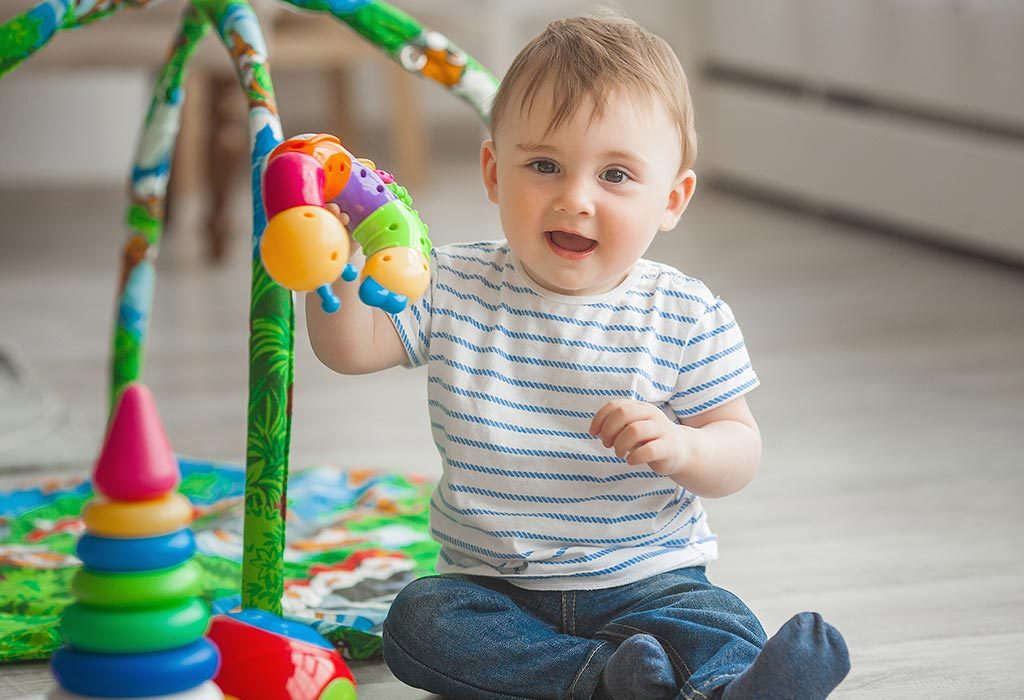
Once babies begin to hold and grab things around them, you know their motor skills are developing. Motor skills refer to the baby’s ability to make motions and movements, and they are classified as fine motor and gross motor skills. Fine motor skills involve small movements, like grasping toys or picking up tiny objects, while gross motor skills focus on larger movements, such as crawling or rolling over. Sometimes though, some babies need to be encouraged to practise holding toys or reaching for objects, which helps strengthen their coordination. Building these two skills appropriately means meeting important growth and development milestones in babies. Here, you’ll understand the types of motor skills, how they function, and when they typically develop.
What Are Fine Motor Skills?
Fine motor skills are small movements made by a baby and involve relatively smaller muscles of your baby’s body. A baby, wrapping his fingers around the finger of a parent, a baby holding and picking up small objects, or a baby trying to move his lips and tongue to ingest food or taste something are also examples of fine motor skills.
What Are Gross Motor Skills?
Gross motor skills are those movements made by a baby which are larger and involve the movements of the larger muscles of your baby’s body. A baby moving his arms to reach for a toy, a baby trying to sit upright, crawl or roll, all require the baby to move the larger muscles of the arms, legs, shoulders and torso, and are, therefore, classified as gross motor skills.
Now that we understand how these motor skills help babies, let’s take a look at how parents can help their babies develop them.
Fine and Gross Motor Skills Development Activities
Fine motor activities are those activities that aid and assist the development of fine motor skills in children and babies. These activities focus on improving hand-eye coordination by focusing on more precise and delicate movement involving the use of smaller muscle sets. One of the easiest activities is to give a child a handful of modelling clay. When a child starts playing with the modelling clay, he will squeeze the dough or try to roll or shape it using his fingers and will develop fine motor skills.
Gross motor activities are those activities that aid and assist in the development of gross motor skills in children and babies. These activities focus on improving the movements of larger muscle sets by engaging in activities that involve larger movements. Some activities that help develop gross motor skills include setting up an object as a target and encouraging the child to hit it by throwing softballs at it.
We have categorised activities according to certain age groups for your convenience.
1. Babies and Toddlers
Babies that are 2-4 months old develop the grasp reflex and should be given small objects that they can hold in their hands. Ensure the objects are not so small that they can be swallowed unknowingly. It might take some time for the baby to hold the object, but eventually, he will grasp it involuntarily.
Between the ages of 4-8 months, babies should be encouraged to play with small objects. They would now transfer objects from one hand to the other, easily pick up medium-sized objects and can also put them in their mouths or pull them out of containers. To avoid choking hazards, you must avoid any small object that can be swallowed accidentally.
At 7-9 months of age, babies have an improved ability to reach forward and sidewards. They should be encouraged to reach for small objects by placing them at a small distance from the baby. Babies can also now place objects in containers and should be encouraged with activities that involve the same.
By 12 months of age, babies should be encouraged with activities that involve pointing and poking. Also, activities involving picking up crayons and other slender objects as babies are now learning to use their thumbs.
By the time they are eighteen months, babies can hold crayons and activities like drawing and colouring should be encouraged.
2. Preschoolers or Kindergarten
A few gross and fine motor activities for preschoolers are listed below:
More activities involving drawing and colouring should be encouraged.
Kids should be encouraged to use the spoon while eating.
Should be taught to put on and take off shoes and socks.
Should be encouraged to indulge in activities that involve the stacking of large objects.
Although still difficult, a child can be taught to string beads.
Playing with modelling clay should be encouraged.
Can be taught to cut paper using scissors.
Games involving the throwing of balls should be initiated.
Should be taught to draw vertical and horizontal lines.
Should be encouraged to dress and change clothes independently.
Fine vs. Gross Motor skills
Gross motor skills involve the use of larger muscle sets for larger movements, activities, like sitting, crawling, rolling. Fine motor skills involve the use of small muscle sets for smaller, more delicate movements, grasping, picking up small objects are examples of fine motor skills.
Gross, as well as fine motor skills, start developing during infancy (by 4 months of age). Grasping of toys, transferring of objects, and pincer grasp are some examples of fine motor skills that develop with the gross motor skills.
Both gross and fine motor skills can be developed by indulging the baby in some activity or games.
Proper nutrition and a stimulating environment play a vital role in fostering the healthy development of both fine and gross motor skills.
Gross motor skills support mobility and balance, helping babies walk, climb stairs, or dance, while fine motor skills enable detailed tasks like holding a spoon, drawing, or buttoning clothes, fostering independence.
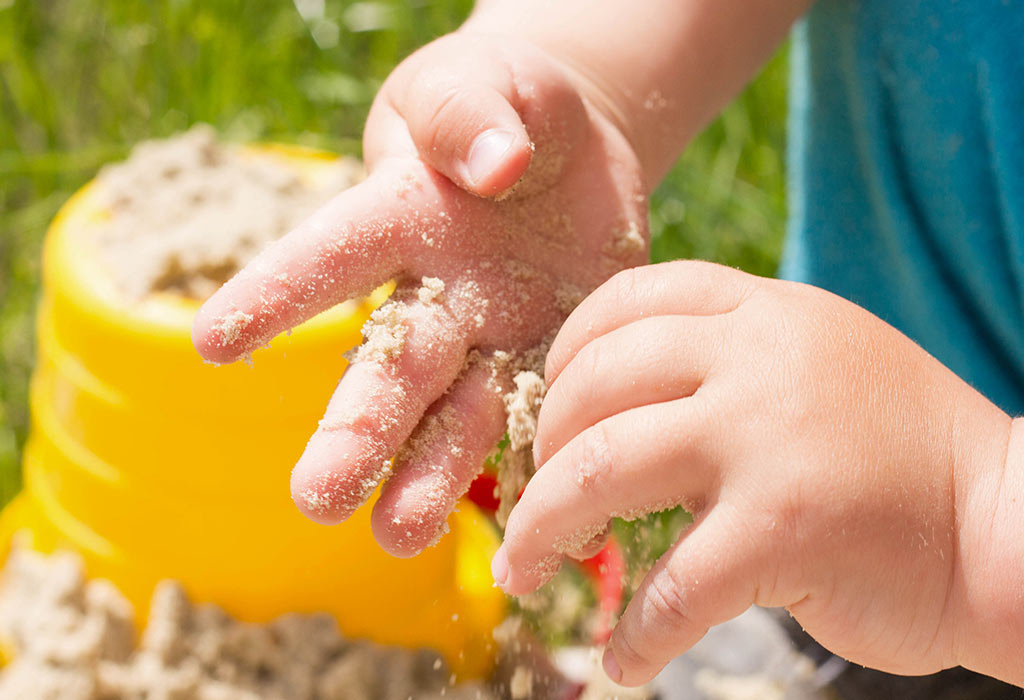
Exposure to sensory activities, such as playing with sand, water, or textured toys, can simultaneously stimulate the development of both fine and gross motor skills.
Tips to Consider While Developing Fine and Gross Motor Skill
Fine and gross motor skills are crucial for daily tasks, mobility, and independence, and they can be nurtured through simple activities and exercises. Here are some practical tips to help your child improve both skill sets effectively.
1. Encourage Tummy Time
Tummy time helps strengthen your baby’s core, neck, and shoulder muscles, which are essential for gross motor skills like rolling and crawling. Aim for short, supervised sessions daily.
2. Provide Age-Appropriate Toys
Introduce toys like stacking blocks, shape sorters, or puzzles to help develop fine motor skills, while balls or push toys can support gross motor skill growth.
3. Incorporate Outdoor Play
Outdoor activities, such as running, jumping, or climbing, promote gross motor skill development while engaging the child’s larger muscle groups.
4. Practice Hand-Eye Coordination Activities
Activities like drawing, threading beads, or tossing and catching a ball enhance both fine and gross motor coordination.
5. Use Everyday Tasks as Learning Opportunities
Encourage your child to perform age-appropriate tasks like buttoning clothes, pouring water, or feeding themselves to strengthen their fine motor skills naturally.
FAQs
1. How do fine and gross motor skills influence academic performance?
Fine motor skills are essential for tasks like writing and cutting, while gross motor skills support posture and balance, both of which are critical for focus and participation in classroom activities.
2. Are fine and gross motor skills hereditary?
While genetics can play a role in muscle tone and coordination, environmental factors, activities, and opportunities for practice significantly influence the development of motor skills.
3. Do bilingual children develop motor skills differently?
Bilingualism does not directly affect motor skill development, but the cognitive benefits associated with managing two languages can enhance overall brain development, indirectly supporting better coordination and problem-solving in motor tasks.
These were some great examples of fine and gross motor skills. Gross and fine motor skills are essential for your baby’s growth and development. While motor skills develop naturally, it is still advisable for parents to monitor their child’s development. Some activities, including playtime activities and games, can be used to develop both fine and gross motor skills. If certain motor skills are slow to develop, some activities can speed up their development. Remember that each child has his own pace of growth and development. If you see a delay in your little one’s development, you need not worry. Instead, consult a paediatrician, who can help you find better ways to bring about the development even if it is slightly delayed.
References/Resources:
1. Is Your Baby’s Physical Development on Track?; American Academy of Pediatrics; https://www.healthychildren.org/English/ages-stages/baby/Pages/Is-Your-Babys-Physical-Development-on-Track.aspx
2. Cava. P, Coffey. T, Perni. N; Children’s Developmental Milestones: Gross and Fine Motor Skills; Brown Health University; https://www.brownhealth.org/be-well/childrens-developmental-milestones-gross-and-fine-motor-skills
3. Gross Motor Skills; Cleveland Clinic; https://my.clevelandclinic.org/health/articles/gross-motor-skills
4. Gross motor skills: Birth to 5 years; Children’s Hospital of Richmond; https://www.chrichmond.org/services/therapy-services/developmental-milestones/gross-motor-skills-birth-to-5-years
5. Fine Motor Skills; Cleveland Clinic; https://my.clevelandclinic.org/health/articles/25235-fine-motor-skills
6. Fine motor skill development: Birth to 2 years; Children’s Hospital of Richmond; https://www.chrichmond.org/services/therapy-services/developmental-milestones/fine-motor-skills-birth-to-2-years
7. Developmental milestones: Fine motor skills and visual motor skills; Children’s Hospital of Orange County; https://www.choc.org/userfiles/file/Rehab-Developmental%20Milestones%20final.pdf
Also Read:
Physical Development in Children
Emotional Development in Infants
Major Stages of Child Development
Understanding and Encouraging a Baby’s Development
Read more

Child Development Stages by Age With Milestones
All parents want their child to grow up to become a smart, successful, and happy individual. They have big dreams for their little one the moment they take their first steps! However, children must go through numerous developmental stages, each with its own significance and set of benefits. As parents, learning about the valuable milestones a child navigates during their childhood helps a great deal in ensuring the child is on the right path, hits all the milestones, and continues to develop steadily. Since every child is unique, children’s development stages and growth will be unique from those of every other child, and so will be their strengths and weaknesses. Thus, every development of the childhood stage will bring excitement and learning.
When children are in their growth phase, they undergo several distinct developmental stages. These phases can be easily segregated based on the age range they are in. These phases of growth have been documented as being helpful to parents in understanding their growing child better and also handling them accordingly. Based on this, parents can follow a few tips and tricks that will enable them to focus on their child’s overall holistic growth.
Children undergo numerous physical and mental changes as they develop, and the exact nature of these changes is largely determined by genetics. By understanding the various developmental stages a child goes through, you, as a parent, can provide them with the necessary support to develop in a positive manner. By taking note of these different stages and keeping an eye out for any sort of developmental habits, you will be able to understand your child better!
What Are the Stages of Childhood Development?
There are different stages of childhood development that have been segregated based on the age of the children and their progress. Each of these stages of child development has distinct periods, which require different parenting approaches. Once you’ve read through them, you’ll be able to acknowledge certain behavioural, physical and emotional traits in early childhood development stages.
The childhood development stages are broadly classified as:
Birth (0 to 1 month)
Baby Development (1 to 12 months)
Toddler Development (1 to 3 years)
Preschooler Development (3 to 5 years)
School-Aged Children Development (6 to 17 years)
1. Birth
When the baby is around 1 month old, they are considered to be in the birth stage of their development cycle. Here, the baby is generally trying to make sense of the world around him, and he is very attached to the mother, as she provides him food, warmth and shelter, and takes care of his other needs.
If you’re a parent who has an infant in this stage of development, you’ll be able to notice certain signs, such as the baby holding his head erect and steady when you hold them upright.
Parenting Tips:
During this stage, your baby will start recognising faces around them. He may begin to coo and babble by 2 to 4 months of age, so take note of the different sounds he makes at this age of development.
He will slowly learn to develop his motor skills by lifting his head while being on his tummy. It is important that you can give your baby at least 20 to 30 seconds of tummy time sessions right from their 2nd week, and gradually increase the time as they grow older.
He will also begin displaying certain reflexes, such as opening his mouth, moving his head when you stroke his cheeks, and trying to grasp things you put in his hands.
2. Baby Development (1-12 Months)
Between the ages of one and 12 months, it is the “baby development stage” of childhood. During this time, your baby will begin to exhibit characteristics that are characteristic of this particular stage.
Babies during this age are able to easily identify their parents and other close relatives and will feel at ease with them. They will also be more comfortable expressing themselves with time. From one to 12 months, babies go through an expanse of development, starting from smiling back if you smile or talk to them and making “cooing” noises like “ooo” and “ahh to sitting up by themselves and walking with the help of furniture, waving ‘bye,’ and saying ‘mama’ or ‘papa.’ (1)
Parenting Tips:
Your baby will now begin to understand their body a little better. He will start improving his motor skills, so you can provide him with toys that will help enhance stimuli like sound, touch, and sight.
He will also be able to sit up when you prop him up, but he may struggle to maintain his balance. Ensure you’re able to strengthen his core muscles to help him with that.
Your baby will also find a love of putting things in his mouth, as he will begin teething at this stage of life. Ensure that you do not provide any harmful objects that he could insert into his mouth.
By the time he is in his 7-12-month stage, he will understand names and other commonly used words. Try seeing if he responds to certain words at this age. Don’t wait for a particular age; talk to your baby right from the moment they are conceived. Your voice will calm them down when they are shocked or overwhelmed (2).
Kids love being in motion towards the end of this stage, and will almost be able to sit up on their own. Your little one will also start trying to walk and build strength in his legs, so try helping him out.
3. Toddler Development (1-3 Years)
Children between 1 and 3 years of age are in the toddler stage of development. During this stage, children begin to show parts of their personality. It is essential to keep an eye out, as they love to explore the independence that comes with the freedom of walking around.
Parenting Tips:
At this age, kids will begin to understand concepts like a bedtime routine, which gives them a sense of comfort. Make sure you stick to a disciplined bedtime routine for your child at this age. You can include reading in your toddler’s bedtime routine.
As your child should be able to walk fairly independently at this age, you must keep an eye out for them wandering or coming into contact with hazardous items.
Your little one might be clumsy, but he should have decent motor skills now. Provide him with bulky stationery like fat crayons or building blocks to aid their cognitive and motor development at this stage.
Take some time out and talk to your child to develop their language speaking skills (3). He can begin to form short sentences that may be a bit incoherent, but with practice, he will improve.
4. Preschooler Development (3-5 Years)
This is the age between 3 and 5 years old, where your child is no longer a baby! He is now able to do things, such as run and have conversations. Now, parents need to help their child grow from a mental perspective and ensure that he is developing in kindergarten. You can talk to your child’s teachers and gauge the kind of activities that he enjoys at school.
Parenting Tips:
At this age, kids love talking about anything and everything. Continue talking to your child and engage in his little conversations. Since they can speak clearly, which anyone can understand, it is good to engage in conversations with them (4).
At this age, your child can read and understand what they read. Have a few books ready to help them improve their reading skills, creativity, and even pronunciation.
Let your child also run around and get much-needed exercise, as he is at an age where he has oodles of energy!
5. School-Aged Children Development (6-17 Years)
School-aged children fall within the 6 to 17-year age bracket. At this age, they are taking in the world around them and are getting influenced by what they see and hear. However, if nurtured in the right way, kids will begin to show traits of intelligence, thoughtfulness, and emotional intelligence, which is exactly what we, as parents, want for them.
Parenting Tips:
Kids at this age have fully developed motor skills and plenty of energy. You need to find ways to channel that energy! See if your child is interested in sports, and ensure that they get exercise on a daily basis. They will enjoy plenty of activities, such as riding a bike, engaging in physical sports, jumping rope, painting, drawing, and more (5).
Your child will also begin to form peer relationships at this age, so make sure that you’re involved in their social development. If you notice that your child is finding it difficult to communicate with new people, be there to support him. Kids should receive emotional and mental support at this stage, as it helps them when they grow up!
Your child will also begin developing secondary sexual characteristics during the later part of this stage, so keep an eye out for the same.
Some kids can also begin showing traits of independence at this age. As long as your child is able to take care of himself, you can begin loosening the reins a little and allow him to make his own decisions.
4 Key Domains of Child Development
Children develop through four main areas, and each one is connected to the others. Progress in one area often supports growth in another. Every child moves at their own pace, so no two journeys look exactly the same.
1. Communication
From early sounds to full conversations, children gradually learn how to express themselves and connect with family, friends, and teachers. Strong communication skills form the base for building relationships as they grow.
2. Physical Development
Physical growth encompasses both large movements (such as walking, jumping, or climbing) and finer skills (like holding a spoon or drawing). As children progress through different stages, they develop balance, coordination, and confidence in their body movements.
3. Social and Emotional Development
This area helps children understand their emotions, develop self-awareness, and learn how to interact with others. Developing these skills supports positive relationships and helps them manage emotions in different situations.
4. Cognitive Development
Cognitive growth is about how children think, explore, and make sense of the world. Early milestones include curiosity, problem-solving, and understanding basic concepts such as numbers, patterns, and cause and effect. These first years shape how a child approaches learning later on.
What Happens If Your Child Doesn’t Meet Development Milestones?
Every child grows differently, and it’s natural for some to reach milestones earlier or later than others. If progress seems delayed, it may or may not point to an underlying issue such as a special educational need. Delays can have many causes, so if you’re concerned, it’s best to check with a doctor or paediatrician. Early support, such as speech, physical, or occupational therapy, can make a big difference.
There are several experts, such as occupational therapists, paediatric neurologists, speech/language therapists, and psychologists, who can help in the development of your child. You can ask your paediatrician for a referral to these specialists.
It’s essential not to delay if you suspect any disorder or developmental delay in your child and to address it with the help of a specialist effectively.
FAQs
1. What to do if your child struggles with some activities for their age?
It’s normal to worry if your child finds certain milestones challenging. Remember, these milestones are only general guides, and every child develops at their own pace. Some children may excel in one area and require a little more time in another. If you’re concerned, your child’s paediatrician is the best person to ask. They can check your child’s progress, suggest helpful therapies like physical, occupational, or speech therapy, or connect you with specialists and resources if needed (6).
2. What are the signs of developmental delays in young children, especially toddlers?
Developmental delay refers to when a child is slow to reach one or more developmental milestones expected of them, given their age. Developmental delay could occur in speech, vision, hearing, or motor function. Children born prematurely often have milestone delays of one month or so, which is normal. However, if a full-term child shows symptoms such as delays in rolling over, sitting up, crawling, and walking, has difficulty with fine motor skills, problem-solving, talking (or talking late), or remembering things, you should consult a paediatrician (7).
3. What constitutes early childhood development?
Early childhood spans roughly from 1 to 6 years of age and is the primary stage for rapid physical growth, language sponging, social development via play and peer interaction, and cognitive development.
4. What are some common challenges children face in their middle childhood?
Middle childhood, generally considered to span from ages 6 to 12, presents challenges such as the establishment of more complex social connections, increasing academic expectations, the development of self-identity, and the exploration of personal interests and hobbies.
The early development stages of a child are a challenging time, and parents must be prepared to be on their toes at all times. Everything that a child sees, hears, touches and even smells can influence their behaviour, and it is the parents’ duty to provide a nurturing environment in which the child can develop. However, you must keep an eye on your child both at home and outside, as kids tend to experiment a lot. Don’t leave anything to chance! At the same time, don’t forget to enjoy your little one’s behaviour and antics. When they are small, they are truly themselves without any restrictions, so try to ensure that they have a childhood worth remembering.
Also Read:
Physical Development in Kids
Types of Play For Child Development
Factors Affecting Child Growth and Development
The Importance of Children’s Play and Its Role in Development
Read more
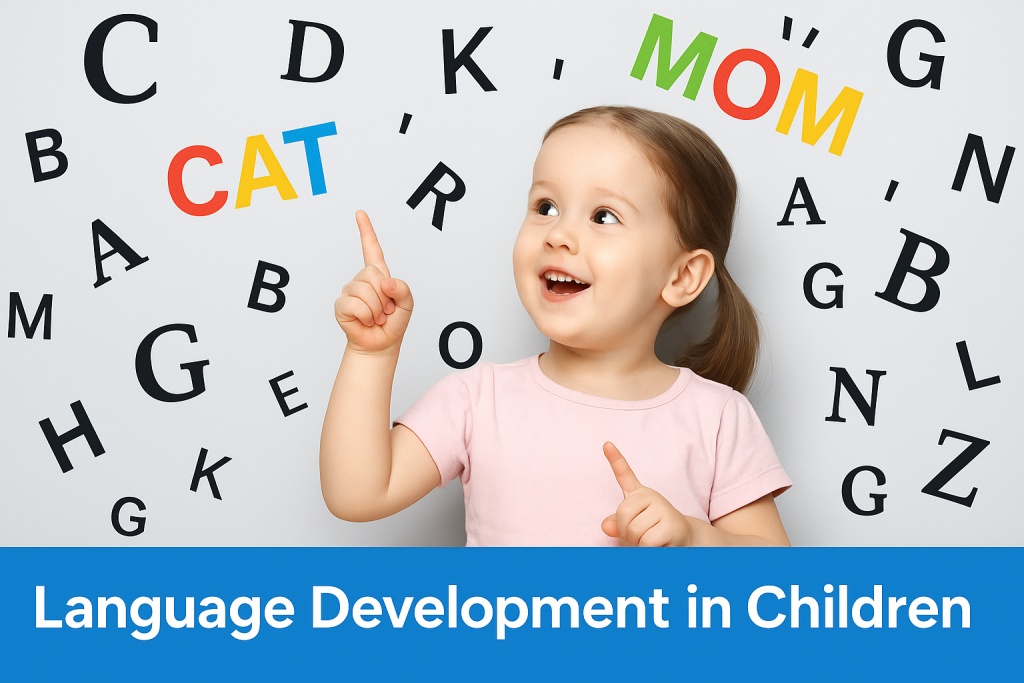
Language Development in Children – Stages, Signs of Delay, and More
Development of language in early childhood is one of the most important milestones, as it prepares children to communicate effectively as they grow. From the first little sounds and babbles to speaking full sentences, children learn to communicate step by step. Watching them pick up new words and express themselves is fascinating and knowing what to expect at each stage can help parents and caregivers support them better. In this article, we’ll look at the stages of language development, signs that a child might be delayed, and simple ways to encourage strong communication skills.
Stages of Language Development in Early Childhood
Child language development is a step-by-step process that helps children learn to communicate, express their feelings, and understand the world around them. Listed below are the various stages of language development since early childhood.
Three to Twelve Months
Your baby has a basic understanding of emotions like love, anger, and affection and responds to them with his unique coos and babbles. At this stage, if you notice that the babbles resemble any word, you can encourage him to speak. Babbling can be an important aspect of language development as this is the first manner of communication your baby has. At this stage, your baby will respond to his name being called and may even be able to speak out simple words like ‘ba’, ‘ma’, ‘da’, etc, as these are easier to pronounce (1).
Twelve to Eighteen Months
By now, your baby should be able to say single words and will try to imitate what you speak. He will also try to communicate more often and it is important that you encourage him by responding to him. You will also need to speak to him in order to help him grasp new words and sentence (2).
Eighteen Months to Two Years
Your baby will have included more words to his vocabulary by this age. He can understand and speak around 50 words and also try to string a short sentence together (3). Although language development in each child varies, if your child hasn’t been able to speak simple words at this stage, it is essential that you consult a professional for further guidance.
Two to Three Years
Your baby’s vocabulary would have further improved and he will be able to speak longer sentences. He will also be able to comprehend what you are saying much better. His communication ability will improve and others would be able to understand what he is saying. He may also be able to multi-task as he plays and speaks at the same time (4).
Three to Five Years
As his curiosity grows, you can expect your child to ask you many questions and speak more complex sentences. He will able be able to understand more complex grammar and use it in his conversation (5). This can be a great time to encourage him to read books and enhance his vocabulary as well as improve his grammar.
Five to Six Years
By now, your child can understand what his teacher says and responds in a coherent manner. He should also be able to recognise more words and use them in sentences. Reading a book to him and engaging in intelligent conversations with him can help him improve his vocabulary and grammar.
Effective Ways to Encourage Language Development in Kids
During these stages, you can engage your child in different simple and fun activities to encourage his language. Here are a few activities for language development in early childhood.
1. Read Him Books
Reading bedtime stories is one of the best ways to introduce new words to your kid. You can practice this from a very young age and make a habit out of it (6).
2. Have Intelligent Conversations
Even though your child may not be able to respond effectively, you can still speak to him like he understands you. He will be listening to you and may even attempt a proper response (7).
3. Listen to Music
Listening to and singing rhymes can help him pick up certain words and understand their rhythm.
4. Repeat
Make it a habit to repeat what your child says with the right pronunciation and grammar rather than criticising him for it (8).
5. Limit the Use of Computers and Television
Excess screen time is linked to delayed language development by some studies. Hence, only permit your child to watch activities that will allow him to improve his language (9).
6. Take Your Child Out
Visiting a new environment can feed your child’s curiosity and he will want to know what the new things around him are called. This can be a great way to improve his vocabulary.
7. Speak About Things Your Child Is Interested In
This can encourage him to be an active part of the conversation and speak more.
8. Introduce New Words Gradually
Don’t try to flood him with words. Add new words to the conversations step by step so that he understands and retains their meaning.
What Is the Difference Between Language and Speech?
The words that your child understands and uses during his communication form a language. This includes the ability to write as well as speak. Speech, on the other hand, is your child’s ability to create sounds that form words (7).
Signs of Developmental Delay in Kids
Your child may have a developmental delay in learning his language if the following signs are observed (1) (7):
He doesn’t babble or try to talk
He hasn’t said ‘mama’, ‘dada’ or other simple phrases
He doesn’t point out things and try to speak out their names
He hasn’t learned to say single words
He hasn’t been using hand gestures, pointing or waving
He does not respond when you give simple instructions
He does not imitate words or actions
He hasn’t been able to string words together to form simple phrases
He stutters often
He cannot interact with others effectively
He does not use pronouns like ‘I’, ‘me’, ‘you’ properly
FAQs
1. Does learning more than one language cause delays?
No, being bilingual does not cause lasting delays. Children may mix words from both languages at first, but over time they learn to separate and use each language effectively (10).
2. Do boys and girls develop language at the same pace?
On average, girls may start talking slightly earlier than boys, but this difference is usually small. Both boys and girls typically reach the same milestones by early childhood (11).
Language learning in early childhood is important to ensure that your child understands what is being said to him and is able to respond. It also forms a key aspect of communication, learning, and even his future relationships. Once your kid is able to use words in accordance with their meanings and purpose, he will be able to express himself better. This will help boost his confidence and help him give his opinions more articulately. In case you notice that your child hasn’t been able to communicate well or say simple words, you will need to consult an expert to understand the reason and get him the required therapy.
Also Read:
Types of Play For Child Development
Tips on Personality Development for Kids
Factors Affecting Child Growth and Development
Importance of Functional Play in a Child’s Growth and Development
Read more
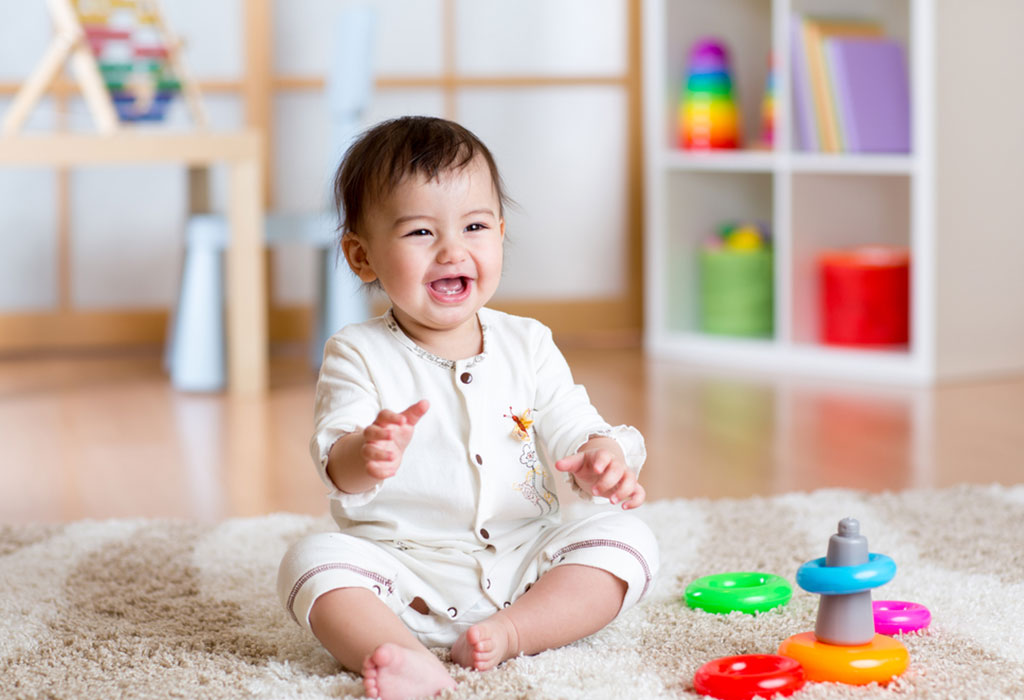
Developmental Delays in Children – Types & Ways to Deal With It
Childhood is a period of significant growth and development, and not reaching specific milestones within certain time frames is what’s dubbed as developmental delay in children. Manifesting in both minor and major forms—developmental delays often lead to a noticeable lack of growth spurts in children, impacting their overall progress. The first three years of a child’s life are especially formative, shaping their future growth and abilities. When developmental delays occur, it can result in them falling behind their peers, struggling to keep up in various aspects. Early identification and intervention are crucial to addressing developmental delay in children and ensuring they receive the support they need to thrive.
What Is Developmental Delay?
Here’s the developmental delay definition. Developmental delay refers to a condition where a child does not reach developmental milestones—such as walking, talking, or social skills—at the expected age ranges, indicating slower progress compared to peers (1). This delay can affect one or more areas, including motor skills, speech and language, cognitive abilities, or social-emotional development, and may result from genetic factors, prenatal conditions, or environmental influences. Early identification and intervention are crucial, as developmental delay in children can impact long-term learning and growth if left unaddressed. While some children may catch up over time, others may require ongoing support, making professional evaluation essential for proper guidance and therapy.
Can Your Child Have Developmental Problems?
Yes! If your child falls behind his peer in terms of social development and fine motor skills, then that’s merely a phase and not a developmental delay. It can be frustrating as a parent to watch your child experience difficulty learning new things, coordinating actions, and interacting with their peers. This is why it’s important to be aware of common developmental problems and how they occur in children.
Chances of Your Child Having a Developmental Delay
The chances of your kid developing developmental delays depend on several risk factors such as:
Genetic and chromosomal disorders like Down Syndrome
Being exposed to life-threatening environmental pollutants and toxic agents
Malnutrition or lack of a nutritional diet
Infections
Lack of hygiene, care, and prematurity
All the above factors have a cumulative effect on developmental delays in children and contribute to increased chances of delays when overlooked over time. Living healthy, exercising, and taking care of yourself can improve the chances of a healthy delivery and reduce risk factors of manifesting various developmental delays.
Difference Between Developmental Delays and Developmental Disability
A developmental delay is temporary while a developmental disability is permanent. Developmental delays can be treated with the right medications, therapies, educational intervention, and early treatment options. Developmental disabilities, on the other hand, cannot be treated and a child may require special education throughout their life. Developmental disabilities can originate due to genetic disorders, overdosing on certain medications, brain injury, and pregnancy complications which is why it’s fundamentally essential to take care of yourself, both emotionally and physically, before considering opting for pregnancy or birth.
What Are the Developmental Delays in Kids?
Development delays range from cognitive, emotional, and fine motor skills and are classified by specific milestones such as giving her first smile, taking the first step, and identifying certain behavioural patterns in children according to their age groups. Children develop at their own pace as they grow, but there are specific telltale signs one can watch out for to spot developmental delays and get a general idea of where they are.
There are several types of developmental delay. Common development delays in children are noted by looking out if your child is able to perform the following things:
Showing signs such as certain words and gestures for identifying parents
Showing affection towards friends and caregivers
Being able to sit without leaning
Walking up the stairs without help
Scribbling with pencils, crayons, and sketch pens
Knowing how to use everyday objects like spoons, forks, and toothbrushes
Understanding basic words and responding when saying no and other commands
Expressing vivid emotions like happiness, anger, joy, and frustration through facial expressions and sounds
Other forms of developmental delays in children include visual development delay, language and speech development delay, gross motor skill development delay, social and emotional developmental delay, and cognitive developmental delay. Let’s take a look at them below.
Vision Developmental Delay
Blurry vision is the hallmark of development during the first six months for babies. Anything beyond that is a misnomer. If your child has trouble coordinating eye muscle movement in both her eyes, continues experiencing blurry vision after six months, or doesn’t notice her arms after two months of visual development, then it’s time to be concerned (2).
1. Causes
Common causes of vision development delays in children are:
Refractive errors like nearsightedness and farsightedness
Amblyopia, or lazy eye syndrome which involves having poor vision in one eye
Infantile cataracts which cloud the infant’s lenses
The eye disease ‘Retinopathy of Prematurity.’
Cross-eye syndrome or Strabismus
2. Treatment
Treatment solutions for the above vision developmental delays include:
Special optic lenses/glasses
Surgeries
Using eye patches
3. Warning Signs
There are several warning signs of vision developmental delays in children. If your child faces any of the following problems, contact a doctor immediately:
Blurry vision (after six months)
Eyes cannot follow moving objects
Uncoordinated eye muscle movement
Frequent crossing of the eyes
Eyes turning in and out (beyond the six-month time frame)
Tearing up frequently
Cannot follow nearby or faraway objects (between one foot to six feet away)
Language and Speech Developmental Delay
Language delay is when the child is not able to deliver words that make proper sense, while speech development delays pronunciation. Language is more connected to comprehension, and speech delays have more to do with the meaning than the sounds. Speech delays are sound-related problems in children. Speech and language delays combine the two and can result in stunted verbal development (3).
1. Causes
There are various causes of language and speech developmental delay. Hearing loss may often be associated with them which could be the underlying reason why your child may not have been able to pick up or comprehend word meanings in the first place Common causes are:
Lack of exposure to a speaking environment, hence no language/speech learning
Prematurity
Intellectual Disability (related to Down Syndrome, Fragile X Syndrome, genetic defects, and fetal alcohol syndrome)
Brain injury or trauma
Autism
Apraxia of speech, a disorder where a child has difficulty sequencing and executing speech movements
Selective Mutism, where a child simply does not talk in all situations
2. Treatment
Common treatment options for speech and language developmental delays involve taking your child to an occupational therapist, social worker, speech-language pathologist, or an audiologist. Here are the following natural treatment options for language and speech developmental delays in children:
Talking to your newborn before birth
Responding to a baby’s coos
Reading aloud books and telling stories
Describing to your child the actions they are doing throughout the day
Use gestures while speaking to your child
Play word games with your child or fun games involving sentence structuring and speaking
3. Warning Signs
If you fear that your child is facing language and speech developmental delay, here are the following signs:
Not being able to say ‘Mama’ and ‘Papa’ after a certain time frame
Unresponsive to calls or doesn’t react when called her name
Doesn’t understand simple instructions and cannot identify different parts of the body when called their names
Lack of vocabulary development
Motor Skill Developmental Delay
Motor skill developmental delays in children are linked to gross motor skills, fine motor movements, and motions like walking, crawling, picking a spoon or drinking from a sippy cup. When your child experiences motor skill developmental delay, she has difficulty coordinating certain movements, picking up crayons, drawing pictures, walking and running, and similar physical activities that require the brain and hand coordination (4).
1. Causes
The possible causes of developmental motor delays in children are:
Prematurity
Brain Injury
Cerebral Palsy
Ataxia, a condition which causes defective muscle coordination
Myopathy
Vision problems
Spina Bifida, a genetic condition which causes partial/complete paralysis of the spinal region of the body
2. Treatment
Treatment types range from incorporating long-term exercise plans to regular therapy. The type of treatment your child needs may be described by the doctor. Certain treatment types help with sensory integration dysfunction and in developing gross motor skills through occupational therapy.
3. Warning Signs
If you notice any of the common warning signs or red flags in your child’s motor skills, contact your doctor immediately:
Cannot grasp or pick up objects
Cannot support her head properly
Cannot bring objects her mouth
Does not push down legs for moving when her body is firmly planted on the ground
Social and Emotional Developmental Delay
Social and emotional developmental delays affect how the child perceives the world which causes them to react differently than other children when exposed to the same environmental stimuli. These delays can affect a child’s ability to learn, communicate, and interact with other children and adults (5).
1. Causes
The most common causes of social and emotional developmental delays in children are:
Child abuse or trauma
Brain injury
Learning disabilities like Dyslexia, Dysgraphia, and Dyscalculia
Loss of hearing due to genetic disorders and infections
Impaired communication and interaction skills related to Autism Spectrum Disorders
2. Treatment
Working with a good occupational, speech, or social developmental delay specialist can help your child. Treatment methods involve speaking with your child, helping them understand social and emotional cues, and supplementing their treatment with certain prescribed medications for dealing with emotional and behavioural problems like ADHD, anxiety, depression, mood swings, and sudden bouts of anger. Letting your child listen to music can also during treatments.
3. Warning Signs
If you notice any of the common warning signs or red flags in your child’s motor skills, contact your doctor immediately:
Not being able to keep good eye contact
Does not show interest in other children
Lack of interest in communication
Stagnant or stuttered speech, difficulty expressing sequences of words
Cannot understand the child’s speech
Cries a lot and cannot stay apart from parents for brief periods of time
Does not show a wide range of emotions or responds to strangers
Lack of interest in playing with other children
Cognitive Developmental Delay
Cognitive developmental delays interfere with a child’s learning ability and hamper their cognitive development. Difficulty in communication, not being able to interact with others, and problems associated with playing or engaging with others are few of the issues related to cognitive developmental delays (6).
1. Causes
The most common causes of cognitive developmental delays are:
Different learning disabilities related to reading, writing, and other learning skills
Lead poisoning
Exposure to alcohol or harmful toxins before or after birth
Neglect or institutionalization since early childhood
Down Syndrome
Autism Spectrum Disorders
Newborn medical complications
Other unknown causes
2. Treatment
If you feel something is wrong with your child, then consulting with a doctor and an occupational therapist can help. Usually, doctors will recommend a specialist who can get to the core of the situation. Common treatment methods are:
Behavioural and occupational therapy
Special education
Prescribed medications which can help with behavioural problems, mood swings, and short attention spans
3. Warning Signs
Common warning signs of cognitive developmental delays in children are:
Cannot copy a circle or basic shapes
Cannot understand simple instructions
Doesn’t enjoy playing with toys or other children
Does not point to pictures or common household objects
Does not imitate gestures or words
Cannot concentrate on one activity for more than 5 minutes by the age of five
Diagnosis
The developmental delay diagnostic process involves structured assessments by healthcare professionals to evaluate a child’s development across key areas. Below are the key steps in diagnosing developmental delays in children (7).
1. Developmental Screening
Developmental screening is a preliminary check to determine if a child is meeting age-appropriate milestones. Pediatricians often conduct these brief assessments during routine check-ups. If concerns arise, further evaluation is recommended.
2. Comprehensive Developmental Evaluation
If screening indicates potential delays, a developmental evaluation is performed by specialists such as pediatric neurologists, psychologists, or occupational therapists. This in-depth assessment examines cognitive, motor, social-emotional, and speech-language skills to pinpoint delays.
3. Professional Assessments by Certified Specialists
Certified professionals, including occupational therapists and speech-language pathologists, conduct targeted tests to assess a child’s abilities. These evaluations help determine the severity of delays and guide intervention strategies.
4. Parent and Caregiver Input
Doctors rely on observations from parents and caregivers about a child’s behavior, communication, and motor skills. Input from family members helps professionals understand the child’s development in real-life settings.
5. Ongoing Monitoring and Follow-Up
Since development is continuous, children with delays require regular follow-ups to track progress. Adjustments to therapy or early intervention programs may be made based on the child’s evolving needs.
What Are the Risk Factors for Developmental Delays?
Children with developmental delays often fall behind their peers in classroom settings and paced activities. Your child may have difficulty communicating with other children, learning new skills, and thus, go through a hampered learning experience. Developmental delays aren’t permanent, and as the name suggests, they are only delays and last a certain period. With the right form of therapy, treatments, and doctor-prescribed medications, your child’s developmental delay can be greatly diminished. Keep in mind that every child grows at a different pace hence, skill acquisition and growth rates are different in all these areas. The only true way to assess whether something is wrong is by looking out for common developmental milestones and warning signs to ensure whether or not your child is right on track.
Ways to Deal With Developmental Delay in Kids
Supporting a child with developmental delays requires patience and the right strategies. Here’s how to help a child with developmental delay:
Enroll in early intervention programs
Keep a structured daily routine
Use speech therapy if needed
Try occupational therapy for motor skills
Consider physical therapy for movement
Give praise and rewards for progress
Practice social skills through play
Get school support with an IEP (Individualized Education Program)
Stay involved and learn therapy techniques
Ensure good nutrition and sleep
Use sensory toys for comfort
Seek counseling for emotional needs
When Should You Call the Doctor?
You should call your doctor anytime you notice any of the above red flags or common warning signs of developmental delays. If your child is behaving out of the ordinary or not according to what is expected of his age group, then it’s time to consider running a diagnostic test at a hospital or a doctor’s clinic. Problems related to facing difficulty in understanding, being quiet for more than 15 months, no signs of movement or gestures, or a lack of interest in communicating with you and other children all translate to signs of developmental delays and require a doctor’s opinion for further evaluation, screening, and treatment.
FAQs
1. Can screen time cause or worsen developmental delays in children?
While excessive screen time doesn’t directly cause developmental delays, it may contribute to speech or social delays if it replaces interactive play and conversation. Moderation and engaging content are key.
2. Do developmental delays always mean a lifelong disability?
Not always—some children catch up with early intervention, while others may need ongoing support. Delays can be temporary, but professional evaluation is crucial for the right guidance.
Developmental delays can be linked to harmful exposure to toxins before birth and brain injury. To eliminate chances of developmental delay before birth, taking care of yourself and administering a diet rich in vitamins, minerals, and nutritious foods can reduce risk factors.
Speaking to your child, giving them love and attention, and rewarding them with smiles, gestures, and warm emotions can make a difference in significantly reducing the risk of developmental delays. Your child can understand even before birth signs of language and gestures on a subconscious level which is why it’s important to constantly and consistently interact with them and be patient throughout the pregnancy and early parenthood phase.
We hope we have answered all your questions, including ‘What are some of the causes of developmental delays?’ Developmental delays can be treated and carrying out educational intervention, and early therapies can greatly reduce the risk factor. Child doctors or specialists are well-versed with developmental delays, and even if your child isn’t showing any signs of delays yet, it’s better to get them assessed early on or incorporate activities suggested by doctors to improve the early treatment phase.
References/Resources:
1. National Library of Medicine – Developmental Delay
2. American Academy of Ophthalmology – Delayed Visual Development: Development of Vision and Visual Delays
3. Nemours Kids Health – Delayed Speech or Language Development
4. American Academy of Pediatrics – Is Your Baby’s Physical Development on Track?
5. National Library of Medicine – Risk factors for delayed social‐emotional development and behavior problems at age two: Results from the All Our Babies/Families (AOB/F) cohort
6. Montana DPHHS – Cognitive Delay
7. Cleveland Clinic – Developmental Delay in Children
Also Read:
Dyslexia in Kids
ADHD in Children
Slow Learner Child
Hyperlexia in Children
Listening Activities, Games and Exercises for Kids
Read more
Sort By
 Latest
 Most Popular
 Trending
Please select atleast one Filter