Prenatal Care
Suggested articles for you

Baby Shower Trivia Questions & Answers for To-Be Parents and Guests
The birth of a tiny little member of the family is celebrated in all parts of the world, but there are many cultures and traditions where celebrations also happen before the baby’s birth, also commonly known as a baby shower. A baby shower is one of the most enjoyable aspects of being pregnant to celebrate the arrival of your little one with your closest friends and family. This function is celebrated in different ways in different cultures, and one such way to enjoy it is by playing baby shower trivia with the guests.
Baby shower trivia is a unique concept that both entertains and informs you about interesting facts about babies. It is an excellent icebreaker for guests that are new parents or haven’t met your other guests. If you are intrigued to find out some fun facts and trivia associated with baby shower, it’s best to read the following post as we’ve compiled a list of entertaining baby shower questions to make this celebration a blast!
Interesting Baby Shower Questions and Answers
Here are some interesting questions to ask at a baby shower trivia:
1. At what age babies can taste salt?
Babies can taste sweet and sour, but it is only by 3 to 4 months of age that their taste buds can recognise salt.
2. Which is the first sense a baby acquires after birth?
The sense of touch.
3. Are babies born without kneecaps?
Yes, babies are born without kneecaps. They, instead, have cartilage that later turns into bone as babies grow and develop.
4. On average, how much does it take to raise a child from birth to 17 years, in America?
It may take approximately 285,000 USD on average.
5. At what age a baby can smile socially?
Anywhere between 6 to 8 weeks after birth.
6. How many bones does a newborn baby have?
A newborn baby has 300 bones in his/her body.
7. How long does it take for the fingerprints to appear on a baby’s fingers?
Newborn babies have shallow and fine fingerprints, and they become prominent after six months of age.
8. How far can a newborn baby see?
A baby can see only up to 8 to 14 inches.
9. Which is the colour that babies recognise first when their colour vision begins to develop?
Babies observe the colour red first then other colours, and by five months of age they can see the full spectrum of colours.
10. Name some popular baby shower games.
Bingo, Guess the Price, Feed the Baby, Sharing baby stories, You Can’t Say That, etc. are some popular baby shower games.
11. What was the most significant attraction in Khloe Kardashian’s baby shower?
There were adorable elephant sculptors that were made of flowers.
12. Which colours were used for Ximena Duque’s baby shower?
All the decorations were done in grey and pink colours.
13. What was so special about Eva Longoria’s baby shower?
The baby shower decor was done in a bright yellow colour!
14. At what age do babies start having actual tears?
Babies start crying at birth, but babies start having tears by one month of age.
15. Which colour was associated with baby boys in the 1900s?
It was the colour pink because the concept of associating colours with genders didn’t happen back then.
16. What are disposable diapers called in South Africa?
Disposable diapers, which are usually known as Diapers in the US and Nappy in the UK, is called Disposables in South Africa.
17. What is the actual percentage of babies who are born on their due date?
Studies reveal that about 4 to 5 per cent are actually born on the exact due date. However, approximately 80 per cent are born anywhere between 38 to 42 weeks.
18. What is the highest number of children born to a woman?
It is whooping 69!
19. How many extra calories should a woman eat in the third trimester?
In the third trimester, a pregnant woman should consume approximately 500 calories over and above the regular calorie intake.
20. How long does it take for a baby to recognise/differentiate between familiar people?
By approximately 3 months of age, babies can differentiate between familiar and unfamiliar faces.
21. How can you say ‘baby’ is Japanese?
A baby is called Akachan in Japanese.
22. There is a scientific term for when a sperm and egg unite, what is it called?
It is called a zygote.
23. How long does it take for a baby’s eye colour to get fixed or permanent?
It may take up to 1 year for a baby’s eye colour to become permanent!
24. What was the birth weight of the heaviest baby born to date?
According to Guinness World Records, the heaviest baby born was 22 pounds and was delivered by Giantess Anna Bates in 1879. The boy survived only for 11 hours.
25. When can babies recognise themselves in the mirror?
Babies can begin recognising themselves anywhere from 18 months to two years of age.
26. What is the most essential ingredient required to make a ‘diaper cake’?
It is the Diapers!
27. What is the highest number of teeth a baby is ever born with?
Sean Keaney of the UK was born with 12 teeth! This record is also mentioned in the Guinness World Records.
28. What is the tentative age when babies start crawling?
Most babies start crawling anywhere between 6 to 10 months of age.
29. What can babies do that is almost impossible for adults?
Babies can swallow and breathe at the same time.
30. What is the average amount of steps that a toddler can take in an hour?
A toddler can take approximately 2400 steps in an hour.
31. What is the proportion of a baby’s head to its body at birth?
A baby’s head is one-quarter of the size of its body at birth.
32. What is another name for a pacifier in England?
A pacifier is also known as a dummy.
33. What is forbidden or is not a done thing for a pregnant woman in Turkish tradition?
Pregnant women should avoid looking at monkeys, camels, bears, etc. and looking at pleasant things is encouraged because it can help them produce a beautiful baby.
34. At what age the baby doubles his or her birth weight?
It is around 5 months of age that a baby is usually double his birth weight.
35. What was the weight of the lightest baby ever born and survived?
Saybie was the lightest baby ever born with a birth weight of 245 grams, in the US.
36. Which is the evil mythological character that is not used in a lullaby?
Lilith is the evil character that is kept at bay in lullabies because this demon was believed to steal the souls of children.
37. Which music group composed the famous song ‘Baby Love’?
The music group was ‘The Supremes’.
38. Who usually organises or hosts a baby shower for the mommy-to-be?
It is either close friends or family members.
39. What is the approximate rate of cesarean deliveries in the United States?
According to a study revealed by the Centers for Disease Control and Prevention provisional, approximately 31 per cent of deliveries were by cesarean.
40. How long does an average pregnancy last?
It is for approximately 40 weeks.
Baby Shower Quizzes for Parents
These baby shower game questions and answers for parents will determine which partner would do what when the child arrives or admit that they would both be guilty as charged!
1. Who would rather do housework while their significant other cares for the baby?
The father prefers to do it because the mother must care for the baby around the clock.
2. Who do you believe will become obsessed with dressing up the baby?
The mother would be preoccupied with dressing up the baby.
3. Who is looking forward to the baby shower the most?
Of course, the to-be mother.
4. Who do you think would be good at singing lullabies?
The mother.
5. Who do you think would volunteer to change the diapers on a regular basis?
The father would assist with diaper changes.
Baby Shower Questions for Mothers
This baby shower quiz will provide an excellent opportunity for the expecting mother to reflect on her childhood experiences and plan the journey. Here are a few questions to ask at the baby shower to the mother.
1. What was your favourite nursery rhyme when you were a child?
2. What was your favourite book when you were a kid? Have you purchased books for your baby?
3. How did you tell your partner about the pregnancy? What happened?
4. Do you have any ideas for baby names? How did you finalise those?
5. Have you done any research on babies?
Baby Shower Questions for Fathers
Fatherhood is not rocket science, but it also does not come easy. Trust us; it builds on itself. Just give love and care to your baby, and you will become a great father. Let’s check out some questions you can ask the to-be father to make the baby shower game more interesting.
1. What aspect of the baby’s arrival are you looking forward to?
2. What are your plans when your baby arrives?
3. Do you think you’ll be able to answer all of your little one’s questions while growing up?
4. How do you think you changed after finding out you were going to be a father?
5. Who do you believe would be harsher on the child, and why?
Question for the Guests for Baby Shower Celebrations
How can we forget guests? Here’s a list of some funny baby shower questions for guests!
1. Which celebrity baby’s development and growth have you been keeping track of?
2. How do you intend to balance work and parenting? Is there any advice from the group on this?
3. What advice would you like to give to our favourite couple today?
4. Where do you envision your first family vacation?
5. How do you intend to decorate the baby’s room? Have you chosen your colours?
These are just some of the interesting facts and trivia for the parents-to-be. You can collect more such data or even use personal information or fun incidents to make the trivia questions more fun and interesting.
Infographic: Baby Shower Trivia Questions & Answers for Parents and Guests
Also Read:
How To Plan A Baby Shower
Unique Baby Shower Theme Ideas
How You Can Host A Virtual Baby Shower
Read more




Signs of a Healthy and Unhealthy Baby in the Womb
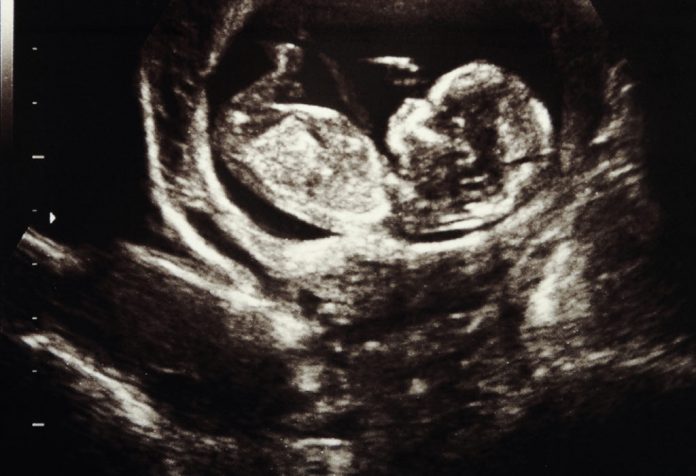
To eliminate any threat to your baby, it is important to be able to differentiate the signs of a healthy foetus from an unhealthy one. The signs of a good pregnancy are very important as it determines the health of the baby. If left unattended, it might lead to a host of pregnancy complications, like premature birth, preeclampsia, and even miscarriage. Miscarriage is one of the common consequences of an unhealthy baby, resulting in loss of pregnancy before the 20th week. We cover some of the warning signs in this article. Understanding the signs of healthy and unhealthy pregnancy can help expectant mothers seek timely medical care, maintain proper prenatal habits, and monitor their body’s changes carefully. Early awareness and regular check-ups play a vital role in ensuring both maternal and foetal well-being throughout the pregnancy journey.
Also Read: Foods to Eat During Pregnancy for a Healthy Baby
What Are the Symptoms of a Healthy Baby During Pregnancy?
Every parent wants to have a healthy baby and goes to great lengths for the same. But a lack of information may sometimes lead to an unexpected outcome. Therefore, understanding the signs of a healthy foetus becomes crucial. Below are the signs of a healthy baby during the early stages of pregnancy:
1. Movement
A baby starts moving after 5 months of conception. Medically, the first foetal movement is termed as quickening (1). A 6-month foetus responds to sound through movement. Around the seventh month, the foetus reacts to stimuli, such as light, sound or pain. By the eighth month, a baby starts changing her position and kicks more frequently. All these are signs that your unborn baby is healthy.
2. Normal Growth
There are several ways to measure the growth and development of a foetus. Your doctor will perform an ultrasound to keep track of your baby’s health and development. Generally, a foetus grows by 2 inches every month. So, your baby should be 14 inches long by the seventh month. In the third trimester, a healthy foetus grows heavier by 700 grams every week. Generally, by the ninth month, a foetus weighs about 3 kilograms and is 18-20 inches long (2). All these are signs of a healthy foetus in the womb.
3. Heartbeat
A baby’s heart starts to beat at around the fifth week of pregnancy and can be detected in a TVS scan by six weeks. However, its detection is a lot easier towards the end of the first trimester through electronic foetal monitoring. To confirm your baby’s heart health, your doctor may conduct a non-stress test. This test monitors the heart rate of a foetus and provides insight into potential threats, if any. Alternatively, some doctors may even count the heartbeat by just touching your stomach. A healthy heartbeat ranges between 110 and 160 beats per minute (3).
4. Position at the Time of Pre-Labour
During the ninth month, the movement of a baby comes to an end or becomes minimal. A healthy baby may adopt a head-first position and start moving towards the birth canal breach, or an unstable lie could also be there. It is not compulsory that the baby is unhealthy.
5. Weight Gain and Belly of Expecting Mom
Weight gain during pregnancy is a surefire sign of a healthy pregnancy. Expecting moms gain around 10-12.5 kgs when they’re pregnant (4). You can ask your doctor to check your weight regularly and give you an update on whether your pregnancy is progressing normally or not. Your belly should also grow in size as the months go by.
Also Read: Tips for a Healthy Pregnancy
6. Morning Sickness
Morning sickness is actually very good for pregnancy. While some believe that morning sickness is a way to expel or avoid the consumption of any harmful substance in the pregnant body so the baby stays safe, there is little to no evidence. But one thing experts agree on is that morning sickness in early pregnancy is a good indication of a healthy pregnancy (5).
7. Enlarged and Sore Breasts
Sensitive, sore, and enlarged breasts are one of the early indicators of pregnancy because of increased estrogen and progesterone levels in the body (6). Sore, heavy, and enlarged breasts indicate your body is preparing well for the birth of the baby.
Signs of an Unhealthy Foetus
During the fifth month, a foetus becomes more reactive toward sound, light, and pain. This is a period when they are also exposed to various threats that may affect growth and development, directly or indirectly.
If problems are visible externally, corrective measures can be taken to deal with them. But how do you recognise an unhealthy foetus inside your womb? The answer is simple: you just need to watch out for these warning signs.
1. Abnormal Fundal Height
Fundal height helps the doctor evaluate whether a woman’s uterus is growing or not. To measure fundal height, you will be asked to lie down and using a tape measure, the length from the top of the uterus to the pubic bone is measured. Usually, after the 16-week mark, fundal height matches the progress of the pregnancy.
If the height of your uterus is not what it should be, it indicates a problem with your pregnancy. The reason may be too much or too little amniotic fluid or a breech baby. In the worst-case scenario, it could also mean that the foetus is not developing in a proper manner.
2. Lack of or No Heartbeat
Although a baby’s heart starts beating after the fifth week, it’s only around the sixth week that detection becomes easy. A foetal heartbeat can be detected through electronic foetal monitoring or by using a fetoscope or stethoscope. In some cases, you can just touch your stomach and count the number of beats per minute (bpm).
At times, detecting the heartbeat may not be possible due to a change in the baby’s position or placental issues. In such a case, your doctor might ask you to try again during your next visit. However, if she still can’t detect the foetal heartbeat, then an ultrasound test might be recommended to dig out the reason behind the undetectable heartbeat. In some cases, lack of heartbeat signals a hindrance in foetal development or, in worst cases, a lifeless foetus (7).
3. Intrauterine Growth Restriction (IUGR)
Intrauterine growth restriction interferes with the growth of the foetus. If you are diagnosed and have IUGR, it implies that your foetus measures atleast 10% smaller than its gestational age (8). If you’re suffering from IUGR, complications, such as difficulty in breathing and high blood sugar, maybe the cause and continue even after delivery. Therefore, there is a need to closely observe this condition. This could happen in the case of multiples as well, where one of the babies suffers from IUGR, but the other one remains unaffected.
This problem happens due to abnormal functioning of the placenta, which in normal conditions ensures the baby gets all the necessary nutrients. Other reasons include kidney issues, anaemia and diabetes.
4. Low hCG Level
hCG is a type of hormone produced by the placenta during pregnancy. hCG levels tend to fluctuate throughout pregnancy, depending on the trimester. Generally, hCG levels are extremely high from 9 weeks – 16 weeks of pregnancy. The normal levels vary from individual to individual, so a low hCG level is not a reason for you to panic. However, miscarriage, a blighted ovum, or ectopic pregnancy may induce a low level of hCG and raise a red flag for your pregnancy.
5. Excess Cramping During Pregnancy
Pregnancy comes with its share of pain and aches. However, extreme pain, which feels like menstrual cramps, is another warning sign. In early pregnancy, if you feel excessive cramping, you might need to consult your doctor.
6. Bleeding During Pregnancy
Spotting during pregnancy is not normal. However, bleeding is still a matter of concern without a doubt and needs to be evaluated by a doctor. It might be a sign of miscarriage, hormonal bleeding or implantation bleeding (9).
7. Extreme Back Pain
Experiencing back pain is common during pregnancy as the growing baby puts a lot of strain on the spine and lower back. This feeling worsens when you’re expecting multiples. Well, look out for back pain, which becomes severe as opposed to a dull ache in the back. Also, if it starts from the front of your body and makes its way to the back, it’s not a good sign. You should visit your doctor immediately.
8. Vaginal Discharge During Pregnancy
Vaginal discharge is a common condition experienced by women when they’re pregnant, and it increases as the pregnancy progresses. Usually, the vaginal discharge of a pregnant woman is clear, transparent, whitish and odourless. However, if you notice a yellowish or greenish discharge with a strong smell, then it’s time to consult your doctor without any further delay. The unusual discharge might be caused by cervical inflammation, a sign of miscarriage.
9. Sudden Discontinuation of Morning Sickness
Morning sickness and pregnancy are correlated. Usually, morning sickness resolves itself by the end of the first trimester or even earlier without affecting the foetus. However, for some pregnant women, sudden discontinuation of morning sickness might be because of low hCG levels, pointing to a miscarriage. It’s advised to seek an expert’s opinion and make sure there’s no threat to your baby.
10. Fever During Pregnancy
Fever during pregnancy should not be ignored. A fever might pose the threat of a bacterial or viral infection to the foetus.
11. Contraction of Breast Size
During pregnancy, the body of a woman goes through a multitude of hormonal changes. Breasts go through a transformation and become more sensitive. They also feel heavier and fuller as the pregnancy progresses. However, a sudden decrease in the size of breasts may signal a miscarriage.
12. No Foetal Movement
Foetal movement can be felt around 20-24 weeks in first-timers as the foetus starts reacting to sound, light and pain. Experts say that a pregnant woman should experience at least three kicks every hour during this period. If the foetus is in distress, the count declines. It’s a clear sign to consult your doctor for proper treatment. Any delay in seeking medical help might cause an unfortunate event.
13. Sudden Spike in Blood Sugar Levels
It’s normal for blood sugar and blood pressure levels to decrease during pregnancy. In fact, you should keep these levels throughout the three trimesters. However, diabetes can cause sudden intrauterine death and raised blood pressure can cause premature separation of the placenta.
14. Changes in Placental Position
An abnormal placental position is also one of the signs of an unhealthy pregnancy. When the placenta detaches prematurely from the uterus, the pregnancy is terminated. So, always get your placental position checked.
Pay attention to what the signs say. Consult your doctor even if you have a minor doubt or feel something is off. Your concern might be futile, but it’s always better to be safe than sorry.
How to Have a Healthy Baby in the Womb?
Pregnancy is a crucial time when a mother’s lifestyle and care directly influence the baby’s development. Understanding the signs of healthy baby in womb and following healthy habits can support proper growth and reduce the risk of complications.
Eat a nutritious diet rich in fruits, vegetables, whole grains, protein, and essential vitamins, as it helps support your baby’s growth and development. Nutrients such as folic acid, iron, calcium, and protein are particularly important during pregnancy.
Go for routine prenatal visits, as they allow doctors to monitor the baby’s development and detect any potential issues early. These check-ups also help track the signs, such as proper growth, normal heartbeat, and adequate amniotic fluid levels.
Do light to moderate exercises like walking, prenatal yoga, or stretching to improve blood circulation and help maintain a healthy pregnancy. Always consult your healthcare provider before starting any exercise routine.
Focus on proper sleep and stress management, which are essential for both the mother and the baby. Relaxation techniques such as deep breathing, meditation, and gentle stretching can help maintain emotional well-being during pregnancy.
Stay away from alcohol, smoking, and other harmful substances during pregnancy. Limiting caffeine intake and avoiding certain medications without medical advice can also help ensure the baby develops safely in the womb.
When to Consult a Doctor
Pregnancy requires regular monitoring to ensure both the mother and baby remain healthy. While learning how to know baby is healthy in the womb is helpful, it is equally important to recognise warning signs that require immediate medical attention.
Severe abdominal pain or cramping
Heavy vaginal bleeding or spotting
Persistent severe headaches or blurred vision
Sudden swelling in the face, hands, or feet
High fever or chills
Reduced or no baby movements after previously feeling regular movements
Severe nausea and vomiting that prevent eating or drinking
Leaking fluid from the vagina
Severe dizziness or fainting
FAQs
1. Can a baby be unhealthy in the womb even if the mother feels fine?
Yes, sometimes a baby may experience growth or developmental issues even when the mother does not notice any obvious symptoms. This is why regular prenatal check-ups and ultrasounds are important to monitor the baby’s health and development.
2. Is it possible for a baby’s growth to slow down in the womb?
Yes, in some cases, babies may experience restricted growth in the womb due to factors like placental issues, maternal health conditions, or poor nutrition. Doctors usually monitor this through regular scans and medical evaluations.
3. Can a baby’s hiccups in the womb indicate good health?
Yes, fetal hiccups are quite common during pregnancy and are usually a normal part of the baby’s development. They often occur as the baby practices breathing movements and develops the diaphragm, which is generally considered a positive sign.
Also Read:
Baby Position in Womb
Healthy Indian Diet during Pregnancy
Activities to Avoid during Pregnancy
Read more
Crown–Rump Length (CRL): What It Is and Why It Matters in Pregnancy
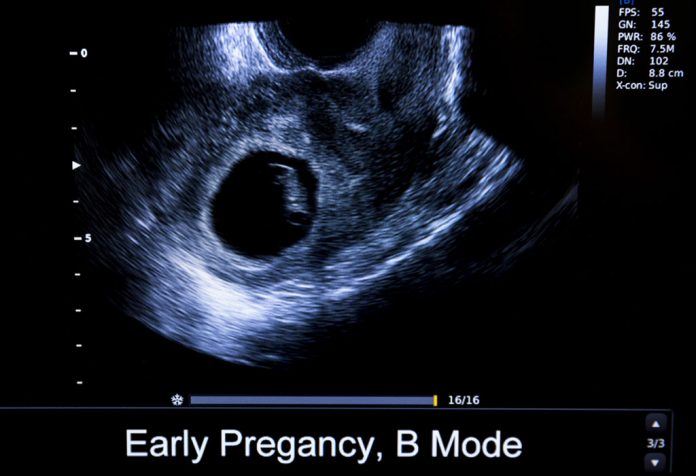
Regular check-ups, prenatal screening, and scans are essential during pregnancy to ensure the well-being of both the mother and the developing baby at every stage. Tests used in dating the pregnancy, estimating gestational age, and identifying possible chromosomal abnormalities may be prescribed by your doctor so your pregnancy can progress smoothly, safely, and with timely medical guidance. Estimation of the crown-rump length (CRL) of the fetus is one such important scan. CRL in ultrasound is used to estimate gestational age and monitor early fetal growth, typically measured during the first trimester of pregnancy. It is considered the most accurate measurement for determining gestational age in the first trimester, particularly between 7 and 13 weeks of gestation, and helps doctors predict the due date and plan appropriate prenatal care and follow-up scans.
Also Read: Common Trimester-Wise Tests During Pregnancy
What Is CRL?
Wondering what CRL in pregnancy means? CRL is the length of the foetus, measured from the top of its head to its buttocks (1). This measurement is in centimetres and doesn’t consider the limbs or the yolk sac. Since CRL can be taken from about 6 to 7 weeks of pregnancy with an upper limit of 14 weeks, it is useful in calculating the foetus’s gestational age. The low biological variability at this stage of pregnancy makes it the most accurate estimation of your baby’s gestational age.
Once the gestational age is evident from the CRL, your doctor can provide an estimated delivery date. The earlier this scan is conducted, the more accurate it is. Note that the gestational age is different from the fertilisation age. Gestational age is calculated from the first day of your last menstrual period, whereas fertilisation age is typically two weeks less than the gestational age.
Uses of Crown Rump Length Measurement
Crown-rump length (CRL) has several important uses in obstetrics and gynaecology. These include:
1. Estimating gestational age
CRL is an accurate measure of gestational age during the first trimester of pregnancy and is used to estimate the due date and monitor fetal development (2).
2. Monitoring fetal growth
CRL is also used to monitor fetal growth throughout pregnancy. Regular ultrasounds are performed to measure the crown-rump length and ensure that the fetus is growing properly.
3. Identifying abnormalities
CRL measurements can help identify abnormalities in fetal development. Deviations from the expected growth rate can be an early sign of a potential problem, prompting further testing and follow-up care.
4. Guiding delivery decisions
CRL measurements can also help guide decisions about delivery methods. For example, if the fetus is significantly larger or smaller than expected for its gestational age, a different delivery method (such as a C-section) may be recommended.
5. Evaluating multiple gestations
In cases of multiple gestations (such as twins or triplets), CRL measurements can help determine whether the fetuses are developing similarly. This information is used to monitor the health of the fetuses and plan delivery.
6. Determining fetal weight
CRL measurement can also be used to estimate fetal weight. Using mathematical formulas, the CRL measurement can predict fetal weight, which can be useful in determining appropriate delivery methods and planning for potential complications.
What Does Crown Rump Length Indicate About Your Baby’s Health?
The CRL scan assists your doctor in evaluating the well-being and development of your baby in the womb. An average baby measures about 51 cm tall and weighs around 3.5 kg at the time of birth. With this scan, it’s possible to find out your baby’s length and weight at different stages of your pregnancy. These are some issues that CRL helps to reveal (3):
Presence of a heartbeat – If the CRL measurement is 7 mm or more, a transvaginal ultrasound can detect the foetus’ heartbeat. This type of ultrasound is conducted through the vagina instead of from outside, which is how most ultrasounds are done.
Miscarriage – A CRL can reveal the absence of a heartbeat and, in turn, a missed miscarriage. In such cases, the expecting mom doesn’t suffer from the usual symptoms of miscarriag,e like pain or bleeding. Also known as a silent miscarriage, the placenta keeps on producing the pregnancy hormone, leading the woman to believe that she is still pregnant.
If your mean sac diameter (MSD) is less than 5 mm greater than the CRL measurement, a first-trimester miscarriage may be impending. This can occur in spite of detecting a normal heartbeat in your baby.
CRL measurements that are on the lower side may also be indicative of chromosomal abnormalities such as Edwards Syndrome (trisomy 18), triploidy, or other growth-related problems (5).
According to a study, there is a direct correlation between CRL measured before the 10th gestational week and birth weight (4). This is a one-of-a-kind study, as other studies focus on the correlation between both factors only after the 10th week of gestation. A total of 632 ultrasound scans were performed on pregnant women who didn’t have any complications. The results indicated that there is a positive association between CRL in the early first trimester and the birth weight of the foetus. This can help to predict low birth weight (LBW) and ensure parents-to-be are emotionally prepared for premature delivery and newborn care.
Does It Determine the Gender of the Baby?
Crown-rump length (CRL) is used in fetal ultrasound to estimate gestational age and monitor fetal growth. However, it is not a reliable method for determining the gender of a baby. While there are some claims that CRL can be used to predict gender based on the size of the fetal genital tubercle, these claims have not been supported by scientific evidence.
Instead, fetal gender is typically determined by ultrasound during the second trimester of pregnancy (between 18-22 weeks), when the genitalia are more developed and can be visualised on the ultrasound image. Even then, there is a small margin of error in gender determination, and ultrasound technicians may not always be able to determine the gender with certainty. Therefore, while CRL is a useful measurement in estimating gestational age and monitoring fetal growth, it is not a reliable method for determining the gender of a baby.
Crown Rump Length Chart
The CRL diagram was first presented by Robinson in 1975 and is still the primary reference for pregnancy dating as well as evaluation. Below, we provide a CRL chart for your reference (6).
Gestational Age in Weeks
CRL (mm)
Mass
6 weeks
4 mm
< 1g
7 weeks
11 mm
< 1g
8 weeks
17 mm
1 g
9 weeks
23 mm
2 g
10 weeks
34 mm
4 g
11 weeks
44 mm
7 g
12 weeks
57 mm
14 g
13 weeks
68 mm
23 g
14 weeks
81 mm
43 g
These are the approximate foetus measurements at different stages of pregnancy. Other factors, such as the mother’s age, smoking habits, and the amount of folic acid consumed, may influence crl in pregnancy.
Every baby is different, and slight variations in growth and development are normal. Your doctor’s benchmark measurements may also differ from the CRL chart. After a CRL scan, make sure you have a chat with your gynaecologist about your baby’s progress and ask for a detailed report on the same.
What Can an Abnormal CRL Measurement Mean?
Crown-rump length (CRL) is a key early indicator of fetal growth and gestational age. When a CRL measurement appears abnormal—either smaller or larger than expected for the gestational age—it doesn’t always indicate a serious problem, but it does warrant careful evaluation. Possible implications include:
Incorrect dating of pregnancy: Sometimes, the estimated gestational age may be off, especially if ovulation occurred earlier or later than assumed.
Growth restrictions: A smaller CRL may suggest intrauterine growth restriction (IUGR) or other conditions affecting fetal growth.
Potential chromosomal or developmental issues: Certain abnormalities, such as Down syndrome or other genetic disorders, may be associated with atypical CRL measurements (7).
Multiple pregnancies or variations in fetal development: Twins or higher-order multiples can affect CRL measurements, as growth patterns may differ from singleton pregnancies.
FAQs
1. Can the CRL measurement be incorrect?
Like all measurements, CRL can be incorrect in some cases. Factors such as fetal position, maternal obesity, and technical errors during the ultrasound can affect the accuracy of the measurement. However, CRL is considered a highly accurate method for estimating gestational age in the first trimester of pregnancy.
2. What if CRL is lower than expected?
A lower-than-expected CRL measurement may indicate a problem with fetal growth. Further testing may be recommended to identify potential issues in such cases.
3. Is CRL smaller for females?
Scientifically, there is no significant difference in CRL measurements between male and female fetuses. However, gender can be accurately determined by ultrasound around 18-20 weeks of gestation, where the genitals become visible on the ultrasound.
4. What is the normal range of CRL at 8 weeks?
At 8 weeks gestation, a normal range for CRL in pregnancy is typically between 16-24 mm. It is important to note that the range may vary depending on the accuracy of the measurement and the individual characteristics of the fetus and mother.
Also Read:
Dating Scan while Pregnant
Fundal Height in Pregnancy
Gestational Sac during Pregnancy
Read more
Hospital Bag Checklist – Things to Pack for Mom & Baby
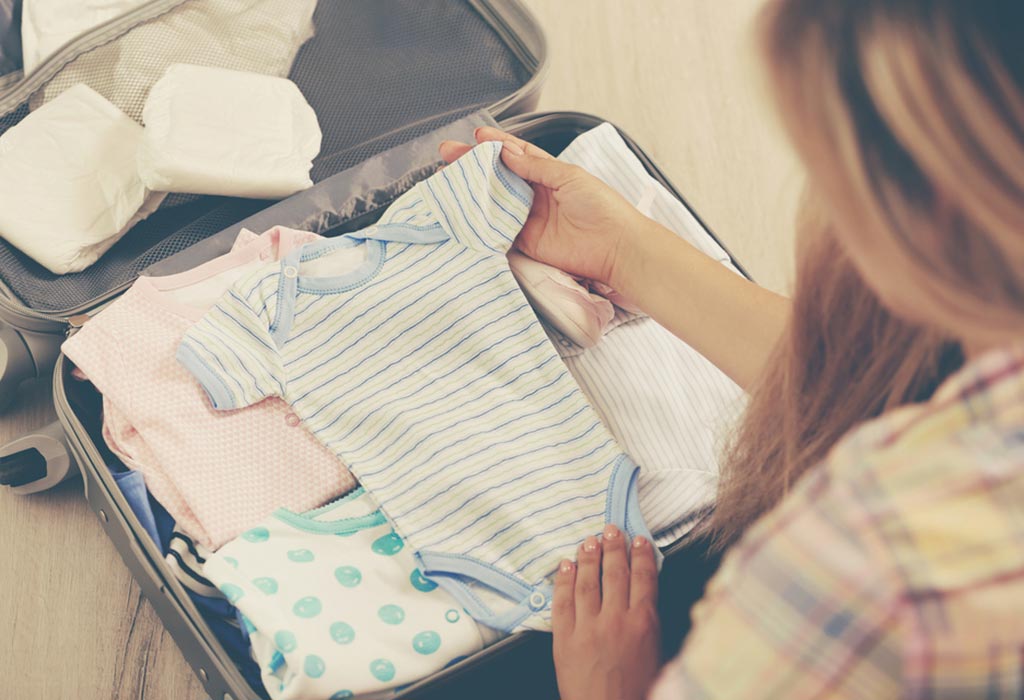
Going into labor can be an exciting and anxious time in your life and pregnancy. All the effort and care of the past nine months is finally coming to an end with the delivery of your baby. Whether you have your delivery date fixed already or not, you should be prepared to rush to the hospital the minute you go into labor. This includes having a bag already packed with all the essentials you will need during your stay at the hospital. Creating a maternity hospital bag checklist can help ensure that you don’t forget anything important, from comfortable clothing and toiletries to important documents and baby essentials. By being well-prepared, you can focus on the joy of welcoming your new baby without the stress of last-minute packing.
When to Pack Your Hospital Bag?
A good time to pack a bag for the hospital is around the 34th and 35th week of your pregnancy. If you are a high-risk pregnancy, then you can pack a bag a couple of weeks earlier. You must not delay packing your bag beyond the 38th week. The baby will not wait for anyone, least of all for an unpacked bag!
Why You Should Pack a Hospital Bag?
Packing a hospital bag is essential because it ensures you’re fully prepared for the unpredictable timing of labor. Having a well-packed bag means you have all the necessary items, like clothing, toiletries, and baby essentials, ready to go when you need them. This preparation can help reduce stress and anxiety as your due date approaches, allowing you to focus on the experience of welcoming your baby rather than worrying about what you might have forgotten. A childbirth hospital bag checklist can be particularly helpful in making sure nothing important is left behind.
What to Pack for Labor?
Mothers who are delivering vaginally will have to stay for one to two days post-delivery at the hospital while mums who’ve had a C-section will stay longer, up to a period of 3 to 4 days. You must also ask your hospital what they provide for mothers and you can keep those items off your list of things to pack. Make a hospital bag checklist for mom and baby, as this will help you keep track of what you have sourced and what you still need to find. Here is the hospital bag list for moms.
Documents: Make sure that you make a folder that contains all your documents such as ID proof, insurance documents, and hospital forms.
Footwear: Take slip-ons as they are the easiest to get in and out of. You can also carry socks in case you feel cold in the air conditioning.
Lip balm: Most mothers find that outside their labor room their lips start to dry out. Keep a lip balm to protect your lips from the air conditioning.
Snacks and drinks: Labor can sometimes extend for hours. This will be the time that you are glad that you carried some small snacks to help you through the pain. Sugar-free candies are a great snack.
Pillows: Pillows can help ease the pains of the contractions.
Toiletries: If you are particular about using a particular brand of toothpaste or cannot do without your floss, then you will appreciate having taken the time to pick up extra toiletries and packing it into your hospital bag. Do not forget to pack towels, soap, shampoo, and a hairbrush.
Glasses or lenses: It is quite easy to forget your glasses and lenses in regular life without having the excitement of labor to distract you. Buy an extra pair of glasses and keep them in your bag beforehand.
Gadgets: Be sure to pack your mobile and tablet charger and an MP3 player if you desire to listen to some music to ease the pains of the contractions.
Accessories: Buy a couple of headbands and hair clips to help keep away the hair during labor. After delivery, these will help you as you learn how to breastfeed.
Books: Keep it light and stick to one or two titles that will help you stay calm and relaxed. PG Wodehouse is a great option as is Alexander McCall Smith.
Old or cheap underwear: Do not carry new or expensive underwear and stick to cotton underwear.
Handouts: Your prenatal classes or consultations will give you material to read up on how to breastfeed.
What to Pack for After Delivery?
After delivery, your focus will shift to recovery and caring for your newborn, so it’s important to pack everything you’ll need for this crucial period. Having the right items on hand can make your hospital stay more comfortable and help ease the transition into motherhood.
Dresses: Be sure to pack loose clothing like maternity dresses that have buttons on the front to quickly undo them for breastfeeding. Flowy dresses are best as comfort is key during this delicate stage.
Underwear and sanitary napkins: You will need extra pairs of underwear and sanitary napkins during your stay in the hospital post-delivery. Bella Mama has a good range of maternity lingerie that offers the utmost comfort. They have expandable bands at the belly as opposed to regular underwear.
Nursing aids: Be sure to pack nursing bras and pads to make breastfeeding a more comfortable experience.
Breastfeeding pillow: Remember to pack a breastfeeding pillow for use soon after birth.
Going home clothes: Be sure to pack comfortable clothes for you to wear when you are discharged from the hospital.
Nursing bras: Read up on the different types of nursing bras and try a few to select a style that you are most comfortable with. Pack at least two nursing bras. Maternity bras that are wireless make all the difference and will make your life as a new mom really easy!
Breast pads: These will help soak up any unexpected leaking of milk as you learn to breastfeed.
Maternity pads: You will need pads after birth, so be sure to pack at least an entire pack.
Nightshirt: Pick a nightshirt with a front opening as it will help with breastfeeding. You can also buy nursing sleepwear which comes with side panels that can be opened to feed your baby.
Eye mask or earplugs: These will help you sleep, particularly if your ward is noisy.
Books: Carry a couple of books for entertainment that will keep your mood light.
Baby’s going home outfit: Don’t forget to pack a cute and comfortable outfit for your baby’s first trip home.
Nipple cream: If you plan to breastfeed, nipple cream can help soothe any discomfort or irritation in the first few days.
What Should Your Birth Partner Pack?
Packing for the hospital is a two-way street; while you may need your essentials, it is important to communicate with your partner and prepare them for what they may need in the hospital and what you may need from them during the delivery of your child here are a few points to consider for the dad’s hospital bag:
Neck-pillows
Calming music
Blankets
Earphones
Cash
Comfortable shoes
Appropriate clothes
What to Pack for a Newborn Baby?
Your newborn baby hospital bag checklist should include the following:
Two to three bodysuits and vests.
A baby blanket to keep your little one warm, especially when you and your baby are heading home.
Nappies: Be sure to pack as many as you can, as a newborn can go through as much as 12 a day.
Muslin handkerchiefs for mopping up any milk.
One pair of socks and booties for the journey home.
A woollen hat to protect your baby’s head on the way home.
An outfit to go home in when you and your baby are discharged.
A baby car seat can be the best way to transport your baby back home as it is safe and comfortable.
Jacket or sweater if the weather is particularly cold.
Things You Should Not Carry in Hospital Bag
Here are some things that should stay out of your pregnancy hospital bag.
Jewellery, as it can get in the way of your tests and procedures and can even get stolen.
Cash or other valuables as they are easy to misplace in a large hospital.
Medications that have not been recommended by your doctor. This includes even vitamins.
Breast pumps are provided by the hospital, and you will not need to carry your own to the hospital.
FAQs
1. Can I pack my own hospital gown instead of using the one provided?
Yes, you can pack your own hospital gown if you prefer something more comfortable or personal. Look for a gown that is soft, has front openings for breastfeeding, and is easy to change in and out of. Some women choose to bring their own gown to feel more at ease during labor and postpartum recovery.
2. Is it necessary to pack baby diapers and wipes?
While most hospitals provide basic baby supplies like diapers and wipes, it’s a good idea to pack a small supply of your preferred brand, especially if your baby has sensitive skin or you plan to use eco-friendly or cloth diapers. This ensures you have exactly what you need without relying solely on hospital-provided items.
3. Can I bring essential oils or aromatherapy items to the hospital?
Yes, you can bring essential oils or aromatherapy items to create a calming environment during labor and delivery. Scents like lavender, chamomile, or peppermint can help reduce stress and anxiety. However, be sure to check with your hospital beforehand to ensure they allow these items in the labor and delivery room.
This was a tentative list for a labor and delivery bag for the hospital. Get your bag ready a couple of weeks before your ninth month of pregnancy begins. Do not stress out about what to pack in the hospital bag for baby and mom as some family members can always bring one or two items to you at the hospital. You can also run a few drills with your partner in preparation for when you are rushing to the labor room.
References/Resources:
1. Hospital bag checklist – what to pack for you and your baby; NHS; https://www.nhs.uk/start-for-life/pregnancy/preparing-for-labour-and-birth/hospital-bag-checklist/
2. Hospital Bag Checklist; American Pregnancy Association; https://americanpregnancy.org/healthy-pregnancy/labor-and-birth/hospital-bag-packing-list/
3. Last Minute Activities Before Delivery; American Academy of Pediatrics; https://www.healthychildren.org/English/ages-stages/prenatal/Pages/Last-Minute-Activities.aspx
4. FAQS: How to Tell When Labor Begins; American College of Obstetricians and Gynecologists; https://www.acog.org/womens-health/faqs/how-to-tell-when-labor-begins
5. Hospital bag checklist: what do I need to take?; NCT; https://www.nct.org.uk/labour-birth/deciding-where-give-birth/giving-birth-hospital/hospital-bag-checklist-what-do-i-need-take
6. Pack your bag for labour; NHS; https://www.nhs.uk/pregnancy/labour-and-birth/preparing-for-the-birth/pack-your-bag-for-labour/
7. What to Bring to the Birth Center; Mayo Clinic Health System; https://www.mayoclinichealthsystem.org/locations/la-crosse/services-and-treatments/birthing-centers/getting-ready-for-baby/what-you-should-bring
Also Read:
Delivery Bag Essentials
Pregnancy Essentials Checklist
Hospital Bag for C-section Delivery
Read more
23 Foods to Avoid During Pregnancy
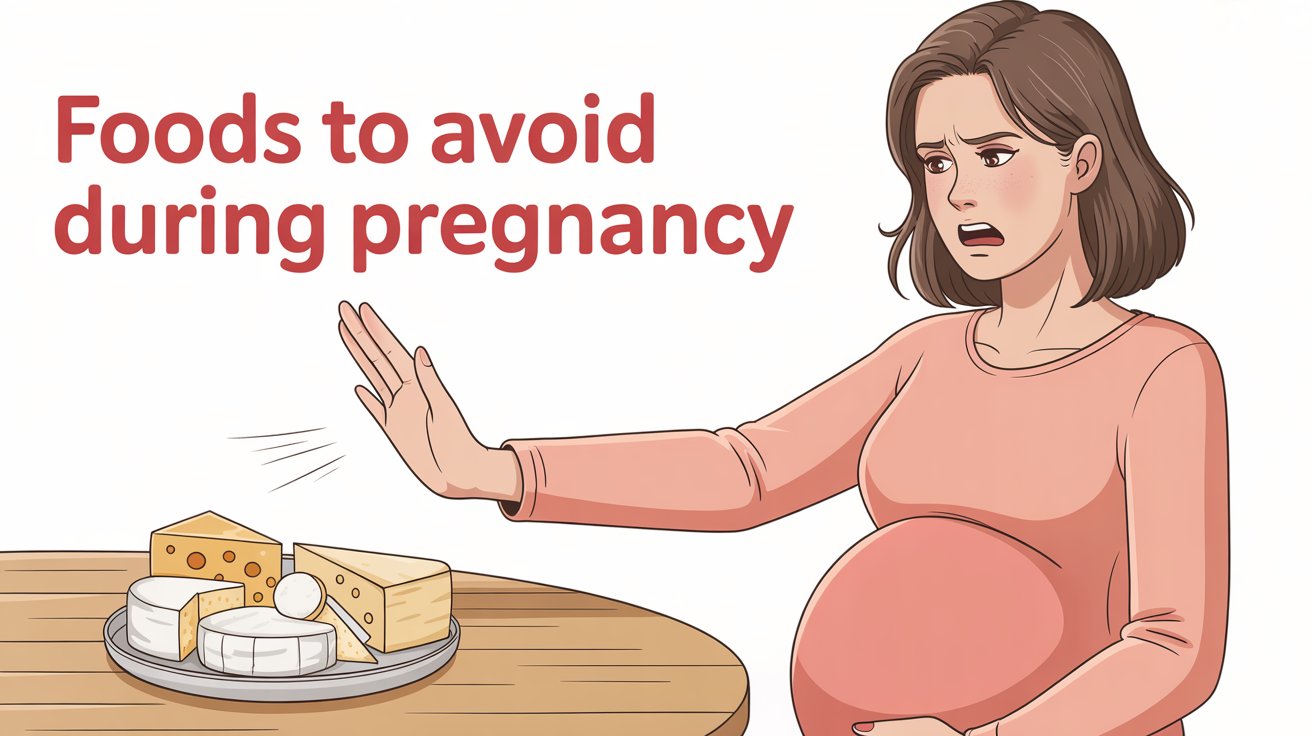
A lot of things change as you go through one of the most beautiful phases in your life – pregnancy. Not only does your body change, but your entire lifestyle, your priorities, and your thinking take a pleasant turn, too. Prepare for the journey by acquainting yourself with the foods to avoid during pregnancy and ensure good health not only for your baby but for yourself, too.
Food is a very crucial element of your life as a mother-to-be. While good food nourishes you and your baby, potentially harmful food can pose a serious risk. Hence it is important to determine what foods to avoid while pregnant as soon as you see that second line on your pregnancy test.
Why Should Pregnant Women Avoid Certain Foods?
Pregnant women need to be cautious about what they eat because certain foods can pose health risks to both mother and baby. Changes in the immune system during pregnancy make women more vulnerable to foodborne illnesses and harmful contaminants. Here are a few important reasons to avoid certain foods during pregnancy.
Certain foods can contain harmful bacteria like Listeria, Salmonella, or E. coli that pose serious risks during pregnancy.
Some fish contain high mercury, which can affect the baby’s developing brain and nervous system.
Unpasteurised or undercooked products can introduce toxins that may be unsafe for fetal development.
Highly allergenic or irritant foods may trigger reactions that can negatively impact maternal or fetal health.
What Not to Eat When Pregnant?
Healthy food for pregnant women is vital for a healthy pregnancy. There are several things you should avoid as many different types of food can pose a threat to your child. We simplify your food choices by bringing you this list of what to avoid eating during pregnancy.
Foods to Stay Away From During Pregnancy
Let’s take a look at what can’t you eat when you are pregnant so you can better understand which foods to avoid for a safe and healthy pregnancy.
1. Raw, Undercooked, or Contaminated Seafood and Fish
Don’t worry; you don’t have to give up on your favourite seafood entirely. You just need to ensure that you steer clear of certain types of seafood.
Raw fish in your diet is definitely a big NO. This means that if you’re a lover of sushi, you will have to hold back for the next few months.
Certain fishes, like mackerel, shark, swordfish, and tilefish contain high levels of mercury in them, and mercury consumption during pregnancy could lead to delayed development and brain damage to your child. Opt instead for fish like chunk light tuna which has low levels of mercury and can be consumed in moderate amounts. It is best to avoid refrigerated and smoked seafood as it may be contaminated with Listeria, a harmful bacterium. Being exposed to Listeria during pregnancy can put you at an increased risk of preterm birth, or an infection spreading to the newborn (1).
A few kinds of fish may have been raised in contaminated water bodies, like bluefish, salmon, walleye, trout, and striped bass. These fishes are exposed to high levels of polychlorinated biphenyls (PCB), which is extremely unhealthy for both mother and child. Exposure to PCB while pregnant can also have a negative impact on your baby’s immune system.
Raw and undercooked shellfish like clams, mussels, and oysters, carry a majority of the seaborne illnesses. While cooking them can prevent some diseases, they won’t affect the algae-borne diseases. This is why it is a good idea to avoid shellfish entirely during pregnancy
Fish is a great source of omega-3 fatty acids, which should be a part of your diet as it helps in the baby’s brain development. During pregnancy, you only have to be more cautious when consuming fish. A good idea is to try sticking to freshwater seafood during your pregnancy. This includes salmon, shrimp, trout and sardines. Also, instead of raw fish, try having fish that is cooked at 145℉. Cooking helps destroy many potential infections and toxins present in seafood, thus protecting you and your baby from harm (2).
2. Raw or Soft Boiled Eggs
Eggs can be almost irresistible when they’re cooked perfectly. Many of us enjoy eating soft boiled or undercooked eggs. However, during pregnancy, they’re definitely a big no-no as they may be contaminated with salmonella which is a bacterium that causes diarrhoea and vomiting. You should also avoid other foods and desserts which are made from raw eggs, including custards and mousse (3).
The best way to have an egg during pregnancy is by cooking it until the yolk is firm. Otherwise, head for eggless salad dressings, mayonnaise, and other things that have an egg-less counterpart. You can also use pasteurised eggs to eliminate the risk of getting diseases.
3. Raw or Rare Meat
It is vital for a non-vegetarian mother to include meat in her diet, but this should also be done with some care and restrictions. Research suggests that raw meat contains Listeria bacteria and must be avoided during pregnancy. There may also be some other parasites in uncooked and undercooked meat like Toxoplasma gondii, which can cause vomiting, foetal damages, and also miscarriages in expecting women (4).
Make sure that whenever you eat meat, it is properly cooked. It is also advisable that you cook your own meat at home with the use of a thermometer. Wash the meat properly with salt and water to ensure all the bacteria have been removed.
4. Unpasteurised Dairy
It is extremely important that you consume milk on a daily and regular basis for the proper development of your child. It provides you and your baby with important nutrients like minerals, calcium, and proteins. But, make sure that you consume only pasteurised milk. Unpasteurised milk may contain pathogens that can cause severe food poisoning. It is advisable that you avoid all kinds of dairy products which are not pasteurised (5).
Make sure that you always consume fresh milk which has been boiled. Always make a couple of simple quality checks so that you can avoid unnecessary diseases and enjoy a happy pregnancy.
5. Unpasteurised Soft Cheese
Cheese is a favourite of almost everyone who has ever tasted it. But when you’re pregnant, you will have to follow some rules even when consuming this delicacy. A lot of unpasteurised soft cheeses contain the Listeria bacteria and rank high in the list of what women should not eat during pregnancy (6).
Instead of soft cheese, simply opt for hard cheeses. Some of these are Cheddar cheese and Swiss cheese. Always make sure that you buy cheese after you check the label for Listeria-free pasteurisation.
6. Unwashed Fruits and Vegetables
There is no doubt that fruits and vegetables are extremely healthy for you and your child during pregnancy. But you may be surprised to hear that almost 78% of the people around the world consume unwashed fruits and vegetables. Not only can the skins of unwashed fruits and vegetables contain harmful pesticides and herbicides, but they may also be home to deadly pathogens like Toxoplasma gondii and Listeria (7). Unwashed raw vegetables like sprouts, lettuce and cabbage should be especially avoided during these times.
When it comes to fruits, the ones that should be avoided during pregnancy include papayas and pineapples. In fact, in some cultures, papayas are in the list of natural foods to avoid pregnancy and are believed to cause miscarriages. Unripe papaya can be especially dangerous as it has certain compounds that trigger uterine contractions (8).
It goes almost without saying that you should wash fruits and vegetable thoroughly before consuming them. You can also peel the skin off and keep them in separate utensils. Also, avoid leaving the vegetables and fruits in the refrigerator for long and then consuming them. Try cooking all of your vegetables, and make sure that the leafy ones are cooked well.
7. Raw Sprouts and Nuts Which Cause Allergies
Raw sprouts are an amazing source of protein and minerals, but they are still in the list of food not to eat when pregnant. This is because they may contain harmful viruses and bacteria that can cause food poisoning. Make sure that every time you eat sprouts, you either shallow fry them or better even, cook them thoroughly. They can still taste nice with proper seasoning (7).
You may enjoy various kinds of nuts in moderate amounts during pregnancy as they are rich sources of vitamins and minerals, and are highly beneficial for foetal development. But there are some nuts that can cause allergies and rashes on your body. Even if you weren’t initially allergic to them, you could develop allergies over time with extended exposure. Too many nuts can cause constipation & other issues, too. Therefore, ensure that you consult with your doctor to know which nuts you can include in your diet, in what quantities, and which nuts you should avoid entirely during pregnancy.
8. Restaurant Food or Store-bought Salads
It is advisable to be extra cautious when ordering food for pregnant women at a restaurant, as one can never be sure of the ingredients that go into making it. It is best to avoid having salads that are available in restaurants or even in the store. The fruits and vegetables used in the salad may not have been washed properly, or they may have been cut a long time ago.
You can always make your own salad at home. Ensure you clean the fruits and vegetables properly and cook your meat thoroughly. Cooking your own food also gives you the liberty to prepare it just the way you like it.
9. Unhygienically Extracted Juices
You may argue that fresh fruit juice is always a good choice during pregnancy. But raw fruits and vegetables may carry the risk of being contaminated by deadly bacteria or viruses. Make sure you quench your thirst for some fresh juice at home so that you are assured of its freshness and hygiene.
When buying packaged juices, choose the ones which have been pasteurised and refrigerated.
10. Excessive Caffeine
You might be a fan of coffee. But including caffeine in your diet is not a good idea during pregnancy. It is a diuretic, which can lead to excessive urination, causing you to get dehydrated faster. Caffeine has also been linked to low birth-weight. Excessive consumption of caffeine can lead to higher risks of foetal deaths, stillbirths, and also abortions.
Make sure that you don’t consume more than 200 ml or 2 cups of coffee in a day (9). Also, enlist your doctor’s or pharmacist’s help in eliminating hidden caffeine in other products like energy drinks and medicines.
11. Herbal Supplements and Herbal Tea
Many people may suggest that you start taking herbal tonics and teas when pregnant, but these may cause more harm to you than good. Some herbs can even increase your risk of preterm labour or miscarriage when taken in large amounts. There are also chances that you may end up buying unsafe or spurious herbs because there isn’t a way you can check their quality.
Avoid herbs like Wormwood, Saw Palmetto and Senna as they aren’t tested thoroughly like other medicines, and opinion is still divided on the advisability of consuming them during pregnancy. If you feel a lack of energy or fatigue, do ask your doctor to prescribe a multivitamin and continue with your regular tea instead of experimenting with herbal concoctions.
12. Canned Food
Canned foods are to be particularly avoided during pregnancy as they may contain preservatives and food additives which increase their shelf-life. Besides, the walls of the can may contain Bisphenol A, a chemical which affects the endocrine activity of your child (10). Due to their long shelf life, the food may also contain harmful bacteria.
Almost all canned foods can be purchased fresh. Therefore, always pick fresh fruits and vegetables. It is a good idea to choose seasonal fruits and vegetables for a meal to ensure you get maximum nutrients from your food.
13. Nitrate-Rich Food
Nitrate is a chemical that is added to some foods to prolong their shelf life. However, it can cause a lot of health issues, especially for pregnant women. When nitrates react with haemoglobin in the blood, they produce modified proteins which interfere with your body’s ability to deliver oxygen to the placenta. Some of the foods that contain nitrate in high quantities are diet sodas, bacon, sausages and artificial sweeteners. These foods also have a very low nutritional value and must be avoided during pregnancy at all costs.
14. Excessive Sugar-rich Food
You might crave for ice creams and chocolates several times during your pregnancy. However, excessive intake of desserts could increase the sugar level in your blood, which could affect foetal health, too. Always keep a check on how much sugar you are consuming in a day and try your best to avoid excessive intake of sugar as much as possible.
Remember, there is no need to turn your back to the ice cream truck altogether; an occasional treat will do you no harm.
15. Street Food
Try your best to avoid your favourite street food during pregnancy. Not only is it unhealthy, but street food can also cause food poisoning and other digestive problems. Don your chef’s hat and try your hand at preparing them at home where you are assured of quality and hygiene.
16. Excessive Fatty Food
Are you looking forward to eating as much fatty food as you want to during pregnancy because you’re going to gain weight anyway? Resist the temptation, as too much fatty food can increase your blood cholesterol levels, making you vulnerable to obesity and heart disease. Make sure that you eat fatty food in moderation.
Consume food containing omega-3, 6, and 9 fatty acids as these are beneficial for your baby’s development. Other foods which are good sources of these fatty acids are – avocados, nuts, olives and pumpkin seeds. However, never binge-eat even on these foods, and always exercise in moderation.
17. Excessive Artificial Sweeteners
You may think that artificial sweeteners are a great substitute for sugar, but it is not healthy to consume them during pregnancy. The placenta doesn’t filter the most commonly used artificial sweeteners, like saccharin, which means your child will be consuming the artificial sugar too. You can have them, but always make sure that you do so in moderation.
18. Unprescribed Vitamins
Vitamins are surely a good source of nourishment for pregnant women, but they can be harmful when consumed in excess. They can affect the normal growth of your foetus and can also cause preterm labour. Don’t make your own decisions when it comes to vitamins. Always consume them as prescribed by the doctor (11).
19. Excess Simple Carbohydrates
Carbohydrates are the primary source of energy in your body, which makes them an important part of your pregnancy diet, too. However, be careful with simple carbs foods such as cookies and corn syrup. Although they are not really harmful to your child, simple carbs tend to cause painful constipation. Try and avoid them by avoiding foods that are made from fine flour. Instead, consume high-fibre foods like those made of wheat and whole grains.
20. Liquorice
Many cuisines use liquorice, which is normally a harmless spice. But during pregnancy, it tends to cause uterine contractions and can lead to preterm labour. Therefore, try and avoid liquorice in all forms during pregnancy (12).
21. Leftover Food
You may feel guilty throwing away leftover food, but you should avoid eating any during your special nine months. Even if it is stored in the refrigerator, there are chances that the food can attract disease-causing bacteria. Always eat freshly cooked food. If you have no other option, heat the leftover food in another clean utensil properly before consuming it.
22. Highly Spicy Food
Spicy food is best avoided by a mother-to-be. During pregnancy, the chance of acid reflux and heartburn is a lot higher, and consuming spicy food will only aggravate it. It can also lead to morning sickness. Always consume spice in moderation, and whenever you eat spicy food, make sure that you also have a glass of milk or a tablespoon of honey to prevent heartburn.
23. Alcohol
It goes without saying that alcohol consumption is bad for your health, not only when you’re pregnant, but at any time in your life. But in case you think that an occasional drink is okay when you’re pregnant, you’re terribly wrong (13).
Alcohol is another thing that isn’t filtered by the placenta and can reach your baby through the umbilical cord. This can cause not only miscarriage and stillbirth but also a range of lifelong physical and intellectual disabilities to your child through a condition called Foetal Alcohol Spectrum Disorder (FASD) (14). There is no known safe time or safe amount of alcohol consumption during pregnancy. It is best that you avoid consumption of alcohol entirely during pregnancy.
FAQs
1. Can pregnant women eat beef jerky?
Beef jerky is not recommended during pregnancy because it is not cooked but dried, meaning bacteria like Salmonella or Listeria may survive the process. Eating it could increase the risk of foodborne illness.
2. Can you eat prosciutto while pregnant?
Prosciutto and other cured meats should be avoided unless they are thoroughly cooked, as they can harbour Listeria or parasites. Cooking them eliminates the risk, but eating them cold or uncooked is not considered safe during pregnancy.
With this, you have the top 23 types of foods to avoid during pregnancy. However, you should consult your doctor before you decide to avoid any of the above-mentioned foods in your diet. Consulting a nutritionist about the pregnancy and food to avoid will help you put together a balanced meal. Needless to say, you may indulge your pregnancy cravings as long as you do so in moderation and stick to safe dietary choices.
Infographics: Foods to Avoid During Pregnancy
Also Read:
Indian Pregnancy Diet Plan
Foods to Eat and Avoid in Pregnancy
Foods to Eat during Pregnancy for Intelligent Baby
Read more
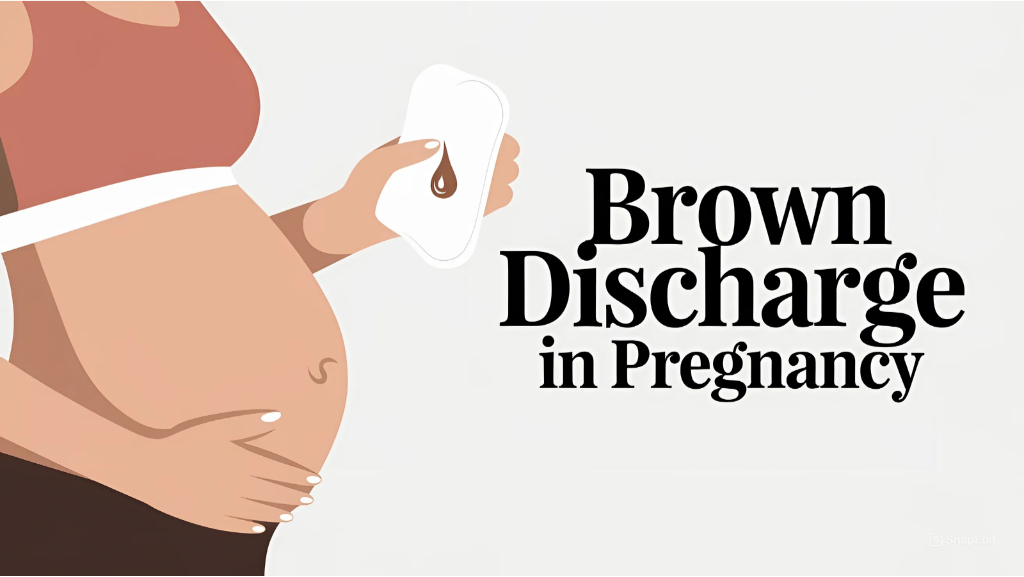
Brown Discharge During Pregnancy: Causes, Signs, & Symptoms
It can be unsettling for you if you notice brown discharge during pregnancy. Although it’s normal and, in most cases, just another part of the pregnancy, it can worry you to no end. Brownish discharge during pregnancy is very common and you need not panic unless it is accompanied by other symptoms such as itching or foul smell. It may occur when old blood from the uterus is expelled, and this typically happens in the early stages or near the end of pregnancy. However, if the discharge is heavy or accompanied by pain, it is important to consult your doctor for further evaluation.
What Is Brown Discharge During Pregnancy?
About 20% of women experience brown discharge during pregnancy. Brown discharge is actually a reddish-brown discharge from the vagina that can happen throughout pregnancy. Brown discharge is basically old blood from the uterus that is expelled. It may start from early pregnancy and continue until the 37th week, i.e until labour. The amount and colour may also vary depending on the cause of the discharge. It can be differentiated from menstrual bleeding and a miscarriage by its colour and amount.
Is Brown Discharge in Pregnancy Normal?
Yes, brown discharge during pregnancy is often normal and can be a common occurrence. It usually happens when old blood from the uterus is expelled and may appear as a brownish or dark-colored discharge. This often occurs due to minor hormonal changes, implantation bleeding in the early stages of pregnancy, or changes in cervical mucus.
In most cases, brown discharge is not a cause for concern. However, if it is accompanied by other symptoms such as heavy bleeding, pain, or a foul odor, it is important to seek medical attention, as it could indicate an underlying issue that needs evaluation by a healthcare provider.
Different Types of Brown Discharge During Pregnancy
Brown discharge can vary in colour and each type of brown discharge can indicate a health issue. Given below are the different types of brown discharge basis the colour of vaginal discharge:
Lightish-brown – Implementation bleeding or STDs
Pinkish-brown – Cervical irritation, ectopic pregnancy or miscarriage
Dark-brown – Early stages of miscarriage or an ectopic pregnancy
Thick, brownish – Yeast infection
Blackish-brown – Miscarriage, infections of the vagina, uterus or cervix
Watery, brown – Molar pregnancy
Yellowish-brown – Yeast or bacterial infections
Brown Discharge During Early Pregnancy
Spotting or brownish discharge occurs during implantation from 6 days of ovulation to the first few weeks of gestation. Sometimes in early pregnancy, the uterus expels old blood that causes brownish discharge or brown spotting during pregnancy. Cervical and vaginal sensitivity can also cause a small amount of bleeding or a brownish discharge at different times of the pregnancy. Bleeding from the vagina in early pregnancy is very common and happens in 25% of pregnancies.
Brown Discharge During Late Pregnancy
Towards the end of the pregnancy, brownish discharge can also be a sign of labour. A few weeks or days before delivery, the mucus plug at the opening of the cervix breaks. This is followed by a brownish discharge or a discharge of blood with a tinge of pink.
Discharge, in general, has a host of causes and isn’t a reason for panic. However, since bleeding during pregnancy is associated with miscarriage, it’s important to differentiate between brownish discharge and bleeding and take a call about visiting the doctor at the earliest signs of trouble.
What Causes Brownish Discharge in Pregnant Women?
Brownish discharge can happen due to:
1. Implantation Bleeding
The fertilised egg travels to the walls of the uterus and implants itself, which may cause bleeding. Implantation bleeding can occur from 6 days after ovulation to the first few weeks of pregnancy. It also occurs, sometimes, as light-pinkish spotting a few days before the expected date of a period. Since menstruation occurs 14 days after ovulation, early implantation bleeding is sometimes mistaken for light and late periods.
2. Pre-Labour Discharge
Brownish discharge that happens just before the due date can be a sign of labour. When this happens between 36 and 40 weeks along with loss of the mucus plug, the discharge may be accompanied by a greyish, mucous and jelly-like blob which is blood-tinged or streaked with old, brownish blood. This happens when the cervix softens and a woman’s body gets ready for delivery and the mucus plug stopping the entry of infections into the womb is not required any longer. The plug and the discharge may be expelled all at once or in smaller bits over the course of a few days or weeks.
3. Sexual Intercourse
The cervix becomes flushed with blood during pregnancy, which makes it sensitive. Sexual intercourse or an intrusive medical examination can cause brown discharge and pain.
4. Molar Pregnancy
Brownish discharge is sometimes caused by a spontaneous expulsion of a molar pregnancy, an abnormality of the placenta. This is caused by problems during fertilisation. A genetic error during the fertilisation process leads to the growth of abnormal tissue within the uterus. Molar pregnancies are rare, occurring in 1 out of every 1,000 pregnancies, and do not usually result in a viable foetus. They instead involve the abnormally rapid growth of tissues. Brownish discharge and grape-like tissue are spontaneously expelled at the end of molar pregnancies.
5. Cervical Polyps
Cervical polyps are harmless benign growth on the cervix. Brownish discharge during pregnancy is sometimes caused by bleeding from a cervical poly, due to the increased vascularity in the cervical tissue.
6. Ectopic Pregnancy
Brownish discharge is, sometimes, a symptom of an ectopic pregnancy, where the fertilised egg implants itself outside the uterus, mostly in the fallopian tubes. It is typically accompanied by a lot of dizziness, light-headedness and occasional fainting, pain on one side of the abdomen and pelvis, which comes and goes.
An ectopic pregnancy is a serious problem and can be associated with fallopian tube rupture and severe internal haemorrhage. If your brownish discharge is accompanied by these symptoms, it needs immediate medical intervention.
7. Missed Abortion
Brownish discharge can, sometimes, be a sign of a missed abortion. In this case, the pregnancy stops developing but the developed foetal tissue does not pass out of the uterus. When this does not happen for 4 weeks, dark brown spotting or bleeding with a texture of ground coffee occurs. This is sometimes accompanied by bad odour and expelled tissue matter. We advise you to visit the doctor, in such a case, to ensure all foetal matter is cleaned away from the uterus.
8. Miscarriage
Brownish and, occasionally, red discharge from the vagina in the first trimester can be a sign of miscarriage if accompanied by abdominal pain, lower back pain, and strong period-like cramps. The bleeding may vary from light to heavy, have blood clots, and come and go for a few days. In most cases, a woman’s body recovers from miscarriage over a period of 1 week to 10 days. Then, further treatment is not needed.
9. Abnormal Placenta
Certain placental conditions or abnormalities like placenta previa and placental abruption can be a reason of brown spotting. In placenta previa, the opening of the cervix is covered by the placenta, causing brown discharge but no pain. Whereas in placenta abruption, the uterus gets separated from the placenta, causing both brown discharge and pain.
10. Genital HPV
This is another condition which is caused by increased estrogen levels and increased blood flow. Brownish discharge is one of its symptoms.
11. Vaginal Infections
Infections of the vagina and sexually transmitted diseases can also cause brown spotting.
Complications With Brown Discharge While Pregnant
While brown discharge during pregnancy is often harmless, it can sometimes signal a complication, especially if it is accompanied by other symptoms. Some potential complications include:
1. Miscarriage
Brown discharge early in pregnancy may be a sign of a miscarriage, especially if it is followed by heavy bleeding, cramping, or the passing of tissue. If you experience these symptoms, contact your doctor immediately.
2. Ectopic Pregnancy
If brown discharge is accompanied by sharp abdominal pain, dizziness, or shoulder pain, it may indicate an ectopic pregnancy, where the fertilized egg implants outside the uterus. This is a medical emergency and requires immediate attention.
3. Infection
A foul-smelling brown discharge could suggest an infection in the reproductive system, such as a bacterial or yeast infection. Infections may cause additional symptoms like itching, irritation, or a burning sensation, and should be evaluated by a healthcare provider.
4. Placental Problems
Brown discharge later in pregnancy could indicate placental issues, such as placental abruption, where the placenta separates from the uterus. This can lead to complications like bleeding and early labor and requires medical monitoring.
5. Cervical Changes
Brown discharge can sometimes occur after a cervical check or intercourse due to the sensitivity of the cervix during pregnancy. If it happens occasionally and is not accompanied by pain or other concerning symptoms, it is usually not a cause for concern. However, persistent or severe discharge should be checked by a doctor.
How to Reduce Brown Discharge When You’re Pregnant
If you are looking for tips on how to stop brown discharge during pregnancy, here’s what you can do.
1. Monitor Yourself
Do not skip your medical appointments and complete all the recommended checkups on time so that any problem can be diagnosed and managed before it’s too late.
2. Take it Easy
This refers to the toll pregnancy takes on physical and mental health. See if you can get a hired help or trusted family member to help out and reduce your workload.
3. Don’t Exercise Too Much
While exercising and staying active is important during pregnancy, remember that too much of something is bad.
4. Get Some Rest
Heading to bed is the best thing you can do. Sleep for as many hours as your body needs. Try to nap during the day if you’re working.
5. Elevate Your Feet
Putting your feet up takes your weight off the floor. This helps better the blood circulation in your body and reduces the quantity of brown discharge during pregnancy.
6. Don’t Lift Heavy Objects
Straining yourself by lifting heavy items isn’t a great idea.
7. Take the Recommended Tests
The tests include a vaginal and cervical examination, blood tests and ultrasound scans, tests to check the size of your uterus, the levels of pregnancy hormones in your blood, the amount of bleeding and the presence of any visible factors causing the discharge and bleeding.
8. Take Medication
The medication administered to treat brown discharge during pregnancy depends on the nature of the problem. Some women don’t require medication, while others do.
When Is Brownish Discharge a Cause for Concern?
While there’s no need to panic in most cases, keeping track of the appearance, quantity, and odour of the brownish discharge is important. Pregnant and brownish discharge can be normal, but it’s important to monitor for any additional symptoms. There are some symptoms that reflect serious underlying problems:
A large quantity of discharge – In general, any discharge during pregnancy that needs a sanitary pad is a warning sign.
Discomfort – Discharge accompanied by pain and cramping, a bad odour may indicate a vaginal infection. If you experience any of these, you must consult a gynaecologist at once.
Watery discharge – Discharge accompanied by watery fluid or lumpy matter may signal a miscarriage and a need for a D & C.
Duration of discharge – Discharge which persists for more than a week after sexual intercourse or a medical examination could be a sign of an infection.
Fever along with discharge – Discharge accompanied by fever and chills may be a serious infection of the uterus or kidneys and should be treated at once.
Severe pain with discharge – Discharge accompanied by dizziness, severe pain, and abdominal cramps may be because of an ectopic pregnancy. This poses a threat to the life of the mother and will need termination.
FAQs
1. How much brown discharge is okay during pregnancy?
Brown discharge during pregnancy is normal and does not indicate anything wrong with you or your baby. The increased blood flow and hormone surge during pregnancy can make the cervix extremely sensitive, and sex during pregnancy or a pelvic exam can aggravate it. This may cause some brown discharge or light spotting.
2. How long does brown spotting last during pregnancy?
Vaginal pH fluctuations can cause minor brown discharge. This is usually not a cause for concern because it only lasts two to three days and goes away on its own.
3. Is brown discharge a sign of miscarriage?
Vaginal bleeding is one of the most common symptoms of a miscarriage. This can range from light spotting or brown discharge to an unusually heavy bleed. Light bleeding is quite common before 12 weeks of pregnancy (during your first trimester) and is not always a sign of miscarriage.
4. Can stress cause brown discharge?
Vaginal discharge is normal during pregnancy because your body produces more oestrogen, which signals the vagina to produce more discharge. When you’re pregnant, having dark or light brown discharge can be concerning. Most of the time, there’s nothing to worry about, but if you have any doubts or concerns, or feel unwell, do consult your doctor immediately.
Though brownish discharge doesn’t usually indicate a problem, always call your doctor if you notice bleeding during pregnancy. Make a note of your symptoms and visit your doctor if you suspect anything amiss. After all – it’s better to be safe than sorry.
References/Resources:
1. Early Pregnancy Loss: FAQs; American College of Obstetricians and Gynecologists; https://www.acog.org/womens-health/faqs/early-pregnancy-loss
2. Vulvovaginal Health: FAQs; American College of Obstetricians and Gynecologists; https://www.acog.org/womens-health/faqs/vulvovaginal-health
3. Sobel. J; Patient education: Vaginal discharge in adult women (Beyond the Basics); UpToDate; https://www.uptodate.com/contents/vaginal-discharge-in-adult-women-beyond-the-basics
4. Abduljabbar. H, Bahkali. N, Al-Basri. S, Hachim. E; Placenta previa (Saudi Medical Journal); National Library of Medicine; https://pmc.ncbi.nlm.nih.gov/articles/PMC5018640/; July 2016
5. Ectopic pregnancy; NHS; https://www.nhs.uk/conditions/ectopic-pregnancy/
6. Dugas. C, Slane. V; Miscarriage; National Library of Medicine; https://www.ncbi.nlm.nih.gov/books/NBK532992/
7. Vaginal discharge in pregnancy; NHS; https://www.nhs.uk/pregnancy/related-conditions/common-symptoms/vaginal-discharge/
Also Read:
Watery Discharge in Pregnancy
Yellow Discharge during Pregnancy
Green Discharge while Pregnant
Jelly Like Discharge when Pregnant
Read more
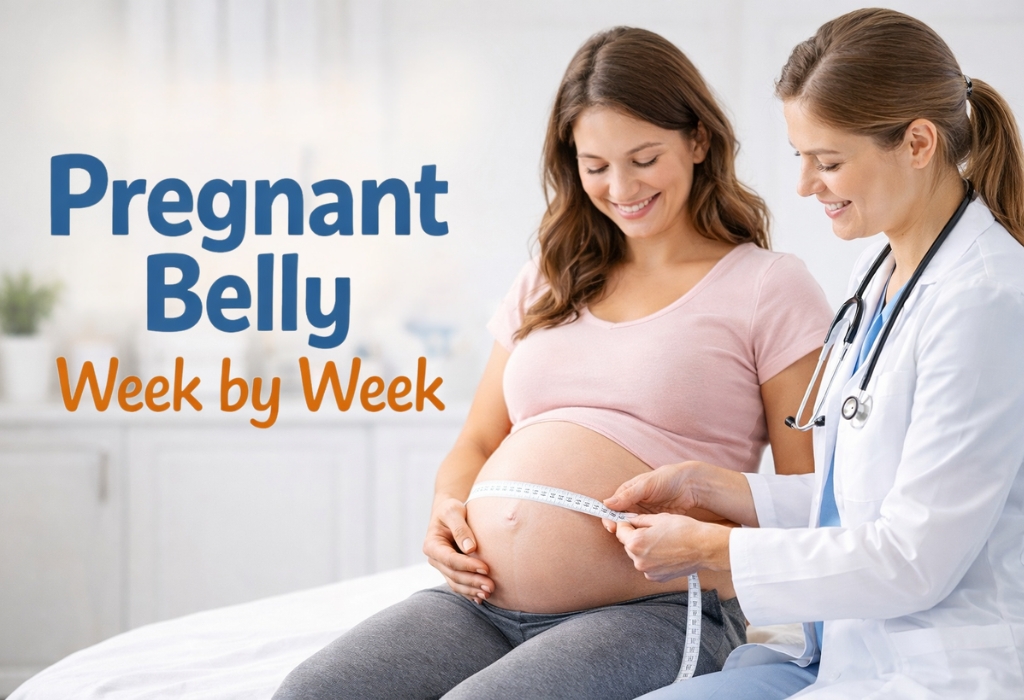
Pregnant Belly Week by Week – Stages, Size & Shape Guide
During pregnancy, your body will undergo a lot of changes during pregnancy, and when you reach the second trimester of your pregnancy, you will start noticing significant changes in your belly. There will be noticeable changes in your pregnant belly week by week. Your belly will start growing, and it’s the one time that you won’t obsess about your weight or your growing belly. We’re pretty sure you’re even checking the way your belly grows with each passing week. If you want to maintain the progress log, our pregnancy belly size chart can help. It’s true that every pregnant belly is different and beautiful! But you must also be curious about whether the belly you have is ideal and if everything is fine with your baby’s growth. However, you should know how much belly growth is actually good. Scroll through our article to learn in great detail about the pregnant belly stages and the pregnancy belly growth chart.
When Does the Belly Start Showing During Pregnancy?
It is actually difficult to understand when your belly will start to show. Most first-time mothers are known to start showing anywhere between 16 and 20 weeks. For others, the belly bump isn’t noticeable till they reach the later part of the second trimester. For women who have been pregnant before, their bellies may start showing right in the first trimester itself.
Does Belly Size Really Matter During Pregnancy?
If you are pregnant, a lot of your friends and relatives would want to share their experiences with you. They will have their set of opinions regarding the weight, belly size, etc., and they’ll share the information as per their experience, but the truth is, the size of the belly does not matter during pregnancy. As long as you are not overweight or obese during pregnancy, there is nothing to worry about (1). The size of your belly should not be a concern to you. Don’t miss your doctor’s appointments and get the tests done at regular intervals – your doctor will keep you updated!
Can Your Belly Size Accurately Indicate Your Stage of Pregnancy?
Your belly size cannot accurately indicate the stage of your pregnancy. Whether your belly is small or big, you cannot exactly determine the stage of your pregnancy. All women have different journeys during their pregnancies. If your friend’s bump was big enough in the 6th month of her pregnancy, that does not mean your belly will also be of the same size in the 6th month of your pregnancy. If you have a small belly bump by that time and your doctor assures you that your pregnancy is progressing fine, you need not stress yourself!
Why the Size of Your Bump Will Not Be Equal to Your Baby’s Size?
No matter how big or small your belly size is during pregnancy, it won’t be equal to the size of the baby. The following factors will determine the size of your belly (and it won’t be equal to your baby’s size, at least not always).
1. Your Height
If you are tall and have a long abdomen, then your belly probably won’t grow outwards, and the size of your bump will appear smaller. Your long abdomen will make more space for your baby to grow. Your baby will have a lot of space to grow. As a result, your baby will grow upwards rather than outwards. On the other hand, if you are on the shorter side, there will be less space between your hip and the lowest ribs for your uterus to grow upwards; hence, it will push outwards. And your bump will appear bigger!
2. Your Baby’s Position
Your baby will move around a lot in your womb during pregnancy, and you must be aware of that if you are in the later stages of your pregnancy. The activities of your baby in the uterus may change his position to an extent. Usually, by the end of the pregnancy, the baby should be in a head-down position, but due to the baby’s activities, the position may change. A change in your baby’s position could change your belly size (2).
3. A Lack of Internal Space
As your uterus expands with your baby, certain other organs of your body, like the placenta and the intestines, will be compromised in their individual positions. As your uterus grows, it may be pushed behind it. This may make your belly appear bigger or similar to the size of the baby. And, in case the intestines may find a place near the uterus’s edges, the belly may look bulged out from the sides as well.
4. Your First Pregnancy
If you are having a baby for the first time, your body will grow bigger for the first time. This means that you will have stiff muscles that will make your uterus compact. Also, the muscles of your stomach that were not stretched will stretch now. Hence, your baby bump will look compact or smaller than what is expected.
5. Earlier Pregnancies
Abdominal muscles are generally stiff in the first pregnancy. If you are pregnant for the second time, then your abdominal muscles must be comfortable and stretch easily to ensure that there is enough space for your baby to grow. In this case, your bump may look bigger even before its time. However, this does not imply that your baby’s size will be bigger. It would indicate that your belly is flexible enough to expand.
6. The Amount of Amniotic Fluid
The amniotic fluid surrounding the baby during pregnancy can fluctuate. Too much or too little amniotic fluid could pose a problem for your baby. In the first 20 weeks of pregnancy, a woman’s body produces amniotic fluid; after that, the baby develops enough to secrete the fluid from the lungs. Thus, the amount of this amniotic fluid in the belly could also influence the belly size (3).
7. Your Baby’s Size
Genetics will play a major role in defining your baby’s size. If you and your husband are tall, your baby will have similar traits. Also, the birth order could define your baby’s weight. The first baby would not be that big in size compared to the second one. Your nutrition will also determine your baby’s weight. If you don’t get enough nutrition, your baby may grow less and vice versa.
Pregnant Belly Size Chart
Excited about the new bundle of joy entering your life? Here’s a size chart to help you understand your growth in the pregnancy stomach week by week during the different stages of your pregnancy (4). Find out what your belly will look like as your baby grows and how you will feel. You can even print this pregnancy tummy month-by-month chart and keep a log.
Week/Month
Belly Size
First Month
Week 1 – Week 4
Ovulation takes place.
Fertilisation of the egg by the sperm.
No noticeable difference in the belly as the baby is about 2mm long during this time.
Second Month
Week 5 – Week 8
The baby grows to an inch, but there is unlikely to be any major difference.
You may experience some tightness in your belly.
Third Month
Week 9 – Week 13
The baby would be about 2.5-3 inches long. You may see an incremental increase in your waist, and your pants may get tighter.
Fourth Month
Week 12 – Week 17
Your baby will be about 5 inches by now.
Your bump will be noticeable, and this is the ideal time to spread the good news.
Fifth Month
Week 18 – Week 21
Your baby will be 7 inches by now.
Your bump may attract the attention of friends and relatives who may inquire about your pregnancy status.
Sixth Month
Week 22 – Week 26
There will be rapid growth during this time, and your baby will reach up to 15 inches.
Your belly size will increase significantly.
Seventh Month
Week 27 – Week 30
The growth of your baby will be stable and he will be about 18 inches now.
The increase in the size of the belly will depend on the growth of your baby.
Eighth Month
Week 31 – Week 35
While the baby is still growing, the growth will be tapered.
Your belly may not have increased as such but would definitely look as if it is popping out.
Ninth Month
Week 36 – Week 40
Your baby will be approximately 19-22 inches.
This is the largest that your belly will ever grow during pregnancy. It will feel crowded but you won’t put on too much weight from now.
It will appear large and curvy.
Source: lifehack.org
Types of Pregnant Belly Shapes and Common Concerns
Pregnant women may have certain concerns about their bellies during pregnancy, which are as follows:
1. Small Belly
Pregnant women with small bellies may often feel that they’re carrying a small baby. However, it all depends on genetics. It could be a matter of concern if the amniotic fluid levels are low. This can be detected through an ultrasound. Other reasons for a small pregnant belly could be first pregnancy, maternal height and weight, fetal position, fetal size, ethnicity, or fetal growth restriction (5).
2. Large Belly
If your belly grows very fast, it could be due to multiple factors, like a previous pregnancy. It’s a matter of concern if the amniotic fluid levels are high (hydramnios), which can be detected through ultrasounds (6).
3. Low Belly
A low belly would make it seem like your due date is nearing faster than expected. However, while it may cause lower back pain and pain in the pelvic region, it’s not a matter of concern.
4. High Belly
A pregnant belly usually means you have strong abdominal muscles and good muscle tone. It’s considered normal unless specified by your doctor.
5. Wide Belly
This could mean that your baby may be in a transverse position or a side-to-side position. It could be an issue if your baby doesn’t turn head down closer to the due date. Sometimes, if the woman is overweight, a wide belly isn’t a cause for concern.
Creative Ways to Celebrate Your Pregnancy Belly
Pregnancy is a time to celebrate, so why not have fun and flaunt that belly bump with these ideas!
1. Belly Painting
Belly painting is a cute way to use the belly as a canvas. You can paint whatever you like. Something cute, something funny, something abstract, and the list goes on!
2. Photoshoot
Pregnancy photoshoots are all the rage now! This is a perfect occasion to flaunt those classy gowns or pose according to different themes. It’s nice to look back at these beautiful memories.
FAQ
1. Why do I have a large belly during pregnancy?
You may have a large belly because of various reasons, such as swelling, which is a common problem during pregnancy. You may also have a large tummy if you were overweight or obese before getting pregnant. However, sometimes it could indicate gestational diabetes. If you have gestational diabetes during pregnancy, your baby may receive too much sugar, which would make him bigger than he normally would. This could also lead to excess amniotic fluid in your body, which again could increase your belly size.
Now you know everything there is to know about belly size and baby growth during pregnancy. Refer to the chart above to track down the changes in your belly. However, keep in mind that the values given above are for reference – they may not strictly apply to you.
Infographic: Factors That Determine Pregnant Belly Size
Also Read:
Pregnant Belly Picture
B Shaped Pregnant Belly
Belly Button While Pregnant
When do Pregnant Women Show Belly
Read more
Changes in Urine Colour During Pregnancy: Reasons & When to See the Doctor
If you are pregnant, you must have noticed a change in the colour of your urine. When you look down in the toilet bowl after peeing, you might see a darker shade of yellow instead of seeing the usual light-yellow colour. A change in the urine colour can be a sign of pregnancy and some problems during pregnancy. This change can be from yellow to a brighter or darker shade of yellow and is governed by several factors.
These changes signal a healthy pregnancy and may even warn you of any issues arising over the course of your pregnancy. It is thus important to monitor changes in the urine and report anything unusual to your doctor as soon as possible. Now, you must undoubtedly have a lot of concerns regarding what colour is pee when pregnant, what pee colour indicates a normal pregnancy, and how you can check it out. Fret not! Our detailed and easy-to-understand explanation about pregnancy pee colour will help you out!
Well, read on to get all the solutions.
Also Read: Is Cloudy Urine During Pregnancy a Cause of Concern?
What Does the Colour of Urine Normally Mean?
The pigment urochrome is what gives your urine its yellow hue (1). Your urine’s consistency affects how this pigment appears. The colour of the pigment in your urine will be lighter when you are hydrated. If your urine is concentrated, it will have a darker shade of colour.
In particular, your urine colour when pregnant can reveal a lot about your health, from normal urine colour to cloudy urine during pregnancy. So let’s distinguish between the colours of regular and pregnant pee.
1. The Normal Urine Colour
Every person’s urine has a different hue depending on their food, medications, level of haemoglobin, degree of hydration, and other factors. However, it typically has a yellow tint, ranging from bright, transparent yellow to somewhat deeper yellow.
2. The Pregnancy Urine Colour
This alteration in urine colour may be easier to see during pregnancy. It can have a wide range of colours, from a strong, bright yellow to a darker, nearly orange-yellow hue that might put you off (2). But there is no need for concern.
Why Do Women Urinate More Frequently When Pregnant?
During pregnancy, pregnant women have a number of changes in their urine, including increased frequency of urination. The hCG hormone, which is created and released after the embryo is implanted in the uterus, is the cause of this alteration. Pregnant women, therefore, urinate more frequently than usual.
Additionally, during pregnancy, the blood circulation volume increases, and about 25% of it is sent to the kidneys. As a result, the amount of fluid processed by the kidneys significantly increases, which subsequently builds up in the bladder (3).
Does Urine Colour Change When Pregnant?
A healthy person’s urine colour can range from a very light, almost transparent yellow to a slightly darker shade of yellow. During pregnancy, however, this change can be more pronounced. The urine colour of a pregnant woman can range from an intense bright yellow to a darker, almost orange-yellow colour.
The colour of the urine is caused by the pigment urochrome, which is also known as urobilin. Urobilin is made when the body breaks down haemoglobin from dead red blood cells. The appearance of the pigment will depend on the consistency of your urine. If your urine is diluted (when you are hydrated), the pigment in your urine will be of a lighter shade. However, if your urine is in concentrated form, the pigment will have a darker shade.
Apart from this, there are a lot of factors which will decide the colour of your urine during pregnancy. There is a profound change in how kidneys filter water during pregnancy. Additionally, changes in the intake of food during pregnancy and the additional intake of vitamins and medicines prescribed can also bring about a change in the colour of pee when pregnant.
Also Read: Smelly Urine During Pregnancy – Reasons and Remedies
Why Does the Colour of Urine Change During Pregnancy?
The factors that decide the colour of urine during pregnancy are mentioned below:
1. Pregnancy Diet
During pregnancy, your diet takes a 180-degree turn. You become more conscious of your eating habits. Your diet will include fruits, vegetables, dairy products, and other healthy foods. Certain fruits and vegetables can bring about a change in the colour of your urine during pregnancy.
2. Vitamins and Other Medicines
Many pregnant women are advised to take prenatal vitamins and supplements during pregnancy. A woman’s body cannot break down the vitamins in their entirety. The absorbed vitamins and other supplemented nutrients are discarded from the body through urine, which could result in a darker shade of urine (4).
3. Dehydration
Intake of water also decides the colour of your urine during pregnancy. Many women experience the problem of dehydration during pregnancy even though if they are drinking more than enough water. Another cause of dehydration is a condition known as hyperemesis gravidarum. Hyperemesis gravidarum is a condition characterised by severe morning sickness, nausea, and weight loss. This condition causes severe morning sickness and is common in about one per cent of all pregnancies. Hyperemesis gravidarum causes excess vomiting in pregnant women resulting in dehydration. In cases where there are no apparent signs of dehydration, dark urine could be a sign of liver complications. You should consult a doctor soon.
4. Urinary Tract Infections (UTIs)
An infection in the urinary tract can also bring about a change in the colour of your urine. A urinary tract infection (UTI) should not be taken lightly as it can have serious consequences like premature labour or underweight baby. Bright yellow-coloured urine, an increase in the frequency of urination, pain in the lower abdomen or blood in the urine are all signs of a urinary tract infection.
5. Hematuria
Hematuria is the presence of blood in the urine (5). The excess red blood cells need to be eliminated from the body; they are discarded by the body through urine and can result in very dark yellow or red-coloured urine.
6. Urinary Bladder Infections
A bladder infection is a type of UTI and is a bacterial infection. Pregnancy can result in an increased frequency of hormonal changes in a woman’s body. Such changes usually result in the enlargement of the urinary bladder, which weakens the bladder lining and makes it prone to infections. Bladder infections can result in a change in the colour of urine.
Also Read: Protein in Urine During Pregnancy
7. Kidney Diseases
Kidneys are the organs that filter and discard waste matter from the body. Any disorder in the kidneys can easily result in a change in the colour of urine.
8. Kidney Stones
Kidney stones interfere with normal kidney functions and can cause severe pain, nausea, and vomiting, and can result in a change in the colour of urine (6).
Also Read: Ketones in Urine During Pregnancy – Causes, Tests and Prevention
How to Notice the Changes in Urine Colour When Pregnant?
During pregnancy, hormonal changes, increased kidney function, and your growing uterus can all affect your urine. Many women notice a change in the colour of urine in early pregnancy, often becoming a darker yellow due to hormonal shifts and dehydration. While it often becomes a darker, more concentrated yellow if you’re dehydrated, it’s important to notice any persistent, unusual changes. An amber colour or very dark yellow urine during pregnancy typically signals a need to drink more water. However, always contact your healthcare provider if you notice bright yellow (which could be from vitamins), pink or red (indicating possible blood), brown, or cloudy urine, as these can be signs of a UTI, other infections, or conditions that need medical attention.
Urine Tests During Pregnancy
Conducting urine tests from time to time during pregnancy is crucial as it will reveal your health status. Urinalysis at different stages of pregnancy will help your doctor detect any possible condition that requires treatment. Tests will be done to monitor for bladder infections, kidney infections, diabetes, and even dehydration. High levels of protein in urine are a sign of urinary tract infection or kidney disease. Having high glucose (sugar) levels during pregnancy could indicate to gestational diabetes, which generally develops in the second trimester of pregnancy. The presence of red blood cells, white blood cells, or bacteria could be a sign of UTI. Conducting urine tests during pregnancy is very important, so don’t skip them. Furthermore, don’t hesitate to visit your doctor if you experience any problem while urinating.
Also Read: Urine Leakage During Pregnancy – Is It Normal?
When to Visit a Doctor
Although a change in colour of urine could be a result of various harmless reasons, ranging from vitamin intake to dehydration, they can sometimes be caused by more severe conditions. A burning sensation while urinating could indicate a UTI. After an increase in the intake of water, if the colour of your urine is still dark, it could indicate liver and kidney malfunctions. If you notice that the colour of your urine is pale-yellow or dark, then you should consult a doctor.
FAQs
1. What are the causes of dark urine in pregnancy?
The presence of bright yellow urine during pregnancy may indicate dehydration. Unless the urine is accompanied by bleeding or discomfort, you shouldn’t be concerned. When in doubt, it is best to visit a doctor.
2. Is blood in urine safe?
It is imperative to see a doctor if you notice any blood spots in your urine or if the colour of your pee changes to pink, brown, or red. Therefore, since blood in urine is unusual, it could not be in any way safe or normal.
3. My urine is a very pale, almost clear colour. Is this a problem?
Consistently very pale, clear urine is typically a good sign of excellent hydration. However, if you notice a sudden, dramatic shift to large volumes of clear urine without a significant increase in your water intake, it’s worth mentioning to your doctor. In very rare cases, it can be linked to gestational diabetes insipidus, a rare condition related to water balance.
Like many other bodily changes, a change in urine colour is common during pregnancy. You could have dark-coloured urine because of dehydration. It merely indicates that you should be drinking more water. If you notice a change in your urine colour, do not panic. Drink water and stay hydrated; however, if the problem persists, visit the doctor.
Also Read:
Leukocytes in Urine During Pregnancy
Urine Pregnancy Test – At Home and Clinic
Urine Test and Urine Culture during Pregnancy
Read more
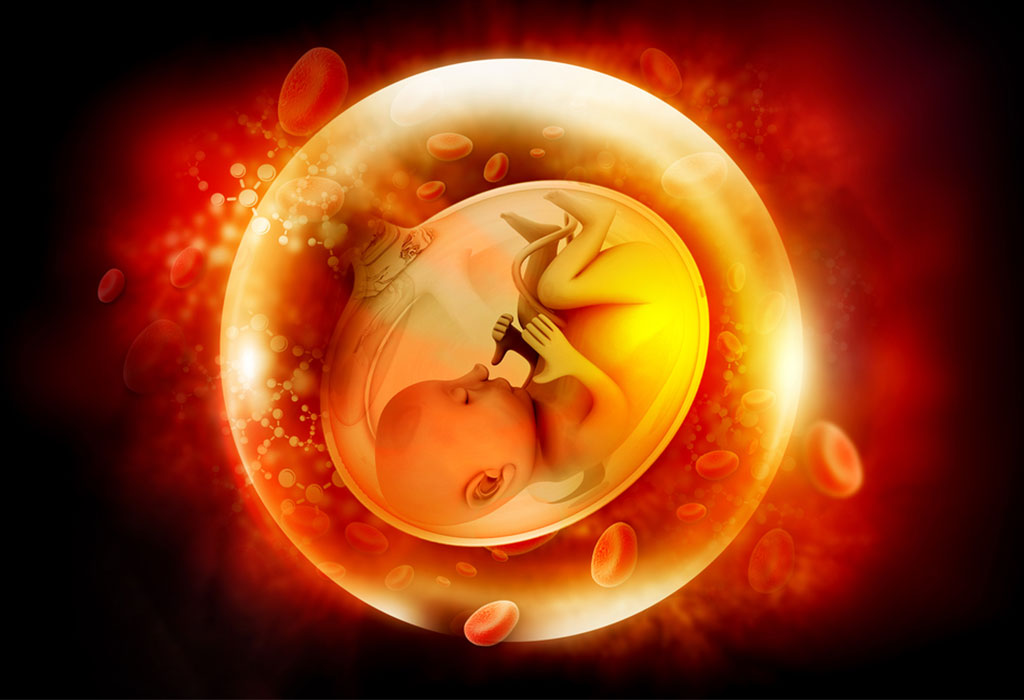
How to Increase Fetal Weight During Pregnancy?
Once you find out that you are pregnant, it is important to pay heed to your diet, exercise, and lifestyle for the optimal growth and development of your unborn baby. Every mother-to-be wishes to have a healthy baby, and one of the parameters that help you know about your little one’s well-being is the fetal weight, which is assessed during the prenatal scan. Optimal fetal weight gain is an essential part of fetal development. Therefore, it is important to monitor the same. Let’s take a look at ideal fetal weight by the week and how to increase fetal weight during pregnancy.
How Is Foetus Weight Measurement Done?
Most pregnant women will have their first ultrasound scan in the first trimester. Your radiologist will take various measurements to understand the foetal growth and development. The following are some measurements that your radiologist will make:
FL or Femur length
HC or Head circumference
AC or Abdominal circumference
OFD or Occipitofrontal diameter
BPD or Biparietal diameter
HL or Humerus length
With the above-mentioned parameters, your radiologist will establish the foetal weight and gestational age. You will also be told about your EDD or estimated date of delivery. The measurements made by the doctor may not be exact, but they will help your doctor establish the overall well-being of the foetus.
Also Read: Foetal Anaemia – Causes, Diagnosis, and Treatment
Is It Important to Know Your Fetal Weight?
Yes. It is important to know about accurate fetal weight estimation as it is used to make decisions about the mode of delivery and the timing of labour induction (1).
Thus, regularly checking fetal growth is important to keep a check on the nutritional needs of both the mother and the baby. A mother on a nutritious and healthy diet can ensure a healthy delivery without complications.
What Is the Ideal Weight of a Foetus?
Every baby grows differently; therefore, the table below is only to give you an idea, and not the ideal baby weight gain, week by week during pregnancy.
Pregnancy in Weeks
Foetal Weight in Grams
8
1
9
2
10
4
11
7
12
14
13
23
14
43
15
70
16
100
17
140
18
190
19
240
20
300
21
360
22
430
23
501
24
600
25
660
26
760
27
875
28
1005
29
1153
30
1319
31
1502
32
1702
33
1918
34
2146
35
2383
36
2622
37
2859
38
3083
39
3288
40
3462
41
3597
42
3685
Effective Tips to Increase Foetal Weight During Pregnancy
As a mommy-to-be, you may wonder how to make your unborn baby gain weight. Follow some of these tips to increase foetal weight during pregnancy:
1. A Healthy and Balanced Diet
Diet plays the most important role in pregnancy. You should include fresh fruits, vegetables, whole grains, meat, and poultry in your diet if you wish to increase foetal weight.
2. Include Nuts and Dry Fruits in Your Diet
A well-balanced diet also includes nuts and dry fruits. You may eat almonds, apricots, figs, walnuts, and other nuts and dry fruits. However, it is recommended not to go overboard with them.
3. Prenatal Vitamins
You will be given prenatal vitamins for your baby’s proper growth and development. These vitamins also help your baby gain weight. You should take these vitamins regularly for optimal foetal weight gain during pregnancy.
4. Stay Hydrated
Drink adequate amounts of fluids to avoid any kind of dehydration in pregnancy. Dehydration in pregnancy may lead to some serious medical complications. You may take fruit juices, vegetable juices, milk, buttermilk or water to keep your body well-hydrated.
5. Take Adequate Rest
It is very important for a pregnant woman to have plenty of rest. Over-exertion or unnecessary pressure may affect foetal development and growth. Try to get a minimum of eight hours of uninterrupted sleep to keep your energy levels intact.
6. Stay Calm and Positive
It is not only important to take care of your physical health, but also your mental well-being. Any kind of stress and anxiety can affect you as well as your unborn baby’s health. The resulting emotional outbursts may lead to over-eating, under-eating, or making wrong food choices, and all these may affect foetal health.
7. Medical Guidance
Your doctor will guide you in case your baby is not gaining a sufficient amount of weight. You may be told to take additional supplements or make dietary changes to increase foetal weight.
The above-mentioned tips may help your baby gain weight during pregnancy. However, it is recommended to take your doctor’s advice in this matter.
What Can You Eat to Increase Baby Weight During Pregnancy?
Confused about how to increase baby weight in the womb? You can try certain foods that increase fetal weight. Here are the following foods to help the foetus gain weight during pregnancy (2):
1. Sweet Potatoes
Sweet potatoes are loaded with fibre, potassium, Vitamin C, Vitamin B6, iron, copper, and beta-carotene. The presence of beta-carotene (an antioxidant) in sweet potatoes gets converted into Vitamin A by your body. Vitamin A, as we know, is essential for foetal skin, bones, and eyes. Sweet potatoes increase the iron levels in the body. You may eat them in mashed, baked, stewed, or shallow-fried form.
2. Lentils and Beans
Lentils and beans are jam-packed with iron and protein. You will also get enough fibre, folate and calcium by including beans and lentils in your diet. If you are a vegetarian, beans will provide you with minerals that you may otherwise get from a non-vegetarian diet (meat and poultry). Being rich in zinc, beans are great for reducing the risk of prolonged labour, low birth weight babies, or premature deliveries.
3. Orange Juice
Start your day with a glass of fresh orange juice and spike up your Vitamin C, potassium and folate levels. Folate and folic acid are extremely important in pregnancy. The CDC recommends starting with at least 400 mcg of folic acid per day to ensure enough folate in the body and continuing with 600 mcg of folic acid during pregnancy to prevent neural tube defects in the baby (3). By meeting your body’s daily requirements of these nutrients, you can reduce the baby’s chances of catching certain birth defects. Orange juice helps maintain your overall health, metabolism, and muscle function.
4. Yoghurt
Calcium, protein, Vitamin B, zinc and other bone-building nutrients are power-packed in yoghurt (4). For a pregnant woman, the daily calcium requirement is 1300 mg, which can be met with yoghurt and other dairy products (5). Apart from keeping your bones and teeth healthy, adequate amounts of calcium in the body reduce the chances of preterm labour or low birth weight babies.
5. Green Leafy Vegetables
Green vegetables, such as spinach, kale, broccoli, and asparagus, are loaded with essential nutrients and antioxidants. Green leafy vegetables work wonders for a pregnant woman and her developing foetus. You may get your daily dosage of calcium, potassium, Vitamin A, folate, and fibre by eating leafy vegetables. A half cup of boiled spinach (95 grams), for example, has 131 mcg of folic acid (6). You may eat them in raw, cooked, baked, or stir-fried form for maximum benefits.
6. Salmon
Salmon is one of the best sources of omega-3 fatty acids and protein. Omega-3 fatty acids are very beneficial for a growing foetus as they help in brain and eye development, as well as supplying the required amount of protein to mothers. Salmon is considered safe for pregnant women, as it has very low levels of mercury in it (7).
7. Eggs
Eggs are a powerhouse of protein, Vitamin A, and Vitamin D, all of which are incredible for the growth and development of the foetus. In fact, the protein profile of eggs is unmatched by any other food, making them beneficial to eat during pregnancy. Eggs are also rich in folic acid and iron, which work towards strengthening amniotic membranes and preventing birth defects and low birth weight in the foetus.
8. Milk
A daily intake of 200-500 ml of milk per day can help pregnant women increase foetal weight. Milk contains a high amount of protein and calcium, which are essential for the growth and development of the foetus (8). You can drink milk in plain form or come up with interesting porridge and smoothie recipes.
9. Chicken
Chicken is a great food that helps increase foetal weight. This lean meat is high in proteins that promote cell and muscle development in the body. Besides proteins, chicken also has a high amount of iron that reduces anaemia in the mother and fetus.
10. Soybean
Soybeans are a rich source of protein for vegetarians and can be consumed in various forms. High in iron as well, soybeans prevent anaemia due to their high iron content. You can consume soya in the form of soy milk, soya nuggets, tofu, etc.
11. Avocado
Avocados are rich in fibre, folate, potassium, vitamins C and E, and are an excellent source of healthy fats. They also contain non-essential compounds, including monounsaturated fats, and lipid-soluble antioxidants, which are known for improving maternal health (9). Avocado is a crucial food for baby weight gain, which also helps them stay warm after birth.
12. Peas
Peas are packed with iron and protein; therefore, they must be included in the pregnancy diet in both fresh and dried forms. This vegetable is highly beneficial for vegetarians and provides almost all the nutrients present in meat and fish. Peas are also rich in zinc and thus come under the foods to increase fetal weight during pregnancy.
13. Pumpkin
Pumpkins are a great source of essential vitamins, like vitamin A, vitamin B-6, and vitamin C and are highly nutritious. Pumpkin is also rich in iron, calcium, and zinc and loaded with protein, omega-3, and carbohydrates. Therefore, you must include it in your diet to increase fetal weight.
14. Nuts
Nuts like walnuts, almonds, hazelnuts, and peanuts offer numerous health benefits. These nuts are also rich in micronutrients like zinc, iron, and copper. All these benefits make them an ideal food to increase fetal weight during pregnancy.
15. Broccoli
Broccoli is an excellent source of iron, beta carotene, vitamin C, vitamin E, vitamin A, vitamin K, and potassium. Therefore, including this vegetable in the pregnancy diet can help to increase fetal weight. However, keep in mind that patients with hypothyroidism should avoid eating broccoli.
16. Oatmeal
Oatmeal is a great source of carbs, selenium, vitamin B, phosphorous and calcium. So, you can make it a part of your pregnancy diet to increase fetal weight.
17. Fruits
Fruits like bananas, kiwis, melons and strawberries can help you cover your daily vitamin C requirement. Vitamin C is necessary to ensure that your baby’s placenta continues to function properly. Additionally, it helps your baby absorb the iron from the food you consume, which is required to maintain a healthy immune system.
18. Whole Grain Bread,
Whole-grain bread with peanut butter is one of the grain choices for evening snacks. Whole-grain bread is rich in folate, which is essential for the mother’s and the baby’s health.
Precautions to Take While Trying to Increase Your Baby’s Weight in the Womb
Some dietary choices may help you increase your baby’s weight in the womb. However, it is very important that you do so in a healthier manner. Overdoing anything may lead to complications. These are some precautions that you should take:
1. Avoid Alcohol and Smoking
You should strictly avoid alcohol consumption and smoking in pregnancy. Both these habits can prove to be fatal for your developing baby and may also lead to serious medical complications.
2. Reduce Caffeine Intake
Consuming high amounts of coffee, tea, or aerated beverages can have a negative impact on foetal health.
3. Avoid Fried, Sugary or Fatty Foods
Regular intake of such food items may make you prone to obesity, which in turn increases the chances of cholesterol and hypertension. It is recommended to go easy on oily, fatty, and sugary food items. Staying away from certain food categories will help you have a healthy pregnancy and also be beneficial for your unborn child.
FAQs
1. In which month does fetal weight increase?
By 31 weeks, or 29 weeks after conception, your baby has finished most of their major development, and now it’s time for them to gain weight.
2. How much weight does your fetus gain per day?
A fetus gains about 8 to 12 ounces (226 to 340 grams) each week. During this time, the fat is being deposited all over your little one’s body, especially around the shoulders.
3. Can low fetal weight be prevented with diet?
Yes, low fetal weight can be prevented by ensuring a good, healthy diet and prenatal guidance.
4. How much water should I drink to ensure good fetal weight?
It is generally recommended to have about 8 to 10 glasses of water, depending on the climate and your activity level.
5. What foods can help increase fetal weight during pregnancy?
Healthy fats, like fish and nuts, protein-rich foods, fruits, whole grains, and leafy vegetables, can help increase fetal weight during pregnancy.
Making healthy food choices during pregnancy is key to ensuring your baby’s growth and development are on track. We have made some suggestions in context to dietary changes that you can make during pregnancy to increase foetal weight. However, consult your doctor before making any changes or amends to your diet. With expert guidance and support, you will not only have a healthy pregnancy but also a healthy baby.
Also Read:
Foetal Development
Decreased Foetal Movement
Foetal Growth Chart Week by Week
Read more
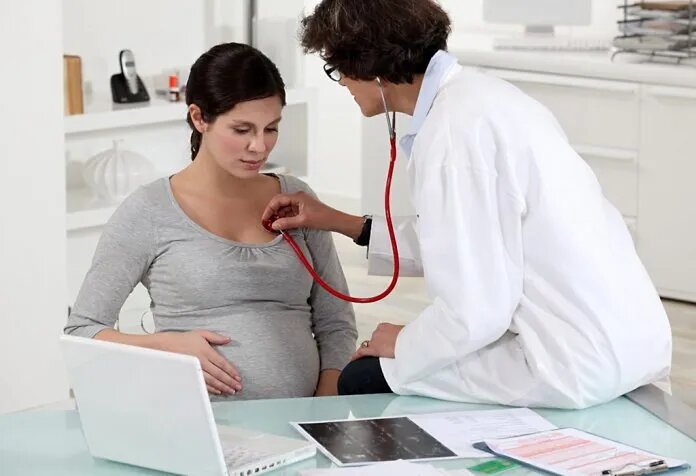
High Heart Rate During Pregnancy
Be it physical, mental or emotional, a woman’s body goes through a lot of changes during pregnancy. If you are pregnant, one such change that might worry you is a change or rather increase in your heart rate. Heart palpitations (the feeling that your heart is racing or pounding) are usually harmless and happen because of cardiovascular changes. However, in many instances this seemingly common change can indicate a problem in the heart or other parts of the body, more so if it is sudden. A sudden increase in the heart rate during pregnancy should not be taken lightly. So read on to know more about it.
Video: Fast Heartbeat During Pregnancy – Reasons, Signs & Treatment
Is It Normal to Have a High Heart Rate During Pregnancy?
The normal heart rate of a healthy person is between 60 and 80 per minute. However, during pregnancy, it is quite common for this rate to go up to 100. An increased heart rate is called tachycardia and is a common occurrence during pregnancy.
If you are pregnant, your body will constantly work hard to provide nourishment to your growing baby. As your pregnancy progresses, the amount of blood required by your baby will increase and your heart will beat faster to pump more blood into the system.
Causes of High Pulse Rate During Pregnancy
There are a lot of factors that can lead to heart palpitations during pregnancy. They are as follows:
Anxiety: It is normal to worry about your baby’s health during pregnancy. But if you tend to worry a lot or get anxious, it will affect your health. Stress and anxiety during pregnancy can increase your heart rate.
A change in the size of the uterus: As your pregnancy progresses, your uterus will increase in size to accommodate the growing baby. As a result, your heart will pump more blood to support the uterus. In fact, towards the end of your pregnancy, about 20% of your blood will be supplied to the uterus. This means extra work for your heart, which will only add pressure on it.
Changes in the breast size: During and after pregnancy, your mammary glands will prepare your body for breastfeeding. When the breast tissues enlarge and breasts increase in size, the blood flow to the mammary glands will increase. This means, your heart will pump more blood than usual, which can make it pound even more.
Changes in the nutrient levels: Complications of the thyroid or a drop in iron levels can also increase the heart rate. Anaemia and hyperthyroidism can cause tachycardia.
Hormonal changes: Hormonal changes and weight gain can cause tachycardia in early pregnancy.
Medication: If you take cold or allergy medicines containing pseudoephedrine during pregnancy, your heart rate might increase. This increase is a sign of your body reacting negatively to medicines.
Lifestyle factors: Smoking cigarettes, drinking alcohol, or consuming foods or drinks high in caffeine can increase your heart rate too.
Some Other Serious Causes of Heart Palpitations
Coronary heart disease
Preeclampsia
Underlying heart damage
Heart damage from a previous pregnancy
Symptoms of Fast Heartbeat While Pregnant
You may experience the following symptoms if you have an increased heart rate during pregnancy.
Shortness of breath even when you are sitting or lying down
Palpitations and skipped heartbeats
Light-headedness with dizzy spells and even fainting spells
A persistent cough
If you experience any of these symptoms, it is best that you bring it to your doctor’s notice so that she can check whether these symptoms are normal or not.
Diagnosis of Increased Heart Rate During Pregnancy
Your doctor will conduct a series of tests to ensure that both you and your baby are in the prime of health. He will also review your medical history. If you have experienced this problem before, you should inform your doctor about it. The doctor will determine the cause of increased heart rate through an EKG or ECG that measures changes in the blood flow and heart rate.
Basis the results, the doctor will most likely suggest you to follow a healthy diet and indulge in light exercises. This will keep your weight in check and will also prevent additional pressure on the heart.
Elevated Heart Rate Trimester Wise
Cardiovascular functions serve a number of purposes during pregnancy. Apart from aiding the development of the foetus, they also impact on the mother’s physiological and metabolic functions. However, depending on the stage of pregnancy, your heart’s way of functioning also varies.
1. First Trimester
During the first trimester, your heart rate can increase by 15 to 20 beats per minute. The increase in heart rate during this trimester is usually caused by an increase in hormone levels, specifically an increase in progesterone and oestrogen. This is to signal your heart that it must provide more blood for the developing foetus.
2. Second Trimester
In this phase, your body will see a general relaxation of the smooth muscles along with dilation of the arteries to accommodate the increase in blood volume. In the second trimester, there will be hemodilution, i.e., an increase in blood volume, under the influence of hormones; these hormones can dilate the blood vessels to maintain the blood pressure. So these changes won’t affect your blood pressure – it will be normal, but they may increase your heart rate. During the fourth month, your heart will pump 30% to 50% more blood than usual and as a result, your heart rate may increase.
3. Third Trimester
During the last trimester, your heart will be at its peak of pumping blood. It will pump 40% to 90% more blood than it did in your pre-pregnancy days. This is to ensure that the rapidly growing foetus receives the oxygen and all the nutrients it requires. It also prepares your body for labour during which your heart rate will spike due to contractions and pain.
Can an Increase in Heart Rate Affect Your Pregnancy?
Heart palpitations or an increase in heart rate during pregnancy is usually a sign of a healthy pregnancy. This means that your body is working hard to ensure that your baby gets the oxygen and essential nutrients to develop healthily.
If your heart beats faster but it not accompanied by other serious symptoms, there is nothing to worry about. You must remember that this is a normal physiological response of your body.
How to Deal With an Increased Heart Rate While Pregnant
Although an increased heart rate is usually normal, if you have it, it is suggested that you make certain changes in your lifestyle for your good health. If an increase in your heart rate is because of some serious problem, your doctor will prescribe the course of treatment and suggest that you take precautions. There are many drugs available to you that can help with tachycardia, but it is best not to use them while pregnant as some medicines can hamper with your baby’s development. Before taking any medicines, you must consult a doctor.
If you experience heart palpitations during pregnancy, you can drink moderate amounts of chamomile tea or try aromatherapy with lavender – these may calm you down. You should make sure that you get enough sleep daily and that your sleep pattern remains undisturbed. Practising yoga and meditation can also calm you down, but you should clarify with your doctor before trying anything new.
Experiencing heart palpitations occasionally is normal during pregnancy, provided they return to normal on their own. But if you feel uncomfortable because of increased heart rate, you must consult your doctor at the earliest.
Medical Treatment for Accelerated Heartbeat
Medication is not always considered the best course of treatment for an accelerated heart rate during pregnancy but can be used in emergencies and only under a doctor’s care. To treat tachycardia (a condition where the heart rate is more than normal), anti-arrhythmic, beta, or calcium channel blockers are commonly administered by healthcare professionals.
Warning Signs
If you notice a sudden increase in your heart rate during pregnancy which is also accompanied by some other symptoms mentioned above, it could be a sign of a serious problem, perhaps a heart condition that you were unaware of previously. Make sure that you seek immediate medical help if you experience one or more symptoms along with heart palpitations.
An increase in heart rate during pregnancy is common and happens because of the physiological changes your body goes through. Ensure that you get enough rest and do not stress during this time. Also, have an honest and open conversation with your doctor if you have any fear about your pregnancy.
FAQs
1. How high can my heart rate go while pregnant?
The guidelines of the American College of Obstetrics and Gynecology (ACOG) do not specify a maximum heart rate that must be maintained throughout pregnancy. However, during aerobic exercise, a heart rate above 140 bpm during aerobic exercise is typical.
2. Does fast heart rate indicate a gender?
There is no evidence to support the idea that a pregnant woman’s or the fetus’s heart rate reveals the gender of the foetus.
3. Can my high heart rate affect my baby?
During pregnancy, an elevated or racing heart rate is normal, with no known adverse effects on the unborn child.
Infographic: 10 Reasons for Increased Heart rate During Pregnancy
Also Read:
Heart Palpitations During Pregnancy
Hearing the Foetal Heartbeat During Pregnancy
Read more
Sort By
 Latest
 Most Popular
 Trending
Please select atleast one Filter